Life imitates art: Strategic Stockpile Born From The Pages Of A fiction thriller.

Life imitates art is a well used phrase and here we go, again.

Bill Clinton loves a mystery, having co-authored the best seller ‘The President is Missing’ in 2018

TPM did some sleuthing and learned that that the National Strategic Stockpile was born from Clinton’s fascination with a work of fiction.

The book is available on Amazon. I just purchased it to have some Shelter in Place Reading.

TMP 4.3.2020

It started when former President Bill Clinton picked up a thriller called The Cobra Event by Richard Preston. In it, a bioterrorist targets the United States with a virus that fused the common cold with smallpox. As the disease tears through New York City, victims succumb to grisly “autocannibalistic” tendencies.  

On Thursday, White House Senior Aide Jared Kushner left quite the impression at his rare press briefing appearance as he insisted that the National Strategic Stockpile was for “our” use, not the states’.

“The state still has a stockpile and the notion of the federal stockpile was it’s supposed to be our stockpile,” Kushner said at a briefing about the coronavirus pandemic. “It’s not supposed to be states’ stockpiles that they then use.”

“So I would just encourage you, when you have governors saying that the federal government hasn’t given them what they need, I would just urge you to ask them, ‘well have you looked within your state to make sure that you haven’t been able to find the resources?’” he continued.

Cobra Event II 4.5.2020

Richard Preston

Eagle-eyed journalists quickly spotted language being amended on a Health and Human Services webpage to come into line with Kushner’s comments. Still, government websites and old documents pointed to the true intent of the stockpile: to be there in an emergency for state and local officials who lack sufficient supplies.

President Donald Trump addressed Kushner’s comments in a Friday press conference.

“‘Our, our,’” Trump mimicked. “It means the United States of America. And then we take that ‘our’ and we distribute it to the states.”

“The federal government needs it too, not just the states,” he added, yelling at the reporter.

Still, Trump and Kushner’s bizarre twist on the stockpile’s intentions is but a blip in the stockpile’s 22-year history.

Per the New York Times, In 1998 Clinton was spooked enough to ask the FBI if such a thing could actually happen.

“In April 1998, as a result of having read the Richard Preston novel, The Cobra Event, the president held a meeting with a group of scientists and Cabinet members to discuss the threat of bioterrorism,” wrote terrorism studies expert Martha Crenshaw in her essay in “Terrorism: Critical Concepts in Political Science.”

“The briefing impressed Clinton so much that he asked the experts to brief senior officials in DOD and HHS.”

That led to the stockpile’s birth: a line in the October 1998 omnibus emergency appropriations package granting $51 million “for pharmaceutical and vaccine stockpiling activities at the Centers for Disease Control and Prevention.” It was known then as the National Pharmaceutical Stockpile.

The stockpile first came to use as the country held its breath for Y2K, an issue with how computers dates were programmed that was expected to wreak havoc as the new millennium rolled over.

“They were afraid that there was going to be an interruption of supplies to hospitals and to the clinics,” said Tom Jackson, then working in the strategic logistics branch for the stockpile, in an HHS video. “So they decided, the U.S. Government decided to put together a cache of material that could be used to supplement those organizations if there was an eruption and supply because of the the Y2K changeover.”

Sue Gorman, science branch chief, added that all they had was “a handful of people to start with and we had a 50 million dollar budget to create a stockpile.”

Since then, the stockpile has come into Americans’ lives in accordance with the country’s greatest disasters, from Hurricane Katrina to 9/11.

Its stores were seriously depleted during the Obama administration. According to a Health Security study, 75 percent of respirators and face masks in its stockpile were used to protect health-care workers during the 2009 swine flu outbreak.

Per USA Today, it was never fully restocked.

And that’s where the stockpile stands today, as its stores are called into use once more to help protect Americans against the newest, and very nonfictional, global threat: the coronavirus pandemic.

https://talkingpointsmemo.com/news/national-stockpile-thriller-coronavirus
 

Homeland’s quirky character Max is gone. Who’s next? 4 episodes remain

On last week’s episode of the gripping series Homeland, Max finally met his end.  Gunned down by the Taliban as his friend Carrie Mathison looked on in shock.

This article in the Wall Street Journal was published prior to the opening of the final season of Homeland.  It remains to be seen what fate meets the two remaining lead characters as the eight season drama concludes.

There are four episodes remaining. The next is Sunday evening on Showtime.

Wall Street Journal 2.3.2020

It looked like Max Piotrowski’s luck had finally run out.

The “Homeland” character—a quirky and socially awkward surveillance expert—had dodged death through the Showtime terrorism drama’s first six seasons. When Maury Sterling, the actor who portrays Max, got a rare phone call midway through Season 7 from co-creator and showrunner Alex Gansa, he figured the jig was up.

Survivor

“Max’s run is done. It’s been great. It’s not you, it’s us,” Mr. Sterling said Mr. Gansa told him. “It was the total breakup call.”

Fellow cast members offered their solace. “Homeland” co-star Mandy Patinkin—who has also managed to escape annihilation as CIA lifer Saul Berenson—told Mr. Sterling his final scene would be memorable.

Homeland Max II 4.4.2020.jpg

“Mandy told me, ‘It’s a good death: a Russian GRU agent crushes your throat with his boot,’ ” Mr. Sterling recalled. “I was like, ‘That’s a terrible death, what are you talking about?’ It’s awful.”

Show star Claire Danes, who plays the brilliant and bipolar CIA agent Carrie Mathison, was also bummed about Max’s demise. Mr. Sterling said she told him it wasn’t fair, since their two characters hadn’t slept together yet—though she used more colorful language.

“Those are the rules,” Ms. Danes said in an interview, joking about her character’s tendency to get a little too close to the men around her, who then tend to become targets.

As the episode where Max was to get the boot drew closer, a “save Max” campaign began behind the scenes.

“I did start lobbying,” said Lauren White, a producer on “Homeland,” which follows a team of CIA agents and their associates as they battle terrorism around the globe, and the wife of Mr. Gansa. “Max was one of the only straightforward, sympathetic characters the show had.”

Others, including longtime “Homeland” director Lesli Linka Glatter, also felt killing off Max would be a mistake.

Mr. Gansa caved and called Mr. Sterling again.

“He’s like, we can’t do it,” Mr. Sterling said Mr. Gansa told him. “It’s not you. It’s Max. We just can’t kill Max.”

Violent TV shows put everybody on edge—cast members included, whose job security is on the line in every episode. Many in the cast of HBO’s “The Sopranos” said they would tear through scripts the minute they got them to see if they made it to the final scene.

Homeland,” which started its eighth and final season on Feb. 9, has been unafraid to kill off major characters. In Season 2, Vice President William Walden—a former CIA chief—died from a heart attack when his pacemaker was hacked by terrorists. At a memorial service at CIA headquarters, a bomb wiped out many of the cast.

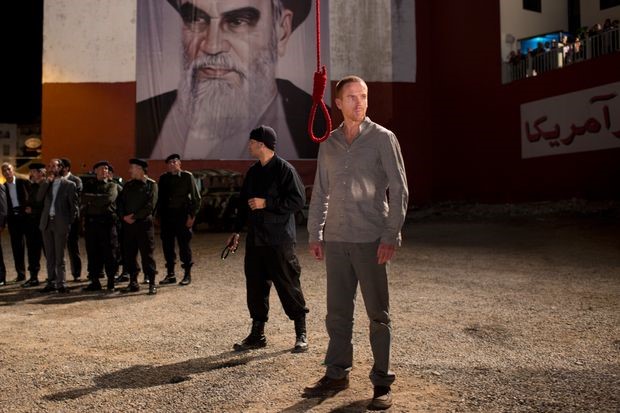
At the end of Season 3, Nick Brody—an American soldier turned spy played by Damian Lewis and the main antagonist of the early seasons—was hanged from a crane in front of a raucous crowd in an Iranian town square. Three seasons later, another prominent character’s run ended when the SUV of Peter Quinn, played by Rupert Friend, was machine-gunned, Sonny Corleone-style.

“Nobody is safe,” said Mr. Sterling. “That’s part of what makes it good.”

If there was anyone on the show who seemed expendable, it was Max Piotrowski. For the first few seasons he was a milquetoast and Zelig-like character who rarely spoke. Carrie Mathison described him as “creepy” after their first meeting, a line Ms. Danes said was the only one she ever ad-libbed on the show. Peter Quinn calls Max “a mute” in a subsequent episode.

“With the huge graveyard that is ‘Homeland,’ it is amazing that he is one of the last ones standing,” said Ms. Linka Glatter.

Homeland Max III 4.4.2020.jpg

The character Nicholas Brody, played by Damian Lewis, faces the end.

PHOTO: DIDIER BAVEREL/SHOWTIME

Mr. Sterling, 48, isn’t a household name, but he has worked consistently for 25 years. When he landed the role of Max, Mr. Sterling wasn’t sure it would last past the pilot. “You wait by the phone,” he said of his early days on the show. “Phone rings or it doesn’t.”

Although it’s never discussed on the show, Max’s awkwardness in interacting with people comes in part because he is on the autism spectrum, something the writers decided when creating the character.

“It’s not overt at all. It’s very convincing,” said Ms. Danes of Mr. Sterling’s portrayal of Max as a person on the spectrum. “The fact that he can’t get too close to anybody works to his advantage, it’s one of the reasons he has survived,” she added.

At times, Max served as comic relief in the tension-filled show.

In Season 6, Max, working undercover, is trying to land a job at a company in the business of peddling misinformation online. Asked during the job interview to explain a yearlong gap in his résumé, Max responds he spent that year “smoking meth and masturbating.”

In another instance in Season 3, Mr. Sterling’s character shows up to a CIA safe house and an angry Peter Quinn asks him what took so long. “Taxi got lost,” Max deadpanned.

“Lord knows we’re desperate for a little bit of funny on our show,” Ms. Danes said. “What Maury did was really remarkable. He made a whole lot of something out of not very much.”

One episode featured a memorial for the vice president—killed by a hacked pacemaker—where a bombing took place that killed off even more characters.


As the Max character rose in stature, the temptation to off him also grew. “He was on the chopping block every year,” said Ms. Linka Glatter.

Mr. Gansa, the co-creator and showrunner, said whenever the writers were challenged with how to end an episode with a dramatic moment, getting rid of Max was often discussed. At the end of Season 4, which took place in Pakistan, Max for a time was going to be killed when the embassy was under fire from terrorists.

Overall, Mr. Gansa said he probably has called Mr. Sterling at least three times during the show’s run to tell him Max was being killed off, only to call him again, “like a governor calling with a stay of execution at 11:59 p.m.”

“I put Maury through the emotional wringer, which I think helped his performance over the years,” Mr. Gansa said. “It kept him on his toes.”

As “Homeland” enters its final season, Mr. Sterling is keeping mum on Max’s fate, but he said the character does have his biggest story line to date.

Mr. Sterling said his character will have a big story line in the coming season, above.

In hindsight, Mr. Sterling feels silly when he thinks about his initial reaction to the role, which he assumed would be short-lived.

“I was like, if I’m not Matt Damon in ‘The Bourne Identity’ then I’m a failure,” he said. “I remember going in for a wardrobe fitting to play Max and they’re dressing me in these gaudy, boxy clothes and I’m thinking, ‘this sucks.’ ”

It was a good lesson, Mr. Sterling said. “Show up, do your work, be professional and you just have no idea of where it will go.”


While government slowly grinds along millions await lifeline unemployment $$

The wheels of government are grinding slowly as millions of displaced and increasingly desparate workers await the unemployment checks promised in the recently passed Stimulus bill.

The bureaucratic machinations to get the program rolling are a source of frustration for people who need to pay rent, buy groceries and cope with the Coronavirus.

Wall Street Journal 4.4.2020

Funding for Bigger Unemployment Payments Coming Next Week

The Labor Department sent preliminary guidance on implementation of the federal stimulus Thursday evening. The agency plans to send out several more pieces of operational guidance over the next week, the Labor Department official said. This would include guidance specifying to states that workers who quit their jobs voluntarily because they could earn more money on unemployment benefits would be ineligible for jobless benefits, the official added.

Now, workers will have to wait a little longer for increased jobless benefits, a major provision in the coronavirus stimulus plan

Labor Secretary Eugene Scalia said earlier in the week that funds from the coronavirus stimulus package would be distributed to states this coming week.

A senior U.S. Labor Department official said Friday that federal funds promised to states, which administer jobless benefits, should be distributed next week.

Workers over the past two weeks have filed for unemployment-insurance benefits in record numbers, and states have been anticipating funding and more specific instructions on how to implement provisions to expand unemployment benefits included in a $2 trillion federal stimulus package signed into law last week.

Last Monday, Labor Secretary Eugene Scalia said these funds would be distributed to states this week, but the federal government won’t meet that goal.

UI payments II 4.4.2020.jpg

The senior Labor Department official expects states to have individual accounts at the Treasury Department that they can draw upon next week, the caveat being that states would need to be ready with the proper technology to access and disburse these funds.

Some states would be ready to release the extra $600 weekly payment to individuals within a week or two after tapping federal money. For others, it could take two to four weeks or even longer, the Labor Department official said.

The $600 additional payments are retroactive to last Saturday, when the Labor Department entered into an agreement with states, according to the official. That means, for instance, Americans who don’t receive the extra $600 a week until the end of April would receive the payments all at once.

Many states are refraining from increasing unemployment payments to laid-off Americans by $600 a week—one of the major provisions included in the stimulus plan—until the federal government provides the necessary cash.

Without specific guidance from the U.S. Labor Department, states say they also are unable to accept or fully process claims from individuals, like independent contractors and self-employed people, who are newly eligible for unemployment benefits under the stimulus package.

Ava Dejoie, secretary of Louisiana’s workforce commission, said those who work in the gig economy and at restaurants, among other sectors, are dependent on getting unemployment checks fast.

“The American people need their money right now,” Ms. Dejoie said. “It’s a lifeline. It means food on their table. It means that their children can eat.”

States including Louisiana, Nevada, Alabama, Rhode Island and Oregon, said on Friday they hadn’t received the federal funds to increase jobless payments, which amounts to more than double the existing maximum in some states. Ohio said on Thursday the state hadn’t gotten the federal funding.

State officials say they hope it comes quickly, especially given the huge number of unemployment-benefit applications they are processing.

“The sooner the better obviously because of the volume of claims,” said Rosa Mendez, public information officer at Nevada’s employment department.

Unemployment claims reached a record 6.6 million last week after logging in at 3.3 million a week earlier. Until recently, applications for unemployment benefits had been hovering near 200,000 a week.

States are in need of federal funding to pay the extra benefits because they would have to otherwise draw on their own trust fund money, which derives from employer taxes.

“There is no way that a state could say they could pay $600 in benefits without an infusion in cash,” Ms. Dejoie said. “That money has been promised to the people of Louisiana by our federal government.”

Write to Sarah Chaney at sarah.chaney@wsj.com and Eric Morath at eric.morath@wsj.com

“Modern piracy.” America Rips off Covid-19 face masks headed for Germany

America is the world leader in capitalism, an economic system whose main rule is Darwinian survival of the fittest. The Coronavirus pandemic is turning into a “Wild West” show where business integrity takes a back seat to who will pay the most.  

Excerpted from Deutsche Welle 4.3.2020

Unprepared for the coronavirus pandemic, officials worldwide have been scrambling for protective medical gear. Germany has accused the US of competing for vital health care resources with “wild west” methods.

Germany accused the US on Friday of confiscating thousands of protective face masks that Berlin authorities have already paid for, calling it “an act of modern piracy.”

Berlin Interior Minister Andreas Geisel said US officials intercepted a shipment of 200,000 face masks in Bangkok intended for use during the coronavirus outbreak.

‘Ruled by Wild West’

Geisel said the state of Berlin had purchased the masks from a US company, but according to Germany’s Tagesspiegel newspaper, they had been manufactured in China.

“Even in times of global crisis, we should not be ruled by Wild West methods,” Geisel said, urging Germany’s federal government to put pressure on the US to abide by international rules.

facemask USA ripoff I 4.3.2020.jpg

Read moreAs the corona virus triggers a global economic crisis, just how bad could it get?

The state of Berlin had ordered FFP2-class respirators for Berlin police officers, who continue to operate during the crisis.

The chairman of the SPD parliamentary group, Rolf Mützenich, said the confiscation was “illegal” and called for the incident to be clarified.

Read moreAngela Merkel sees ‘bit of hope,’ but keeps coronavirus lockdown in place

“Illegal methods must not be used when procuring protective masks. This is particularly true between partners … even if they are in short supply,” Mützenich told DW.

“If the reports on such events are confirmed, the federal government must address the issue and call for the consequences,” he said.

US multinational conglomerate 3M, a mass producer of health equipment, was also forced  by Washington to supply the US with as many type-N85 respirator masks as possible.

US criticized by France and Canada

French politicians have also recently accused the US of buying up medical protective gear including face masks in China that had been meant for France.

Valerie Pecresse, president of the hard-hit Ile-de-France region, said this week that a shipment of protective masks were snatched at the last minute by “Americans who made a higher bid,” French news agency AFP reported.

“The Americans pay cash sight unseen, which obviously can be more tempting for people just looking to make money off the entire world’s distress,” she said. Pecresse did not give further details on the buyers.

https://www.dw.com/en/us-accused-of-seizing-face-mask-shipments-bound-for-europe-canada/a-53010923


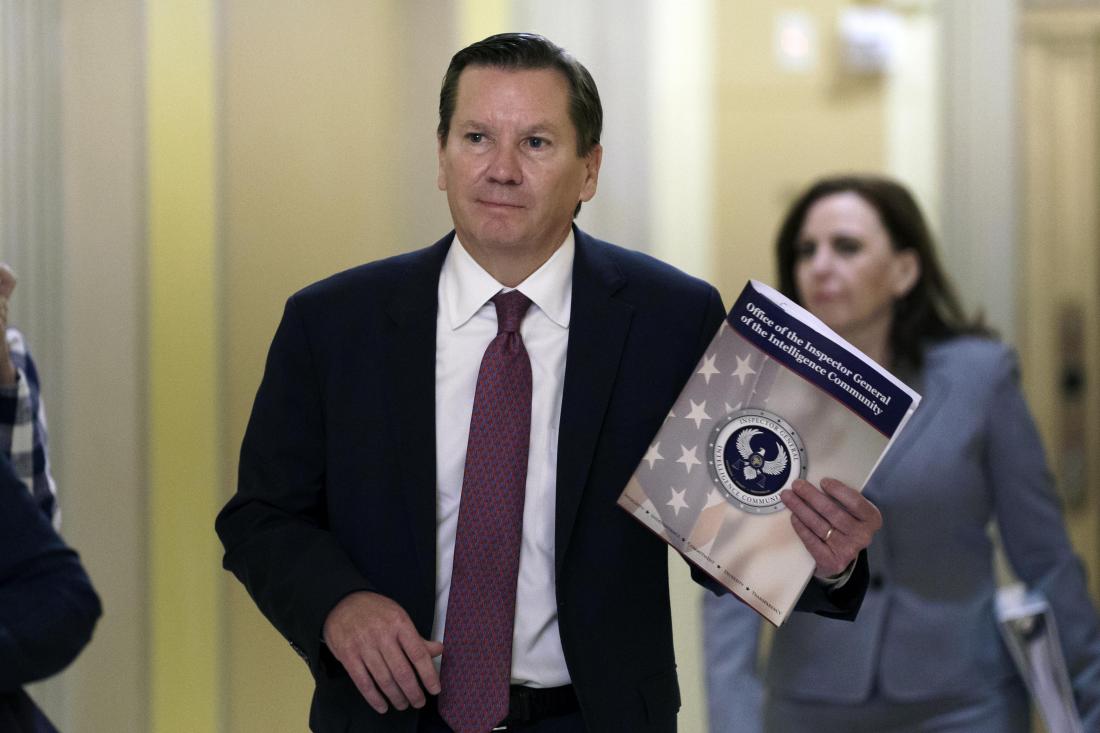
Retaliation: Trump sacks Intelligence official whose info led to Impeachment

Amazing.  What will four more years bring to this country??!!!!

While the Coronavirus continues its invasion of America the Moron in Chief ” I won’t wear a mask” Trump just fired the Inspector General who was instrumental in the recent impeachment.  

Remember that ancient history?

With the Pandemic consuming the Media, the politcal world and the population in general this latest Fascist like manuver will go unnoticed.

That is why Trump will get away with yet another outrage as he consolidates his power in Putin like fashion.

Breaking News 4.15.2019

CNN 4.3.2020

President Donald Trump on Friday removed Intelligence Community Inspector General Michael Atkinson — who had told Congress about the whistleblower complaint that led to Trump’s impeachment — from his post, the President told Congress in a letter obtained by CNN.

Atkinson will be fired in 30 days, Trump told the House and Senate Intelligence committees. He did not name a successor.

“As is the case with regard to other positions where I, as President, have the power of appointment … it is vital that I have the fullest confidence in the appointees serving as inspectors general,” Trump wrote. “That is no longer the case with regard to this Inspector General.”
Michael Atkinson II 4.3.2020.jpg
Atkinson’s firing is the latest case of the Trump administration removing officials who took part in the President’s impeachment. Trump also removed Alexander Vindman, a then-National Security Council official who had testified in the House’s proceedings, along with Vindman’s twin brother and then-US Ambassador to the European Union Gordon Sondland.

Coronavirus whistleblower ousted. US Navy removes aircraft carrier captain

Last week I posted the story about several American sailors coming down with the Coronavirus. The number has now increased dramatically.

Today the Captain of the aircraft carrier USS Roosevelt was removed from his post for bringing the Coronavirus to the public’s attention.

The Acting Secretary of the Navy claimed, “We’re not looking to shoot the messenger here.” Really?!!!

The ouster of the Captain will only further hi-lite the problem and make the Captain an in-demand Media presence. The public has a right to know how the men and women serving their country are being treated during the Pandemic.

Washington Post 4.2.2020

The Navy on Thursday removed the captain of an aircraft carrier crippled by the coronavirus, two days after a blunt letter the officer wrote warning the service of the need to get more sailors off the vessel created a furor.

Navy Capt. Brett Crozier (pictured below), the commanding officer of the USS Theodore Roosevelt, was relieved of command at the direction of acting Navy secretary Thomas Modly.

USS Roosevelt V 4.2.2020.jpg

“We’re not looking to shoot the messenger here,” Gilday had said of Crozier on Wednesday.

The Navy had become increasingly convinced that Crozier was involved in leaking the letter to the news media to force the service to address his concerns over the outbreak on his ship, a defense official said, speaking on the condition of anonymity because of the sensitivity of the issue.

Modly said that Crozier showed “poor judgment” by sending the letter by email to 20 or 30 people. He did not directly accuse Crozier of leaking the letter but noted that it appeared in Crozier’s hometown newspaper.

“I could reach no other conclusion than that Capt. Crozier had allowed the complexity of his challenge with the covid breakout on his ship to overwhelm his ability to act professionally, when acting professionally was what was needed most at the time,” Modly said at the Pentagon. “We do and we should expect more from the commanding officers of our aircraft carriers.”

Modly added a few minutes later that he did not mean to insinuate that he knew Crozier leaked the letter and believed the captain “did what he thought was in the best interest of the safety and the well-being of his crew.”

But Modly said the letter, first reported by the San Francisco Chronicle on Tuesday, undermined more senior Navy leaders and could have emboldened adversaries of the United States in the Pacific region. Modly said that Crozier had been told that he could communicate directly with Modly’s office.

“It creates a panic, and it creates the perception that the Navy is not on the job, the government’s not on the job, and it’s just not true,” Modly said.

Modly said the decision to remove Crozier was his, and that he received no pressure from the White House on the issue. He said that he notified Defense Secretary Mark T. Esper of his plan on Wednesday afternoon and that Esper indicated he would support him.

The Navy’s top officer, Adm. Michael Gilday, stood alongside the acting secretary as he made the announcement. Gilday said he has called for an investigation across all naval forces in the Pacific to examine the issue.

Crozier, who has not responded to requests for comment, sent the letter Sunday decrying the pace at which the service was removing sailors from the ship in Guama amid a coronavirus outbreak. Crozier asked that 90 percent of the crew, comprising more than 4,800 sailors, be removed to allow for testing, quarantining and disinfecting of the ship.

“Decisive action is required. Removing the majority of personnel from a deployed U.S. nuclear aircraft carrier and isolating them for two weeks may seem like an extraordinary measure,” he wrote. “We are not at war. Sailors do not need to die. If we do not act now, we are failing to properly take care of our most trusted asset — our sailors.”

Crozier added that 50 sailors could die, which Modly said Thursday did not appear possible. All of the sailors who have tested positive so far have had either moderate or mild flu symptoms, or no symptoms at all, Modly said.

Some 113 members of the crew had tested positive as of Thursday, Modly said, predicting that “hundreds” ultimately could. By far, it is the U.S. military’s largest coronavirus outbreak to date in the pandemic.

The captain will soon be replaced by the ship’s former commanding officer, Capt. Carlos Sardiello, who already has been selected for promotion to rear admiral.

Family members of sailors aboard the Theodore Roosevelt had expressed growing concern before the letter’s publication that the Navy was moving too slowly in getting sailors off the ship.

The mother of a sailor who tested positive for the virus and was evacuated from the ship said she and the majority of commenters in closed Facebook groups for family members of the crew supported Crozier.

“My husband and I are still grateful that he asked for help, and said that what was going on wasn’t adequate. In our eyes, he saved I don’t know how many people on his ship,” the mother said, speaking on the condition of anonymity to avoid identifying her child.

Modly’s decision, first reported by Reuters, comes one day after Modly said that there was nothing wrong with Crozier’s writing the letter but that leaking it to the media “would be something that would violate the principles of good order and discipline.”

“How it got out into the media I don’t know,” Modly said. “I don’t think anyone would ever know.”

Gilday and Modly both said Wednesday that they encouraged commanders to continue raising their concerns. About 1,000 sailors must remain on the ship at all times to man weapons, nuclear reactors and other sensitive equipment, and some 2,700 would be off the ship for testing and quarantining within days, the Navy said.

https://www.washingtonpost.com/national-security/navy-removes-aircraft-carrier-captain-who-spoke-out-about-coronavirus-response-from-post/2020/04/02/ddd4c9ae-751e-11ea-a9bd-9f8b593300d0_story.html

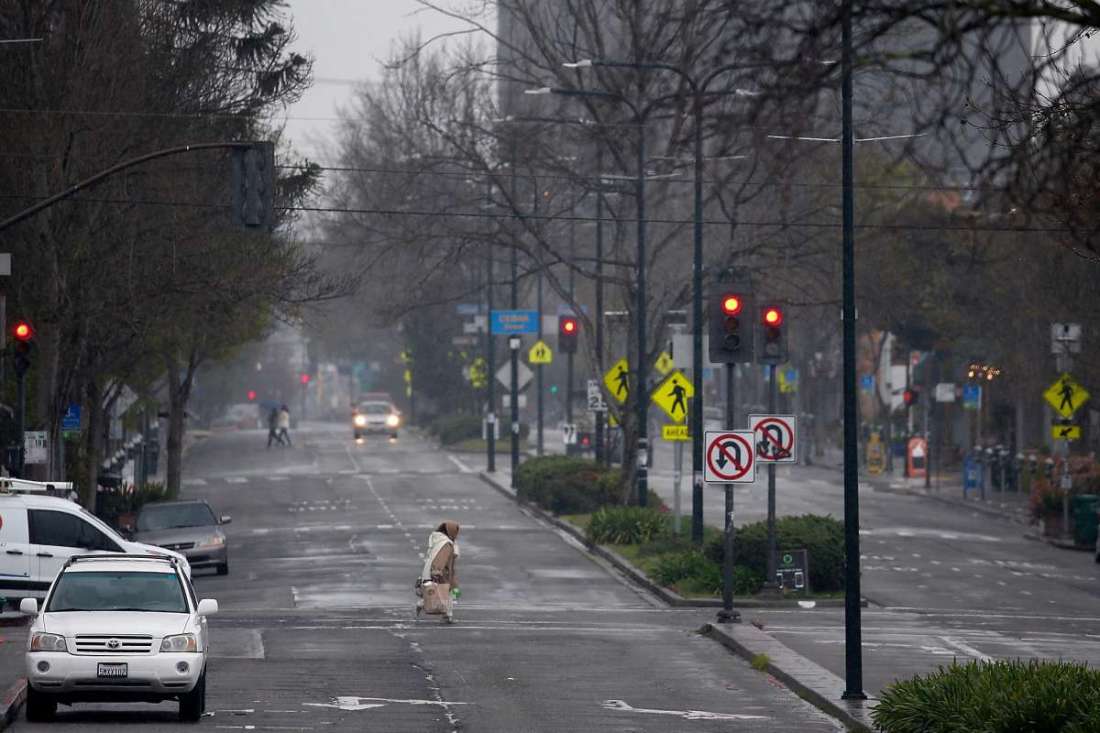
Shelter in Place an environmental blessing. Fewer cars. Marvelous air.

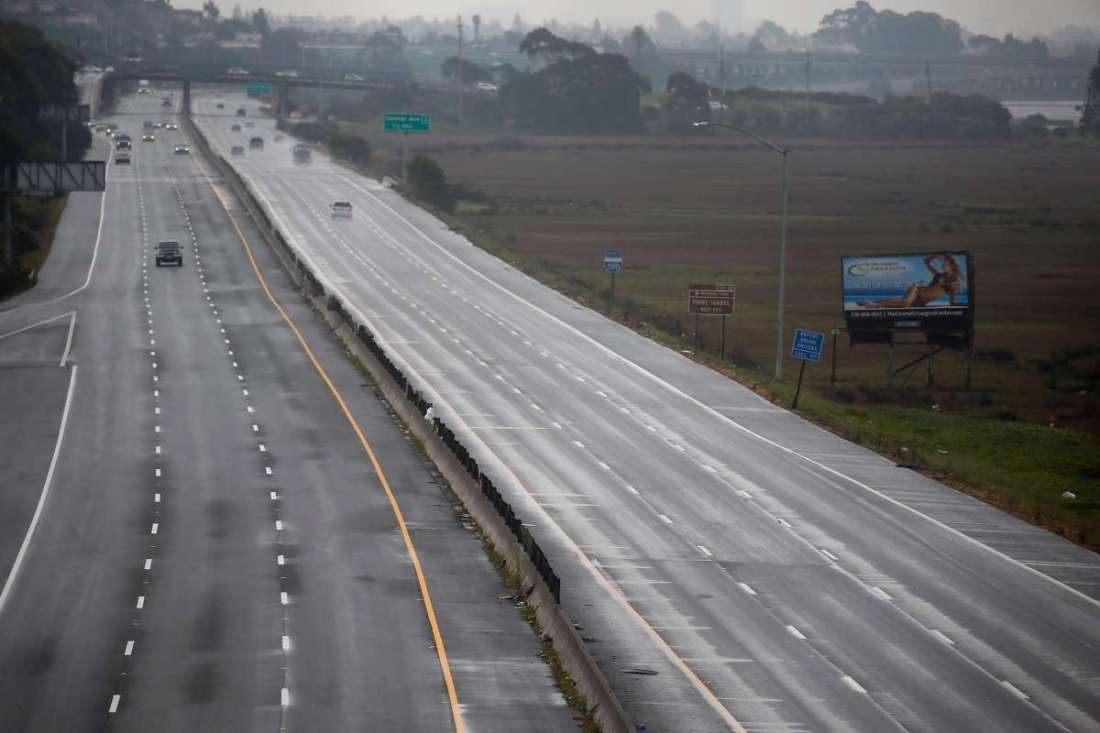
With a world devoid of cars, daily life is both quieter and an environmental blessing. Only something horrific as the Coronavirus pandemic will force people to leave their cars at home.

Eventually (perhaps) life will return to the pre-Coronavirus world where cars rule the planet. For now, there’s more to life than a fossil fuel polluting way of life.

For those who appreciate it. Enjoy the moment. It won’t last (probably).

San Francisco Chronicle 4.2.2020

When you look out at the crystal blue skies over California, it doesn’t look like a deadly pandemic.

In fact, the Bay Area is basking in its cleanest air in months, if not years. And we’re not alone. Satellite photos of China show an unprecedented drop in pollution. Worldwide greenhouse gas emissions are falling. And even the planet’s rivers and bays are clearing up, including the famously murky canals of Venice.

In the Bay Area, traffic has decreased as much as 70% since stay-at-home directives were issued last month. The reduction translates to at least a 20% drop in air-choking particulate matter and at least a 26% drop in heat-trapping carbon emissions, according to estimates from the local air district. Similar declines are being reported in metro areas around the globe.

At a huge cost to the global economy, Earth is getting a rare gulp of fresh air as society shuts down in the face of the coronavirus outbreak. It’s an environmental boon that decades of green activism could not achieve.

The improvement isn’t likely to last, however. Once the world comes roaring back to life, so too will the ecological carnage. Or will it? Environmental experts say that cleaner days could lie ahead, that is, if we permanently adopt some of the climate-friendly practices we’ve accidentally embraced during the shutdown — working remotely being just one — and if federal stimulus money can be steered toward green infrastructure.

Air Quality I 4.2.2020.jpg

The masses now working from home, clocking in on laptops and using video conferencing apps instead of driving to work or flying to a convention, is the most apparent and perhaps most Earth-friendly shift in societal behavior recently.

It’s something that workers and their bosses are learning is not too difficult, and might continue after the pandemic is long gone, say Jackson and others. Same goes for telemedicine and tele-education and other remote activities that have spiked with the outbreak.

“My wife’s ceramics guild had their first Zoom meeting. They were surprised how nice it was,” Jackson said. “The virus really provides opportunity for us to rethink travel and work.”

Transportation is the largest driver of global warming in the United States and much of the world. So even a small contraction can have a big impact.

Joanna Lombard, a professor at the University of Miami School of Architecture and a climate mitigation expert, takes the idea of staying close to home one step further.

She said she believes that the pandemic could prompt people who have gotten stir crazy at home to begin demanding more of their communities and push to make them more livable. More shopping and recreating locally, she says, could result in wholesale reductions in automobile travel — and greenhouse gas emissions.

And, if goods are produced closer to home, it would shorten supply chains and cut even more emissions, she said. Already, some farmers have seen a boost in direct sales to local residents since the shutdown.

“All of a sudden, people are having to pay attention to where they live,” Lombard said. “We look around and see that there are amenities that have been neglected. Maybe this will alert us to the idea that planning is good and we can reinvent our neighborhoods.

“It doesn’t mean you cut off global commerce,” she added, “but when you want to go local, you can.”

The shelter-in-place orders have led to other behavioral changes that are tougher to gauge from an environmental perspective. The uptick in online shopping, for example, is beneficial in cutting carbon emissions when purchases are part of streamlined mass delivery operation and deter trips to Costco in the family SUV, experts say. But if it’s a single pack of toilet paper rushed out in an Amazon van, emissions increase.

Eating in, versus eating out, is another wild card, with a yet-to-be determined verdict. It’s dependent on a wide range of factors, including what is consumed, packaging and food waste.

“There are different ways that these activities can affect your carbon footprint,” said Maya Almaraz, program manager for the Working Lands Innovation Center at UC Davis, who has studied behavior and climate change. “I’m just hoping this (pandemic) can be an excuse for people to re-evaluate the way we think about our health and our consumption, and use it as an opportunity.”

Almaraz also said that people’s willingness to quickly change their lives as they’ve done in response to the coronavirus is hope that people could make adjustments to counter global warming.

Pandemics have altered how people live before. Elena Conis, a historian of public health at UC Berkeley, can point to nearly every widespread outbreak of infectious disease over the past few centuries and recall how it modified human behavior.

The AIDS epidemic led to people practicing safe sex. The tuberculosis pandemic halted the once-common practice of spitting in public. Puerperal fever prompted doctors to begin washing their hands before delivering babies.

“Today we don’t even think about these changes,” said Conis, noting how ingrained those behaviors have become. “We’re all very curious what the world will look like when we come out of this pandemic.”

The money that the federal government has begun pumping into the economy to prevent a recession could also be a catalyst for change. Environmental advocates are pushing to fund projects that will keep a lid on greenhouse gas emissions. Other nations are doing the same.

The widely reported 25% plunge in carbon emissions during the coronavirus outbreak in China, the world’s biggest polluter, many say, is what a future with clean infrastructure could look like.

“A green stimulus is a way governments could commit to building back greener, stronger and more equitably,” said Daniel Kammen, a professor of energy at UC Berkeley, who last month helped author a spending proposal sent to Congress from dozens of scientists and academics from across the United States.

https://www.sfchronicle.com/environment/article/The-coronarvirus-will-change-our-lives-but-the-15172859.php#photo-19249987

Coyote attacks 6-year-old girl near San Francisco. Is human behavior the cause?

Humans increasingly continue to invade and disrupt the habitat of native animals. These animals are doing what comes natural. They are protecting their living space.

Two weeks ago walking my dog before going to bed I came upon a Coyote at my corner. It was a very peaceful encounter.  The Coyote looked at me. I looked at the Coyote who proceeded on its way towards the seashore in San Francisco.

This incident is deplorable. The young girl is traumatized. Still it will not be the appropriate response to capture and kill these native creatures which have lived in the Bay Area longer than humans.

As the Shelter in Place continues it is to be expected that humans will continue to encroach upon these native habitats. Fortunately the State has banned cars in the Parks. This should mitigate the problem and allow the native creatures to live in peace.

San Francisco Chronicle 4.1.2020

A coyote attacked a 6-year-old girl in Dublin Hills Regional Park on Wednesday, biting her neck and ear before the girl’s mother rushed in and scared the predator away.

The incident occurred about 2:30 p.m., as the girl was hiking with her mother and two brothers. The coyote jumped on her and “went for her head,” said Capt. Patrick Foy of the California Department of Fish and Wildlife.

As of 5:30 p.m. the girl was being treated for non-life-threatening injuries in UCSF Benioff Children’s Hospital Oakland, Foy said. Crews from Fish and Wildlife are laying traps and hoping to euthanize the coyote, along with two other coyotes that lingered nearby when it bit the girl. Officials closed the park while a multiagency effort is under way to find the offending animals, which could be identified by DNA that was taken from the victim’s clothing, said Doug Bell, wildlife program manager for the East Bay Regional Park District.

He recounted the family’s harrowing ordeal to The Chronicle. A pack of coyotes had approached the three children and their mother as they hiked through a shallow canyon in the 654-acre park that’s sandwiched between two housing developments.

Like all Bay Area parks, Dublin Hills has its share of coyotes. Some of them gravitate to the periphery, scouring for food around the town houses that line the park’s borders, Bell said.

“Being at that interface between parkland and urban development, the neighborhoods present a lot of food for coyotes,” Bell said. He noted that these wild animals are drifting into various residential parts of the Bay Area, including San Francisco.

A screenshot from a video taken by a POST wildlife camera shows a coyote and a badger traveling together into a tunnel in the Santa Cruz Mountains.
Photo: Screenshot from video / Peninsula Open Space Trust

State and regional park officials have seen a string of other attacks in recent weeks, Foy said, as more people flock to parks to get exercise during the shelter-in-place period. He received a call Friday about a coyote going after a dog, and he heard reports of another aggressive coyote in San Diego.

“We’ve seen a pretty significant influx of people into these places, and that’s meant calls for service,” Foy said.

Still, attacks on people are rare, Bell said. He has served as wildlife program manager since 2005, and has never seen a coyote pounce on a human. Usually, they go after dogs — particularly those that are not wearing leashes. Sometimes, coyotes approach humans who feed them, which presents problems for park officials who want people and animals to enjoy the park without confrontations.

Bell did not know if food was involved in this case.

“I can’t imagine the trauma that the poor child and her family has gone through,” he said.

Mountain lions may also be a threat for people heading to parks and nature trails. In January, mountain lions attacked young children in Santa Clara County and Orange County. Both children were injured; both mountain lions were chased away by parents and later captured and euthanized.

https://www.sfchronicle.com/bayarea/article/Wildlife-cam-shows-coyote-playfully-leading-15030859.php