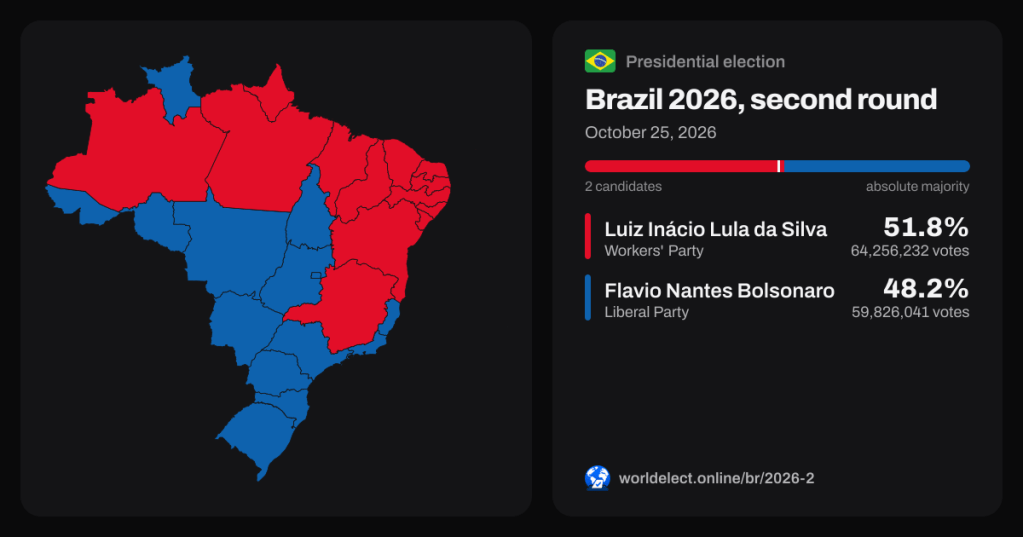
The blogger believes a substantial factor in the surprise reelection victory of Lula Luiz Inácio Lula da Silva is the antipathy many Brazilians share toward Donald Trump and his meddling in their politics.
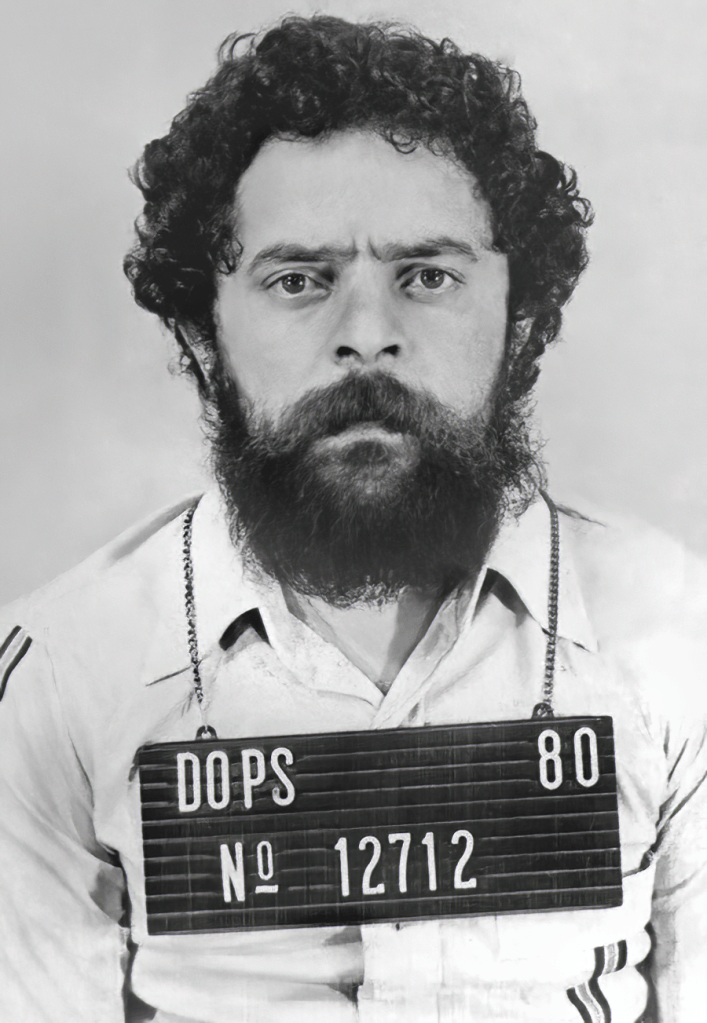
The victorious Lula known for his “charismatic command” is a well traveled organizer and political brawler who has historically supported the working class and stood up to authoritarians.
In 1981, Lula was sentenced by the Military Justice to three and a half years in prison for incitement to collective disorder, but appealed and was acquitted the following year. [98] On the other hand, the strikes in the ABC made it gain national and international prominence. The New York Times wrote in 1981 that “Luiz Inácio da Silva is to Brazil what Lech Wałęsa is to Poland.” [99] Moreover, such events led him to be known for his “charismatic command.” In 2010, historian Lilia Schwarcz highlighted, along with charisma, his “seductive” rhetoric and “populist language”. [100]
Excerpted from Deutsche Welle 10.25.2026
In his victory speech, President Luiz Inácio Lula da Silva – Wikipediareiterated that Brazil would “not accept being anyone’s backyard,” a recurring campaign message defending the country’s sovereignty against US influence. The stance may have helped him win votes, with some voters viewing Washington’s actions as interference.
President Lula has defeated right-wing challenger Flavio Bolsonaro to win another term in office. Bolsonaro has refused to concede and called for the results to be annulled. DW has the latest.
A Brazilian voter gives thanks to Lula’s victory
Relations between the two countries deteriorated in 2025, when the US imposed tariffs on Brazil in retaliation for legal proceedings against former president Jair Bolsonaro, who was later convicted of coup-plotting.
Speaking in a hoarse voice, Lula thanked his campaign team and Brazilians, particularly young people who took to the streets to defend democracy. He described the result as a “loss for negativity, lies.”
The re-elected president also promised better regulation of big tech platforms, after Meta was the subject of legal complaints over alleged “interference” throughout the polarizing campaign.
It’s disconcerting to realize there are so many Americans still cheering Donald Trump.
His presidency is a statement that bullshit and lies works with the American voter.
Trump.A notorious grifter who can honestly be described as a wannabe Authoritarian has occupied the White Housefor nearly six years.
The blogger can only hope that a sufficient number of voters send a resounding message to Trump and his ilk November 3rd.
Enough!!!!
Excerpted from The Wall Street Journal 10.25.2026
The rallies are something of a security blanket for Trump, according to advisers, freeing him from the pressures of the job, critical news coverage and the lowest approval rating of any president heading into midterm elections in Wall Street Journal polling dating to the 1990s. Most analysts expect the GOP will lose control of the House and possibly the Senate.
A Trumpista gives the Nazi salute to her leader
Saturday night in Georgia, Trump bragged that oil revenues in the U.S. are surging because of the conflict in the Middle East. He said that his advisers told him not to say that because people are paying more for gasoline. “But I said, ‘I don’t give a damn, I’m gonna say it: We’re making a freaking fortune.’
Joe Mitchell lamented Trump hasn’t been awarded the Nobel Peace Prize and presented him with a framed “man of the century” certificate.
Trump pauses at rallies to play a video clip of a CNN analyst explaining that among Republican voters, he is far more popular than Ronald Reagan or Abraham Lincoln.
Maniacal smile from a Trumpistaand her toddler
These German kids had no idea of the Evil before them
Janis Joplin song ‘Down on Me’ is a proper song to encapsulate Trump
It’s no surprise Trump has been twice elected President. What are these people thinking? Are they thinking?
The blogger now knows full well how disjointed is the state of American politics just 11 days before the November 3rd election.
The disturbing and depressing video starts off by happily displaying a Pennsylvania family in the killing fields joyfully hunting and slaughtering harmless fowl. The young man tells the reporter such activity has been going on in his family for decades. The teenager is happy to join in the killing
An adult, an enthusiastic Trump fan, contends that rising gas prices don’t bother him.
Further on the reporter interviews a number of citizens. Many of whom seem totally ambivalent to the ruination Trump has brought to this country.
Deutsche Welle 10.23.2026
Deutsche Welle reporter Ines Pohl interviews a disenchanted Pennsylvania voter
Less than two weeks before US midterm elections, the race for Congress is becoming a test of President Trump’s strength. DW’s Ines Pohl went to Pennsylvania to find out what, if anything, will get voters to the polls.
Voters in Pennsylvania are weighing a mix of cultural values, economic concerns and political frustration ahead of the US midterm elections.
In many rural communities, support for gun rights and hunting traditions remains strong, with some residents crediting Donald Trump with protecting those freedoms.
But rising living costs, including fuel prices, are also shaping opinions.
In struggling former industrial towns such as Johnstown, some voters have lost faith in politics altogether. others are reconsidering long-held party loyalties.
Here’s the tabloid headline in The California Post
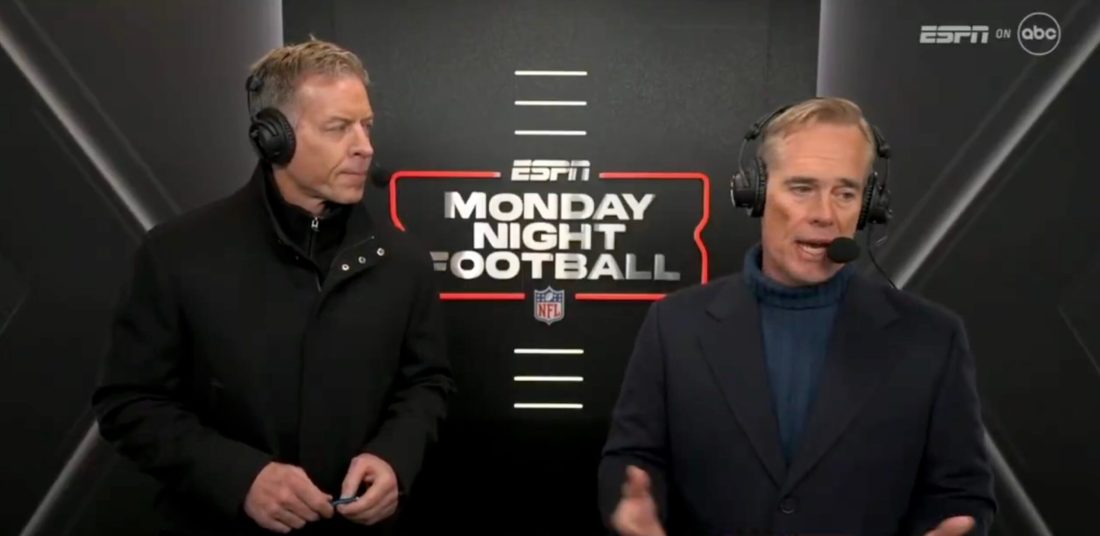
Joe Buck, Troy Aikman in shock pre-game argument over $108 million ESPN contract drama
Watching the latest Monday Night Football game with the San Francisco 49ers and Washington Commanders the blogger had no idea Troy and Joe are arguing. About what I am unsure.
Perhaps their former FOX sideline sidekick Erin Andrews needs to come in and tell the guys to calm down.
Erin Jill Andrews[1] (born May 4, 1978)[2] is an American sportscaster and television personality. She rose to prominence as a correspondent on the American cable sports channel ESPN after joining the network in 2004. She later joined Fox Sports in 2012 and has since become the lead sideline reporter for the network’s NFL broadcasting team.Erin Andrews – Wikipedia
Or perhaps Joe and Troy need a soundtrack as they weather the incipient broadcasting booth crisis.
The Beatles ‘Helter Skelter’ is one way to digest this spat or the Steve Winwood classic ‘Can’t find my way home’ which could be relabeled in the moment ‘Can’t find my way to the broadcast booth’.
Excerpted from The Wall Street Journal – Jason Gay 10.20.2026
I tuned into the “Monday Night Football” contest between San Francisco and Washington, not to watch the 49ers or the Commanders, but because I was curious to see if Joe Buck and Troy Aikman would wrestle each other on the air.
By now you’ve likely heard at least a whiff about the reported friction running between these two. Joe Buck and Troy Aikman, an admired NFL TV duo who have worked together for 25 years, appear headed for an unexpected, unhappy split.
Buck, 57, recently reupped with ESPN for a new, nine-figure contract. Aikman, 59, has not. The reasons why Buck has secured an ESPN future and Aikman has not are unclear (the network hasn’t commented), but it’s reportedly caused, well, feelings.
Front Office Sports reported that the pair bickered after Buck “‘broke the ice’” on the “unspoken tension” prior to the Oct. 12 MNF game. A few days later, Aikman was asked on Dallas radio about this tension. After starting to demur, he lit a small, kerosene-soaked rag.
Israel is engaging in criminal nutritional genocide.
Why is this being allowed to happen?
There’s more than money involved. Benjamin Netanyahu and his thuggish Israeli Defense Forces (IDF) have acted with impunity and no accountability for over three years.
For three years Israel has slaughtered over 70,000 children, women and men in retribution for the Hamas October 7, 2023 attack which resulted in the deaths of 1200 people. Mostly Israelis.
Now the United Nations World Food Programme has been forced to cut its monthly food aid to the war-ravaged Gaza Strip , where some two-thirds of the population are struggling to get food, the agency said on Monday.
Excerpted from Deutsche Welle 10.19.2026
The Israeli authority responsible for the Palestinian territories, COGAT, says the supply of aid deliveries into the strip exceeds the demand for food and it claims there is no acute food insecurity in Gaza.
The United Nations World Food Programme (WFP) has been forced to cut its monthly food aid to the war-ravaged Gaza Strip , where some two-thirds of the population are struggling to get food, the agency said on Monday.
The WFP said it was reducing the number of people receiving aid from 1.6 million to 1.1 million, leaving some 500,000 people without support.
The UN program is facing severe funding shortages. “WFP no longer has sufficient funding to sustain this level of support,” the organization said.
Beyond the cutting of aid to some half a million recipients in the region, the WFP is also:
Reducing rations by half
Cash assistance has been cut for some 75,000 families
Hot meals for those unable to cook have been reduced from 250,000 to 150,000
Some 1.4 million people in Gaza are facing crisis levels of food insecurity according to the WFP, with 200,000 living in emergency conditions.
The blogger was surprised to learn that Kalshi Inc., the burgeoning on line prediction aka betting market is now immersed in local San Francisco ballot measures.
Given the fact the site was established in San Francisco eight years ago the gambling interest in local ballot measures is still a surprise.
Even Proposition G, the attempt to destroy Sunset Dunes Park, has garnered the interest of bettors.
Kalshi Inc. is a prediction market platform based in Manhattan, New York City, that launched in July 2021. The platform is used primarily for sports betting, which constitutes more than 90% of site activity[3][4] and 89% of revenue in 2025.[5] Analysts describe activity on the platform as “heavily tied to the sports calendar”.[6] Individuals can place bets on other future outcomes, including economic indicators, weather patterns, awards, political and legislative outcomes, and military conflicts.
Initially, the project was named “Kownig”.[18] In November 2020, Kalshi attained a license from the Commodities Futures Trading Commission (CFTC), registering the platform as a designated contract market and the first regulated platform to trade directly on the outcomes of events and event contracts.[19][20][21] The site was publicly launched in July 2021.[22]Kalshi – Wikipedia
Kalshi founder Tare Mansour was recently interviewed on the PBS News Hour
Can Vladimir Putin’s increasingly aggressive actions against Germany force the government to bring back compulsory military service?
It’s hard to fathom the idea that Germany could conceive of bringing forced military service back to the country.
Conscripts are never happy about being dragooned into the military. Think of the United States and its involvement in the Vietnam conflict. 1961-1975.. A Civil War which successive administrations poured hundreds of the thousands of young Americans into a senseless war. Over 50,000 Americans perished.Many of whom were conscripted young men at the margins of society. Black, Hispanic and White, too.
The classic anti-war anthem, “War. What is it good for?? Absolutely nothing!!” Edwin Starr – 1970
Given Germany’s hellacious Nazi regime (1933-1945) resulting in World War II and the Holocaust today’s German youth are quite rightfully taking to the streets in protest of any proposed conscript military.
Deutsche Welle 10.17.2026
Experts believe that, so far, Germany has been ill-prepared — both militarily and mentally — for Russian provocations. They also warn against the idea that ending support for Ukraine would make Germany safer.
The perceived security threat has led the German military, the Bundeswehr, to fast-track significant modernization through substantial investment. But it is struggling to find enough recruits for its planned expansion. Many young Germans have taken to the streets to protest against plans to reintroduce conscription. Defense Minister Boris Pistorius faced criticism from inside his own party, the center-left Social Democratic Party (SPD), for saying that Germany must become “capable of waging war.” Many found the statement to be too militaristic.
Is Germany prepared for a military threat? “Not at all. Germany is not well prepared militarily or in the civilian sector, and the population isn’t mentally prepared for it either,” said Meister. “Just look at the demonstrations against conscription and the military that continue to take place, even though Germany needs a draft. For decades, we’ve grown up in this culture of pacifism, in a comfort zone. I believe there is very limited societal resilience, but above all, we are not at all mentally prepared for war.”
The Rich want War..The Youth a Future… Young Germans take to the streets
Chancellor Friedrich Merz and his conservative Christian Democratic Union (CDU) are under increasing political pressure — especially from the far right — to scale back support for Ukraine. But Merz never tires of emphasizing that Ukraine will continue to receive support under his chancellorship, calling it a matter of Germany’s security. He recently visited Kyiv once again and, together with Ukrainian President Volodymyr Zelenskyy, surveyed the destruction caused by Russia.
But this also means that the threat from Russia will continue and even intensify, says Stefan Meister: “I believe we will see a massive increase in attacks such as the one in Leipzig, of provocations involving drones. We will see attacks on infrastructures and possibly also on specific individuals within the military-industrial complex. I believe this is the real, concrete danger facing Germany in the coming months.”
The Kaiser San Francisco French Campus Vaccine Clinic
Going for the annual flu shot at the neighborhood Kaiser French Campus is akin to standing in the airport security line.
On the blogger’s first attempt earlier in the week mid morning the line stretched through the corridor. Thinking it would be better to go mid afternoon I deferred and came back a day later.
If anything the afternoon queue was longer. I steeled myself and 40 minutes later was fully vaccinated and good to go for another year.
Following is a photo collage of my in line waiting experience.
Beginning the vaccine wait
The outside view looks far away
Hurry up and wait as the old saying goes
A DANGER zone near the vaccine line
Thankfully, the wait is nearly over
After the vaccine the blogger looks back at the queue
40 minutes later. All shot up and ready to come home
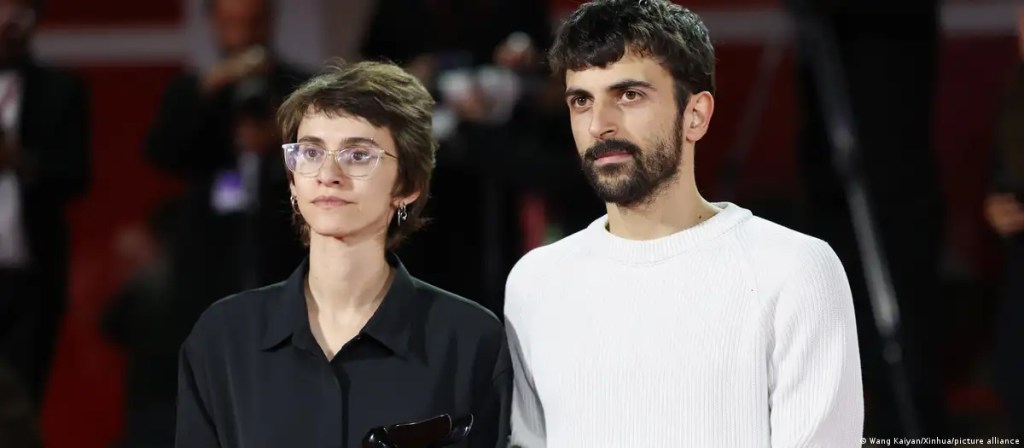
On this date, the third anniversary of the murderous Hamas attack against Israel, the controversial documentary NAZA landed like a bombshell at the Mill Valley Film Festival.
Filmmakers Rachel Szor, left, and Yuval Abraham
The showing was sold out. Outside a contingent of protestors, outraged that his film is being shown on this particular date, circled the venue in protest. The protest is understandable.
Equally understandable is the observation by the blogger.
Some Jewish people think Genocide in Gaza is just fine. After all the Israeli Defense Forces (IDF), supported with the most lethal weaponry have killed over 70,000 people in Gaza since October 7, 2023.
Devastation in Gaza by the Israeli military has killed over 70,000 people in Gaza since October 7, 2023.
Why is this woman laughing?
A slaughter bordering on Genocide which might have been avoided had Bibi Netanyahu listened to the now well documented warnings he received prior to the Hamas crime against Israel.
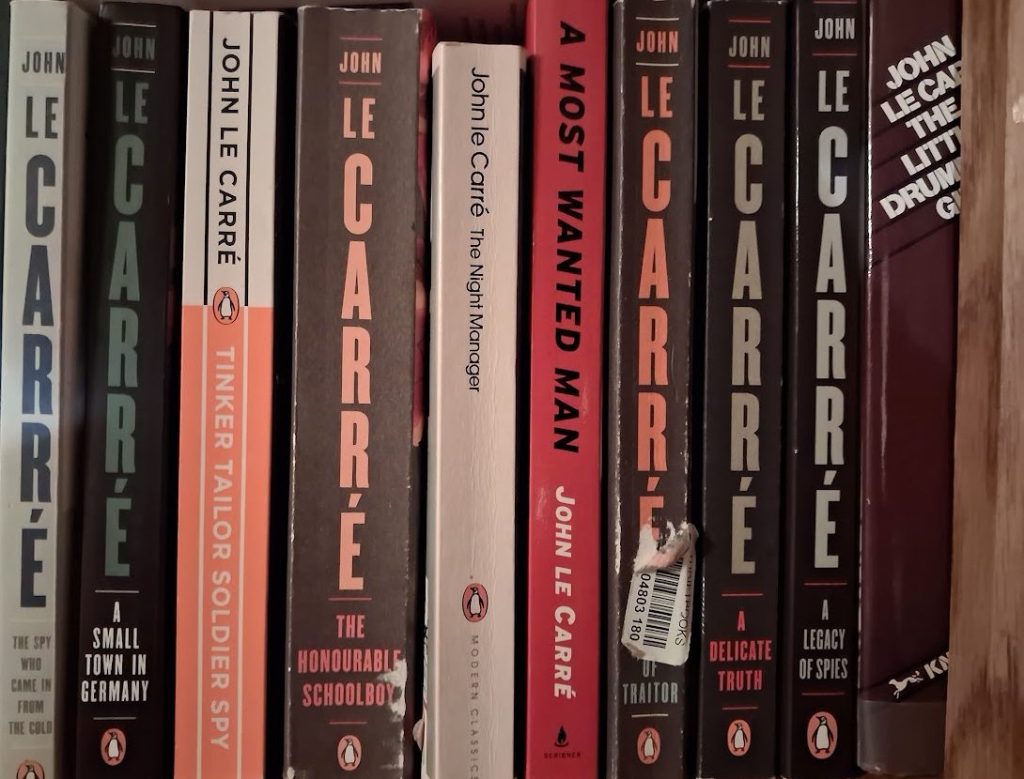
The blogger has read many spy novels. Particularly those written by John Le Carre. Therefore it comes as a shock only in the sense that Life can be stranger than fiction.
Excerpted from Deutsche Welle 10.6.2026
Michaela Kufner, Chief Political Editor of Deutsche Welle was unsparing in her critical comments.
Spy vs Spy – “There’s never a good time to discover that your former chief of intelligence might have sold the country (Germany) out.”
“A movie will be made out of this.”
“There’s never a good time to discover that your former chief of intelligence might have sold the country (Germany) out.”
“This is not only a loss of face. It’s a loss of credibility for the German foreign intelligence BND both externally, but also internally.”
“Huge damage done in real time.”
A sampling of the John Le Carre novels in the blogger’s collection
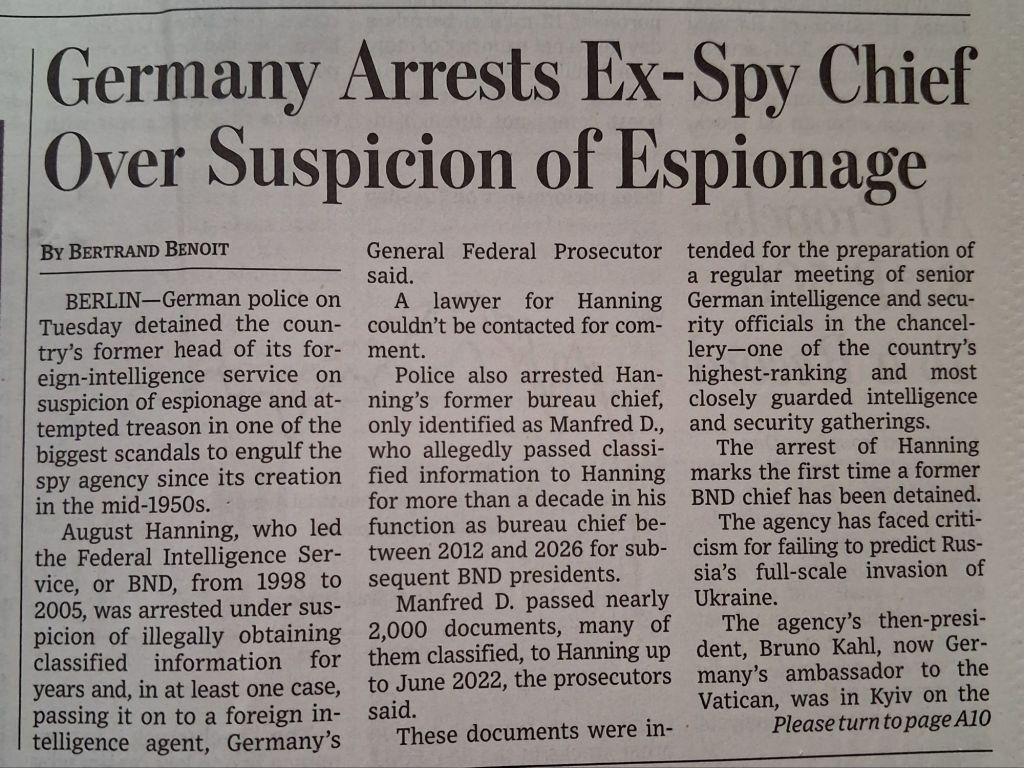
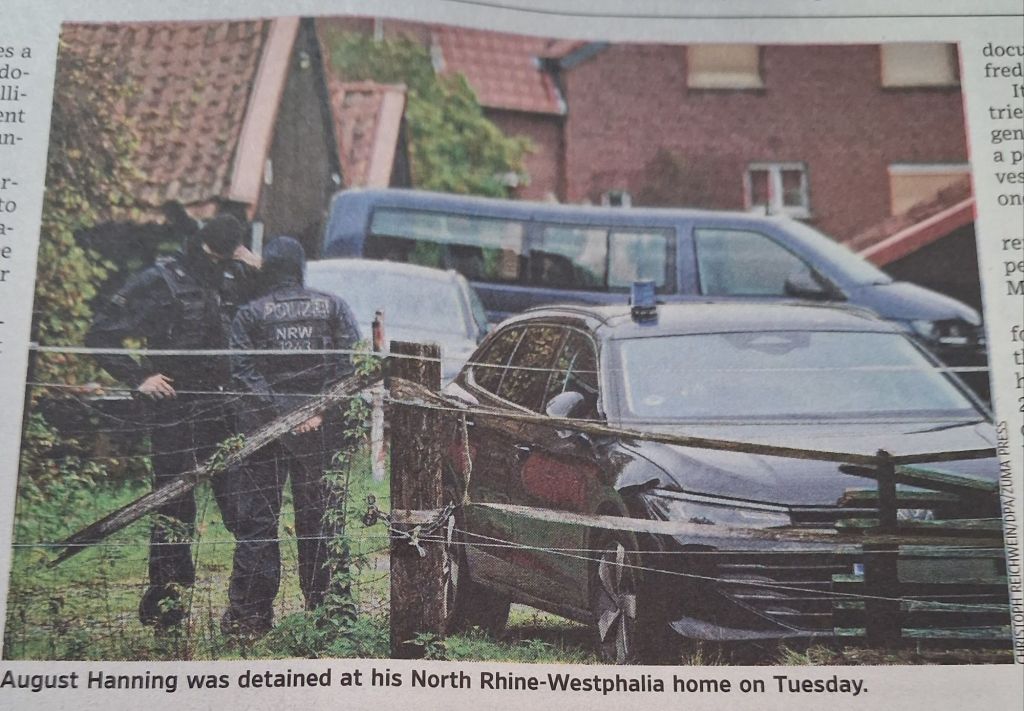
The former head of Germany’s foreign intelligence service, the BND, has been accused of spying for a foreign country. Never before has a German official of August Hanning’s stature been accused of treason.
If the allegations are confirmed, it would be an espionage case of historic proportions for Germany: August Hanning, former head of the Federal Intelligence Service (BND), has been arrested, with the federal prosecutor accusing him of espionage, treason and attempted treason.
A coffee mug of the Brandenburg Gate, Berlin. Gift from the German foreign office http://www.diplo.de
August Hanning, now 80, headed the BND from 1998 to 2005. But even before then, he had enjoyed a meteoric rise within the security apparatus. After leaving the BND, he served as state secretary in the Federal Interior Ministry, then moved into the private sector and worked as a security consultant.
According to the federal prosecutor’s office, his informant was his former chief-of-staff, named in the statement only as Manfred D.*, who went on to hold this position under Hanning’s successors from March 2012 to March 2026. D. thus had access to a great deal of classified information.