
SAN FRANCISCO
Liz and Lee Heidhues 4.13.2024
“There are so many ways it could have ended for him. He didn’t want to quit.”
The moving tribute to an old-timer who loved the thrill of covering combat for the New York Times.

We sat mesmerized as the whirr of helicopters and staccato rat-a-tat-tats of machine guns exploded across the giant screen of “Civil War (2024)”, a genius of a war film which opened Friday at the AMC Kabuki in San Francisco.

The modern-day scenes in the film evoked the chaos of the 1960s at the height of the Vietnam War.
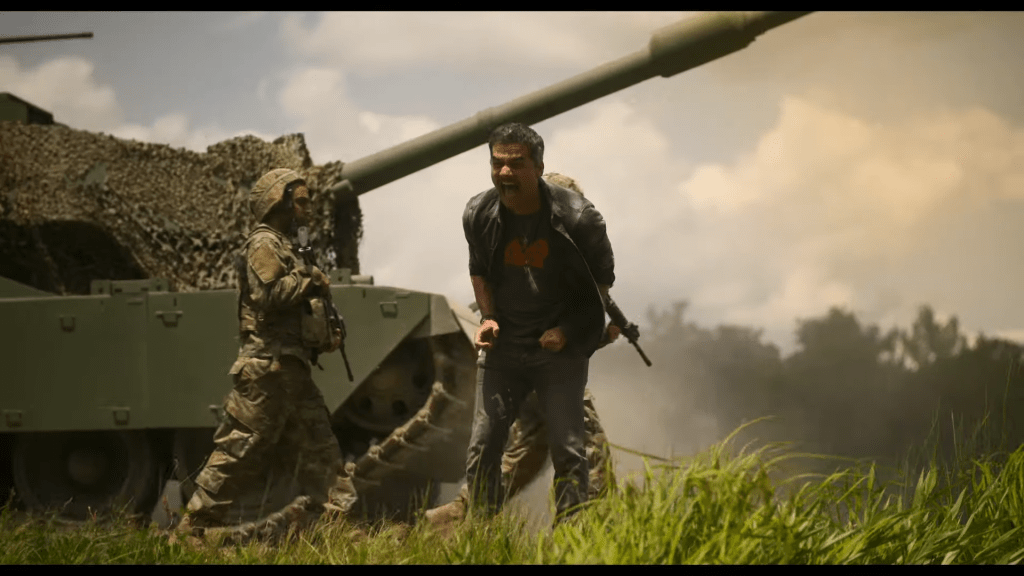
There are some scenes that made us writhe in pain. When an insurrectionist demands of the journalists whom he has taken hostage to prove they are American by speaking unaccented English to his questions, and two of them fail his test, we felt the agony of the guy who was Asian, as his tongue froze in fear and he barely managed to blurt out the words that he was from Hong Kong. Those were his last words.
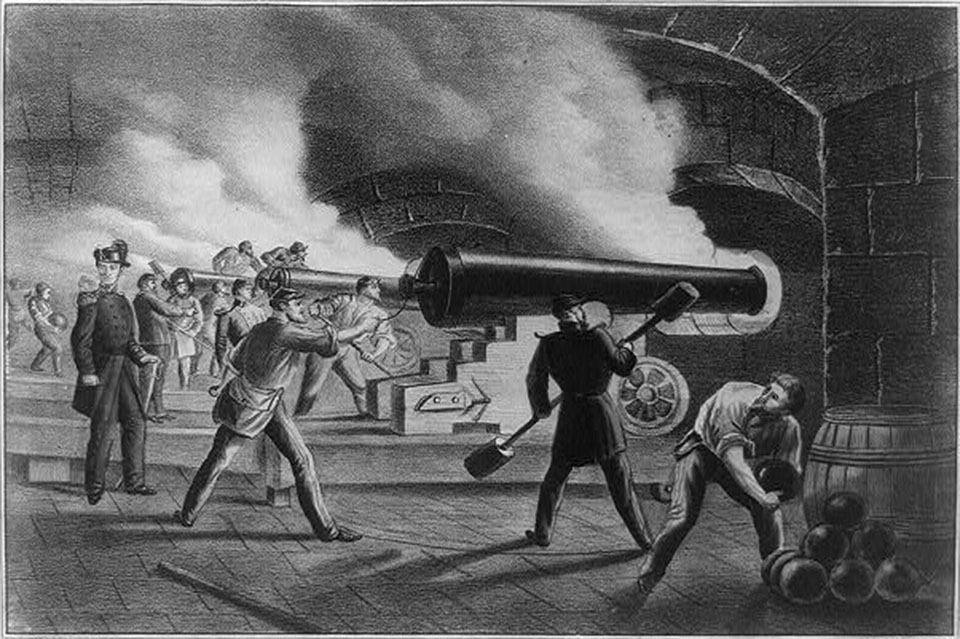
April 12th also marked the 163rd Anniversary of the start of the original Civil War, when Confederate troops fired on Fort Sumter in South Carolina’s Charleston Harbor on a Friday on April 12,1861,capturing Union territory.
April 12th is also the 6th Anniversary of Liz’ first False Citizen’s Arrests in 2018. An act totally beyond the pale of any human conduct. Our next-door neighbors falsely arrested and imprisoned Liz for asserting her rights as a property owner. Liz was brutally handcuffed because of their false arrest. Taken away by SFPD and placed in a filthy cage in county jail for hours. Until Lee Heidhues raced to her rescue on his bicycle with $20,000 cash to buy back her freedom. A False Citizen’s Arrest in the hope of inflicting such mental distress on Liz, we would sell our house we have owned for decades and move away.
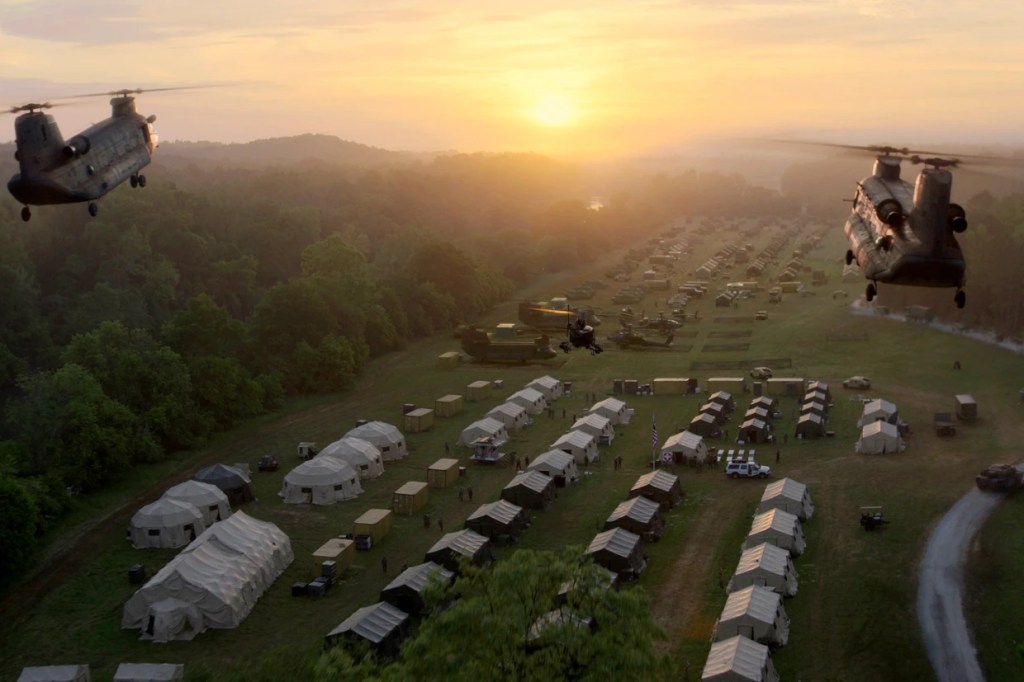
With its police barricades and tents in the streets, its low gravely voices and endless cigarettes, its F- bomb laced shouts and protestors being beaten by baton-wielding police, “Civil War (2024)” seemed a re-enactment of the long-ago Vietnam war until a huge explosion shatters the screen. Our attention then becomes riveted on a small group of journalists rushing into the carnage to document the bodies lying crumpled in the mayhem.

This corps of journalists wearing “Press” flak jackets now commands the screen. The lurid circus of civil insurrection has begun. Journalists must photograph and record it from every angle, even to the point of insanity and the sacrifice of their own lives. “Civil War (2024)” transfuses our veins with the adrenaline that is the grueling, shocking, and unforgettable drug of war.
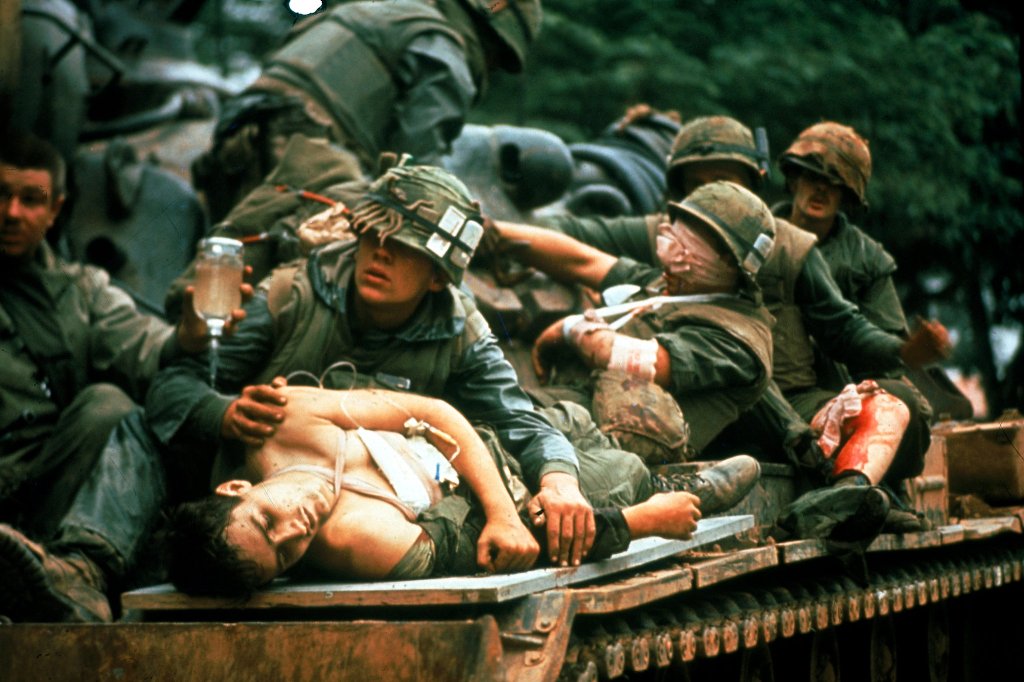
The glossy pages of 1960’s Life magazine jumped into mind, with its enduring photos of grime-streaked bloodied faces of GI’s sitting around a campfire, or an Army truck stacked high with body bags, an eerie “déjà vu” one gets watching a graphic war film similar to “Full Metal Jacket” or “Apocalypse Now” reminding us that war is inhuman. “Civil War (2024)” is in this same category of mesmerizing images. War is impossible to describe with words. The horror and moral terror can only be felt in watching graphic scenes and hearing its inhumane cacophony.
“What a fucking rush,” says one lifer watching the militias fight one another.
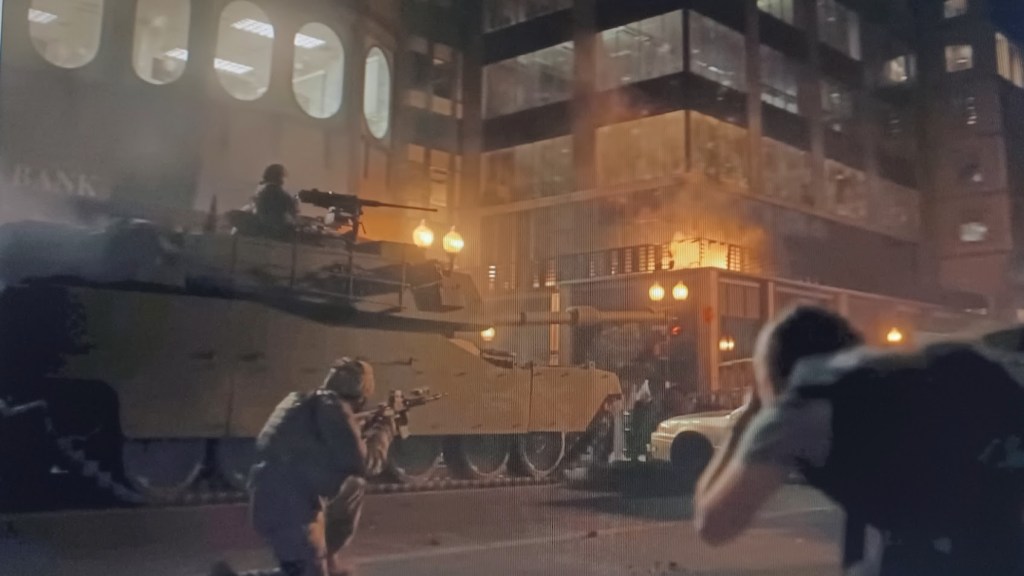
The weariness of the war journalist: Every time I shot a war zone and got the photos right and sent them home that said, “Don’t do this” . . . is embellished by the grim irony the camera is not as useful a tool as a machine gun in war: “It’s not a story if it never gets filed.”

The voyeurism of seeing bodies blown to bits and the reality that the next fusillade might bear the names of the journalists aiming their cameras at the carnage is part of the overall suspense.

Americans up against the wall in Vietnam
There are sardonic exposures of the apathy of family and neighbors who pretend that war in the nation is not raging, and atrocities are not being committed: “Your parents? Where are they?” “He’s sitting in his farm in Missouri pretending none of this is happening.”
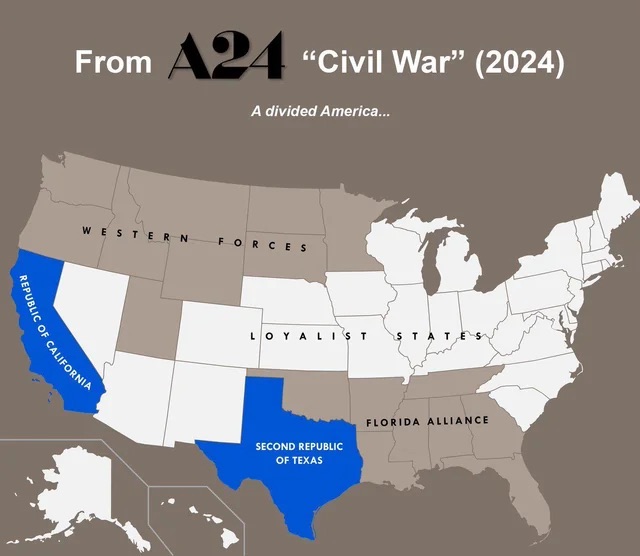
Liz’ biggest gripe about this film is – its targeted audience is American and it is rife with that which appeals to American tastes – endless car crashes, a stunt where two cars recklessly speed side-by-side down a winding road and the occupants in them trade vehicles squeezing through rolled-down windows, loads of shoot-em-ups, a hairy gas station stand-off, cigarettes smoked down to their butts and tossed into the environment, and a splendid scene of a freeway jammed with scorched and twisted bodies of cars in a true apocalyptic vision of where America is going to end up with its car crazed culture.
The scene of the journalists driving through a forest set on fire by the rockets and bombs of war predicts the doom of climate change when it shows a vast cool stream over which a lone helicopter darts, much like a dragonfly, while behind, drifting burning orbs light up the horizon.
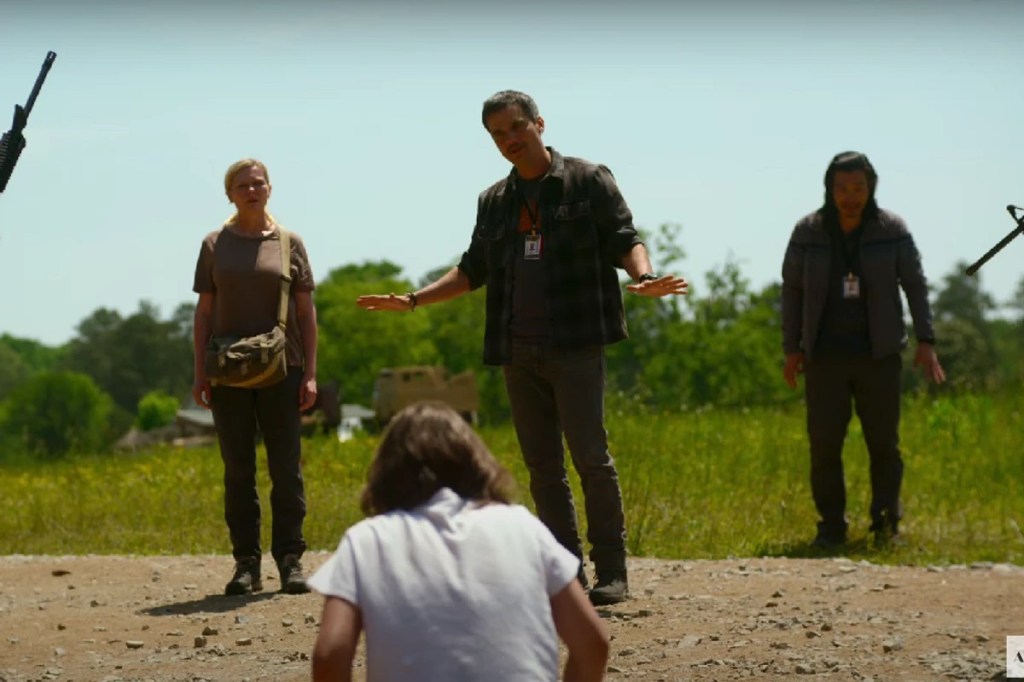
When a bullet hits the out-of-shape, lifer, old reporter driving the vehicle of the journalists away from a confrontation, we know that he is not going to make it through this war when he says “I can’t drive” as he bleeds to death in the vehicle. The admission that he cannot drive anymore are his last words. What is meant to be a moving scene of bereavement when his friend and lifelong colleague washes his blood off the leather upholstery of the driver’s seat left Liz musing why so much of this film was centered around cars. What if all the stunts had taken place on bicycles?

The civil war in Vietnam was won by Indigenous people who fought the invading force, the Americans with their arsenal of napalm, Huey choppers, and fighter jets, on bicycles and with far less sophisticated firepower, and won.
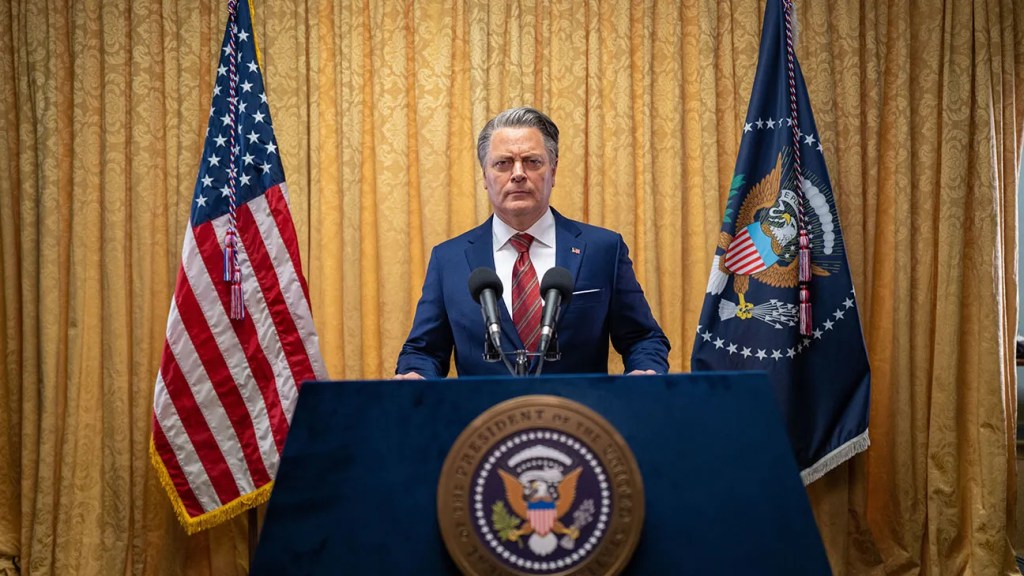
“God Bless You All and God Bless America” are the words of the fictional president as The End closes in.
 Lee's Perspective