
SAN FRANCISCO
Lee Heidhues 5.31.2024
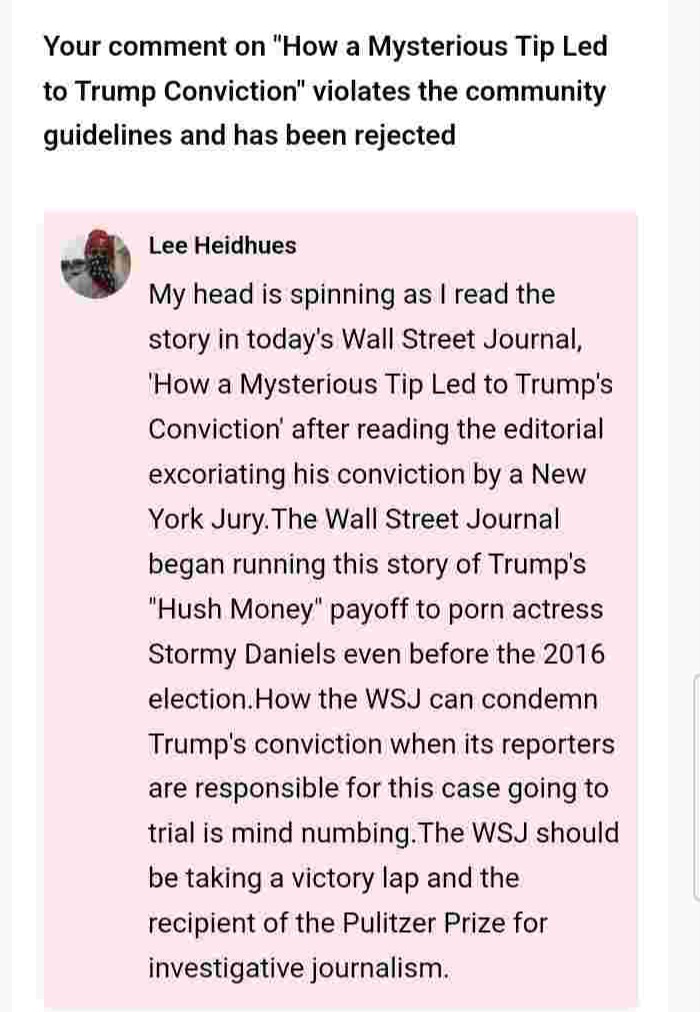
My head is spinning as I read the story in today’s Wall Street Journal, ‘How a Mysterious Tip Led to Trump’s Conviction’ after reading the editorial excoriating his conviction by a New York Jury.
The Wall Street Journal began running this story of Trump’s “Hush Money” payoff to porn actress Stormy Daniels even before the 2016 election.
How the WSJ can condemn Trump’s conviction when its reporters are responsible for this case going to trial is mind numbing.
The WSJ should be taking a victory lap and the recipient of the Pulitzer Prize for investigative journalism,
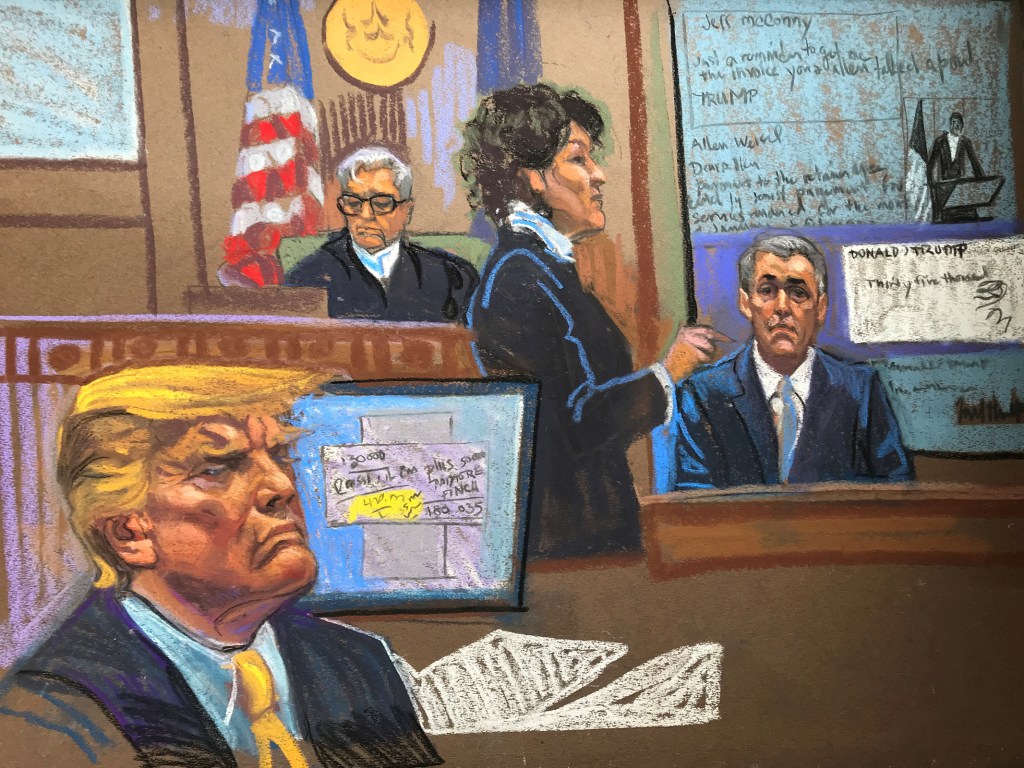
Excerpted from The Wall Street Journal 5.31.2024
In October 2018, during an interview with the Journal, Donald Trump was holding forth on everything from the Federal Reserve to the U.S. relationship with Saudi Arabia. When he got a question about Michael Cohen, he clammed up.
“I’ve discussed that (The “Hush Money”) so much,” he snapped. “Nobody cares about that.” He sidestepped a question about whether he had ever discussed hush-money payments with Cohen during the campaign.

Weeks later, the Journal reported that Trump had not only discussed the payments with Cohen, but had directly intervened on multiple occasions to suppress stories about his alleged sexual encounters with women. Both the White House and his outside lawyers had declined to comment or to substantively weigh in on the Journal’s reporting.
The reporters braced themselves for the Trump playbook: decrying a story as “fake news” on Twitter, then following up with intense—and often personal—attacks on the journalists who wrote it.
But the tweet never came. Instead, Trump spent the afternoon attacking the former mayor of Tallahassee, badgering the president of France over military spending and threatening to withhold federal funds from forest management in California.
His aides, privately, were less bullish. One described the story at the time as an “absolute killer.”
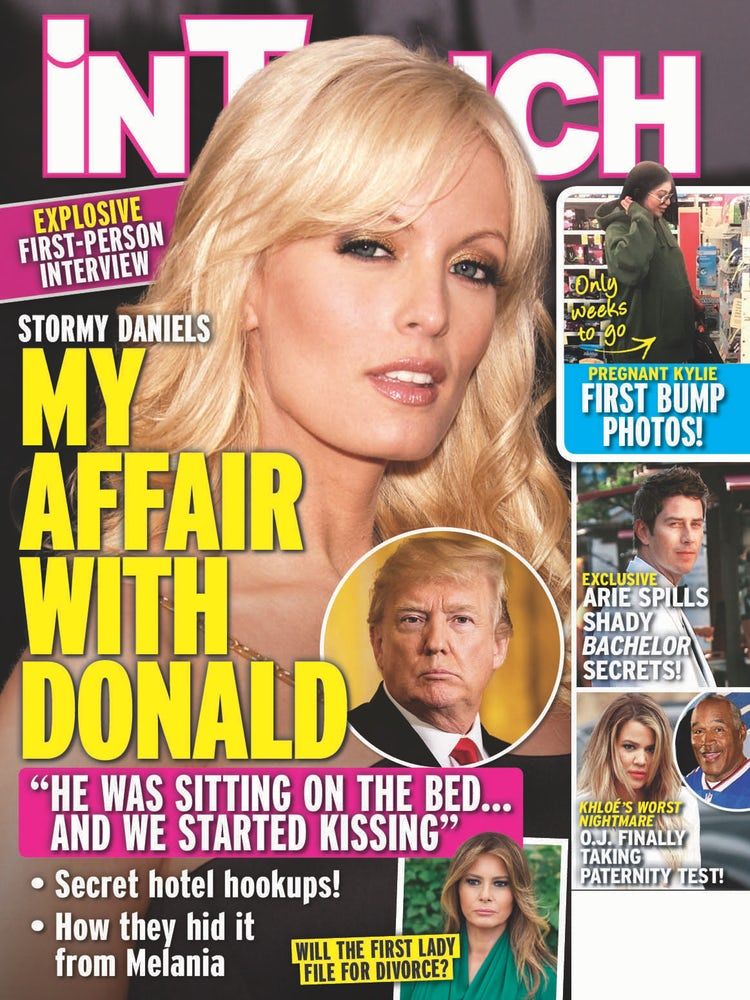
That December, a federal judge sentenced Cohen to three years in prison. Prosecutors in court filings provided new details alleging that Trump—identified as “Individual-1”—had directed and coordinated both hush payments, indicating they had evidence corroborating Cohen’s implication of the president.
Trump, a day after the sentencing, said in a tweet: “I never directed Michael Cohen to break the law. He was a lawyer and he is supposed to know the law.”
The former Trump attorney reported to a minimum-security prison camp in Otisville, N.Y., in May 2019 to begin serving his sentence.
By July of that year, it seemed like Trump might be off the hook. The Manhattan U.S. attorney’s office said it had completed its investigation into Cohen’s campaign-finance violations without indicting others in Trump’s orbit. A longstanding opinion by the Justice Department’s Office of Legal Counsel said sitting presidents couldn’t be prosecuted. Jay Sekulow, a lawyer for Trump, said that day: “We are pleased that the investigation surrounding these ridiculous campaign finance allegations is now closed. We have maintained from the outset that the President never engaged in any campaign finance violation.”

But the matter was far from closed. The following month, Cohen received some visitors in Otisville—prosecutors from the Manhattan district attorney’s office, according to “People vs. Donald Trump: An Inside Account,” a book by Mark Pomerantz, who worked in the office on a special assignment.
They wanted to talk about hush money.
https://www.wsj.com/politics/policy/trump-hush-money-stormy-daniels-707fa959
 Lee's Perspective