
SAN FRANCISCO
Lee Heidhues 12.13.2025
I have been listening to the Rolling Stones since I bought my first of many Stones LPs ‘Out of our Heads’ in 1965.
Stones guitarist Keith Richards has gone from rock ‘n roll bad boy drug addict to being featured in the Wall Street Journal.
Written up in the WSJ the reporter talks about the Stones affinity for Chess Records House of Blues in Chicago and how the music of Black blues artists influenced the Stones creativity.
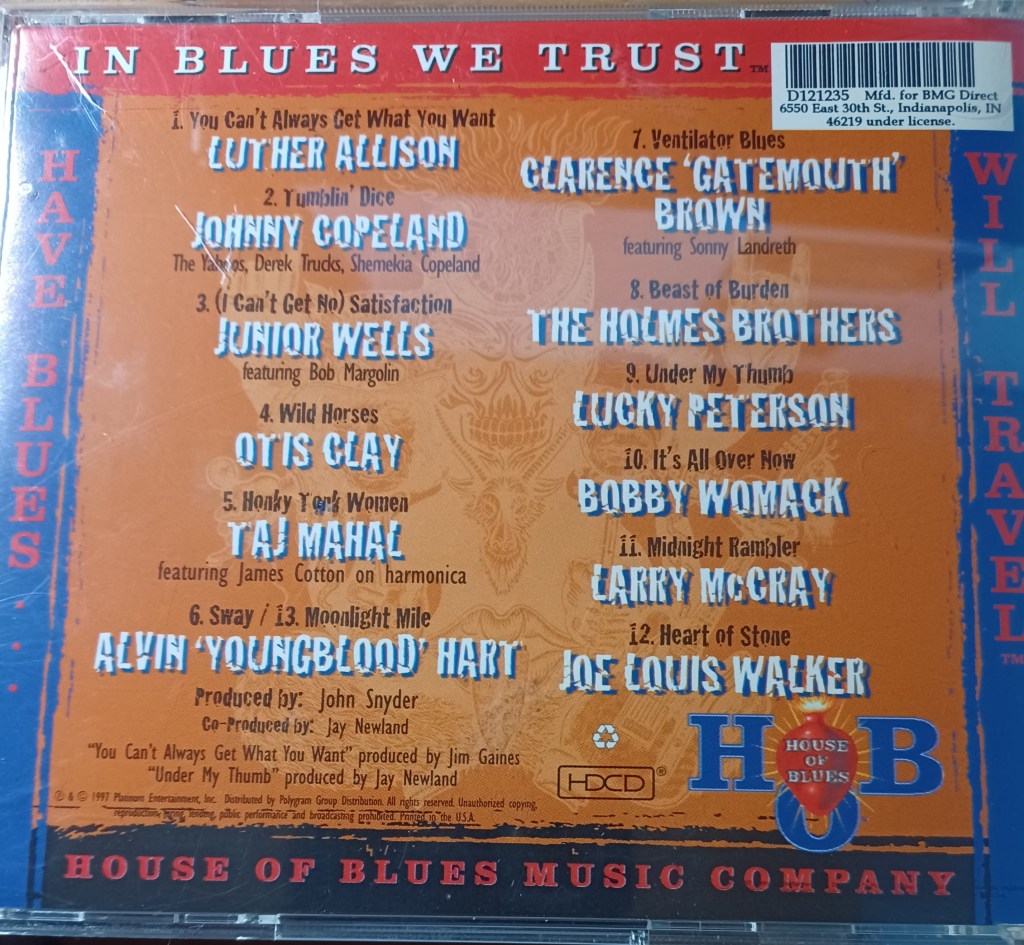
The Stones and the reciprocal love from House of Blues was memorialized in the 1997 CD ‘Paint it Blue – Songs of the Rolling Stones’. 13 Stones songs performed by Black blues artists.
I think the best piece on the CD is Clarence ‘Gatemouth’ Brown cover for Ventilator Blues.

Excerpted from The Wall Street Journal 12.13.2025 – Rich Cohen
Solving the mystery of the guitarist’s longevity may be our best hope of aging gracefully.
In America, the average man can expect to live 75.8 years. Rolling Stones drummer Charlie Watts had gone five years past that and was still playing for audiences shortly before he died in 2021. Stones founder Brian Jones died young in his swimming pool, but several of the band’s other iconic members, from Ronnie Wood, 78, to Bill Wyman, 89, have won the battle with the actuarial tables. Mick Jagger, the demonic frontman, was barely slowed by the replacement of his aortic valve in 2019. An octogenarian, Mick can still be seen dancing on the ashes of Western Civilization.
And yet, for some reason, it is the band’s rhythm guitarist who personifies immortality. As the bumper sticker has it, “Think of the world we’ll be leaving Keith Richards.” How this riff-drunk ragamuffin, who turns 82 on Dec. 18, not only survived but stayed relevant is a mystery, a puzzle wrapped inside a guitar string. Solving it may be the best hope the rest of us have of aging gracefully.
I date my life with Keith to the spring of 1982, when, in the finale of the Central School talent show in Glencoe, Ill., I played the part of the guitarist in the Stones cover band that brought down the house with “Jumpin Jack Flash.”
It was while preparing for the show that I first really learned about Keith: about his legendary 1961 meeting with Jagger at the train station in Dartford, the English town where they both grew up; about their mutual love for the Chicago Blues (Jagger was carrying a stack of albums from Chess Records); about the Stones’ apprenticeship in the basement clubs and bars around London; about the first rush of fame and how Keith shut himself off from it behind a wall made of heroin. It was living through the chaos and tragedies of the 1960s and 70s—the river of opioids, the demise of Janis, Jimi, Jim and the rest—that gave him that vampiric aura. As the roadie puts it in “Wayne’s World 2,” “Keith cannot be killed by conventional weapons.
Top photo: Rolling Stones circa 1963 = Keith is second from left
 Lee's Perspective