
SAN FRANCISCO
Lee Heidhues 5.31.2026
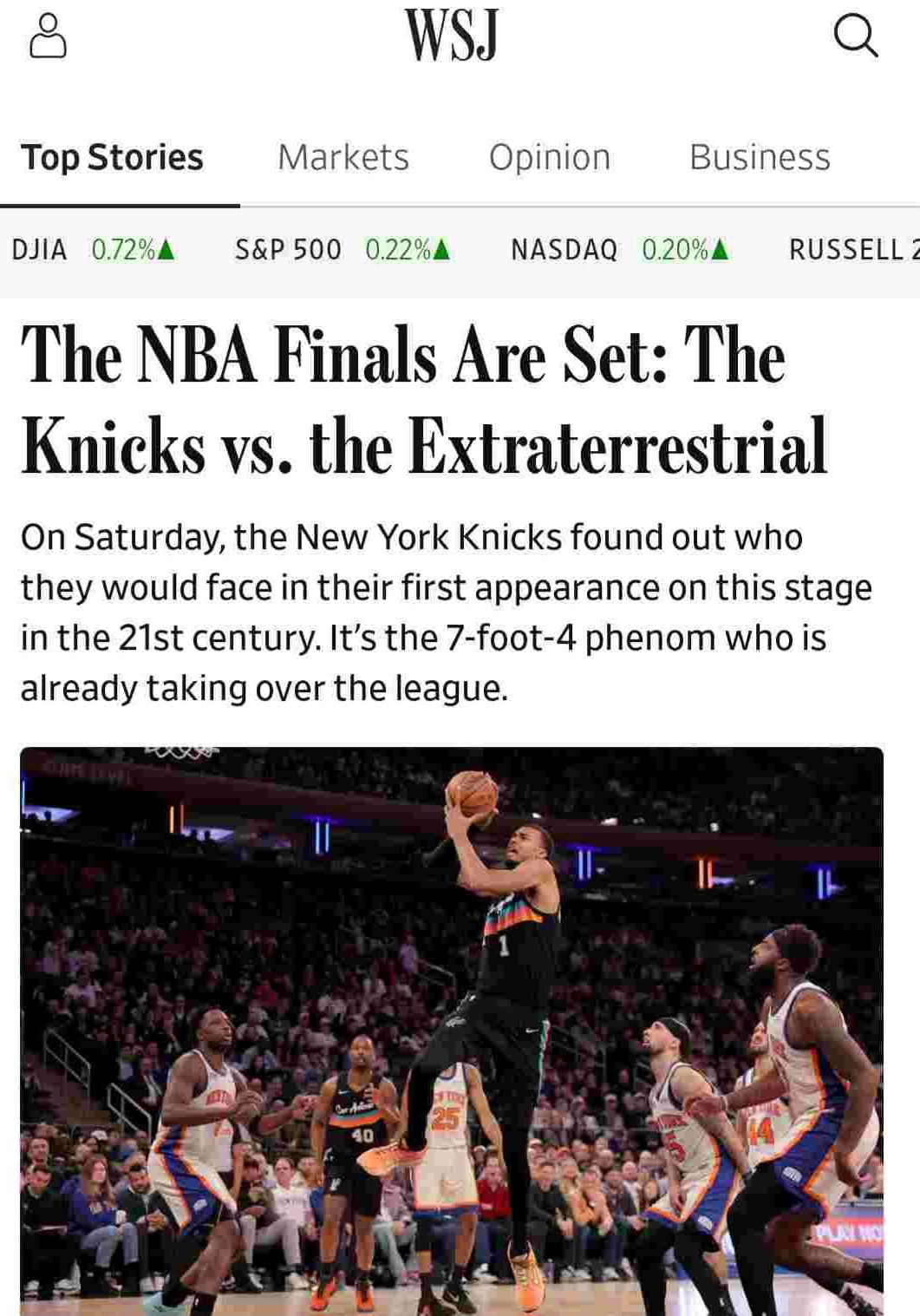
Victor Wembanyama is the new Crown Prince of the NBA. All Frenchman 7’4″ of him wrapped up in his 22 year old frame. The most apt music to describe ‘Wemby’, as he is referred to by network announcers, is Aaron Copeland’s ‘Fanfare for the Common Man’ featured below. Performed by the Metz, France Cite musicale.
Excerpted from The New Yorker – Louise Thomas – 5.31.2026
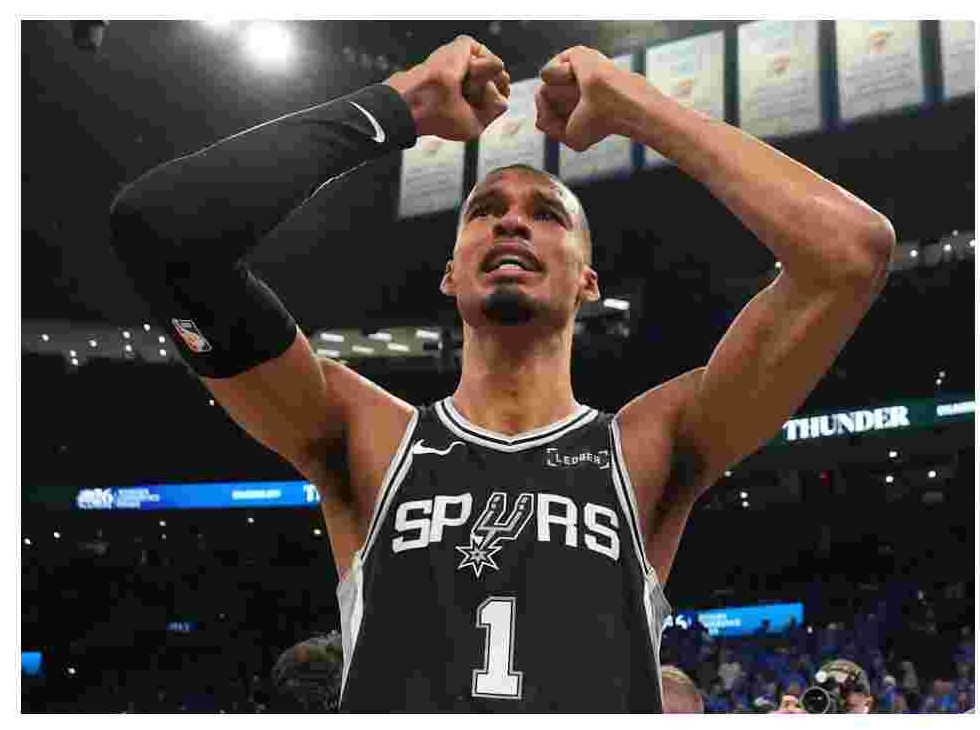
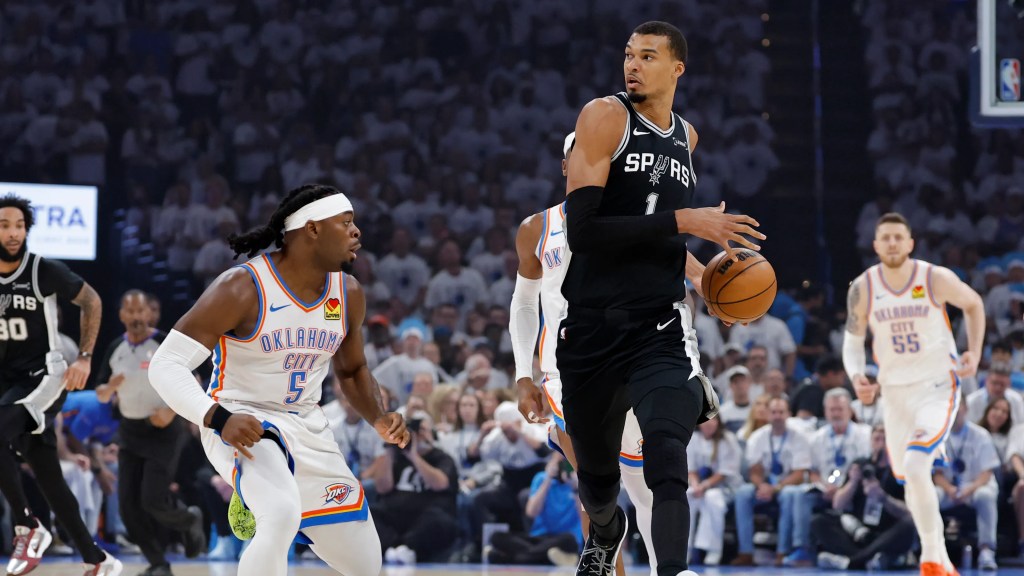
Victor Wembanyama, the San Antonio Spurs’ supernova, opened the Western Conference Finals, against the Oklahoma City Thunder, with forty-one points and twenty-four rebounds in a double-overtime game that seemed to reset the possibilities of professional basketball. He ended Game Seven, a thrilling 111–103 win over the defending champions, with a pedestrian stat line—twenty-two points, two assists, seven rebounds—and a glimpse of his dreams. And when it was over, after he had broken down in tears and screamed with euphoria and relief, he hugged and leaned on his teammates, who had, for much of the second half, become the best versions of themselves, and, collectively, a reflection of him.
Wembanyama has an eight-foot wingspan and a nearly ten-foot standing reach. He can dunk without leaving the ground or smoothly sink a standard jump shot—you have to see it to believe it—from forty-two feet. In his third N.B.A. season, he may already be the best defender in pro basketball history. A story of Saturday night’s game could be told in one play, which took place late in the fourth quarter. The Thunder’s implacable scoring machine, Shai Gilgeous-Alexander—among the most gifted foul-baiters of his generation, who had received his second-straight Most Valuable Player award days before—had the ball. Up to this point, he had played (finally!) with his usual surgical precision. Wembanyama, playing with five fouls, was a stray hand away from fouling out of the game, and was all that stood between Gilgeous-Alexander and the basket. But the reigning M.V.P. declined to challenge him.
Here is another story of the series: before Game One, Wembanyama had to sit and watch Gilgeous-Alexander accept that M.V.P. trophy—an award Wembanyama had openly sought. He took it personally. During the finals, the Spurs were at their best, statistically, when Wembanyama was on the court. That isn’t surprising. But the same was not true for the Thunder’s best player, Gilgeous-Alexander: Oklahoma City were actually outscored when he was on the floor. (Out of kindness, let us not speak of the performance of Chet Holmgren, who was drafted one spot behind Wembanyama, finished second in Defensive Player of the Year balloting, and was once talked of as Wembanyama’s rival.)
When Wembanyama went to the bench in the fourth quarter with five fouls, and Gilgeous-Alexander began finding the space that he thrives in, and the excitement swelled in the partisan Oklahoma City crowd, with plenty of time still on the clock, Luke Kornet checked in. Kornet is an élite comedian, a competent backup, even a good writer! But he is not, let’s face it, on the level of the other players who were on the floor, playing some of the best basketball we’ve ever seen. And suddenly, with six minutes left and the Spurs up by six, he found himself racing after Isaiah Hartenstein, who had just stolen the ball and had an open lane to the basket. Kornet chased him down and cleanly blocked his shot, leading to a Spurs basket on the other end. It was a four-point swing and, in retrospect, the beginning of the end for the Thunder.
The block was one thing. The reaction on the bench was another. Wembanyama—usually the one to make that kind of play—clenched his fist and bit it. Kornet’s teammates embraced him. There was a palpable sense of inspiration flowing from player to player. Presti brought San Antonio’s team-oriented culture to Oklahoma City, but Wembanyama has brought a culture, too, and, by the force of his example and his will, he has remade the image of his team.

