
SAN FRANCISCO
Lee Heidhues 8.31.2026
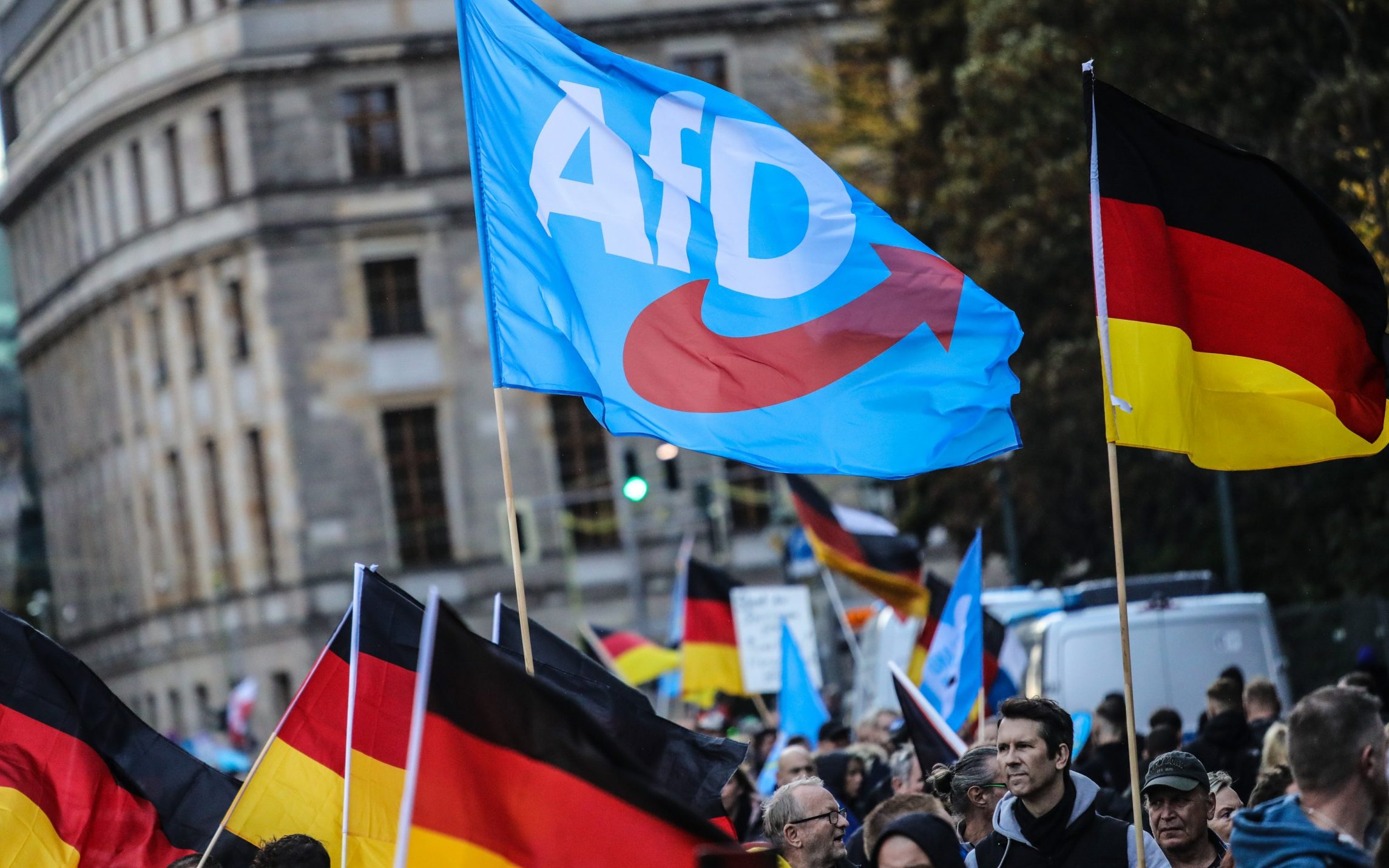
Who would have imagined a far right immigrant bashing German political party could rise from the ashes of Nazism in less than 15 years and be on the verge of seizing power in a German State? It could happen this weekend in the German State of Saxony-Anhalt (see below).
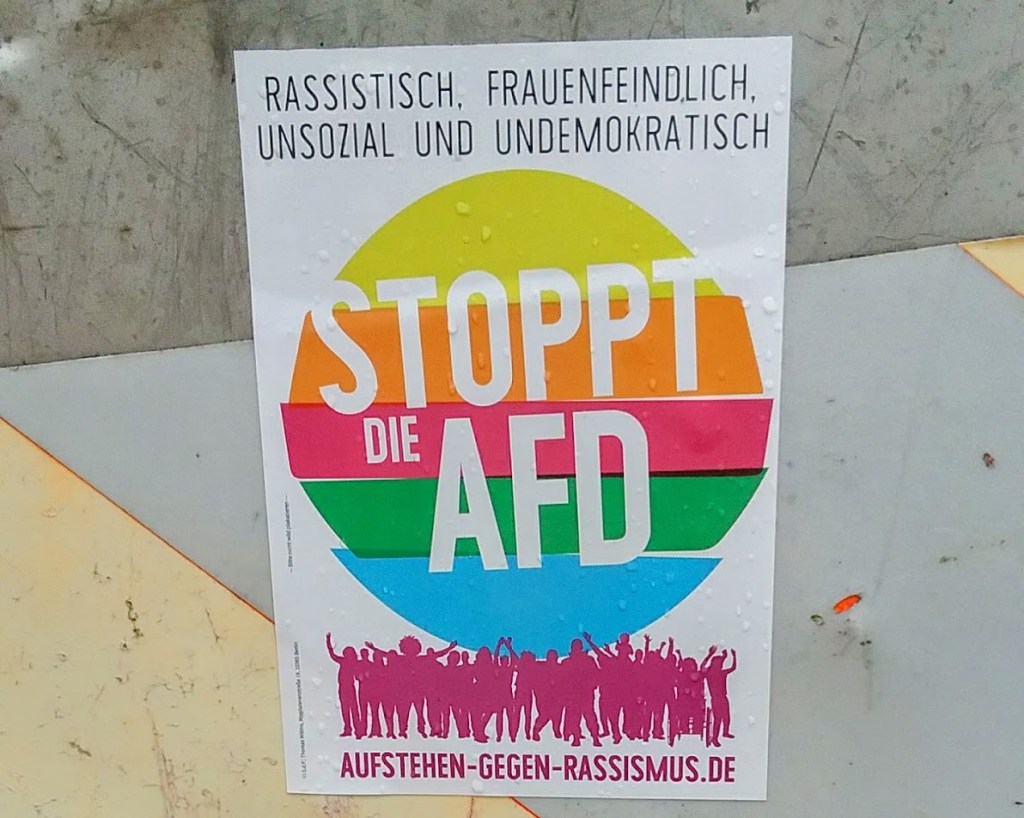
Nearly 10 years ago the blogger was in Germany.
At that time the Alternative for Deutschland (AfD) was simply another newly formed political entity trying to gain traction. The AfD immigrant bashing received a lukewarm reception. Now, after nearly 10 years the AfD is on the precipice of a major victory. Achieving a majority in a German State election on September 6th.
During the last German election Trump’s comrade Elon Musk actively campaigned for the AfD.

Alternative for Germany (German: Alternative für Deutschland, AfD [aːʔɛfˈdeː] ⓘ) is a far-right,[18] right-wing populist,[19] national conservative,[20][21] and in parts völkisch nationalist[nb 3] political party in Germany. It has 151 members of the Bundestag and 15 members of the European Parliament. It is the largest opposition party in the Bundestag and a member of the Europe of Sovereign Nations Group in the European Parliament.[22] Alternative for Germany – Wikipedia
Excerpted from Deutsche Welle – 8.31.2026
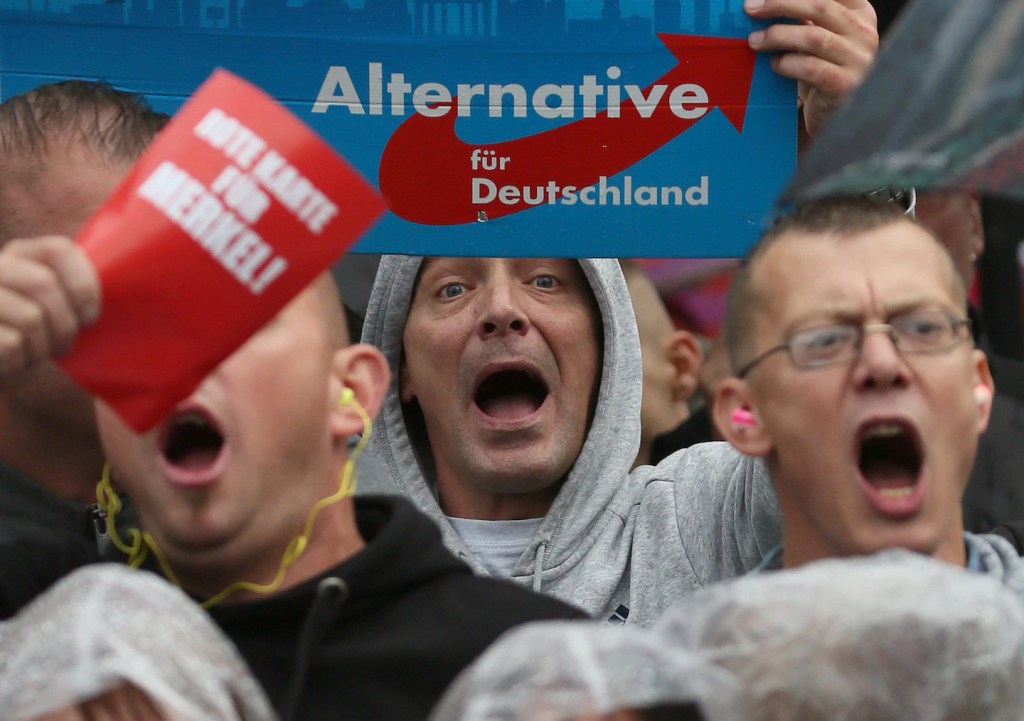
The AfD is polling above 40% ahead of Saxony-Anhalt’s election on September 6. What is driving support for the far right in this predominantly rural eastern German state?

Just before the election, the AfD is polling at more than 40% in Saxony-Anhalt. The conservative Christian Democratic Union (CDU), which has been the dominant governing party in the state since German reunification in 1990, trails far behind, with support ranging between 23% and 26%.
The state office for the protection of the constitution has classified the AfD as a “confirmed right-wing extremist” organization, but this has done little to dent its popularity among voters. The Left Party is polling at 13%, while support for the center-left Social Democratic Party (SPD) stands at between 6% and 7%. It remains uncertain whether the Greens and the pro-business Free Democratic Party (FDP) will succeed in returning to the state parliament.
https://www.dw.com/en/saxony-anhalt-election-afd-far-right-germany/a-78482588
https://www.dw.com/en/saxony-anhalt-election-can-the-cdu-stop-the-afd/video-78579766
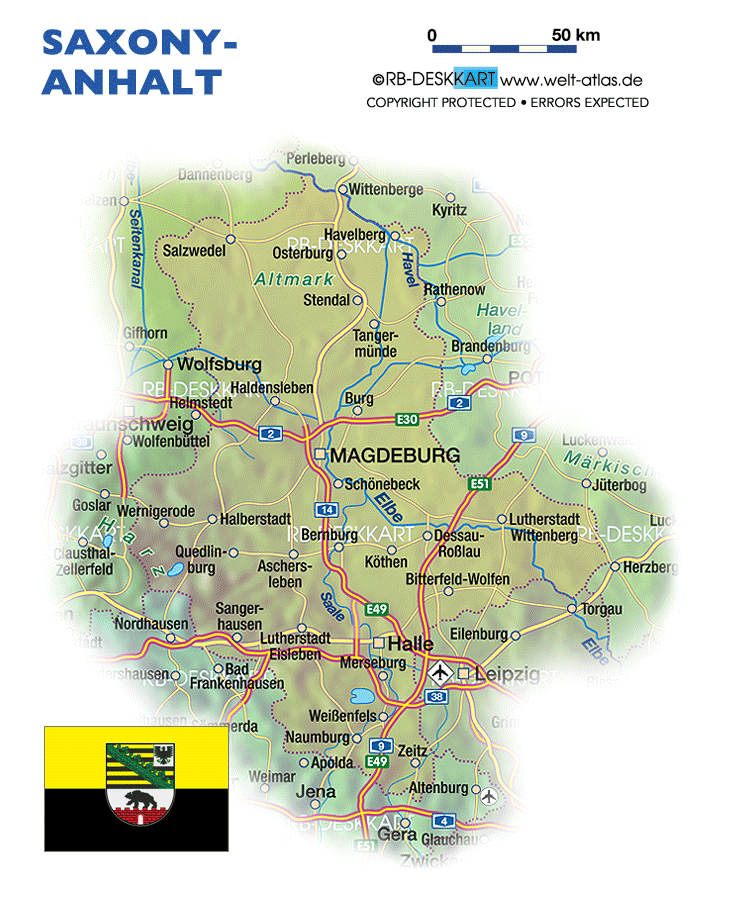
Saxony-Anhalt (/ … ˈɑːnhɑːlt/ ⓘ … AHN-hahlt;[5][6] German: Sachsen-Anhalt [ˌzaksn̩ ˈʔanhalt] ⓘ; Low German: Sassen-Anholt) is a landlocked state of Germany, bordering the states of Brandenburg, Saxony, Thuringia and Lower Saxony. It covers an area of 20,555 square kilometres (7,936 sq mi)[7] and has a population of about 2.14 million inhabitants,[2] making it the 8th-largest state in Germany by area and the 11th-largest by population. Its capital is Magdeburg.[8] Saxony-Anhalt – Wikipedia

