Every Picture Tells a Story. Ongoing Series
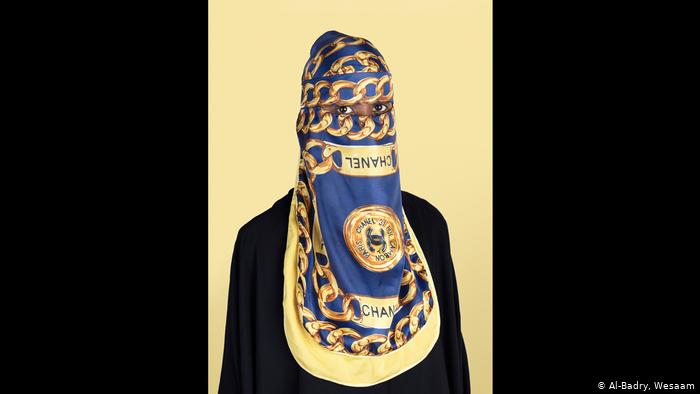
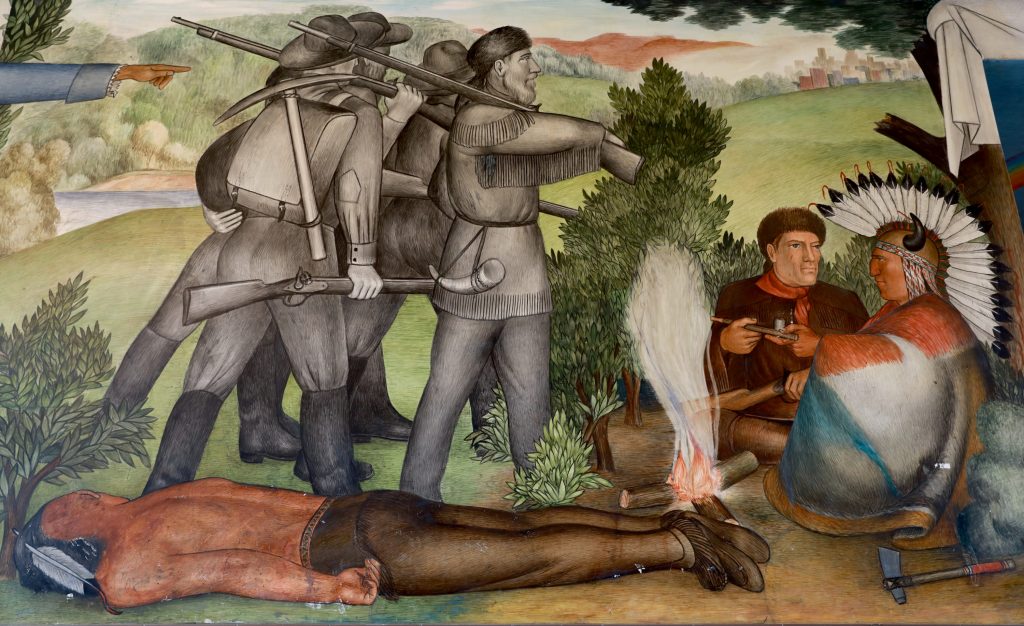
“Proud to be an American at a Trump Rally in Missoula, Montana, October 2018.”
Photo. Foreign Affairs Magazine March April 2019
Every Picture Tells a Story. Ongoing Series
“Proud to be an American at a Trump Rally in Missoula, Montana, October 2018.”
Photo. Foreign Affairs Magazine March April 2019
Deutsche Welle 2.18.2019
Producers of the film ‘Berlin, I Love You’ have cited Chinese influence as the reason they cut Ai Weiwei’s segment. The artist told DW that the Berlin International Film Festival suggested his section be removed.
Ai is an outspoken critic of China’s government and spent four years under house arrest in China until he was finally allowed to leave the country in July 2015. He then moved to Berlin.
The Berlin Film Festival told DW they do not comment on films that had not been selected, but added: “We can confirm that the involvement of Ai Weiwei would never be a criteria for choosing or not choosing a film.”

Chinese dissident artist Ai Weiwei’s segment in the film “Berlin, I Love You” was cut from the final version due to concerns the artist had become a political liability, the artist and film producers said.
“The reason we were given for the episode’s removal was that my political status had made it difficult for the production team to secure further funding,” Ai told DW reporter Melissa Chan.
Ai told DW that the Berlin International Film Festival had suggested his participation in the film had made it difficult for the producers to submit it as an entry to the event, a claim the festival has denied.
“[The producers]Â told me they submitted this film to the Berlin Film Festival and the festival told them, if Ai Weiwei’s in there, the film can never be accepted,” Ai said.
DW’s Melissa Chan reviewed a document which appeared to confirm Ai’s story.
“Berlin, I Love You” is not the only film to have succumbed to apparent influence from China. Earlier, top Chinese director Zhang Yimou withdrew his film “One Second” — set during the Cultural Revolution — from consideration for the Berlinale’s prized Golden Bear in what is widely believed to be censorship and control by Chinese officials.
https://www.dw.com/en/chinese-artist-ai-weiweis-segment-cut-from-berlin-i-love-you/a-47575219
SCARY. We know what the Ayatollahs think about women’s place in society.Â
Deutsche Welle 2.17.2019
Iranian state TV did not broadcast a Bundesliga soccer match because of the presence of a woman as referee, media say. The Islamic country censors the showing of women in “revealing” clothes such as football shorts.
Bibiana Steinhaus, 39, is the first woman to have officiated at men’s football matches at a professional level in Germany. She refereed her first Bundesliga match in September 2017.
The broadcast was reportedly canceled because the Iran’s strict Islamic regulations do not allow the showing of images of women wearing clothes that reveal large amounts of skin, such as football shorts.
Written and directed by Christian Petzold, adapted from the novel by Anna Seghers
New York Review of Books 3.7.2019
The protagonist of Anna Seghers’s novel Transit (1944)—the source for Christian Petzold’s new film of the same name—is a young German who, having escaped from a Nazi concentration camp and then a French work camp, makes his way to occupied Paris. There he is recruited by another former inmate to deliver a letter to an anti-fascist writer named Weidel. The letter is described to him as a desperate plea from Weidel’s estranged wife, Marie, who is stranded in Marseille.

But Weidel, as Seghers’s nameless fugitive discovers, has committed suicide in a Left Bank hotel room. Carrying the dead man’s suitcase, which contains a manuscript that he reads out of boredom, as well as the letter, the fugitive travels to Marseille; once there, “a specter among the visa applicants,” he finds himself, almost unintentionally, taking Weidel’s identity and applying for his exit visa. The consul seems weirdly eager to help someone so distinguished. Waiting for passage to the New World among a disparate horde of desperate souls seeking to escape Europe, the fugitive shadows and is shadowed by Marie, who is frantically searching for her dead husband; thanks to the bureaucratic trail left by the imposter, she believes him to be alive in Marseille. Tipped off that her “husband” is enjoying a pizza in a harbor café, she finds only the fugitive Weidel, and her unrealizable pursuit continues.
Seghers’s existential thriller—recounted in the first person, a tale told by one refugee to another, and written while the author, having successfully gotten out of Marseille, was in exile in Mexico—has been described as Casablanca imagined by Franz Kafka.  Sartre’s No Exit, first performed in 1944, the same year that Transit was published in English and Spanish versions, is another analogue. So too perhaps is Camus’s The Stranger (1942). The underlying absurdity of the fugitive’s condition, as well as Transit’s understated modernism, belies Seghers’s reputation as a Marxist ideologue; most certainly this strain of absurdism helped interest Petzold in the material.
https://www.nybooks.com/articles/2019/03/07/christian-petzold-waiting-rooms-history/
Excerpted from New York Review of Books 3.7.2019
Review by Raja Hhehadeh
Photo. Israeli soldiers detaining a Palestinian during clashes at a protest, Hebron, West Bank, February 2018. Kobi Wolf/Contact Press Images
On June 2, 1980, three members of an offshoot of the right-wing Israeli settler movement, a terrorist group that became known as the Jewish Underground—Menachem Livni, Uzi Sharabaf, and Shaul Nir, all West Bank settlers—placed bombs under the cars of the Palestinian mayors of Ramallah, Bireh, and Nablus. The mayor of Nablus, Ghassan Shakaa, lost both his legs; Kareem Khalaf, the mayor of Ramallah, lost a foot. A rumor circulated that Menachem Livni worked at the military governor’s office in Ramallah. If so, I must have seen him there. When I heard what he had done and saw his picture, I wondered at the incongruity of his innocent-looking face.
The three were apprehended in 1984 and convicted in 1985 after another attack, which killed three Palestinian students at the Islamic College in Hebron. They received life sentences, but these were commuted by Israeli president Chaim Herzog. In 1990 they were released from prison, to the cheers of Jewish settlers and no real show of public protest. Menachem Livni now produces cabernet sauvignon at his winery in the settlement of Kiryat Arba next to Hebron.

Photo: Israeli Defense Force members
After the bombings, Al-Haq, a Palestinian human rights NGO, met with the Association for Civil Rights in Israel and urged an investigation of settler violence in the West Bank. In 1981 a committee to carry one out was formed by the Israeli attorney general, headed by his deputy, Judith Karp. The Karp Report: On the Investigations of Suspicions Against Israelis in Judea and Samaria, published in 1984, described numerous acts of violence carried out by Jewish settlers against Palestinian Arabs in the West Bank, including assaults, destruction of property, armed threats, shootings, obstructed access to places of employment, and attacks on schoolchildren. It was not followed by any significant change in the ways settler violence was addressed by the Israeli police and security services.
Such criminal behavior is more widespread now than it was in the 1980’s.
https://www.nybooks.com/articles/2019/03/07/bearing-witness-in-the-west-bank/
It may be a Day Late. But there’s always time for a little Romance in this topsy turvy world.
Photo Above. Lady and the Tramp
Deutsche Welle 2.14.2019
Pucker up, buttercup! For Valentine’s Day, we look at the best smooches of all time — from those on the big screen to the most memorable real life kisses captured on camera.

The most famous of Gustav Klimt’s paintings comes from his so-called Golden Phase, in which he used a gold bronze, reminiscent of Christian paintings from the late Middle Ages. The works of art gain a touch of preciousness with the color, employed here in “Kiss,” a quadratic 180 x 180-centimeter piece completed between 1908 and 1909.
https://www.dw.com/en/15-unforgettable-kisses-for-valentines-day/g-19379406
Excerpted from Deutsche Welle 2.14.2019
The Jewish Museum Berlin has banned Iranian state broadcaster IRIB from filming on its premises, arguing the station spreads anti-Zionist propaganda. The decision has drawn backlash from German press associations.

Nongovernmental organization Reporters Without Borders, however, took a different position, arguing that the Iranian state broadcaster is the mouthpiece of a “government which denies Israel’s right to exist.” That is why the organization respects the museum’s decision, managing director Christian Mihr told DW.
The Jewish Museum Berlin (JMB) is currently showcasing an exhibition titled “Welcome to Jerusalem,” which attracted criticism from Israel’s Prime Minister Benjamin Netanyahu, who said it adopts a one-sided Muslim and Palestinian perspective. Netanyahu even demanded the German government cut back its financial support for the museum.
The JMB, however, decided to ban the Iranian broadcaster from filming on its premises. In a statement explaining the decision, the museum said that “the coverage of state-run broadcaster IRIB is clearly anti-Zionist, and has disseminated anti-Israeli and anti-Semitic propaganda.” The JMB expressed concern IRIB will “instrumentalize” the exhibition to further “its own agenda” and capitalize on the “Welcome to Jerusalem” exhibition to produce fake news for Iranian television. The museum added that IRIB has in the past provided a platform for Holocaust deniers “to disseminate false claims which constitute a criminal offense in Germany.”
https://www.dw.com/en/jewish-museum-berlin-bans-iranian-state-broadcaster-irib/a-47509946
Excerpted from The Guardian and Deutsche Welle 2.13.2019
Above Photo. Mata Hari
A former US air force intelligence officer who defected to Iran in 2013 has been charged with espionage, giving away the identity of a US agent and other secrets.
Monica Witt, aged 39, was a cryptologist and a counter-intelligence investigator for the US Air Force for more than 10 years before working as an intelligence analyst for the defense contractor Booz Allen Hamilton for five months in 2008 and doing other private sector work.
According to charges unsealed on Wednesday by the Department of Justice, she defected to Iran in August 2013, taking with her details of US counter-intelligence agents she had worked with who were then targeted by Iranian hackers, four of whom are named in the indictment and charged alongside Witt.

Following her defection to Iran in 2013, the Department of Justice alleged in its indictment, “Ms. Witt was recruited by Iran as part of a program that targets former intelligence officers and others who have held security clearances. Following her defection to Iran in 2013, she is alleged to have revealed to the Iranian government the existence of a highly classified intelligence collection program and the true identity of a US intelligence officer, thereby risking the life of this individual.”
Witt served as an counterintelligence and Farsi linguistic specialist, working as a special agent of the Air Force Office of Special Investigation from 1997 until 2008. After leaving the armed forces, she worked as a Defense Department contractor.
The former agent was “granted high-level security clearances and was deployed overseas to conduct classified counterintelligence missions,” according to the Justice Department. An FBI official said the Bureau warned her that she was vulnerable to Iranian recruitment.

The indictment suggests Witt defected for ideological motives, and was recruited when she visited Iran in February 2012 to attend a conference on US cultural influence called “Hollywoodism”.
The conference was organised by an group called New Horizon, which was put under US sanctions on Wednesday for allegedly serving as a front from the Quds Force, the external arm of the Islamic Revolutionary Guard Corps (IRGC-QF).
https://www.theguardian.com/world/2019/feb/13/monica-witt-air-force-charged-spying-iran
https://www.dw.com/en/us-charges-double-agent-monica-witt-in-iran-conspiracy/a-47509398
Excerpted from New York Times 2.13.2019
Federal prosecutors in Arkansas announced racketeering charges against 54 people who they say belong to a white supremacist gang that kidnapped, maimed and tried to kill to protect its drug-trafficking operations.
An indictment unsealed on Tuesday describes the gang, the New Aryan Empire, as a highly organized outfit that sold “copious amounts” of methamphetamine around the Arkansas River Valley. Its leaders kept members in line with threats and acts of violence, and the gang viciously attacked people it suspected of collaborating with the authorities, prosecutors wrote.
“The N.A.E. is reprehensible in its admiration for Nazi imagery and racist views, but even more alarming are the crimes and violence perpetrated by these defendants,” said David Rybicki, a deputy assistant attorney general in the Justice Department’s Criminal Division.
New Aryan Empire began in a county prison in Russellville in 1990, and was affiliated with the Aryan Brotherhood, the indictment charges. It quickly grew and expanded outside of prison as members were released, and they collaborated with White Aryan Resistance, or WAR, in the drug trade, according to prosecutors.
The United States attorney for the Eastern District of Arkansas, Cody Hiland, said his office was prosecuting the case using the RICO law, the federal statute enacted in 1970 to combat organized crime. The law — its full name is the Racketeer Influenced and Corrupt Organizations Act — allows prosecutors greater flexibility to hold anyone who is part of a criminal enterprise responsible for its acts.
The superseding indictment unsealed on Tuesday adds 10 defendants and additional charges to an indictment announced in October 2017. At that time, the authorities said that investigators had seized more than 25 pounds of methamphetamine, 69 firearms and $70,000 in drug proceeds.
The authorities announced the new charges at the Police Department in Russellville, about 75 miles northwest of Little Rock, where the authorities said the group — believed to have 5,000 members — was founded.
In the 1970’s, impecunious and unknown, the only way I could get into the legendary Studio 54 was under the sponsorship, so to speak, of someone older and more established. The velvet rope parted only one time; it wasn’t the night Bianca Jagger rode across the dance floor on a white horse, but it was close.
There was a balcony where you could go if you were seriously tripping, as I was, to get out of the mayhem. That night the rows of theater seats were empty except for a few couples making out in the back. I collapsed into a chair. When my eyes adjusted to the dark, I became aware of someone else in my row. There he was, solitary in the shadows, standing with his arms crossed and one hand to his chin, staring at the revelry below. The trademark wig, in the pulsing light of the dance floor, looked not so much silver as made of straw. He glanced at me briefly, seemed about to speak, changed his mind. I was of no interest to him, just another stoned kid.

Andy Warhol: Mao, 1972. Acrylic, silkscreen ink, and graphite on linen, 14 feet 8½ inches x 11 feet 4½ inches.
Andy Warhol combined social and pictorial intelligence in a way not seen in this country since John Singer Sargent. In one of the most unexpected artistic transformations of the last century, he found a way to make a highly synthetic, semi mechanized kind of painting feel authentic. His attitude and posture, his public persona, and his forays into film making and other media were radical in the world of high art, but his aesthetic inclinations were more traditional. They harked back to, and partially bridged, two widely divergent tendencies in American art: social realism and abstraction, the Yankee peddler and the Transcendentalist.