
To Track Virus, Governments Weigh Surveillance that pushes Privacy Limits

Government agencies are pushing hard to track the Coronavirus as it continues its worldwide march.

The use of surveillance technology is one of the tools being utilized by government agencies. There is a growing concern that such tools will become yet another intrusion into the privacy of citizens.

At what point is the need to eradicate the Coronavirus come into conflict with personal privacy?

Wall Street Journal 3.17.2020

Geolocation and facial-recognition systems can locate vectors of infections, but they also gather highly personal data

As the country scrambles to control the rapidly spreading coronavirus, government agencies are putting in place or considering a range of tracking and surveillance technologies that test the limits of personal privacy.

The technologies include everything from geolocation tracking that can monitor the locations of people through their phones to facial-recognition systems that can analyze photos to determine who might have come into contact with individuals who later tested positive for the virus, according to people familiar with the matter.

coronavirus surveillance II 3.19.2020.jpg

Data-mining firm Palantir Inc., which was credited with helping to find Osama bin Laden, is working with the Centers for Disease Control and Prevention to model the virus outbreak. Other companies that scrape public social-media data have contracts in place with the agency and the National Institutes of Health, documents show.

The push is in part being coordinated by a task force working in conjunction with the White House, and includes startups as well as tech giants such as Alphabet Inc.’s Google unit, Facebook Inc. and Amazon.com Inc. The task-force discussions involving the White House and tech companies were reported by The Wall Street Journal on Sunday.

Other efforts are more grass-roots, with tech companies pitching state agencies and governments.

Tech and government officials are struggling to find a balance between deploying technology and keeping patients’ data—particularly medical information—safe. Some privacy advocates worry that little has been disclosed about what is being planned or implemented.

A man standing earlier this month at a building entrance in Shenzhen, China, fitted with an AI computer, made by the company SenseTime, that identifies even masked individuals and detects whether they have a fever.

PHOTO: ALEX PLAVEVSKI/EPA/SHUTTERSTOCK

Technology executives spent much of an hour-long call Sunday discussing ways to track hospital-bed availability across the country using geolocation data, but also how the data could be aggregated so that personal information of cellphone users wouldn’t be shared, according to people familiar with the call. It isn’t clear which companies would handle that kind of tracking.

Other countries have already deployed location-tracking systems and other tech solutions to fighting the pandemic, but many such efforts could run afoul of U.S. privacy laws.
In China, telecommunications companies helped the government track and contact people who had traveled through Hubei province during the early days of the virus. Location data was funneled to China’s National Health Commission and other agencies, allowing them to re-create the steps of virus carriers and people that they may have encountered and issue warnings via social media.

As part of the task-force discussions, Facebook and Google are exploring ways to use data to help the U.S. government track outbreaks of the disease, according to a person familiar with those discussions.

Facebook is already sharing disease-migration maps to help combat the spread of coronavirus, a company spokesman said.

In the U.S., the government could legally request location data from telecom carriers or from Google, which has access to more-precise data belonging to its Android and Google Maps users, said Al Gidari, director of privacy at Stanford Law School. This information can’t typically be released without user consent or a court order, but the government has broader authority to request such data in the event of an emergency, he said. “I don’t think anybody would dispute that this is an emergency,” he said.

White House and CDC representatives didn’t respond to requests seeking comment.

Camber Systems, a Washington, D.C., location-tracking startup founded by former government officials, says on its website that it leverages “data, machine learning and artificial intelligence” to help cities manage transportation and infrastructure. The company is among the firms in talks with the White House, according to people familiar with the matter. The company hopes to work with state and local agencies to use its data.

“If we’re to leverage commercial technology to save lives, how do we put in the policy framework so we’re not South Korea or China or Israel?” said Ian Allen, Camber’s chief executive, in an interview.

Sen. Ron Wyden, a Democrat from Oregon, is among the lawmakers who is investigating this activity. In a statement, Sen. Wyden said the efforts are sensible as long as the appropriate conditions are in place. “There must be procedures to keep this information safe, to delete information once it’s no longer in use, and to ensure it isn’t used against Americans by law enforcement,” he said

.“We understand that given we are in this crisis, that some temporary adjustment of our digital liberties may be necessary, however it’s really important that those adjustments be temporary,” said Adam Schwartz, a senior lawyer at the Electronic Frontier Foundation, an advocacy organization for civil liberties and technology. It is crucial, he added, for governments to be transparent about the technology they are using and to put safeguards for consumers in place.

Clearview A.I. Inc., a facial-recognition startup that has sparked controversy among privacy advocates over its use by police departments, is in discussions with state agencies about using its technology to track patients infected by the coronavirus, according to people familiar with the matter.

The technology has yet to be adopted by any agency, but the New York-based company hopes it will be helpful in what’s known as “contact tracing”—figuring out who else might have been with a person known to have the virus.

Palantir is working with the CDC on data collection and data integration related to disease tracking, according to a person familiar with the company,

During the cholera outbreak in Haiti in 2010, the CDC used Palantir to “monitor the situation and inform their response efforts,” according to a white paper later published by Palantir. The company’s technology allowed government analysts to “explore text messages” between Haitians and a text platform built by an outside technology company.

The company said it is making privacy a priority.

“Data-driven responses to the Covid-19 pandemic must treat good data governance, including privacy and civil-liberties protections, as guiding concentrations along with the mission objectives, not as afterthoughts,” says Courtney Bowman, head of Palantir’s Global Privacy and Civil Liberties Engineering team, in a statement.

Crimson Hexagon, now part of Brandwatch, has a $30,000 contract with the CDC that was initiated last fall, according to government records. Crimson provides companies and governments with “social listening” tools, meaning it scrapes public Facebook, Instagram and Twitter posts in part to gauge sentiment.

Before its merger with Brandwatch in 2018, the company ran afoul of Facebook’s privacy policies, and former employees told the Journal at the time they were concerned government agencies used the service for surveillance.

A Brandwatch spokeswoman said the CDC contract encompasses the National Center for Injury Prevention and Control, which uses the company’s technology to “gain an understanding of historical and recent trends in injury prevention topics.”
San Francisco tenant attorneys fight to stop evictions during Coronavirus

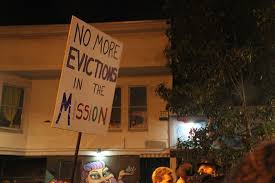
Led by Supervisor Dean Preston, a tenants rights attorney, local tenant attorneys are petitioning and imploring San Francisco Superior Court to halt all eviction proceedings during the Coronavirus crisis.

48 Hills – Tim Redmond 3.18.2020

Landlord lawyers are still demanding that courts rule against tenants and hold trials — right now, despite shelter-at-home rules.

The mayor has declared a moratorium on evictions for nonpayment of rent. The sheriff has announced that they will “postpone all evictions until further notice.” The local Superior Court is continuing all non-essential civil cases for as much as 90 days.

But the landlord lawyers don’t care.

Supervisor Dean Preston wants a moratorium on all no-fault eviction cases.

As of Tuesday tenant lawyers tell me, Ellis Act evictions continue to arrive – and landlord lawyers are in some cases refusing any continuance.

Sup. Dean Preston put out a tweet yesterday:

Just learned of a landlord refusing to delay an Ellis Act eviction of a disabled tenant during this COVID-19 crisis. Here’s what the attorney wrote

“It is not my clients’ duty to build in protections for a pandemic or emergency. They are unwilling to extend the time, or amend the agreement to have stays of execution or extensions of time”

The landlord’s attorney also writes that “all trial court appearances are to be in person, and “preference” cases are not being continued.” In other words, the landlord is pressing forward and the court’s delay of other cases doesn’t apply to eviction cases.

Preston isn’t the only one hearing about this. Tom Drohan, director of litigation at Legal Assistance for the Elderly, told me that the courts are still planning to hear eviction cases.

“Although the San Francisco Superior Court has continued all jury trials for 90 days in the interest of public health,” Drohan said, “certain cases called preference cases are exempt from this ruling. Eviction cases are considered preference cases and therefore will be going forward as scheduled.”

Ken Garcia, a spokesperson for the Superior Court, confirmed that “Under the law (and until the legislature amends it), unless one of the parties waive their rights, the [eviction] cases must be heard.”

That would mean that, during a shelter-in-place order, tenants, many of them elderly or otherwise vulnerable, will have to appear in court for an eviction trial. Lawyers will have to show up. A jury will have to be empaneled. All of these people will be in close contact.

And even if the sheriff doesn’t carry out the evictions immediately, the legal judgment will still be on the record, and the tenants may be forced out as soon at the Sheriff’s Office decides to resume.

This is insane.

Drohan said that a group of tenant lawyers, working together, appeared Wednesday in Courtrom 501 to file motions for continuance in each of their eviction trials. Word is that some landlord lawyers may actually object.

Preston, at Tuesday’s board meeting, said that the evictions have to stop.

“I am calling on the Governor, the Courts, and the Mayor to immediately suspend all eviction activity, except for evictions that are necessary to protect from threats to safety,” Preston said. “Right now, eviction notices are being served in San Francisco and eviction cases are moving forward.  This is the last thing we need.”

Preston introduced an emergency resolution calling on the governor to expand his executive order to impose a moratorium on all evictions, and specifically to waive and suspend the provisions of the Ellis Act, asking the courts to stay all eviction lawsuits, with limited exception for tenants posing a serious danger to the safety of others; and asking the mayor to expand her emergency directive limiting certain nonpayment evictions to cover all no-fault evictions during the state of emergency

“I have seen a lot of good from people in the last week, with an outpouring of neighbors reaching out, asking how they can help. Some of those include landlords in my district,” Preston said. “But unfortunately, there are those who seem to lack compassion at this time, and it is to deal with them that we must take the actions at all levels of government to stop evictions in this time.”

San Francisco pot dispensaries win reprieve. Still ok to purchase Weed

The stay in place Order is tough to handle.  But forcing pot dispensaries from selling their product was one toke over the line too many.

San Francisco City Hall decided to keep the dispensaries open for the locals who need a little help in weathering the trauma of Covid-19.

It keeps a segment of the population working and brings in lots of tax revenue. San Francisco needs it.

San Francisco Chronicle 3.18.2020

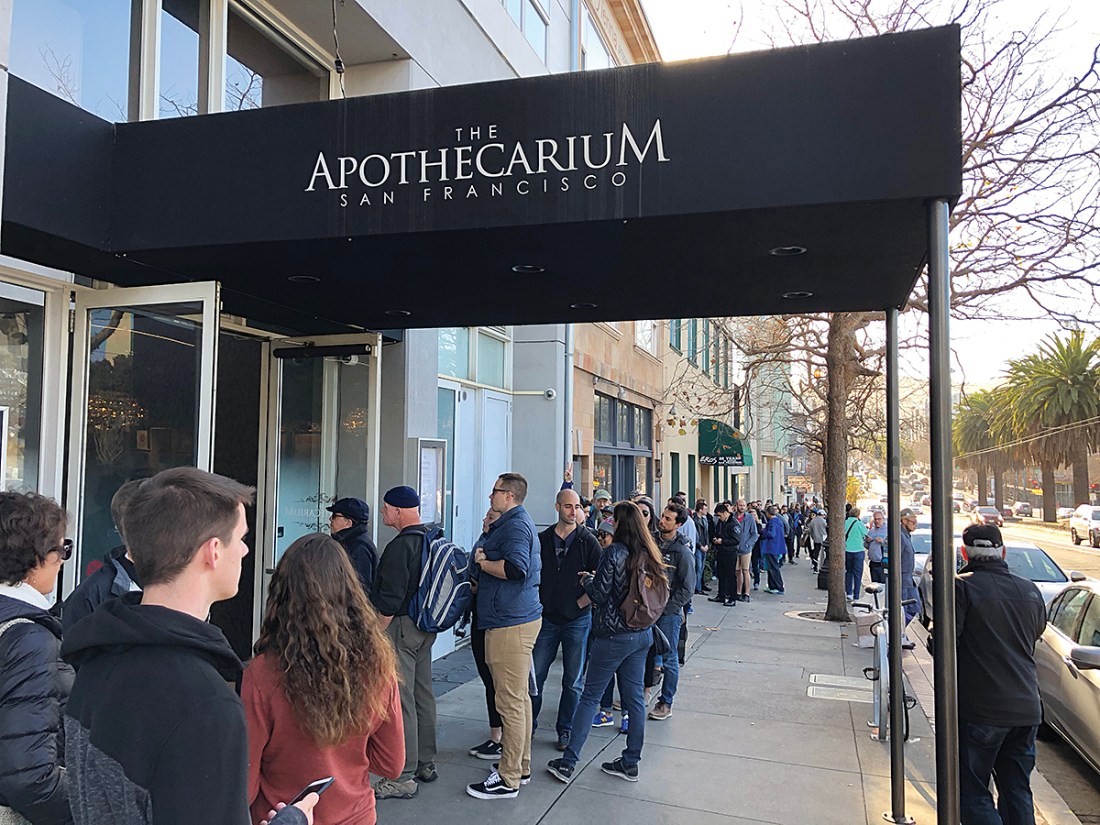
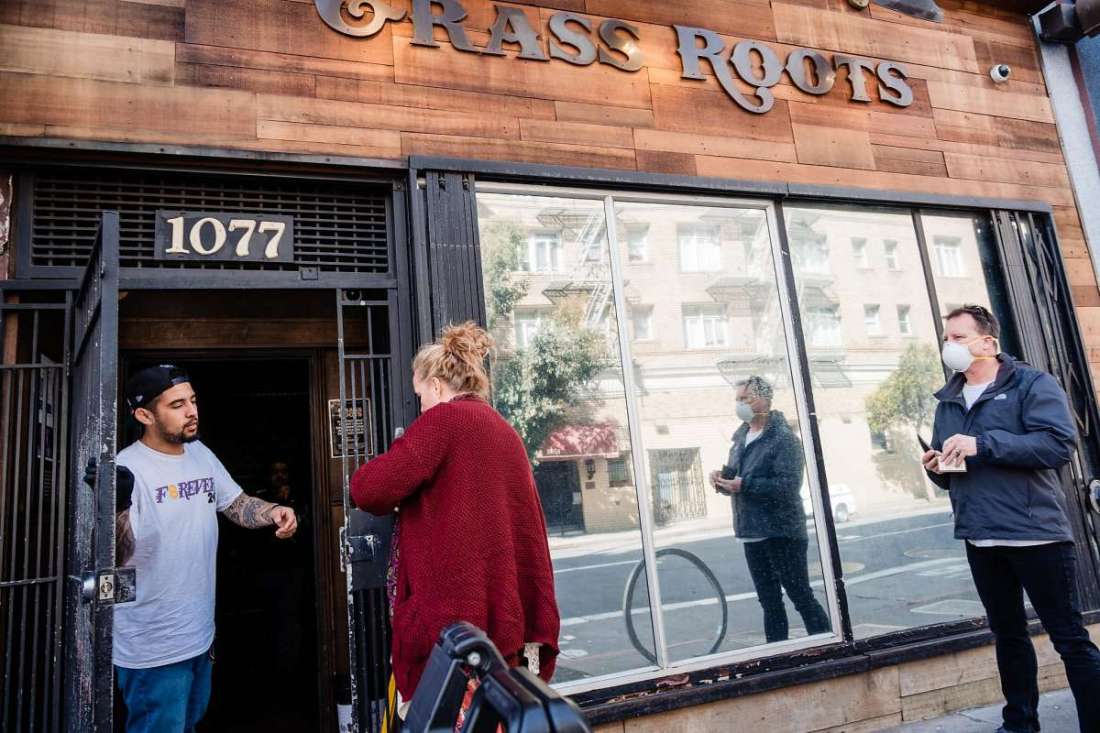
Long lines were reported at cannabis stores in San Francisco and the East Bay because of the shelter-in-place orders.

San Francisco officials are allowing cannabis businesses to remain open while many other stores are shut down over the next three weeks as the city goes to extreme lengths to fight the coronavirus pandemic.

City officials originally told cannabis stores they had to close on Tuesday because of the city’s order one day earlier to close nonessential businesses and have residents stay at home as much as possible. But then the San Francisco Department of Health sent a tweet calling cannabis “an essential medicine for many San Francisco residents.”

“Dispensaries can continue to operate as essential businesses during this time, while practicing social distancing and other public health recommendations,” the department said in its tweet.

The initial directive had frustrated businesses and advocates who want cannabis to remain available, especially for medical patients, while residents in San Francisco and other Bay Area counties shelter in place until April 7.

SF Cannabis II 3.18.20.jpg

Restaurants were allowed to offer delivery and takeout, but the same was not true for San Francisco’s cannabis businesses at first. An email sent Tuesday afternoon by the city cannabis office and public health department said businesses should be closed Tuesday but signaled that changes could come soon.

In the meantime, some of the city’s most visible cannabis operations were temporarily shuttered.

“For now we are completely closed,” said Eliot Dobris, a spokesman for the Apothecarium dispensary, which has three locations in San Francisco. “We have raised the issue of access for medical patients and are in ongoing discussions with the city. Many of our guests with true medical needs have not bothered to get medical cards over the last couple of years, since recreational use became legal.”

Others that stayed open in San Francisco and other parts of the region forced customers to separate themselves as mandated by the health orders. Harborside’s Oakland dispensary said Tuesday on Twitter that it had “limited in-store capacity for social distancing.”

SF Cannabis I 3.18.20.jpg

Eaze spokeswoman Elizabeth Ashford said the company was hoping the city order would change to allow for cannabis deliveries.

“We think it’s essential and helpful,” Ashford said. “Delivery helps people stay home.”

In their email Tuesday afternoon, the San Francisco Office of Cannabis and Department of Public Health thanked permitted cannabis businesses for respecting the city’s directions.

“The situation is fluid, and we are working closely with city partners and health-care professionals to craft a strategy that will allow for access to healthy and safe product,” the departments said in their email. “We are hopeful that this will create a pathway for businesses to support those that need access. Please standby.”

Troy Brunet, a medical cannabis patient for 10 years, said he makes a purchase every two or three days. He said he lives on a fixed income and can’t afford to stockpile. Brunet, a San Francisco resident, said he is HIV positive and uses cannabis to treat nausea.

“I was able to purchase two cartridges … that will hold me five or six days — let’s hope,” Brunet said. “I’ll have to stretch everything to the limit and pray for the rest. My nausea is going to be unbelievably frustrating.”

Dobris, the Apothecarium spokesman, said Monday that the company had added numerous precautions to protect customers and staff.

“We have hand sanitizer stations prominently set up, and team members have been reassigned to clean and disinfect continuously — including counters, door handles, tabletops, ordering kiosks and ATMs.” Apothecarium staff were also asking customers to maintain social distance inside their stores and not allowing them to touch samples or sniffer jars.

https://www.sfchronicle.com/bayarea/article/Coronavirus-SF-s-cannabis-dispensaries-shut-15138052.php#photo-19184333

Absurd American behavior. Panic buying. Toilet paper will save you.

The San Francisco Chronicle  editorial flushes out the absurd rush to the marketplace by Americans. All too typical behavior in a populace wedded to Fox News.

The lines at the local supermarkets boggle the mind. You would think the end of the world is close at hand. If that’s the case, what’s the need to gorge yourself on products you will never need?

San Francisco Chronicle – Marshall Kilduff – 3.14.2020

Got you covered on toilet paper

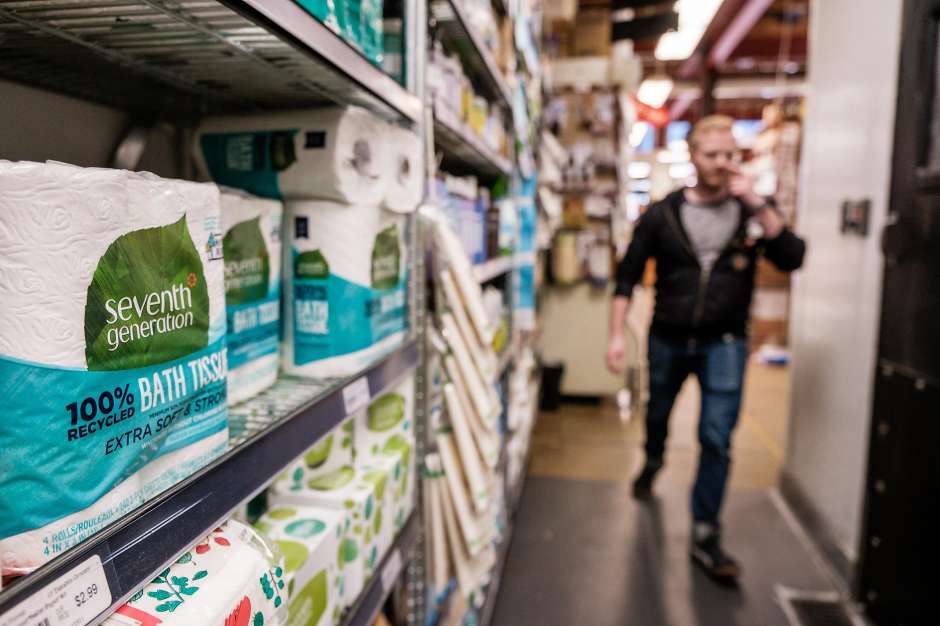
Loading up on masks and hand sanitizer maybe makes sense. But what about carting off giant bricks of toilet paper? The coronavirus outbreak is a glimpse into the giddy behavior that surfaces when we all slightly lose our minds.

The facts don’t apply here. There’s no shortage of tissue. Big box stores have plenty of the rolls stacked ceiling high. The virus doesn’t, umm, lead to more direct use. Still, it’s among the first things to go out the door when shoppers think like zombie-chased survivalists.

panic-buying-i-3.14.2020.jpg

Photo – Lee Heidhues at Trader Joe’s 3.13.2020

Maybe the endless advice to wash hands and stand several paces away from people isn’t enough. We all want something to clutch and save. California’s typical disasters like earthquakes or wildfires come too quickly for a Walmart run. Now there’s a chance to prep for Armageddon. Except this is a medical challenge that calls for common sense, not an unhinged retail impulse. A six-month supply heaped in the garage is a comforting sight until reality sets in. It’s just toilet paper.

https://www.sfchronicle.com/opinion/lastword/article/Last-Word-Got-you-covered-on-toilet-paper-15130454.php


San Francisco heads toward complete tenant protection. Eviction moratorium

San Francisco, led by Supervisor Dean Preston a long time advocate for tenant rights, is moving to have evictions banned during the Coronavirus outbreak.

The Supervisor’s legislation appears to have wide spread support within City Hall.

This ultimate tenant protection could soon be a reality.

48 Hills – 3.12.2020

Supervisor Preston, Mayor Breed working to block landlords from throwing out tenants during coronavirus crisis.

Mayor London Breed said she will issue a directive to place a moratorium on evictions in the midst of the coronavirus at Tuesday’s Board of Supervisors meeting. The directive follows District 5 Supervisor Dean Preston’s March 6 announcement to introduce legislation doing the same.

“There’s no need to wait and go through a lengthy legislative process in order to make this happen,” said Breed.

She also said she would work with Preston’s office on the directive and to requesting that the governor waive any state laws that could limit the directive, including restricting the City’s ability to enforce a moratorium on no fault or nonpayment of rent evictions.

Preston said he met with the mayor on Wednesday. “I’d like nothing more than to see the mayor or the governor ban evictions so we wouldn’t need to pursue legislation,” he said, but had some reservations. “I have to see what the scope of the directive is. We’re hoping it can be as strong as possible.”

The scope that Preston said he’s looking for is a ban on both evictions for nonpayment of rent and “no fault” evictions, including owner move ins, Ellis Act evictions, and evictions involving capital improvements.

His legislation would also ban evictions in private, public, and nonprofit housing. Most tenant legislation excludes public and nonprofit housing, such as permanent supportive housing, where more than 7,000 formerly homeless individuals live and are also subject to eviction. Preston said his legislation, which was also introduced at Tuesday’s Board of Supervisors meeting, would include all types of housing.

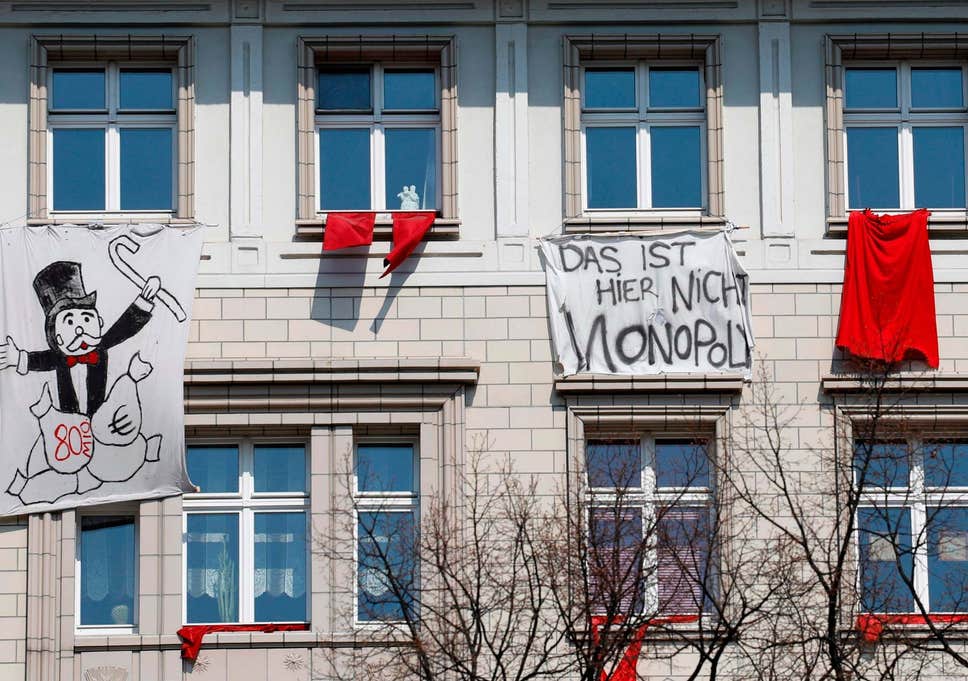
Berlin II 6.22.2019

Tenants who are evicted for nonpayment of rent would be required to notify and provide documentation to their landlord of an inability to pay. The legislation also would prohibit landlords from collecting late fees on late payments of rent. Tenants would still be expected to pay in full following the end of the state of emergency.

Preston’s office is in consultation with the city attorney to determine how quickly legislation can be passed, and he said the measure may take a month or two before implementation. However, if passed, the ordinance would apply to eviction notices starting the day it was introduced, March 10.

“As people lose income because of the coronavirus, many of them will be subject to evictions,” said Preston. “The danger now is that some of the bigger corporate landlords might use the fact that people have lower income as an opportunity to evict — for profit.”

At least one San Francisco landlord — GreenTree Property Management — has voluntarily instituted a moratorium on evictions for those experiencing financial hardship due to the virus.

https://48hills.org/2020/03/sf-heads-toward-eviction-moratorium/

It takes a suicide attempt. US Judge orders Chelsea Manning’s prison release

Amongst all the horrific Coronavirus news and the obscene reaction by the American President, there is one piece of good news today.

Justice has been served. I hope. Chelsea Manning can now resume her life and, hopefully, will never be incarcerated again.

It took a suicide attempt and a Federal Judge’s Order who said her testimony is no longer needed to end her outrageous jailing.

What was Chelsea’s offense?  Having been jailed already for  years, Chelsea refused to testify before yet another Grand Jury in its inquisition into Wikileaks founder Julian Assange and was imprisoned in May 2019.

Deutsche Welle 3.12.2020

A US federal judge on Thursday ordered the release of whistleblower Chelsea Manning from prison. Judge Anthony Trenga, in an order filed at a US District Court in Alexandria, Virginia, said her testimony was no longer required in the grand jury investigation into WikiLeaks.

Read more: WikiLeaks and Julian Assange: The never-ending story

He also rejected a request by Manning to cancel fines imposed on her for refusing to testify. The total amount — in fines — stands at $256,000 (€229,000).

The former Army intelligence analyst has been behind bars since May 2019, but this isn’t the first time she has been imprisoned.

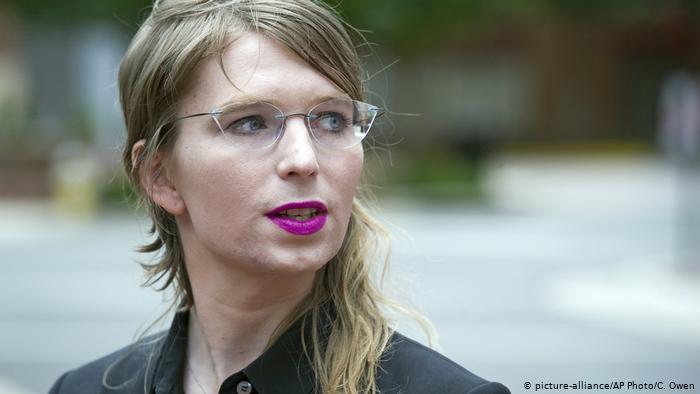
Chelsea Manning II 3.12.2020.jpg

The US government has accused her of colluding with WikiLeaks founder Julian Assange to release classified documents related to the wars in Iraq and Afghanistan. Manning was sent to prison in 2010 and convicted of espionage in 2013. She received a 35-year prison term, before then-President Barack Obama commuted the sentence and ordered her release in 2017.

The order for Manning’s release comes a day after her legal team said she was recuperating under medical care after a failed suicide attempt.

https://www.dw.com/en/us-judge-orders-chelsea-mannings-release-from-prison/a-52749227

‘He’s gonna get us all killed’: sense of unease after Trump coronavirus speech

The report may be a bit apocalyptic.

Nonetheless, it indicates the total lack of trust that Americans and the world in general have in the current White House incumbent.

Coming on top of the National Basketball Association (NBA) cancelling its season and megastar Tom Hanks being afflicted with Coronavirus the situation is spiraling into foreign territory.

The Guardian 3.11.2020

Donald Trump’s first Oval Office address – that almost sacred altar for US presidents on prime time television – came in January 2019 amid a partial government shutdown and asserted that only a border wall can keep out dangerous illegal immigrants.

His second such address on Wednesday night was again couched in terms around the need to resist a foreign invasion that is someone else’s fault. The problem is that the coronavirus is already inside America and spreading.

German poll I 12.26.2019

And the message was delivered by a 73-year-old man with a sniffing habit who did not seem to be a glowing picture of health nor entirely at ease reading from a TelePrompter. His bold assertion last week – “I like this stuff. I really get it … Maybe I have a natural ability.” – seemed even more incredible than before.

On Wednesday he wore a blue suit, white shirt and blue patterned tie – not his favourite red. He also sported a stars and stripes pin and had hands his folded before him (he said nothing about the potential perils of shaking hands). His face looked undeniably orange. Behind him were framed photos, including portraits of his parents, and flags and gold curtains.

The president touted his own sweeping travel restrictions on China and, far from expressing sympathy and solidarity with allies, argued the European Union “failed to take the same precautions and restrict travel from China and other hotspots. As a result, a large number of new clusters in the United States were seeded by travelers from Europe.”

Trump announced the US will bebanning travelers from many European countries to the US for the next 30 days with exemptions for Americans, permanent residents and family of US citizens who have undergone screenings and, mysteriously, the UK, despite it having a higher caseload than some other European countries. Could Brexit be the new TSA PreCheck?

The president then made an awful bungle. He said “these prohibitions will not only apply to the tremendous amount of trade and cargo, but various other things as we get approval”. Such words could trigger global economic panic. Trump was forced to hastily clarify on Twitter: “… very important for all countries & businesses to know that trade will in no way be affected by the 30-day restriction on travel from Europe. The restriction stops people not goods.”

He went on to talk of the pathogen as if it was a foreign army or terrorist network. “The virus will not have a chance against us,” he said. “No nation is more prepared or more resilient than the United States.”

And seen in the midst of an emergency, Trump could not resist some campaigning. “Because of the economic policies that we have put into place over the last three years, we have the greatest economy anywhere in the world by far,” he said.

“This is not a financial crisis, this is just a temporary moment of time that we will overcome together as a nation and as a world.”

Many observers found the address unreassuring and downright weird. Susan Glasser, a staff writer from the New Yorker, tweeted: “The militaristic, nationalistic language of Trump’s speech tonight is striking: a ‘foreign virus,’ keeping out China and Europe.”

David Litt, who wrote speeches for Obama, posted: “As a former presidential speechwriter, my careful rhetorical analysis is that he’s gonna get us all killed.”

Trump’s second Oval Office address was over in 10 minutes. Then a man off camera said: “We’re clear.” The president unbuttoned his jacket and exclaimed with relief: “OK!”

To millions of viewers, it was anything but.

https://www.theguardian.com/us-news/2020/mar/11/donald-trump-us-coronavirus-address


“HE’S DEFINITELY MELTING DOWN OVER THIS”: TRUMP, GERMAPHOBE IN CHIEF

I always thought Trump would be brought down by an event totally beyond his control.

It’s happening.

Unfortunately, a lot of people are going down with him.

Vanity Fair 3.11.2020 – Gabriel Sherman

Publicly, he sees it as yet another (“Fake News”) media war; privately, he worries about virus-carrying journalists on Air Force One. But cancel his rallies? “I’m not going to do it,” he says.

Ever since the coronavirus exploded outside of China at the end of January, Donald Trump has treated the public health crisis as a media war that he could win with the right messaging. But with cases now documented in 34 states and markets plunging, Republicans close to Trump fear his rosy assessments are fundamentally detached from reality in ways that will make the epidemic worse. “He is trying to control the narrative and he can’t,” a former West Wing official told me.


The problem is that the crisis fits into his preexisting and deeply held worldview—that the media is always searching for a story to bring him down. Covid-19 is merely the latest instance, and he’s reacting in familiar ways. “So much FAKE NEWS!” Trump tweeted this morning.

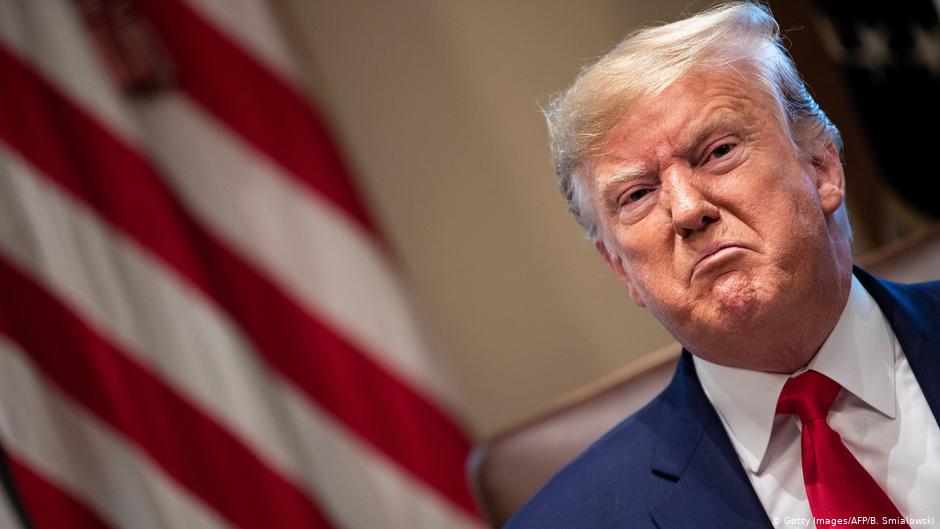
Trump Coronavirus I 3.11.2020.jpg

“He wants Justice to open investigations of the media for market manipulation,” a source close to the White House told me. Trump is also frustrated with his West Wing for not getting a handle on the news cycle. “He’s very frustrated he doesn’t have a good team around him,” a former White House official said. On Friday he forced out acting chief of staff Mick Mulvaney and replaced him with former House Freedom Caucus chair Mark Meadows. Trump thought the virus was “getting beyond Mick,” a person briefed on the internal discussions said. Trump has also complained that economic adviser Larry Kudlow is not doing enough to calm jittery markets. Last week Kudlow refused Trump’s request that Kudlow hold an on-camera press briefing, sources said. “Larry didn’t want to have to take questions about coronavirus,” a person close to Kudlow told me. “Larry’s not a doctor. How can he answer questions about something he doesn’t know?”

Trump found a willing surrogate in Kellyanne Conway, but Conway’s dubious claim on Friday that the virus “is being contained” only made the P.R. situation worse.

Trump’s efforts to take control of the story himself have so far failed. A source said Trump was pleased with ratings for the Fox News town hall last Thursday, but he was furious with how he looked on television. “Trump said afterwards that the lighting was bad,” a source briefed on the conversation said. “He said, ‘We need Bill Shine back in here. Bill would never allow this.’”

Trump’s press conference on Friday at the CDC was a Trumpian classic, heavy on braggadocio and almost entirely lacking a sense of the seriousness of the crisis. “I like this stuff. I really get it,” Trump told reporters, his face partly hidden under a red “Keep America Great” hat. “People are surprised that I understand it. Every one of these doctors say, ‘How do you know so much about this?’ Maybe I have a natural ability. Maybe I should’ve done that instead of running for president.” At another point Trump compared the situation to the Ukraine shakedown. “The [coronavirus] tests are all perfect. Like the letter was perfect. The transcription was perfect,” he said.

By now many of the president’s advisers are numb to this kind of performance. “There’s very little that fazes anyone now,” a former official said. But one person who spoke to the president over the weekend saw the press conference as an ominous sign. “He’s just now waking up to the fact that this is bad, and he doesn’t know how to respond.”

As Trump pushes a nothing-to-see-here message in public, sources said he’s privately terrified about getting the virus. “Donald is a famous germaphobe. He hates it if someone is eating nachos and dips a chip back in after taking a bite. He calls them ‘double dippers,’” a prominent Republican said. Former Trump aide Sam Nunberg recalled Trump’s response to the last major outbreak in 2014. “When I worked for Trump, he was obsessed with Ebola,” Nunberg told me. (One Mar-a-Lago guest disputed this and said Trump was handshaking with gusto this past weekend. “He was acting like the opposite of a germaphobe,” the source said.)


But thus far Trump’s private concerns haven’t affected his public response. Pressure from the public health community is mounting on Trump to cancel his mass rallies, but Trump is pushing back. “He is going to resist until the very last minute,” a former West Wing official said. “He may take suggestions to stop shaking hands, but in terms of shutting stuff down, his position is: ‘No, I’m not going to do it.’”

The White House did not respond to a request for comment.

https://www.vanityfair.com/news/2020/03/trump-germaphobe-in-chief-struggles-to-control-the-covid-19-story#intcid=recommendations_default-popular_32d76a7d-4801-42b4-94d9-41ec42ae4e61_popular4-1


Corruption probe. San Francisco Mayor wants Building Inspection Chief fired

San Francisco’s Department of Building Inspection (DBI) has for years been considered a department where relationships go a long way in getting permits approved.

Now the Mayor is calling for the ouster of the Director, Tom Hui. He has become enmeshed in the Federal and local probe involving City Hall.

Director Hui is just the tip of the iceberg. The real problem is with the entrenched civil service building inspectors who run DBI. If San Francisco is really serious about getting to the root of the systemic problem a thorough house cleaning of Building Inspection management is in order.

Ousting Director Hui will make for good press but the barnacle like influence the building inspectors wield will continue unabated.

Excerpted from San Francisco Chronicle 3.10.2020

San Francisco Mayor London Breed is urging that Tom Hui, the chief of the city’s Department of Building Inspection, be removed after the city attorney’s office alleged Hui abused his official position. The city attorney’s allegations came out of an investigation into corruption launched after the arrest of former Public Works Director Mohammed Nuru.

DBI Director III 3.10.2020.jpg

Breed sent a letter to the president of the Building Inspection Commission, Angus McCarthy, on Tuesday, recommending the commission remove Hui. Only the commission has the power to fire the building inspection director, though the mayor appoints four of the commission’s seven members. The Board of Supervisors appoints the other three.

“While this recommendation is pending, I have placed Mr. Hui on paid administrative leave from his position,” Breed wrote in the letter, which was reviewed by The Chronicle.

Hui’s annual city compensation, including salary and benefits, is $347,662. Hui, who joined Building Inspection in 1996, has been its director since 2013.

The department’s budget for the current fiscal year is $96.5 million, enough to fund around 269 full-time employees.

The city attorney’s office opened an investigation into corruption within city government following Nuru’s arrest on fraud charges in late January. The investigation has already yielded a flurry of subpoenas to construction firms, nonprofits and individuals suspected of playing roles in corruption schemes.

DBI Director II 3.10.2020.jpg

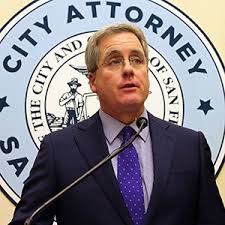
San Francisco City Attorney – Dennis Herrera

The city attorney’s office presented Breed with a lengthy memo Tuesday revealing the evidence they found tied to Hui. The memo, which was also reviewed by The Chronicle, indicated that Hui was initially cooperative with the investigation last month, but has since retained a criminal defense attorney. Whether he would continue to participate in the investigation was unclear, the memo said.

Breed’s letter to the Building Inspection Commission lays out that the investigation uncovered evidence that Hui “provided intentional preferential treatment and access to Walter Wong, a permit expediter who regularly conducts business with DBI.

The city attorney’s memo also indicates that Hui and Wong corresponded for years on a variety of topics, including Building Inspection Department policy, suggesting a close relationship between the two men.

https://www.sfchronicle.com/bayarea/article/Mayor-Breed-looks-to-fire-SF-building-inspection-15120965.php