
“Fight club” charges against deputies in jail case dropped by District Attorney

The usual story. Law enforcement looks after itself. Always

Excerpted from San Francisco Chronicle and San Francisco Examiner 2.2.2019

The San Francisco District Attorney’s office on Thursday dismissed charges against three sheriff’s deputies who stood accused of staging an inmate “fight club” in San Francisco jails in 2015 after defense attorneys brought forward evidence the Sheriff’s Department had botched the investigation.

Attorneys for the three accused deputies maintain evidence was mishandled and destroyed.

Nicole Pifari, attorney for one of the accused deputies,  in a Motion to Dismiss, told the Court, “Upon further inquiry, the Sheriff’s Department explained that ‘sometime in October,’ approximately seven months after they had received two preservation demands, the Sheriff’s Department destroyed the laptop’s hard drive by smashing it with a hammer.”

The District Attorney’s Office filed felony and misdemeanor charges against deputies Eugene Jones and Scott Neu in March 2015 after Public Defender Jeff Adachi brought forward information from inmates saying deputies had forced them to fight for food like gladiators and gambled on the winners. A third deputy, Clifford Chiba, was also charged with two misdemeanors.

The deputies threatened inmates with violence or withheld food if they didn’t fight each other for the deputies’ amusement, Adachi said.

“It’s extremely disappointing, and it sends the wrong message,” Adachi said. “You are forcing prisoners to fight against each other and betting money on it — and you get away with it. Yeah, charges were brought, but because the Sheriff’s Department bungled its own investigation you’re free to go. What kind of message does that send to people who always assume American jails are better?”

“The problem here as far as I can tell is they didn’t know what they were doing. Keystone cops were assigned to investigate their fellow deputies,” he added. “You can certainly wonder if the investigation was intentionally conducted in an incompetent manner.”

While San Francisco Superior Court Judge Ross Moody granted the district attorney’s motion to dismiss the criminal charges that carried possible state prison terms, a new prosecution team will review the case to determine whether there is enough untainted evidence to proceed with new charges.

At the center of the dismissal decision are statements the deputies were required to make during an internal affairs investigation by the Sheriff’s Department. Such statements, known as “compelled statements,” cannot legally be used in criminal probes because they violate a defendant’s Fifth Amendment right against self-incrimination.

Law enforcement agencies usually isolate administrative and criminal investigations from each other in a process called “walling off” to avoid such conflicts.

https://www.sfchronicle.com/crime/article/DA-drops-charges-in-SF-jail-fight-club-case-13580636.php

http://www.sfexaminer.com/charges-dropped-deputies-fight-club-case/

Role Playing on Canvas

Excerpted from Wall Street Journal 2.2.2019 and Visit to German Museum of History 10.2.2018

In the first half of the 20th century, German-speaking Europe experienced world wars, economic chaos and the rise of Nazism. It was an unlikely historical moment for artists to focus on the most private of genres, the self-portrait. But “The Self-Portrait: From Schiele to Beckmann,” a new exhibition that will be on view at New York’s Neue Galerie from Feb. 28 to June 24, suggests that this time and place produced the greatest flowering of art depicting the artist since the Renaissance.

There is nothing stylized about the haunted, unshaven face that Felix Nussbaum gave himself in “Self-Portrait With Jewish Identity Card,” painted around 1943. At the time, Nussbaum was in Brussels, where he had gone into hiding after escaping from a concentration camp. In the canvas, the artist is portrayed wearing a coat with an upturned collar bearing the yellow-star symbol that Jews had been forced to wear. In an ironic contrast, a small I.D. photo on a card he holds up for our inspection shows him in an earlier incarnation, wearing a suit and tie. Arrested soon afterward, Nussbaum died in Auschwitz in 1944.

Born in Osnabruck, the artist and his wife Felka went into hiding in Brussels in 1942.  This self-portrait with his wife and a young helper shows him as a devout Jew, dressed in a blue-and-white striped prayer shawl and wearing a kippa. They follow the front lines on a map, but their faces show no sign of hope for their rescue.  After being betrayed, the Nussbaums were sent on the last deportation train from Belgium to Auschwitz on July 31, 1944.

jewish-refugee-iii-2.2.2019.jpg


Punxsutawney has its Groundhogs. San Francisco has its Seagulls.

By Liz Heidhues. February 2, 2019

Today Punsxutawney Phil predicted an early thaw for his thousands of numb and frozen followers shivering in the fractured Polar Vortex.

San Francisco has its Seagulls to forecast climate change.

During the worst of the horrific wildfires of 2018 and 2017, we saw no Seagulls flying above the ocean breakers of the Lands End area.  The seabirds had fled the unhealthy smoke invading San Francisco’s coastline.

Painting of Seagull in Marin, by our daughter Atlanta Kane.


https://www.cnn.com/travel/article/groundhog-day-punxsutawney-phil-prediction/index.html

Holocaust-denying bishop loses case against German conviction

People of influence like this are beyond reprehensible

Deutsche Welle 1.31.2019

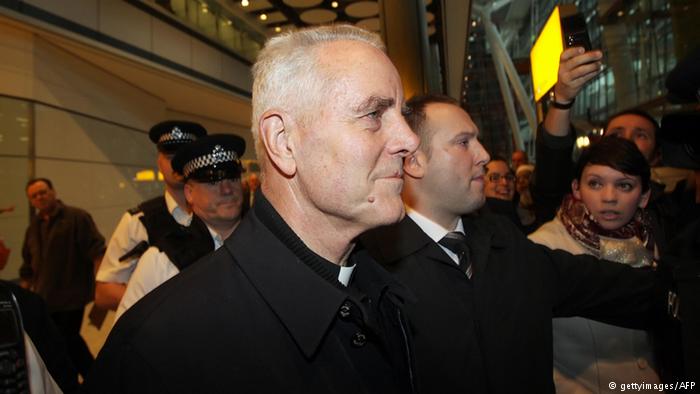
A Holocaust-denying former bishop from an ultra traditionalist Catholic splinter group on Thursday lost a European rights case against a conviction in Germany.

Holocaust denial is a criminal offense in Germany.

Richard Williamson, who denied that gas chambers were used in Nazi Germany’s death camps, argued his right to free speech was violated. But the European Court of Human Rights has described his sentence as “very lenient.”

Richard Williamson had been fined €1,800 ($2,066) for denying there were gas chambers in Nazi Germany’s death camps in a 2008 interview with Swedish television carried out in Germany.

The European Court of Human Rights (ECHR) in Strasbourg rejected Williamson’s rights case as “manifestly ill-founded,” describing the sentence imposed on him as “very lenient.” Originally, Williamson had been fined €12,000, but the amount was lowered following an appeal.

Williamson, who is British, argued that the 2013 sentence violated his right to free expression and that Swedish rather than German law should have applied to the interview. Holocaust denial is not illegal in Sweden. 

Williamson was excommunicated by the Vatican in 1988 but allowed back into the church in 2009. After carrying out an unauthorized consecration of a bishop in Brazil, he was excommunicated again in 2015.

Blue Cheer Drummer. Pioneered heavy metal.

It’s Only (Heavy Metal)  Rock and Roll. Legacy of the San Francisco Music Scene

San Francisco Chronicle 1.31.2019

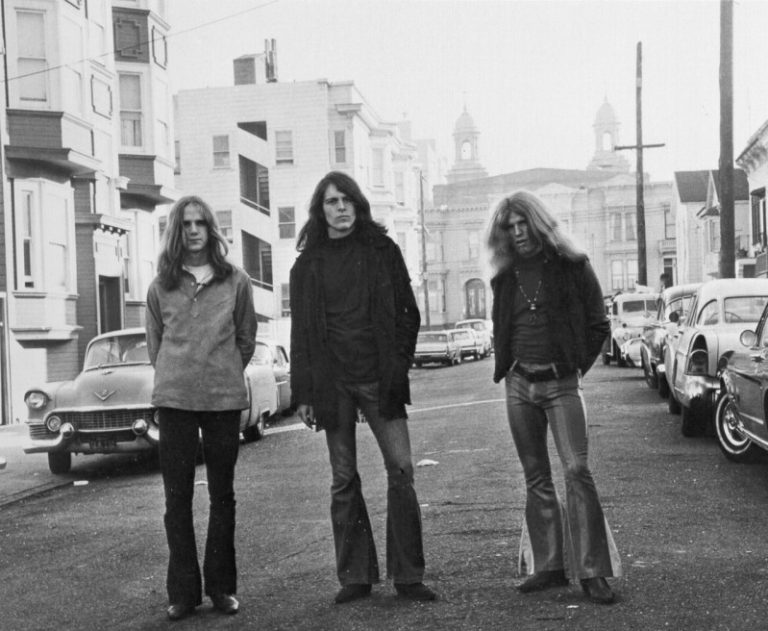
Paul Whaley, whose thrashing drum sounds lifted the San Francisco blues rock trio Blue Cheer out of the psychedelic rock haze and into the realm of proto-heavy-metal, died Monday, Jan. 28, at his home in Regensburg, Germany. He was 72.

The cause was heart failure, said Eric Albronda, the band’s co-founder and former manager.

Whaley was part of the core power trio of Blue Cheer, the loudest band to come out of the Summer of Love era. He completed a lineup that featured singer and bass player Dickie Peterson and guitarist Leigh Stephens in 1967, coming into the fold a year after the group formed in the city’s Haight-Ashbury district.

https://datebook.sfchronicle.com/music/paul-whaley-drummer-who-invented-heavy-metal-with-blue-cheer-dies-at-72


True San Franciscan. Mayor London Breed

January 30.2019 by Lee Heidhues

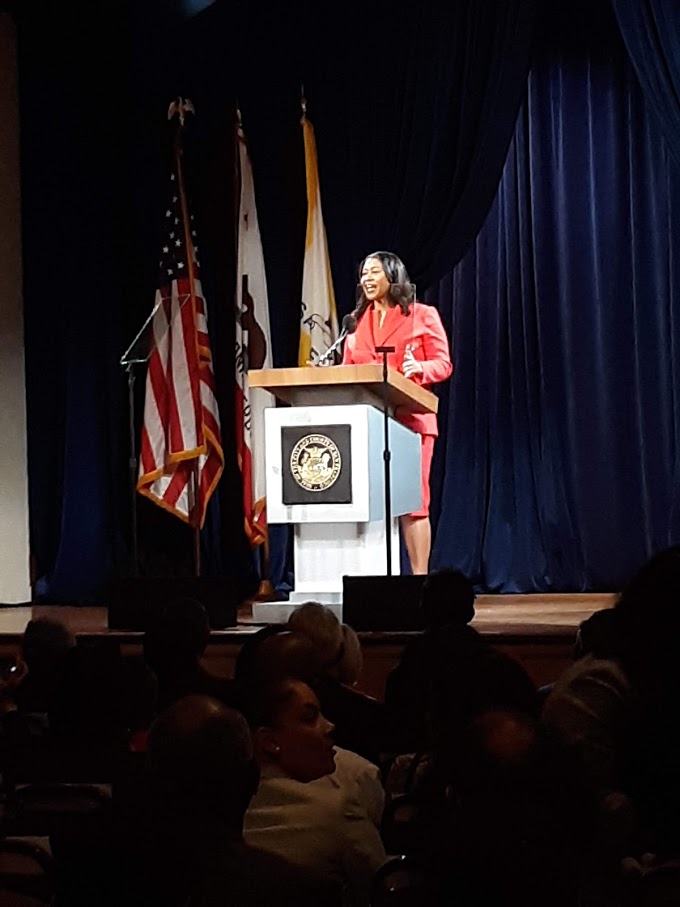
Leesperspectives attended San Francisco Mayor London Breed’s first “State of the City Address” at the new National LGBTQ Center for the Arts at 170 Valencia Street. An historic Art Deco building.

The massive hall was packed with a  veritable who’s who of City political life. Former Mayor Willie Brown, still a major presence and mentor to the new Mayor, was in the front row.

Mayor Breed, born and raised in the nearby Western Addition housing projects, was beaming as she gave her first annual address to a packed and enthusiastic gathering.

The 30-minute talk was straight forward, no nonsense and laced with tales of the City and her goal to improve the quality of life here.

The Mayor, obviously proud of The City, cited a list of her accomplishments and goals in the coming year.

Foremost on Mayor Breed’s all-inclusive list are humane policies for dealing with the homeless, clean streets, safe streets and affordable housing.

The Mayor specifically mentioned a 5.8MM budget item to provide for legal assistance to San Francisco’s tenant population faced with displacement via eviction.

The Mayor gave a shout out to several San Franciscans who currently play a role in State and Federal government; Gavin Newsom, Dianne Feinstein, Nancy Pelosi and Kamala Harris.

The Mayor, to raucous cheers, reminded the crowd, “Senator Harris could be the next President of the United States.”

Photo:  Lee Heidhues

Warren Eyes White House. Big Banks Brace for Beating

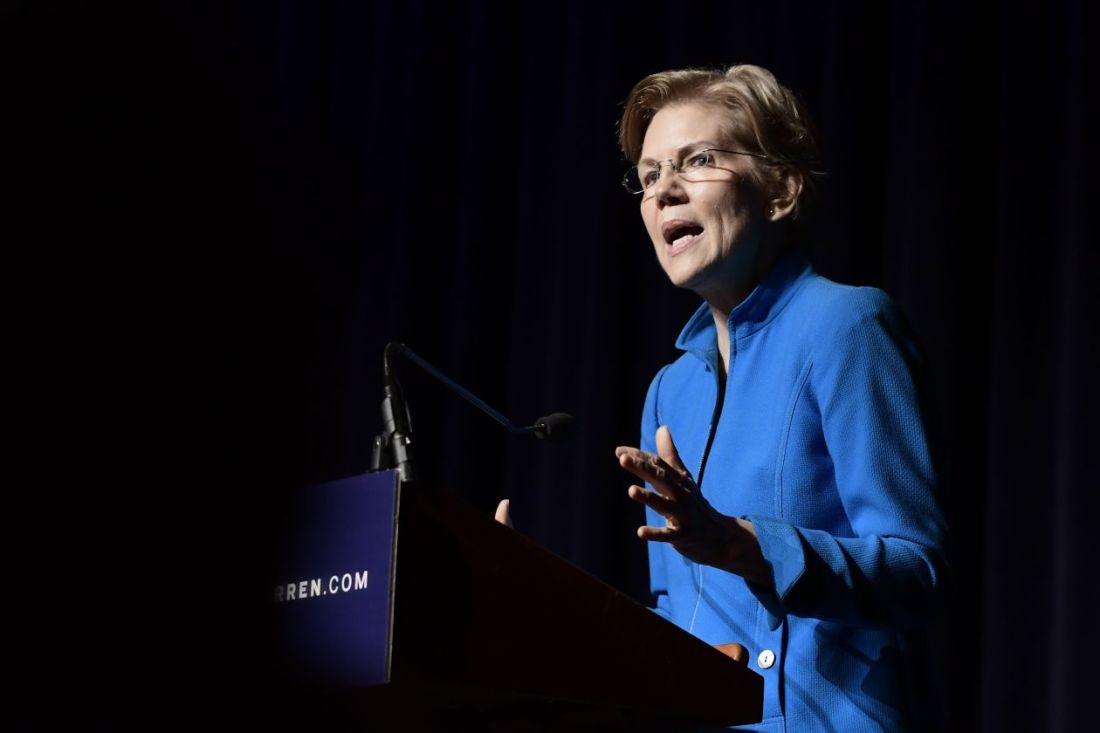
Elizabeth Warren is Serious. That is why The Senator is THE presidential candidate who terrifies the capitalist markets, the banking industry in particular.

Wall Street Journal 1.29.2019

Elizabeth Warren’s presidential bid will be driven by her populist assault on big banks that helped her rise to prominence during the financial crisis and in her successful 2012 Massachusetts Senate race.

Although the economy has recovered and new, stricter regulations remain largely in place, Ms. Warren sees cause for further vigilance, and many on Wall Street dread another round of criticism on an even bigger national stage—the Democratic presidential primary race.

“Banks exercise too much power in Washington,” Ms. Warren said in a recent interview. “One of the main things I’ve done is grass-roots organizing to wave the flag and point out what’s going on here and get some political pushback. Otherwise Congress and the administration will just continue to work for the big banks.”

U.S. banks are approaching Ms. Warren’s candidacy with trepidation. “The banking industry is a lot different than it was in 2008,” said Richard Hunt, president and chief executive of the Consumer Bankers Association. “Most people know that but she still seems to be living in 2008-land.”

As president, Ms. Warren would represent a striking change to the Trump administration’s deregulatory approach. Bank officials worry she would take a more adversarial tack than the Obama administration, which put the financial sector under tougher scrutiny after the 2008 crisis.

Her campaign policy proposals include breaking up the biggest U.S. banks by reviving a modern version of the Depression-era Glass-Steagall Act, which had separated commercial and investment banking before it was repealed in 1999. She backs a mandate that workers elect at least 40% of corporate boards, holding Wall Street executives liable for criminal misconduct at their firms and tougher federal oversight of the credit-reporting industry in the wake of the hack of Equifax Inc.

If elected, she would likely appoint regulatorswho would push for companies to disclose their spending on political activities as well as complete a raft of unfinished curbs to compensation for financial firms from the 2010 Dodd-Frank financial overhaul, measures that supporters say will damp excessive risk taking.

An indirect threat to the industry may be the reception Ms. Warren’s ideas receive with primary voters. Their response, if energetic, could nudge other Democratic presidential hopefuls to embrace the proposals as well. After the 2016 presidential primary, Vermont Sen. Bernie Sanders’s popular call for free college tuition found its way into the platforms of other liberal Democrats.

“She has this sort of applause line that we are all crooks, which is scary that you may hear that for a year and a half,” said a large U.S. bank executive who asked to remain anonymous for fear of a Warren backlash.


“They’re right to be scared because the public’s anger with the big banks remains raw,” said Robert Weissman, president of Public Citizen, a consumer-advocacy group. “I think they will respond to presidential candidates who give voice to that feeling.”

Ms. Warren’s signature accomplishment before she was elected was helping the Obama administration launch the Consumer Financial Protection Bureau, an idea she floated in a 2007 article. Since then, the 69-year-old former Harvard Law School professor has become a formidable obstacle to both Republicans seeking to ease the postcrisis financial rulebook she helped craft and Democrats she viewed as too cozy with the financial industry.


“Bad Judges Deal.” So Says Wall Street Journal

WSJ says it is “Bad. ” It must be Good.

Wall Street Journal Editorial 1.30.2019

President Trump’s best achievement has arguably been judicial selection. From the Supreme Court to the appellate circuits to district-court nominees, he is remaking the federal courts. So more than a few eyes widened this month when the White House omitted three names from the list of 50 judges Mr. Trump sent back up to the Senate. What intrigue gives?

The three missing names were Californians nominated to the Ninth Circuit Court of Appeals last year. Two other Ninth Circuit nominees, Eric Miller of Washington and Bridget Bade of Arizona, were renominated. But Daniel Collins, Kenneth Lee and Patrick Bumatay were withheld because we’re told the White House is negotiating with California Democrats Dianne Feinstein and Kamala Harris.

Ms. Feinstein and the White House counsel’s office have been pen pals on this for some time. In a November letter to new White House counsel Pat Cipollone, Ms. Feinstein and Ms. Harris requested “that the White House work with us to reach an agreement on a consensus package of nominees.” The Democrats want to pick one name from the White House list, one from their own, and a third consensus nominee.

Why Mr. Cipollone or the President would agree to this or any other deal with these Senators is a mystery. The hope seems to be that a White House concession would somehow produce less resistance to Mr. Trump’s nominees. And this would be useful if the President gets the chance to replace, say, Justice Ruth Bader Ginsburg on the Supreme Court.

It’s hard to believe someone could think this is plausible. Ms. Harris is running for President and will oppose any Trump nominee to the High Court. Ms. Feinstein was once more reasonable, but she and Ms. Harris were two of the worst mudslingers on the Judiciary Committee that smeared Brett Kavanaugh.

A concession to them now on nominees would rightly be seen as political weakness. It would concede influence that neither Senator has earned and set a precedent for other Democrats who would demand similar consideration. The result would be nominees who aren’t nearly as qualified, or as originalist in their thinking, as Mr. Trump’s nominees have been.

The California Democrats are demanding in particular that Mr. Trump dump Patrick Bumatay, an assistant U.S. Attorney who has specialized in drug enforcement. He also happens to be a 40-year old gay Filipino-American who believes in the original meaning of the Constitution.

Democrats are apparently frightened that at his age and with his political identity, he might eventually be Supreme Court material. What a disgrace it would be if Mr. Trump threw over a gay minority nominee because of opposition from Senate Democrats who accuse Republicans of being anti-gay and anti-minority.

Mr. Trump’s other Ninth Circuit nominees from last year are also distinguished. Mr. Collins is a lawyer in private practice who was an associate deputy attorney general and has worked on issues like child exploitation. Mr. Lee, also now in private practice, was an associate counsel to George W. Bush and has a pro bono practice for the poor and incarcerated.

Consulting Senators on judicial nominees from their home state is a courtesy, not a right. It hails from a day when most Senators operated in good faith, unlike today. Democrats are trying to cajole White House concessions now because they know it will be harder to defeat nominees with 53 GOP Senators.

Remaking the federal judiciary may be the only thing a Republican Senate can accomplish in divided government. The White House shouldn’t water down the quality of its nominees to please Democrats who won’t be helpful when their votes are really needed.

Photo: Ninth Circuit Courthouse – San Francisco, CA


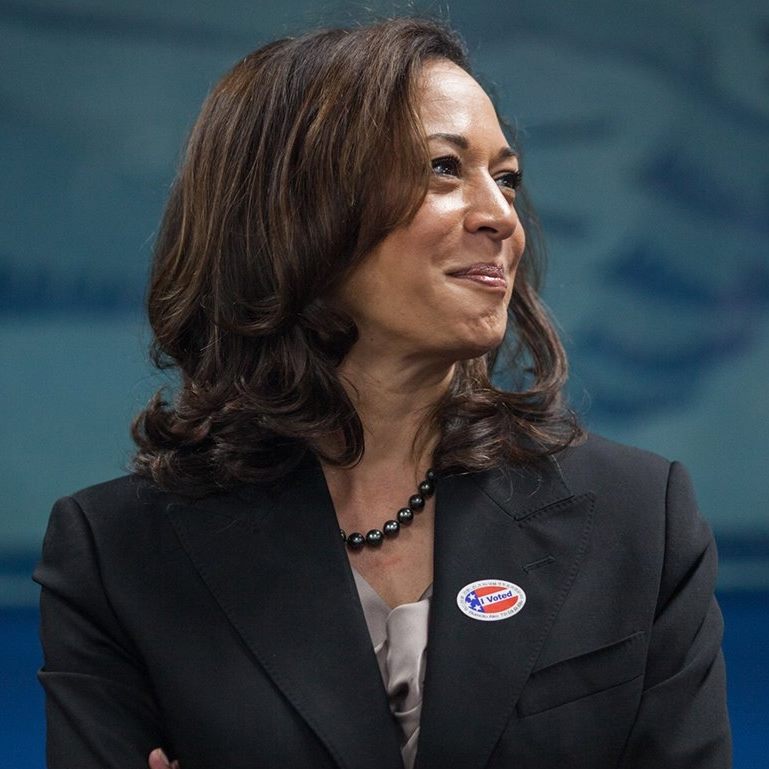
Telegenic: Kamala Harris

Liz Heidhues and I were discussing the definition of Telegenic this morning.

Definition of telegenic:  Well-suited to the medium of televisionespecially having an appearance and manner that are markedly attractive to television viewers

https://dictionary.cambridge.org/us/dictionary/english/telegenic