Booker T. Jones Financed Music Lessons With a Paper Route

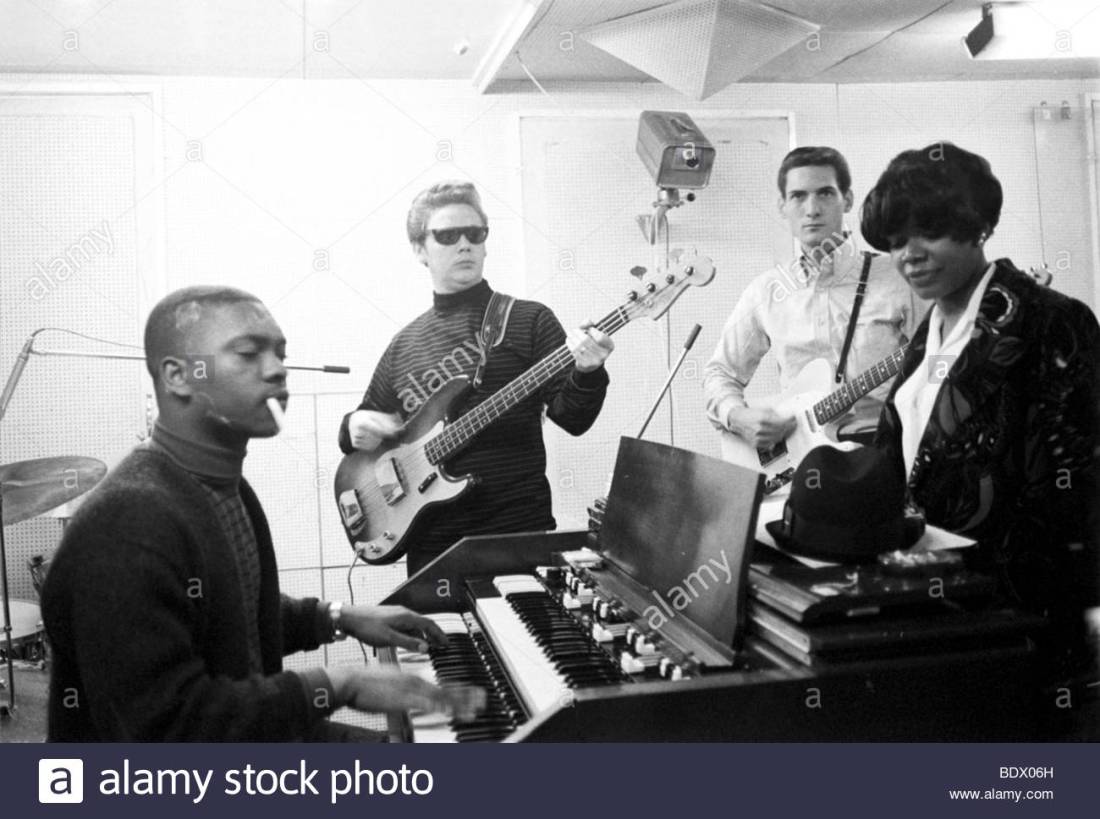
As tumultuous 2019 thankfully draws to a conclusion here is an upbeat story about a true Americn Icon.  The classic song “Green Onions” was a favorite in my youth. It can be heard in movie soundtracks, including “Get Shorty.” Booker T above at the keyboards in London, 1967.. Carla Thomas is on the right. A link to “Green Onions” is attached. Happy listening and Happy New Year 2020.


Wall Street Journal 12.24.2019

The Grammy-winning musician discusses his childhood in Memphis, cutting class for his first recording session and an impromptu performance at a local barbershop.

Booker T. Jones, 75, is a Grammy-winning songwriter, producer and arranger, and former leader of Booker T. & the MGs. He is the author of “Time Is Tight: My Life, Note by Note” (Little, Brown). He spoke with Marc Myers.

I had a pretty decent throwing arm when I was 12. From my bike, I could hurl newspapers so they’d land on porch steps or the porch. My arm let me finish my paper route fast and sign up more customers.

I needed the money. I was paying for weekly clarinet and piano lessons at Elmertha Cole’s house. She lived near our home in Memphis. One day, in Mrs. Cole’s dining room, I saw a Hammond organ for the first time. I was in awe. There were two keyboards, pedals and lots of buttons and drawbars. I decided to add organ lessons by delivering the heavy Sunday paper. My father drove me around from house to house.

I grew up on Edith Street in Memphis. We lived in a one-story, 1,300-square-foot brick house that my dad bought in 1950. My mother, Lurline, was an accomplished classical and gospel pianist. In church, she played a pipe organ. Parishioners begged my father to sing.

I was an only child, so I was protected, looked after and cared for by my family. I knew I was lucky. Half my friends didn’t have fathers at home. Sitting on my dad’s knee was a luxury.

Booker T. Jones with his parents, Lurline and Booker T. Sr., at their Memphis home in 1945. PHOTO: ARTIST COLLECTION

At the start of the 1950s, music was everywhere in Memphis, especially on the radio. Even white stations played music by black artists, which they weren’t supposed to do. Walking around, live music was always three feet away from you in clubs and on the street. My first instrument was a toy drum my mother bought me.

Mama taught me to play piano when I was 9. That year, my father, Booker T. Sr., bought me a clarinet. I didn’t have a record player, so the radio helped me along. I listened a lot to Benny Goodman.

Months after I started taking lessons, my father took me to Cade’s Barbershop. After my haircut, I was asked to play. I picked “Skokiaan,” a song I had heard on a TV show. When I finished, there was silence, which scared me. Then the men smiled and wouldn’t stop clapping.

By the time I was 12, I was being paid to play piano at Sunday afternoon teas for church ladies. For me, music lessons and practicing weren’t chores. My family loved music and so did I.

Mr. Jones at about age 8, second from right, with his friends Greg, Rudy and Skipper near his home in Memphis. PHOTO: ARTIST COLLECTION

My first recording session pulled me out of school in 1960. I was in math class when my friend, David, knocked on the door with a fake pass. I grabbed a baritone sax from the band room and we drove off to Satellite Recording Studios. By then, I could play all the reed instruments.

We recorded behind Rufus and Carla Thomas. The following year, Satellite changed its name to Stax. I formed a band to back up artists who recorded there. But we needed a name. Al Jackson, our drummer, looked at an MG parked outside. He suggested Booker T. & the MGs.

In 1962, I was in the studio fooling around with blues chords I had come up with in my 11th grade music-theory class. The MGs fell in behind me, and we recorded a song.

When bassist Lewie Steinberg heard the playback, he said, “Man, that’s so funky, it smells like onions!” Mrs. Axton, Stax’s co-owner, suggested “Green Onions.” The instrumental became a #3 Billboard pop hit.

Today, my wife, Nanine, and I live in Carson Valley, Nev., east of Lake Tahoe. We moved here about a year ago. We have lake and golf-course views.

My wife is my biggest fan. We met on a blind date in 1982. She said, “You have the same name as one of my favorite musicians.”

The little drum my mother bought me is long gone. But I have the sticks. I keep them in my studio for inspiration.

Booker’s Beat
Ray Charles, 1960. PHOTO: BETTMANN ARCHIVE

Favorite organ record: Ray Charles’s “One Mint Julep” (1960)

Number of organs at home: Three: a Hammond B3, an M3 and a digital B3 MK2

First L.A. home: A horse ranch in Malibu purchased in 1968

Seller: Actress Lana Turner

Impression: When she stepped out of her limo at the ranch, she was dressed to the nines

Ranch’s neighbor: Bob Dylan

https://www.wsj.com/articles/booker-t-jones-financed-music-lessons-with-a-paper-route-11577204449?mod=searchresults&page=1&pos=1

Ex POA boss threatened Supervisor. He’d leak husband’s private police records

The year 2019 comes to an end and with it a reminder that going into 2020 it’s going to a rough year politically.  Locally and nationally.

Mission Local 12.30.2019

‘You can tell Sandra the next time she opens her mouth, I’m going to release John’s record to the Board of Supervisors,’ Gary Delagnes tells Mission Local 


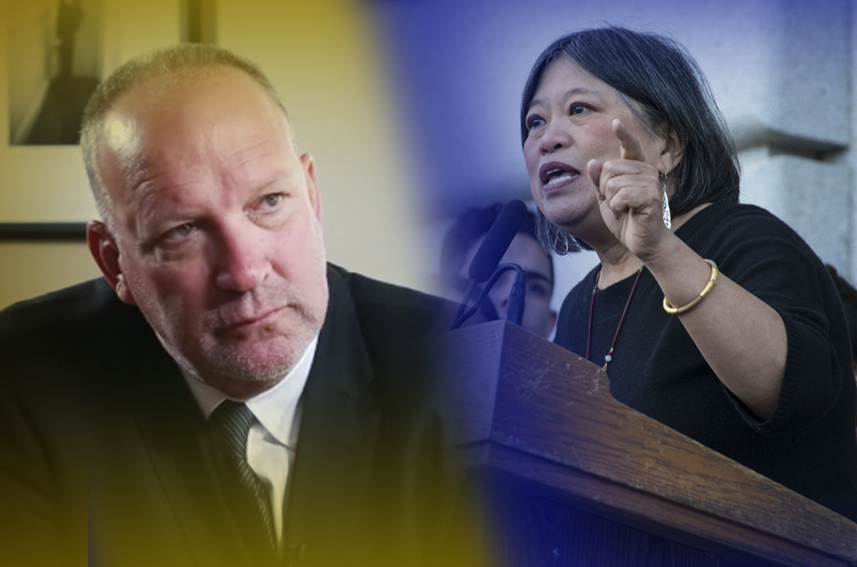
In a bellicose email obtained by Mission Local, former police union boss Gary Delagnes bemoaned Supervisor Sandra Lee Fewer’s voting record, and threatens to humiliate her by releasing the confidential disciplinary files of her husband, retired San Francisco Police Sergeant John Fewer. 

“ … Here is the deal. We know that Supervisor Fewer is a fighter for the oppressed, opposed to this horrible capitalistic society, and abhors any form of police brutality so I will be releasing John’s disciplinary record (which is quite substantial and entertaining),” reads the letter. 

“Perhaps he [John Fewer] should sit down and think about all of the complaints he received, and maybe recall some of his alleged actions, as I did last night, and let’s see how that will play in front of his wife’s colleagues at the Board. His disciplinary record is quite entertaining, I assure you. They are free to call my bluff if they wish.” 

Delagnes wrote this email in the summer of 2018 to retired SFPD Commander Rich Corriea, tasking him to send it along to John Fewer. “He could’ve just asked me for John’s email address,” said Corriea. He described Delagnes’ threats as “troubling, even evil.”

Delagnes also cc’d Police Officers Association legal defense administrator and former captain Paul Chignell, retired chief Tony Ribera, and John Tennant — the POA’s former attorney.

While this email was sent on June 28 of 2018, Mission Local only obtained it this month. Corriea, Ribera and Delagnes himself confirmed its contents.

At the time of its writing, Delagnes, the president of the union from 2004 to 2013, was employed as a POA consultant. In February 2019 he was ousted from this post following a Facebook tirade against the deceased former Public Defender Jeff Adachi.

Neither John nor Sandra Fewer called Delagnes’ bluff. Instead, they called the City Attorney’s office, which directed them to the DA’s office, then led by George Gascón. The status of the case is uncertain, but it appears to be dormant. Calls to the DA’s office — now helmed by Suzy Loftus, with Chesa Boudin to be sworn in on Jan. 8 — were not returned.

“I saw it as a threat to harm my family,” says Sandra Lee Fewer. “I should think twice. I should always keep this in the back of my mind whenever I’m voting on or deliberating an issue of concern to the police.”

The personnel records Delagnes threatened to disseminate, Sandra Lee Fewer continued, “are protected under the law. But the way they worded this is, they are above the law. And they can do this.”

Multiple messages left for POA president Tony Montoya were not returned; it is unclear if he knew of Delagnes’ email.

Delagnes, however, freely acknowledged he sent it. “She was ripping the POA; I don’t remember what she was ripping them about back in those days. I got angry at the time, as I used to do — not anymore, I’m retired,” he said.

When asked what the purpose of this email was, he replied, “You can tell Sandra the next time she opens her mouth, I’m going to release John’s record to the Board of Supervisors.”

But, he continued, “I can’t do that. I ran it by a lawyer. I ran it by [POA counsel] Gregg Adam. It’s a violation of state law. Definitely a misdemeanor. Could be a felony!”

In fact, it could be extortion or blackmail.

Both Sandra and John Fewer took it that way: “I saw it as what he was saying is ‘if you don’t get on board with us, we’ll harm your family,’” said Sandra Lee Fewer. Adds John: “The intention was to embarrass Sandy, or harm her. Or, if she was a weak person, to get her to go along with them a little more, see things their way.”

Mission Local shared the contents of the email with several law professors. While it’s clear in the letter that Delagnes is threatening to release negative information to harm his enemies, this alone does not constitute extortion or blackmail. To reach that threshold, he would’ve had to ask for something in return to prevent the release of damaging information — and Delagnes’ letter is ambiguous about this.

“Saying ‘you better worry tonight, because tomorrow you’ll read this in the paper’ — that’s not extortion,” explains John Diamond, a professor at UC Hastings.

“The ironic thing about extortion is: You can threaten to disclose something. And you can ask for things. But you can’t put the two together.”

Delagnes, in his letter, does not make a clear ask. There is, in the end, no law against taking political vengeance.

“Not that I think nothing wrong happened here,” says Scott Altman, a professor at the USC Gould School of Law, “but proving beyond a reasonable doubt that [Delagnes] was seeking to obtain property or an official act seems like it’d be really hard to do based on that vague language.”

And yet the language Delagnes subsequently used in conversation with Mission Local was far less vague than his one-page letter, in which there was no direct causality between demands made of Supervisor Sandra Lee Fewer and the threatened release of John Fewer’s confidential records. What Delagnes told us in December 2019 is remarkably direct and causal: You can tell Sandra the next time she opens her mouth, I’m going to release John’s record to the Board of Supervisors.

Delagnes’ letter “is very far from explicit,” says Altman. “It’s unclear what he wanted.” Based on Delagnes’ conversation with Mission Local, however, it is clearer. And it’s also clear, based on his own words, that he put thought and effort into following through with his threat.

Delagnes says he reconsidered, however. Not only is it illegal to release these confidential records — nor should he even be rummaging through them — but it would be deeply hypocritical for Delagnes to disseminate protected police files.

He acknowledges this: “As president of the POA, I’ve fought the release of police records for a long time. To a certain degree, I had to say ‘I’m doing the same thing I’m fighting,’” Delagnes says. “As much as I do dislike Rich, Sandy, and John, I have a loyalty to cops. I would’ve set a terrible precedent releasing his disciplinary record.”

And yet, if those files just happened to land on Delagnes’ desk, it’s not illegal for him to distribute them — just as it wouldn’t be illegal for a journalist to publish them. Anyone unfamiliar with these rules learned them following Adachi’s sudden death in February, when confidential police files regarding the Public Defender’s last hours were quickly leaked by the SFPD and disseminated via the media.

The expediency of these leaks — and the ongoing lack of accountability — can hardly have been lost on the Fewers.

Delagnes, 65, ascended to the POA’s vice presidency in 1990. Under his leadership, the San Francisco Police Department became one of the nation’s best-compensated police forces, going from the state’s 92nd-best-paid department in 1992 to become one of the richest big-city outfits in all of California.

At the same time, he served as the vocal and very visible face of a union increasingly viewed as a reactionary force — and, to a greater and greater extent, isolated from power and on the political outs. In 2015, he was fined $5,500 for illegal lobbying due to an email he sent then-Supervisor Malia Cohen regarding a proposed non-binding resolution cheering Black Lives Matter efforts: “If you become involved in this legislation you can rest assured that any relation with the POA is over,” reads his note to Cohen. “We went above and beyond for you and this is how you repay us. You had better think long and hard before lending your name to this. I am astounded that you would involve yourself in this absolute bullshit.”

The POA alienated Supervisor — and later, mayor — London Breed; it has, in recent years, grown more and more politically ineffective. Its attempts to bypass the Police Commission and write its own rules regarding Tasers, Proposition H of 2018, was obliterated by a 60-40 margin, despite the police union outspending its foes by a factor of five. In 2019, some $700,000 marshaled by the POA was put into ads labeling DA candidate Chesa Boudin “The No. 1 choice of criminals and gang members.” Boudin won his race, and the POA’s negative ads were credited with galvanizing his supporters.

Delagnes, in his conversation with Mission Local, was clearly incensed to have seen John Fewer holding a sign for “Chelsea Boudin” (Whether intentionally or not, Delagnes repeatedly referred to the DA-elect as “Chelsea”).

Fewer said the June 2018 letter has not altered her on-the-job performance, via either fear or retribution.

“Tony Ribera came to ask me for an additional $50,000 for batting cages at Washington High,” she said. “He did this knowing he was cc’d on that email, and he never reached out to me and distanced himself from it. I granted it.”

Delagnes, for his part, did not seem concerned that he broke any laws or would face any consequences. “I don’t think anybody goes to jail in San Francisco,” he said.

“You think Chelsea is going to prosecute me?”


Inches matter. 49ers nab No. 1 seed. Last play. Nail biting victory over Seahawks

Inches matter.  The difference in the 49ers win over Seattle. The final climactic play found the 49ers stopping the Seahawks literally inches from the goal line on the final play. 

49ers first playoff  game is January 11, 2020 at Levi’s Stadium

Breaking News 4.15.2019

San Francisco Chronicle December 29, 2019

Eric Branch

SEATTLE – The only thing the 49ers lost at CenturyLink Field on Sunday night was the monkey they’d been lugging on their back for the past seven seasons.

Yes, the 49ers finally won a game at Seattle and their heart-stopping 26-21 victory came with some valuable parting gifts: They earned the No. 1 seed in the NFC playoffs, which comes with a first-round bye and home-field advantage throughout the postseason.

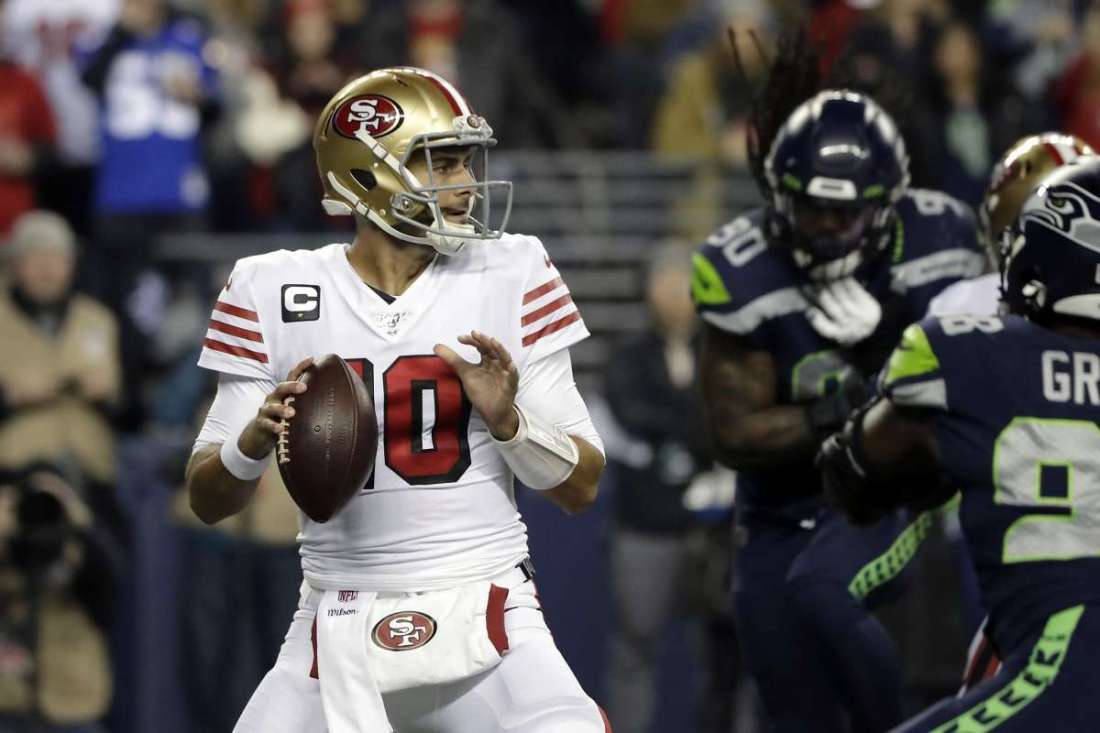
It didn’t come easily: The 49ers nearly squandered a 12-point lead in the final six minutes, but won their first game at CenturyLink Field since 2011 when linebacker Dre Greenlaw tackled tight end Jacob Hollister inches from the goal line on fourth-and-goal from the five-yard line with nine seconds left.

Niners Win II 12.29.2019

The 49ers (13-3) arrived with horrific memories of always ear-splitting CenturyLink Field, where they’d lost eight straight games dating to 2012 and been outscored 216-96 in the process. The 49ers hadn’t scored more than 20 points in Seattle since 2008.

On Sunday, however, their offense was at its best in big moments.

49ers schedule

Date Opponent Time/Result
Sept. 8 at Tampa Bay W, 31-17
Sept. 15 at Cincinnati W, 41-17
Sept. 22 Pittsburgh W, 24-20
Oct. 7-x Cleveland W, 31-3
Oct. 13 at L.A. Rams W, 20-7
Oct. 20 at Washington W, 9-0
Oct. 27 Carolina W, 51-13
Oct. 31-y at Arizona W, 28-25
Nov. 11-x Seattle L, 27-24 (OT)
Nov. 17 Arizona W, 36-26
Nov. 24 Green Bay W, 37-8
Dec. 1 at Baltimore L, 20-17
Dec. 8 at New Orleans W, 48-46
Dec. 15 Atlanta L, 29-22
Dec. 21-z L.A. Rams W, 34-31
Dec. 29 at Seattle W, 26-21

In the second half, the Seahawks, who trailed 13-0 at halftime, scored three touchdowns to close within one score and the 49ers answered the first two scores with swift touchdown drives of their own that lasted a combined six minutes and 25 seconds.

The 49ers took a 26-14 lead – and seemingly put the game out of reach – on running back Raheem Mostert’s 13-yard run with just under six minutes left.

But the Seahawks closed to within 26-21 just over two minutes later when Wilson capped a seven-play, 60-yard drive with a 14-yard touchdown to D.K. Metcalf with 3:40 remaining.

The 49ers went three-and-out on their next drive, on which center Ben Garland was flagged for a 15-yard unnecessary roughness penalty, to set the stage for the Seattle’s final drive.

On the drive, Seahawks faced fourth-and-10 at the 12-yard line with 42 seconds left when Wilson completed an 11-yard pass to wideout John Ursua. However, the Seahawks, who were out of timeouts, took a delay-of-game penalty.

After Wilson spiked the ball to stop the clock, he threw two incompletions before his fourth-down pass to Hollister came up inches short.

Jimmy Garoppolo completed 18 of 22 passes for 285 yards, and wideout Deebo Samuel had five catches for 102 yards and added a 30-yard touchdown run. Wilson completed 25 of 40 passes for 233 yards with two touchdowns.

The 49ers dominated the first half, which ended with them leading 13-0 and outgaining the Seahawks, 222-79.

The 49ers took a 3-0 lead on their first drive, which was headlined by Garoppolo. He completed 4 of 4 passes for 38 yards, including an 11-yard completion to outstretched tight end George Kittle on third-and-7.

The drive was capped by a 47-yard field goal by Robbie Gould.

On their next possession, the 49ers began at their six-yard and raced down the field on an eight-play drive that included completions of 30 yards to Samuel and 15 yards to Kittle. It was capped by a 30-yard run on a reverse by Samuel, who did a 360-degree spin at the 10-yard line to avoid cornerback Tre Flowers and give the 49ers a 10-0 lead.

The 49ers scored on their first three drives – Gould added a 30-yard field goal – and Garoppolo completed his first nine passes, totaling 122 yards. Garoppolo didn’t throw his first incompletion until there was 9:28 left in the second quarter.

Meanwhile, the Seahawks didn’t cross midfield until there was three minutes before halftime, but their best drive of the first half ended when running back Marshawn Lynch was stopped by Nick Bosa on fourth-and-1 at the 31-yard line.

Trailing 13-0, the Seahawks’ offense awoke in the third quarter with a touchdown drive that included runs of 8 and 15 yards by Lynch. But the 11-play, 62-yard march was finished by Wilson, who stepped up in the pocket to avoid pressure and rifled a 14-yard touchdown to wideout Tyler Lockett, who was well covered by cornerback Ahkello Witherspoon in the back of the end zone.

With the crowd back in the full throat, the 49ers’ response was immediate and aggressive.

On their first offensive play, Garoppolo lofted a 49-yard pass to fullback Kyle Juszczyk, who got wide open down the right sideline by running past linebacker Mychal Kendricks. The 49ers finished the two-minute, 21-second drive four plays later on a two-yard run by Mostert. Their two-point conversion attempt failed and they had a 19-7 lead late in the third quarter.

Seattle answered with a 75-yard touchdown drive in which Wilson completed 5 of 5 passes for 44 yards. Lynch’s one-yard leap over the top trimmed the Seahawks’ deficit to 19-14 with 9:55 left.

https://www.sfchronicle.com/49ers/article/49ers-nab-No-1-seed-with-a-thrilling-victory-14938488.php

Happy New (Election) Year 2020

This is what we have to look forward to politically for the next 10 months….

Credit…Bethany Mollenkof for The New York Times (pictured above)

New York Times 12.29.2019


GOLDEN VALLEY, Ariz. — Great American Pizza & Subs, on a highway about 100 miles southeast of Las Vegas, was busier and Trumpier than usual. On any given day it serves “M.A.G.A. Subs” and “Liberty Bell Lasagna.” The “Second Amendment” pizza comes “loaded” with pepperoni and sausage. The dining room is covered in regalia praising President Trump.

But this October morning was “Trumpstock,” a small festival celebrating the president. The speakers included the local Republican congressman, Paul Gosar, and lesser-known conservative personalities. There was a fringe 2020 Senate candidate in Arizona who ran a website that published sexually explicit photos of women without their consent; a pro-Trump rapper whose lyrics include a racist slur aimed at Barack Obama; and a North Carolina activist who once said of Muslims, “I will kill every one of them before they get to me.”

All were welcome, except liberals.

“They label us white nationalists, or white supremacists,” volunteered Guy Taiho Decker, who drove from California to attend the event. A right-wing protester, he has previously been arrested on charges of making terrorist threats.

“There’s no such thing as a white supremacist, just like there’s no such thing as a unicorn,” Mr. Decker said. “We’re patriots.”

wingnuts-ii-12.29.2019.jpg

Credit…Bethany Mollenkof for The New York Times

These supporters have electoral muscle in key areas: Mr. Trump outperformed Mitt Romney, the 2012 Republican nominee, in rural parts of Arizona like Mohave County, where Golden Valley is located. Mr. Trump won 58,282 votes in the county, compared to 47,901 for Mr. Romney, though Mr. Romney carried the state by a much bigger vote margin.

Arizona will be a key battleground state in 2020: Democrats already flipped a Senate seat and a Tucson-based congressional district from red to blue in 2018. For Mr. Trump, big turnout from white voters in areas like Mohave County — and in rural parts of other battlegrounds like Florida, Michigan, Minnesota and Georgia — could be a lifeline in a tight election.

“We like to call this the ‘Red Wall of Arizona,’” said Laurence Schiff, a psychiatrist and Republican campaign official in Mohave County who organizes in support of Mr. Trump’s campaign. “Winning the state starts here, with us.”

Hanukkah in America. New York boosts policing. ‘Despicable’ anti-Semitic attacks

This is Hanukkah in America. A land of tolerance and religious freedom.

Deutsche Welle 12.27.2019

Police in New York City have registered at least six attacks against Jews in the city since Hanukkah began on Sunday. In response, the city is stepping up security in neighborhoods with a large Jewish population.

“The persistent and violent anti-Semitic attacks on Jews in the New York area has reached a crisis level,” said Eric Goldstein, the CEO of the UJA Federation of New York, a large Jewish charity.

“It’s something that’s very alarming, and we treat it very seriously,” police Chief of Detectives Rodney Harrison said at a Friday news conference.

A recent increase in anti-Semitic attacks has prompted New York City to increase its police presence in neighborhoods with large Jewish populations, the mayor of New York announced on Friday following the most recent attack.

At least six attacks against Jews have been reported in New York City since Hanukkah, the eight-day Jewish festival of lights, began on Sunday.

New York Hannukah attacks I 12.27.2019.jpg

New York Mayor Bill De Blasio with community leaders

Read more: American Jewish Committee CEO: ‘It’s time to wake up and see the menace clearly’

More officers will be sent to patrol in the neighborhoods Borough Park, Crown Heights, and Williamsburg.

Police will also make more frequent visits to synagogues.”I feel pained that in this society, a place that is supposed to be of respect for everybody, a season when we’re supposed to be respecting everybody, we see hate rearing its very ugly head. We will not accept it,” New York City Mayor Bill de Blasio said during a visit with representatives of a local Jewish community.

Children and adults attacked

The mayor’s announcement followed an assault on Friday morning. A woman slapped three other women wearing traditional Jewish clothing and shouted anti-Semitic slurs at them. The assailant was arrested and will be charged with a hate crime.

Similar events have unfolded all week long. On Monday, a 65-year-old Orthodox Jewish man was punched in the face. That same day, teenagers allegedly attacked two Jewish children.

On Tuesday, a group of people allegedly threw a drink on a 25-year-old man and shouted anti-Semitic slurs. Later that day, a 56-year-old man reported he had been physically assaulted.

A woman on Thursday hit a 34-year-old Jewish woman in the head with a bag and said, “Your end is coming.” She was later charged with assault as a hate crime. 

Officials speak out

The string of assaults follows a deadly attack at a kosher market in northern New Jersey on December 10 that left six people dead.

Read more: How can Germany better protect its synagogues?

New York Governor Andrew Cuomo has asked a state hate crimes task force to support police in investigating the attacks.

“It’s even more despicable that it occurred over the holidays,” the governor said.

https://www.dw.com/en/new-york-boosts-policing-after-despicable-anti-semitic-attacks-on-hanukkah/a-51816065

WIRED: The 24 Absolute Best Movies of the 2010s. Not your normal fare.

Here are the 24 movies the techie go to magazine WIRED selected as the “absolute best” of the past 10 years.  Not what you will likely find in The New York Times, Wall Street Journal or The New Yorker.

Wired 12.26.2019

Wired II 12.26.2019.jpg

From the cloistered college campus of The Social Network to the sands of Mad Max: Fury Road, these are the movies that defined the decade.

Wired III 12.26.2019

https://www.wired.com/story/best-movies-2010s/


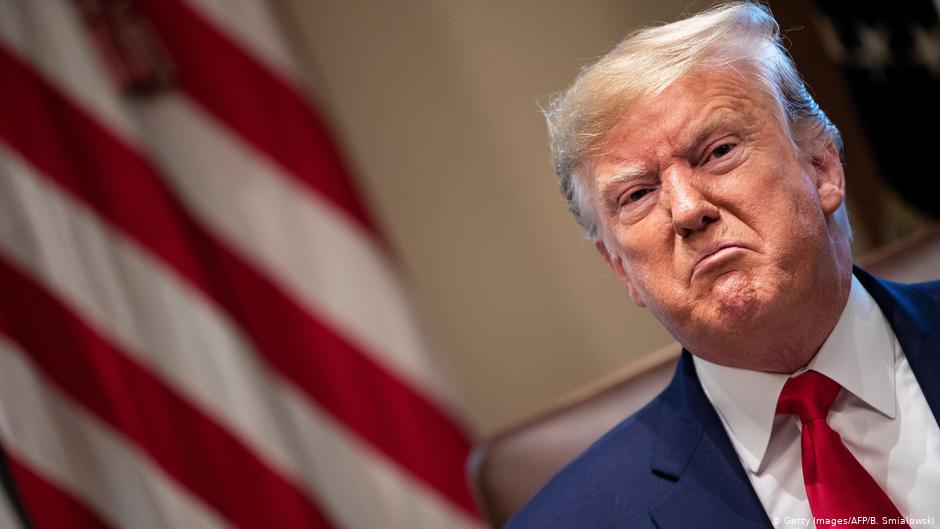
Germans should know. Trump is more dangerous than Kim Jong Un and Putin

The Germans certainly have credibility in determining who is a “Dangerous” leader.

It’s a sad fact too many Americans go blithely along believing the Buffoon in Washington is a competent leader. What do you expect?  This is the voting public which gave the World Ronald Reagan and Bush 43.

Excerpted from Deutsche Welle 12.26.2019

When asked who posed the greatest threat to world peace, Germans in a recent poll overwhelmingly pointed to one person — Donald Trump. The US president beat out the leaders of North Korea, Russia, China and Iran.

Trump the Dictator 1.26.2019

Although Washington is one of Germany’s closest allies, public trust in the US has significantly eroded under President Donald Trump, a new YouGov survey showed.

Germans were asked who was more dangerous: North Korea’s leader Kim Jong Un, Chinese President Xi Jinping, Iran’s Supreme Leader Ayatollah Ali Khamenei, Russian President Vladimir Putin or US President Donald Trump.

Some 41% of Germans said they thought Trump was the most dangerous out of the five world leaders.

In second place was Kim with 17%, followed by Putin and Khamenei with 8%. Coming in last was China’s Xi with 7%.

Over 2,000 people in Germany took part in the survey, which was commissioned by news agency dpa.

https://www.dw.com/en/germans-think-trump-is-more-dangerous-than-kim-jong-un-and-putin/a-51802332

Trump’s dark legacy: a US judiciary remade in his own image

Trump has been in office three years. His impact on the American judiciary with the appointment of a record number of ultra conservative ideologues to the Federal Courts is having a catastrophic impact on Progressive change.

It is not the Twitter Storm Trump has unleashed which should alarm people. It is Federal Judges with their life long tenure which is a the Dark Storm descending on American freedom.

The Guardian 12.25.2019

No president has secured so many important judgeships so quickly – and progressive say the damage will be lasting.

Critics of Donald Trump make much of the fact that his legacy will forever bear the stain of impeachment, whatever the outcome of the prospective Senate trial next month.

But Trump is positioned to bequeath a much more substantial legacy, one that progressive activists and civil rights advocates warn will harm the cause of equality in the United States for decades to come.

With a dozen confirmations last Thursday alone, Trump hit an end-of-year tally of 133 district court judges out of 677 total, 50 appeals court judges out of 179 total, and two US supreme court justices out of nine total.

Trump Judges II 12.25.2019.jpg

Carl Tobias, a professor at Richmond School of Law specializing in federal judicial selection, called Trump’s performance on judges – with the notable assistance of the Senate majority leader, Mitch McConnell, and outside groups such as the Federalist Society – “an amazing accomplishment”.

“He has really made an imprint on the federal appeals courts,” said Tobias. “About a quarter of the active judges by now have been appointed by him. And that’s really substantial.”

Tobias said that Trump’s judicial record could help pave the way to his re-election.

“Issues like abortion, LGBTQ rights, religious freedom – the judges are being chosen to take a particular view on those issues.”

That legacy is a judiciary remade deeply conservative in Trump’s own image. In securing the confirmation of his 50th appeals court judge earlier this month, Trump cemented his status as the most accomplished sponsor of federal judges in the modern history of the presidency.

No president has secured so many important judgeships as quickly. Barack Obama managed to confirm only 55 appeals court judges – in eight years. Trump’s presidency is not yet three years old.

“Among conservatives, this is probably one of the biggest bright spots,” said Josh Blackman, a professor at the South Texas College of Law specializing in the supreme court and constitutional law. “Not all conservatives are happy with a lot of things Trump has done, but on judges he’s killing it. It’s an across-the-board success that we’ve seen in this area.”


Trump continued to run up the score on judges until the last minutes of the congressional calendar year. As the House debated impeachment, the Senate went to work on a final 13 Trump nominees to serve on district courts, one level below the appellate courts.

“While Democrats in the House wasted all their time this week on a partisan impeachment,” Vice-President Mike Pence tweeted jubilantly on Friday morning, “the Senate confirmed 13 new judges making that a total of 185 amazing judges picked by President @realDonaldTrump!”

Legal analysts have blasted Trump and McConnell for allowing an unprecedented number of nominees to advance who have staked out extreme philosophies or been flagged as unqualified by the American Bar Association (ABA), the country’s largest non-partisan coalition of lawyers.

Progressive activists additionally express alarm at the relative youth of many Trump nominees, who assume lifelong appointments upon confirmation.

“The American people should be deeply troubled and scared as to the status of their rights and liberties over the next three to four decades,” said Daniel Goldberg, legal director at the progressive Alliance For Justice.

“It’s critical that the next Democratic president prioritize the courts like never before. While Donald Trump has been able to get his judges confirmed, we have never seen progressives as galvanized on the court issue as they are now.”

The confirmation this month of Sarah Pitlyk to the district court in St Louis and Lawrence VanDyke to the 9th circuit court of appeals, both of whom were rated unqualified by the ABA, should give Americans cause for alarm, said Goldberg, whose group has produced the report Trump’s Attacks on Our Justice System.

Pitlyk “spent her career fighting IVF and surrogacy” and VanDyke “has spent his career fighting environmental protections, women’s rights and LGBTQ rights”, Goldberg said.

Trump’s work on the courts would not have been possible without the assistance of McConnell, who blocked Obama judicial nominees and then relaxed Senate rules to accelerate the installation of Trump nominees. Another key Trump partner in the effort is the Federalist Society, the conservative legal group that has vetted judicial candidates and spoon-fed them to the White House.

Blackman said that former Senate majority leader Harry Reid’s 2013 decision to take the so-called “nuclear option” and abolish a rule requiring 60 votes to approve federal judicial appointments – a decision that followed unprecedented stalling on judicial appointments by then minority leader McConnell – had made it easier to confirm judges with ideologies outside the mainstream.

“I think because the nuclear option is gone, you no longer have to appeal to 60, you can appeal to 50,” said Blackman. “And I think with that, you have less of a need to appeal to the moderates, so I definitely think the tilt of the nominees is definitely away from the center.”

https://www.theguardian.com/us-news/2019/dec/25/trump-judiciary-judges-legal-america

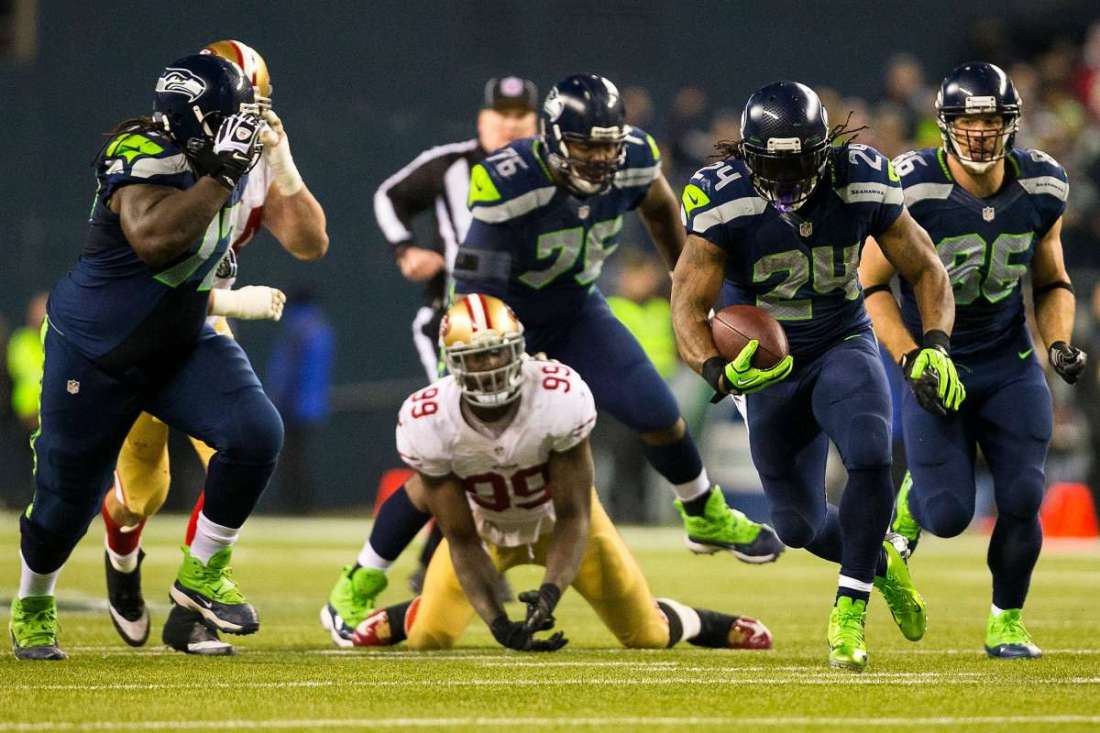
“Beast Mode” Marshawn Lynch is back. How much will that matter?

UPDATE: Yesterday the local sports world was all atwitter about the return of Marshawn Lynch to the Seattle Seahawks. The Oakland native made live miserable for the San Francisco 49ers in his prime.

Today’s question posed by the local press is, “How much will that matter” on Sunday evening in Seattle?

Excerpted from San Francisco Chronicle 12.24.2019

It’s quite possible that what’s unexpectedly emerged as a massive pregame story line — the return of Marshawn Lynch to the Seahawks — won’t have even a minor impact on Sunday’s game.

Can a 33-year-old running back really hop off his couch and jump-start an injury-thinned team in a game that will determine the NFC West champion?

Beast Mode IV  12.24.2019.jpg

The odds are better that Lynch, who went through his first NFL practice in 14 months Tuesday, will have a few forgettable carries against the 49ers rather than offer an unforgettable performance.

On Tuesday, after his first practice, Lynch, known for not speaking with the media, showed he was still at least the same interviewee that he was in his prime.

“Happy holidays,” Lynch said in his lone words to Seattle reporters. “Merry new year. You all have a great day. It’s great for me to be back. Thanks.”

Still, Lynch announced his first “retirement,” via Twitter, during Super Bowl 50. After he was ejected from a home game in 2017, the Oakland native, then with the Raiders, watched the rest of the game in the stands and hung out with fans on BART when it was over.

So it’s understood that the physical, five-time Pro Bowler known for his “how-did-he-break-that-tackle?” runs is known for doing the unexpected, on and off the field.

So what can Lynch realistically offer the Seahawks (11-4) when they host the 49ers (12-3) on Sunday in his first game with Seattle in four seasons?

“I don’t think,” Seattle head coach Pete Carroll said, “that we should ever set any expectations that are too low for Marshawn.”

The Seahawks spiced up a game that didn’t need any more seasoning by signing Lynch on Monday night. After injuries devastated their third-ranked rushing attack, they will play for the division title with Lynch, just-signed Robert Turbin, 30, who last played in an NFL game in October 2018, and rookie Travis Homer, a sixth-round pick who has played 34 career offensive snaps.

On Tuesday, Carroll indicated the Seahawks, who had maintained a relationship with Lynch over the years, had informed him of their interest when running back Rashaad Penny tore his ACL on Dec. 8. They also brought in Turbin for a workout after Penny’s injury.

Carroll expressed confidence in their ability to skip offseason workouts, training camp and 15 regular-season games and still flourish in the finale.

“These guys have been working,” Carroll said. “They’ve known there were opportunities that were coming. And in the true competitive sense, these guys have always been all about, they’re working. They’ve worked hard to be ready. So I’m not worried about that. … These guys are going to be just fine. I’m not worried about it a bit.”

Lynch visited Seattle’s facility on Dec. 12 for what was then viewed as a personal visit. He has spent the past few weeks doing intense workouts in San Francisco with his longtime coach, Tareq Azim, NFL Network reported.

Could he provide an emotional jolt for the Seahawks, whose myriad injuries beyond their backfield help explain why they are home underdogs?

“Well, we didn’t have a car parade or anything,” Carroll said. “But they were fired up to see him. I said to Marshawn, ‘Some of these guys were watching you in high school.’ He says, ‘I think they were maybe in grade school.’

https://www.sfchronicle.com/49ers/article/49ers-Seahawks-Marshawn-Lynch-is-back-but-how-14930612.php

A Conversation With Rudy Giuliani Over Bloody Marys at the Mark Hotel

Unscripted and Unedited. Fascinating interview with Rudy Guiliani. 

New York  – Olivia Nuzzi 12.24.2019

As the black SUV came to a stop on 33rd Street in Manhattan, its lights flashing, a pale hand stretched through the open window of the passenger door and gave a little wave. It was attached to Rudy Giuliani, who smiled from behind his tortoiseshell sunglasses. He apologized for being late. “Couldn’t go on sidewalks like I used to,” he said, mourning a perk of his past life as mayor.

It was early in the afternoon on Sunday, December 8, and Giuliani had just returned from Ukraine, where he said he was looking for information to undermine the case to impeach his client, President Donald Trump.

“We snuck out of Kiev to escape having to answer a lot of questions,” he said, though it wasn’t clear if he meant from the press or government officials. “They all thought we were going to leave on Friday morning, and I organized a private plane to go to Vienna on Thursday night.”

The back of the car was cluttered with luggage. His bodyguard, a retired NYPD officer who loves Donald Trump almost as much as he loves his boss of ten years, got out to move the bags to the trunk while Giuliani climbed into the backseat.

Rudy Guiliani II 12.24.2019

When Giuliani got to his hotel in Vienna, he said it was 2:30 in the morning, and the first thing he did was search for opera tickets. “Lo and behold, that Friday night they were performing Tosca, with the conductor Marco Armiliato.” He sang me an aria from Rigoletto, one of the first pieces he fell in love with when he was introduced to opera in high school, as he theatrically conducted with his hands.

Over a sweater, he wore a navy-blue suit, the fly of the pants unzipped. He accessorized with an American-flag lapel pin, American-flag woven wallet, a diamond-encrusted pinky ring, and a diamond-encrusted Yankees World Series ring (about which an innocent question resulted in a 15-minute rant about “fucking Wayne Barrett,” a journalist who manages to enrage Giuliani even in death).

In addition to being the president’s free personal attorney, Giuliani, who is 75, is an informal White House cybersecurity adviser and a high-priced cyber-security contractor. In one hand, he clutched three phones of varying sizes. Two of the devices were unlocked, their screens revealing open tabs and a barrage of banner notifications as they knocked into each other and reacted to Giuliani’s grip. He accidentally activated Siri, who said she didn’t understand his command. “She never understands me,” he said. He sighed and poked at the device, attempting to quiet her.

Giuliani is quick to announce that he knows “every block of this city,” but he lives on the Upper East Side and doesn’t linger much across or below the park. When I asked him to bring me somewhere he likes to hang out, he quickly directed his bodyguard to the Mark, a five-star hotel on East 77th Street. Always a creature of habit, Giuliani is extra-aware of where he’s welcome these days. He says that “because of what’s happened” his circle is tightening, that he doesn’t trust anyone anymore.

Open link to read the entire article.

http://nymag.com/intelligencer/2019/12/a-conversation-with-rudy-giuliani-over-bloody-marys.html