“Modern piracy.” America Rips off Covid-19 face masks headed for Germany

America is the world leader in capitalism, an economic system whose main rule is Darwinian survival of the fittest. The Coronavirus pandemic is turning into a “Wild West” show where business integrity takes a back seat to who will pay the most.  

Excerpted from Deutsche Welle 4.3.2020

Unprepared for the coronavirus pandemic, officials worldwide have been scrambling for protective medical gear. Germany has accused the US of competing for vital health care resources with “wild west” methods.

Germany accused the US on Friday of confiscating thousands of protective face masks that Berlin authorities have already paid for, calling it “an act of modern piracy.”

Berlin Interior Minister Andreas Geisel said US officials intercepted a shipment of 200,000 face masks in Bangkok intended for use during the coronavirus outbreak.

‘Ruled by Wild West’

Geisel said the state of Berlin had purchased the masks from a US company, but according to Germany’s Tagesspiegel newspaper, they had been manufactured in China.

“Even in times of global crisis, we should not be ruled by Wild West methods,” Geisel said, urging Germany’s federal government to put pressure on the US to abide by international rules.

facemask USA ripoff I 4.3.2020.jpg

Read more: As the corona virus triggers a global economic crisis, just how bad could it get?

The state of Berlin had ordered FFP2-class respirators for Berlin police officers, who continue to operate during the crisis.

The chairman of the SPD parliamentary group, Rolf MĂŒtzenich, said the confiscation was “illegal” and called for the incident to be clarified.

Read more: Angela Merkel sees ‘bit of hope,’ but keeps coronavirus lockdown in place

“Illegal methods must not be used when procuring protective masks. This is particularly true between partners 
 even if they are in short supply,” MĂŒtzenich told DW.

“If the reports on such events are confirmed, the federal government must address the issue and call for the consequences,” he said.

US multinational conglomerate 3M, a mass producer of health equipment, was also forced  by Washington to supply the US with as many type-N85 respirator masks as possible.

US criticized by France and Canada

French politicians have also recently accused the US of buying up medical protective gear including face masks in China that had been meant for France.

Valerie Pecresse, president of the hard-hit Ile-de-France region, said this week that a shipment of protective masks were snatched at the last minute by “Americans who made a higher bid,” French news agency AFP reported.

“The Americans pay cash sight unseen, which obviously can be more tempting for people just looking to make money off the entire world’s distress,” she said. Pecresse did not give further details on the buyers.

https://www.dw.com/en/us-accused-of-seizing-face-mask-shipments-bound-for-europe-canada/a-53010923


Retaliation: Trump sacks Intelligence official whose info led to Impeachment

Amazing.  What will four more years bring to this country??!!!!

While the Coronavirus continues its invasion of America the Moron in Chief ” I won’t wear a mask” Trump just fired the Inspector General who was instrumental in the recent impeachment.  

Remember that ancient history?

With the Pandemic consuming the Media, the politcal world and the population in general this latest Fascist like manuver will go unnoticed.

That is why Trump will get away with yet another outrage as he consolidates his power in Putin like fashion.

Breaking News 4.15.2019

CNN 4.3.2020

President Donald Trump on Friday removed Intelligence Community Inspector General Michael Atkinson — who had told Congress about the whistleblower complaint that led to Trump’s impeachment — from his post, the President told Congress in a letter obtained by CNN.

Atkinson will be fired in 30 days, Trump told the House and Senate Intelligence committees. He did not name a successor.

“As is the case with regard to other positions where I, as President, have the power of appointment … it is vital that I have the fullest confidence in the appointees serving as inspectors general,” Trump wrote. “That is no longer the case with regard to this Inspector General.”
Michael Atkinson II 4.3.2020.jpg
Atkinson’s firing is the latest case of the Trump administration removing officials who took part in the President’s impeachment. Trump also removed Alexander Vindman, a then-National Security Council official who had testified in the House’s proceedings, along with Vindman’s twin brother and then-US Ambassador to the European Union Gordon Sondland.

Coronavirus whistleblower ousted. US Navy removes aircraft carrier captain

Last week I posted the story about several American sailors coming down with the Coronavirus. The number has now increased dramatically.

Today the Captain of the aircraft carrier USS Roosevelt was removed from his post for bringing the Coronavirus to the public’s attention.

The Acting Secretary of the Navy claimed, “We’re not looking to shoot the messenger here.” Really?!!!

The ouster of the Captain will only further hi-lite the problem and make the Captain an in-demand Media presence. The public has a right to know how the men and women serving their country are being treated during the Pandemic.

Washington Post 4.2.2020

The Navy on Thursday removed the captain of an aircraft carrier crippled by the coronavirus, two days after a blunt letter the officer wrote warning the service of the need to get more sailors off the vessel created a furor.

Navy Capt. Brett Crozier (pictured below), the commanding officer of the USS Theodore Roosevelt, was relieved of command at the direction of acting Navy secretary Thomas Modly.

USS Roosevelt V 4.2.2020.jpg

“We’re not looking to shoot the messenger here,” Gilday had said of Crozier on Wednesday.

The Navy had become increasingly convinced that Crozier was involved in leaking the letter to the news media to force the service to address his concerns over the outbreak on his ship, a defense official said, speaking on the condition of anonymity because of the sensitivity of the issue.

Modly said that Crozier showed “poor judgment” by sending the letter by email to 20 or 30 people. He did not directly accuse Crozier of leaking the letter but noted that it appeared in Crozier’s hometown newspaper.

“I could reach no other conclusion than that Capt. Crozier had allowed the complexity of his challenge with the covid breakout on his ship to overwhelm his ability to act professionally, when acting professionally was what was needed most at the time,” Modly said at the Pentagon. “We do and we should expect more from the commanding officers of our aircraft carriers.”

Modly added a few minutes later that he did not mean to insinuate that he knew Crozier leaked the letter and believed the captain “did what he thought was in the best interest of the safety and the well-being of his crew.”

But Modly said the letter, first reported by the San Francisco Chronicle on Tuesday, undermined more senior Navy leaders and could have emboldened adversaries of the United States in the Pacific region. Modly said that Crozier had been told that he could communicate directly with Modly’s office.

“It creates a panic, and it creates the perception that the Navy is not on the job, the government’s not on the job, and it’s just not true,” Modly said.

Modly said the decision to remove Crozier was his, and that he received no pressure from the White House on the issue. He said that he notified Defense Secretary Mark T. Esper of his plan on Wednesday afternoon and that Esper indicated he would support him.

The Navy’s top officer, Adm. Michael Gilday, stood alongside the acting secretary as he made the announcement. Gilday said he has called for an investigation across all naval forces in the Pacific to examine the issue.

Crozier, who has not responded to requests for comment, sent the letter Sunday decrying the pace at which the service was removing sailors from the ship in Guama amid a coronavirus outbreak. Crozier asked that 90 percent of the crew, comprising more than 4,800 sailors, be removed to allow for testing, quarantining and disinfecting of the ship.

“Decisive action is required. Removing the majority of personnel from a deployed U.S. nuclear aircraft carrier and isolating them for two weeks may seem like an extraordinary measure,” he wrote. “We are not at war. Sailors do not need to die. If we do not act now, we are failing to properly take care of our most trusted asset — our sailors.”

Crozier added that 50 sailors could die, which Modly said Thursday did not appear possible. All of the sailors who have tested positive so far have had either moderate or mild flu symptoms, or no symptoms at all, Modly said.

Some 113 members of the crew had tested positive as of Thursday, Modly said, predicting that “hundreds” ultimately could. By far, it is the U.S. military’s largest coronavirus outbreak to date in the pandemic.

The captain will soon be replaced by the ship’s former commanding officer, Capt. Carlos Sardiello, who already has been selected for promotion to rear admiral.

Family members of sailors aboard the Theodore Roosevelt had expressed growing concern before the letter’s publication that the Navy was moving too slowly in getting sailors off the ship.

The mother of a sailor who tested positive for the virus and was evacuated from the ship said she and the majority of commenters in closed Facebook groups for family members of the crew supported Crozier.

“My husband and I are still grateful that he asked for help, and said that what was going on wasn’t adequate. In our eyes, he saved I don’t know how many people on his ship,” the mother said, speaking on the condition of anonymity to avoid identifying her child.

Modly’s decision, first reported by Reuters, comes one day after Modly said that there was nothing wrong with Crozier’s writing the letter but that leaking it to the media “would be something that would violate the principles of good order and discipline.”

“How it got out into the media I don’t know,” Modly said. “I don’t think anyone would ever know.”

Gilday and Modly both said Wednesday that they encouraged commanders to continue raising their concerns. About 1,000 sailors must remain on the ship at all times to man weapons, nuclear reactors and other sensitive equipment, and some 2,700 would be off the ship for testing and quarantining within days, the Navy said.

https://www.washingtonpost.com/national-security/navy-removes-aircraft-carrier-captain-who-spoke-out-about-coronavirus-response-from-post/2020/04/02/ddd4c9ae-751e-11ea-a9bd-9f8b593300d0_story.html

Shelter in Place an environmental blessing. Fewer cars. Marvelous air.

With a world devoid of cars, daily life is both quieter and an environmental blessing. Only something horrific as the Coronavirus pandemic will force people to leave their cars at home.

Eventually (perhaps) life will return to the pre-Coronavirus world where cars rule the planet. For now, there’s more to life than a fossil fuel polluting way of life.

For those who appreciate it. Enjoy the moment. It won’t last (probably).

San Francisco Chronicle 4.2.2020

When you look out at the crystal blue skies over California, it doesn’t look like a deadly pandemic.

In fact, the Bay Area is basking in its cleanest air in months, if not years. And we’re not alone. Satellite photos of China show an unprecedented drop in pollution. Worldwide greenhouse gas emissions are falling. And even the planet’s rivers and bays are clearing up, including the famously murky canals of Venice.

In the Bay Area, traffic has decreased as much as 70% since stay-at-home directives were issued last month. The reduction translates to at least a 20% drop in air-choking particulate matter and at least a 26% drop in heat-trapping carbon emissions, according to estimates from the local air district. Similar declines are being reported in metro areas around the globe.

At a huge cost to the global economy, Earth is getting a rare gulp of fresh air as society shuts down in the face of the coronavirus outbreak. It’s an environmental boon that decades of green activism could not achieve.

The improvement isn’t likely to last, however. Once the world comes roaring back to life, so too will the ecological carnage. Or will it? Environmental experts say that cleaner days could lie ahead, that is, if we permanently adopt some of the climate-friendly practices we’ve accidentally embraced during the shutdown — working remotely being just one — and if federal stimulus money can be steered toward green infrastructure.

Air Quality I 4.2.2020.jpg

The masses now working from home, clocking in on laptops and using video conferencing apps instead of driving to work or flying to a convention, is the most apparent and perhaps most Earth-friendly shift in societal behavior recently.

It’s something that workers and their bosses are learning is not too difficult, and might continue after the pandemic is long gone, say Jackson and others. Same goes for telemedicine and tele-education and other remote activities that have spiked with the outbreak.

“My wife’s ceramics guild had their first Zoom meeting. They were surprised how nice it was,” Jackson said. “The virus really provides opportunity for us to rethink travel and work.”

Transportation is the largest driver of global warming in the United States and much of the world. So even a small contraction can have a big impact.

Joanna Lombard, a professor at the University of Miami School of Architecture and a climate mitigation expert, takes the idea of staying close to home one step further.

She said she believes that the pandemic could prompt people who have gotten stir crazy at home to begin demanding more of their communities and push to make them more livable. More shopping and recreating locally, she says, could result in wholesale reductions in automobile travel — and greenhouse gas emissions.

And, if goods are produced closer to home, it would shorten supply chains and cut even more emissions, she said. Already, some farmers have seen a boost in direct sales to local residents since the shutdown.

“All of a sudden, people are having to pay attention to where they live,” Lombard said. “We look around and see that there are amenities that have been neglected. Maybe this will alert us to the idea that planning is good and we can reinvent our neighborhoods.

“It doesn’t mean you cut off global commerce,” she added, “but when you want to go local, you can.”

The shelter-in-place orders have led to other behavioral changes that are tougher to gauge from an environmental perspective. The uptick in online shopping, for example, is beneficial in cutting carbon emissions when purchases are part of streamlined mass delivery operation and deter trips to Costco in the family SUV, experts say. But if it’s a single pack of toilet paper rushed out in an Amazon van, emissions increase.

Eating in, versus eating out, is another wild card, with a yet-to-be determined verdict. It’s dependent on a wide range of factors, including what is consumed, packaging and food waste.

“There are different ways that these activities can affect your carbon footprint,” said Maya Almaraz, program manager for the Working Lands Innovation Center at UC Davis, who has studied behavior and climate change. “I’m just hoping this (pandemic) can be an excuse for people to re-evaluate the way we think about our health and our consumption, and use it as an opportunity.”

Almaraz also said that people’s willingness to quickly change their lives as they’ve done in response to the coronavirus is hope that people could make adjustments to counter global warming.

Pandemics have altered how people live before. Elena Conis, a historian of public health at UC Berkeley, can point to nearly every widespread outbreak of infectious disease over the past few centuries and recall how it modified human behavior.

The AIDS epidemic led to people practicing safe sex. The tuberculosis pandemic halted the once-common practice of spitting in public. Puerperal fever prompted doctors to begin washing their hands before delivering babies.

“Today we don’t even think about these changes,” said Conis, noting how ingrained those behaviors have become. “We’re all very curious what the world will look like when we come out of this pandemic.”

The money that the federal government has begun pumping into the economy to prevent a recession could also be a catalyst for change. Environmental advocates are pushing to fund projects that will keep a lid on greenhouse gas emissions. Other nations are doing the same.

The widely reported 25% plunge in carbon emissions during the coronavirus outbreak in China, the world’s biggest polluter, many say, is what a future with clean infrastructure could look like.

“A green stimulus is a way governments could commit to building back greener, stronger and more equitably,” said Daniel Kammen, a professor of energy at UC Berkeley, who last month helped author a spending proposal sent to Congress from dozens of scientists and academics from across the United States.

https://www.sfchronicle.com/environment/article/The-coronarvirus-will-change-our-lives-but-the-15172859.php#photo-19249987

Coyote attacks 6-year-old girl near San Francisco. Is human behavior the cause?

Humans increasingly continue to invade and disrupt the habitat of native animals. These animals are doing what comes natural. They are protecting their living space.

Two weeks ago walking my dog before going to bed I came upon a Coyote at my corner. It was a very peaceful encounter.  The Coyote looked at me. I looked at the Coyote who proceeded on its way towards the seashore in San Francisco.

This incident is deplorable. The young girl is traumatized. Still it will not be the appropriate response to capture and kill these native creatures which have lived in the Bay Area longer than humans.

As the Shelter in Place continues it is to be expected that humans will continue to encroach upon these native habitats. Fortunately the State has banned cars in the Parks. This should mitigate the problem and allow the native creatures to live in peace.

San Francisco Chronicle 4.1.2020

A coyote attacked a 6-year-old girl in Dublin Hills Regional Park on Wednesday, biting her neck and ear before the girl’s mother rushed in and scared the predator away.

The incident occurred about 2:30 p.m., as the girl was hiking with her mother and two brothers. The coyote jumped on her and “went for her head,” said Capt. Patrick Foy of the California Department of Fish and Wildlife.

As of 5:30 p.m. the girl was being treated for non-life-threatening injuries in UCSF Benioff Children’s Hospital Oakland, Foy said. Crews from Fish and Wildlife are laying traps and hoping to euthanize the coyote, along with two other coyotes that lingered nearby when it bit the girl. Officials closed the park while a multiagency effort is under way to find the offending animals, which could be identified by DNA that was taken from the victim’s clothing, said Doug Bell, wildlife program manager for the East Bay Regional Park District.

He recounted the family’s harrowing ordeal to The Chronicle. A pack of coyotes had approached the three children and their mother as they hiked through a shallow canyon in the 654-acre park that’s sandwiched between two housing developments.

Like all Bay Area parks, Dublin Hills has its share of coyotes. Some of them gravitate to the periphery, scouring for food around the town houses that line the park’s borders, Bell said.

“Being at that interface between parkland and urban development, the neighborhoods present a lot of food for coyotes,” Bell said. He noted that these wild animals are drifting into various residential parts of the Bay Area, including San Francisco.

A screenshot from a video taken by a POST wildlife camera shows a coyote and a badger traveling together into a tunnel in the Santa Cruz Mountains.
Photo: Screenshot from video / Peninsula Open Space Trust

State and regional park officials have seen a string of other attacks in recent weeks, Foy said, as more people flock to parks to get exercise during the shelter-in-place period. He received a call Friday about a coyote going after a dog, and he heard reports of another aggressive coyote in San Diego.

“We’ve seen a pretty significant influx of people into these places, and that’s meant calls for service,” Foy said.

Still, attacks on people are rare, Bell said. He has served as wildlife program manager since 2005, and has never seen a coyote pounce on a human. Usually, they go after dogs — particularly those that are not wearing leashes. Sometimes, coyotes approach humans who feed them, which presents problems for park officials who want people and animals to enjoy the park without confrontations.

Bell did not know if food was involved in this case.

“I can’t imagine the trauma that the poor child and her family has gone through,” he said.

Mountain lions may also be a threat for people heading to parks and nature trails. In January, mountain lions attacked young children in Santa Clara County and Orange County. Both children were injured; both mountain lions were chased away by parents and later captured and euthanized.

https://www.sfchronicle.com/bayarea/article/Wildlife-cam-shows-coyote-playfully-leading-15030859.php

It’s Time to Face Facts and Cover up, America: Masks Work

In San Francisco an impromptu visual survey as I have my daily run, walk the dogs and make the necessary shopping excursions via bicycle are that a minority of the local population is wearing masks.

Excerpted from WIRED 3.28.3020

Official advice has been confusing, but the science isn’t hard to grok. Everyone should cover up.

WHEN YOU LOOK at photos of Americans during the 1918 influenza pandemic, one feature stands out above all else: masks.

The collective evidence makes a strong case for universal mask wearing during a pandemic.

Face Masks 1918 WIRED 3.30.2020.jpg

In 1918 Fabric, usually white gauze, covered nearly every face. Across the country, public health experts recommended universal mask wearing, and some cities ordered residents to wear them under penalty of fine or imprisonment.

The Red Cross made thousands of cloth masks and distributed them for free. Newspapers published instructions for sewing masks at home. “Make any kind of a mask 
 and use it immediately and at all times,” the Boston commissioner of health pleaded. “Even a handkerchief held in place over the face is better than nothing.”

After the 1918 pandemic, the prophylactic use of masks among the general public largely fell out of favor in America and much of the West. The US Centers for Disease Control and Prevention has almost never advised healthy people to wear masks in public to prevent influenza or other respiratory diseases.

In the past few months, with medical supplies dangerously diminished, the CDC, US surgeon general Jerome Adams, and the World Health Organization have urged people not to buy masks, paradoxically claiming that masks are both essential for the safety of health care workers and incapable of protecting the public from Covid-19. (WIRED’s editorial staff, like the CDC, suggests that healthy people not wear masks.)

Masks are not a substitute for other interventions; they must always be used in combination with social distancing and hand hygiene.

But even during a lockdown, some people need to leave their homes for essential task, such as buying food and medicine.

With diseases like Covid-19, many individuals may be infected but asymptomatic, spreading the virus without realizing it. In parallel, some healthy people may not be able to adequately isolate themselves from infected partners, family members, and housemates. Masks could help reduce the spread of disease in all these scenarios.

“Masks work in both directions,” virologist Julian Tang explained. “If everybody wears a mask, it’s double protection. Even if a mask is not 100 percent sealed, it is still a significant reduction in risk of transmission.”

https://www.wired.com/story/its-time-to-face-facts-america-masks-work/

Signs of the Times in a San Francisco Neighborhood by the Pacific Ocean

Every picture tells a story – On going Series

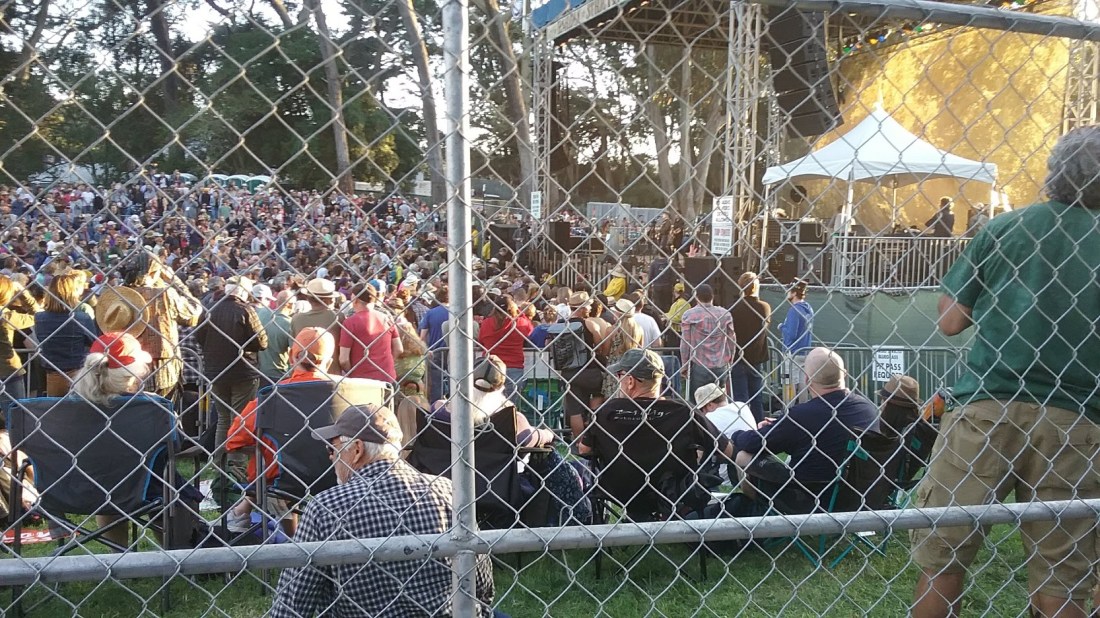
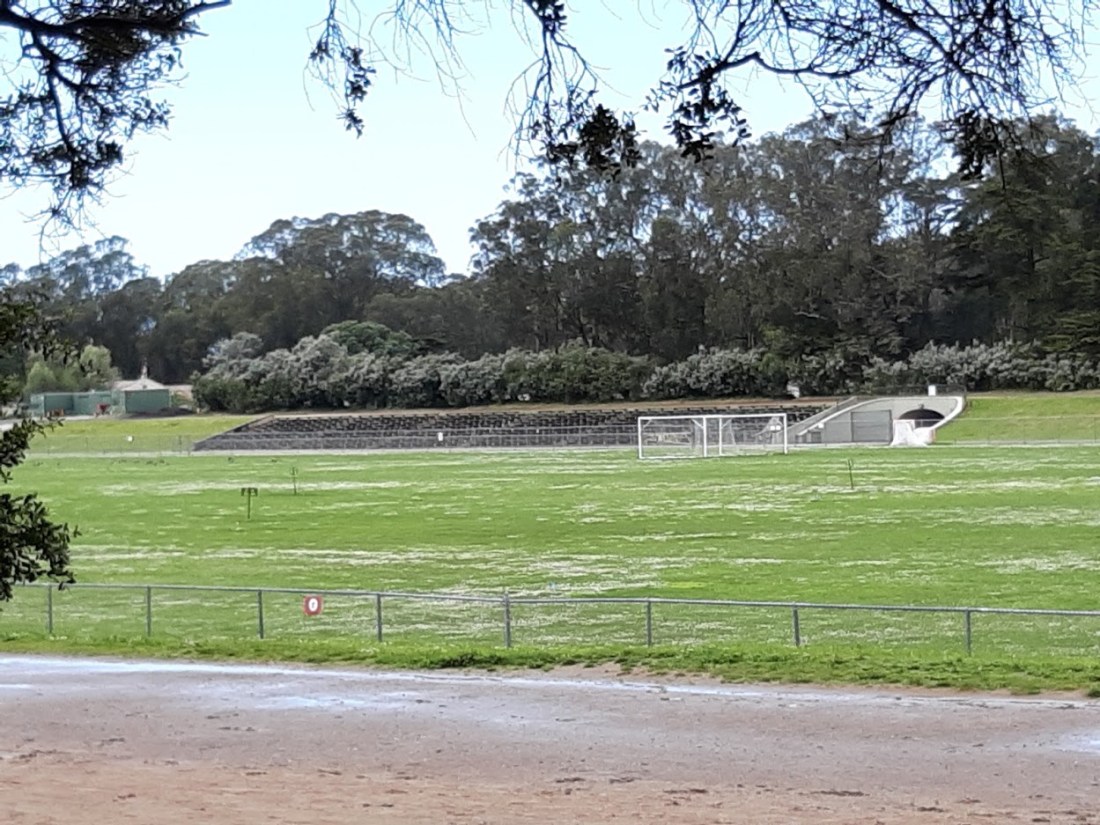
Liz Heidhues took these photos in the Outer Richmond District Shopping area and  Golden Gate Park on a sunny Shelter in Place Monday in San Francisco.

Photo above – The marquee on the Balboa Theater

First photo below – The desolate entryway to Balboa Street shopping district

Second photo – Boarded up hardware store open for business

Third photo – Speckels Lake in Golden Gate Park

Fourth photo – Entry tunnel to Golden Gate Park Polo Fields

liz-ii-3.30.2020.jpg

liz-xi-3.30.2020-e1585614505825.jpg

Liz IX 3.30.2020

liz-v-3.30.2020.jpg


Subdued San Francisco adjusts to the Coronavirus daily regimen

Every Picture Tells a Story – Ongoing series

Two weeks into Shelter in Place the citizens of San Francisco are slowly adjusting to the new lifestyle. This way of living will be with us into the forseeable future.

Photos by Lee Heidhues

Photo above – Ocean Beach with its closed parking lot.

First photo below – Pussy cap wearing neighbor walking the dog in Sutro Heights Park.

Second photo – JFK Drive in Golden Gate Park.

Third photo – Waiting in line to enter Whole Foods.

Suddued II 3.29.2020.jpg

Suddued III 3.29.2020

Suddued IV 3.29.2020

The Third Reich of Dreams. How Dreams Change Under Authoritarianism

I looked for this out of print book on Amazon.  Its price is nearly $1500.

The New Yorker 11.7.2019

When the Nazis came to power, the writer Charlotte Beradt began collecting dreams. What did she learn?

Not long after Hitler came to power, in 1933, a thirty-year-old woman in Berlin had a series of uncanny dreams.

In one, her neighborhood had been stripped of its usual signs, which were replaced with posters that listed twenty verboten words; the first was “Lord” and the last was “I.” In another, the woman found herself surrounded by workers, including a milkman, a gasman, a newsagent, and a plumber. She felt calm, until she spied among them a chimney sweep. (In her family, the German word for “chimney sweep” was code for the S.S., a nod to the trade’s blackened clothing.) The men brandished their bills and performed a Nazi salute. Then they chanted, “Your guilt cannot be doubted.”

These are two of about seventy-five dreams collected in “The Third Reich of Dreams,” a strange, enthralling book by the writer Charlotte Beradt. Neither scientific study nor psychoanalytic text, “The Third Reich of Dreams” is a collective diary, a witness account hauled out of a nation’s shadows and into forensic light.

third reich of dreams 3.28.2020.jpg

The book was released, in Germany, in 1966; an English translation, by Adriane Gottwald, was published two years later but has since fallen out of print. (Despite ongoing interest from publishers, no one has been able to find Beradt’s heir, who holds the rights.) But the book deserves revisiting, not just because we see echoes today of the populism, racism, and taste for surveillance that were part of Beradt’s time but because there’s nothing else like it in the literature of the Holocaust. “These dreams—these diaries of the night—were conceived independently of their authors’ conscious will,” Beradt writes. “They were, so to speak, dictated to them by dictatorship.”

Beradt—who was born Charlotte Aron, in Forst, a town near the German-Polish border—was a Jewish journalist. She was based in Berlin when Hitler became Chancellor, in 1933. That year, she was barred from publishing her work, and she and her husband, Heinz Pol, were arrested during the mass roundups of Communists that followed the passage of the Reichstag Fire Decree. After her release, she began secretly recording the dreams of her fellow-Germans. For six years, as German Jews lost their homes, their jobs, and their rights, Beradt continued making notes. By 1939, she’d gathered three hundred dreams. The project was risky, not least because she was known to the regime. Pol, who once worked for Vossische Zeitung, Germany’s leading liberal newspaper, soon fled to Prague, and Beradt eventually moved in with her future husband, the writer and lawyer Martin Beradt.

The Beradts lived in Charlottenburg—a largely Jewish suburb of Berlin, which was home to figures such as Walter Benjamin and Charlotte Salomon—and the dreams Beradt gathered reflect the area’s secular, middle-class milieu. “Enthusiastic ‘yes men’ or people who drew some advantage from the regime were not readily accessible to me,” Beradt writes. “I asked a dressmaker, neighbor, aunt, milkman, friend—generally without revealing my purpose, for I wanted the most candid and unaffected responses possible.” Her friends included a doctor who “unobtrusively” canvassed patients in his large practice.

To protect herself and those she interviewed, Beradt hid her transcripts inside bookbindings and then shelved them in her private library. She disguised political figures, turning dreams of Hitler, Göring, and Goebbels into “family anecdotes” about Uncles Hans, Gustav, and Gerhard. Once book burnings and home searches became fixtures of state control, Beradt mailed her notes to friends overseas. In 1939, she and Martin left Germany and eventually arrived in New York, as refugees. They settled on West End Avenue, and their apartment became a gathering place for fellow-Ă©migrĂ©s, such as Hannah Arendt (for whom Beradt translated five political essays), Heinrich BlĂŒcher, and the painter Carl Heidenreich. In 1966, after retrieving her transcripts, Beradt finally published the dreams, in Germany, as “Das Dritte Reich des Traums.”

“The Third Reich of Dreams” unfolds over eleven chapters, arranged by recurring symbols and preoccupations. Epigraphs from Arendt, Himmler, Brecht, and Kafka give ballast to the surreal material that follows, and chapters are titled with emblematic figures—“The Non-Hero,” “Those Who Act”—and gnomic quotes such as “Nothing Gives Me Pleasure Anymore.” These headings reinforce the book’s premise: that the links between waking life and dreams are indisputable, even evidentiary. In an afterword, the Austrian-born psychologist Bruno Bettelheim notes the collection’s many prophetic dreams, in which, as early as 1933, “the dreamer can recognise deep down, what the system is really like.”

Like Svetlana Alexievich’s oral histories of postwar Soviet citizens, Beradt’s work uncovers the effects of authoritarian regimes on the collective unconscious. In 1933, a woman dreams of a mind-reading machine, “a maze of wires” that detects her associating Hitler with the word “devil.” Beradt encountered several dreams about thought control, some of which anticipated the bureaucratic absurdities used by the Nazis to terrorize citizens. In one dream, a twenty-two-year-old woman who believes her curved nose will mark her as Jewish attends the “Bureau of Verification of Aryan Descent”—not a real agency, but close enough to those of the time. In a series of “bureaucratic fairy tales” that evoke the regime’s real-life propaganda, a man dreams of banners, posters, and barracks-yard voices pronouncing a “Regulation Prohibiting Residual Bourgeois Tendencies.” In 1936, a woman dreams of a snowy road strewn with watches and jewelery. Tempted to take a piece, she senses a setup by the “Office for Testing the Honesty of Aliens.”

These dreams reveal how German Jews and non-Jews grappled with collaboration and compliance, paranoia and self-disgust, even as, in waking life, they hid these struggles from others and themselves. The accounts are interwoven with Beradt’s sharp, unembellished commentary, which is deepened by her own experience of Nazism and emigration. By foregrounding dreams, instead of relegating them to colorful secondary material in a more conventional history, Beradt allows the fantastical details to speak louder than any interpretation. Her book recalls the photomontages of Hannah Höch, in which objects, text, and images from the German media are scissored up and juxtaposed, producing unexpected scenarios that feel all the more truthful for their strangeness.

At times, “The Third Reich of Dreams” also echoes Hannah Arendt, who saw totalitarian rule as “truly total the moment it closes the iron vice of terror on its subjects’ private social lives.” Beradt seems to agree with this premise—she understood dreams as continuous with the culture in which they occur—but she also presents dreams as the one realm of free expression that endures when private life falls under state control. Under such conditions, the dreamer can clarify what might be too risky to describe in waking life. Beradt recounts the dream of a factory owner, Herr S., who is unable to muster a Nazi salute during a visit from Goebbels. After he struggles for half an hour to lift his arm, his backbone breaks. The dream needs little elaboration, Beradt writes; it’s “devastatingly clear and almost vulgar.” In a period during which the individual was reduced either to a parasite or to a member of a faceless mob (“I dreamt I was no longer able to speak except in chorus with my group”), dreams offered a rare opportunity to restore a sense of agency.

Beradt’s book does not include any dreams with religious content, and there are no dreams from the Eastern European Jews who lived across town, on Grenadierstrasse and Wiesenstrasse—that is, the Jews who had already survived pogroms. But these absences do not detract from Beradt’s vivid, indelible details, which deepen our understanding of life during Nazism’s early years—a period still overshadowed in the literature by accounts of mass murder and war. Especially novel is Beradt’s study of the many urban women—Jewish and non-Jewish—who narrate their own (dream) lives. Here is Göring trying to grope a salesgirl at the movies; here is Hitler, in evening clothes, on the KurfĂŒrstendamm, caressing a woman with one hand and distributing propaganda with the other. “There can be no neater description of Hitler’s influence on a large sector of Germany’s female population,” Beradt writes, noting the numbers of women who voted for him and his party’s calculated manipulation of his supposed “erotic” power. But the dreams also depict women—reduced to obedient wives and child-bearers in Nazi propaganda—seeking greater social authority. In one instance, a woman has just been classified by the race laws as one-quarter Jewish. And yet, in a dream, she is led by Hitler down a grand staircase. “There was a throng of people below, and a band was playing, and I was proud and happy,” she told Beradt. “It didn’t bother our FĂŒhrer at all to be seen in public with me.”

Hitler in Hell I 2.4.2020


The final chapter of “The Third Reich of Dreams” is reserved for those who—in their dreams, at least—resisted the regime (“I dreamed that it was forbidden to dream, but I did anyway”) and those who were Jewish. Beradt writes that such dreams “constitute a separate category, just as the Jews themselves were a separate category under the Nazi regime” and were the focus of “direct, not indirect terrorization.” A Jewish doctor dreams he’s the only physician in the Reich who can cure Hitler. When he offers to donate his services, a blond youth in Hitler’s entourage cries, “What! You crooked Jew—no money?” Later, a Jewish lawyer dreams of travelling through icy Lapland to reach “the last country on earth where Jews are still tolerated”—but a customs official, “rosy as a little marzipan pig,” throws the man’s passport onto the ice. Ahead, unreachable, the promised land shimmers “green in the sun.” It is 1935. Six years later, the mass deportations would begin.

In Germany, “The Third Reich of Dreams” was reviewed as “surprising and gripping evidence” and an “important historical document.” As the psychoanalyst Frances Lang has noted, it’s strange, then, that Beradt’s book has gone “virtually unrecognised” in America. Perhaps it was difficult for such an idiosyncratic history to compete with the more urgent, straightforward accounts that appeared in the nineteen-sixties. (The book is contemporaneous with both Arendt’s “Eichmann in Jerusalem” and Raul Hilberg’s “The Destruction of the European Jews.”) And yet there is still time for the collection to enter the canon of Third Reich literature, and perhaps for it to gain wider circulation. Lang, who practices in Boston, learned of Beradt’s work via a footnote in Freud’s “The Interpretation of Dreams” and wrote about it in the Journal of the American Psychoanalytic Association. In her own practice, she has noticed a widespread uneasiness following Trump’s election. She has asked her friends and colleagues to begin collecting dreams.


California’s Unemployed. The Check will be in the mail. The question is, “When?”

Now that Congress has passed and the President has signed the Coronavirus Aid, Relief, and Economic Security or “CARES” act  millions of newly unemployed are in for a surprise. 

Wait Wait Wait.

It will be weeks before the unemployed expecting money to subsist on arrives.

The processing of claims by State workers is a cumbersome process due to the numbers of new applicants, lack of funding for State agencies and an antiquated computer system.

It’s good news for the unemployed that the CARES act will distribute an additional $600 weekly to the unemployed.  California has no plan to increase its current maximum benefit of $450.  That figure has been in place for decades.

Sacramento Bee 3.25.2020

If California wants to increase unemployment insurance benefits to help workers cope with the economic fallout from the new coronavirus, the higher payments could be delayed up to a year because the state employment department isn’t prepared for the job.


A new report from the nonpartisan Legislative Analyst’s Office found the information technology systems at California’s Employment Development Department, which adminsters unemployment benefits, are limited in what they can currently do.

“Due to the limitations of (the Employment Development Department’s) current information technology systems, changing (unemployment insurance) benefit levels—for instance, by increasing the maximum weekly benefit amount or setting a minimum weekly benefit floor—could take as long as a year to implement,” the analysts wrote.

“For this reason,” the analysts said, “in our view, the legislature probably has limited options to respond to the COVID-19 crisis by adjusting (unemployment) benefit levels.”

UI I 3.28.2020

Department spokeswoman Loree Levy said the agency has been working to update its current systems for some time.

“There are a number of different solutions the EDD is developing and implementing now to deal with the unprecedented claim demand and issue benefit payments,” she said.

“That includes streamlining the processing of claims wherever possible, staff working overtime seven days a week, redirecting hundreds of staff from throughout the department and elsewhere in the state with unemployment processing experience (including recent retirees), and of course hiring when we can,” Levy explained. “Although it does take several months to get new staff trained on the complexity of the (unemployment) rules and regulations. “

The current maximum weekly state benefit is $450. The federal economic stimulus package due for a vote in Congress this week would provide extra unemployment benefits. State officials have not proposed higher California-funded benefits.

UI III 3.28.2020

It’s unclear how the state’s technology limits could affect implementation of a change funded by Washington. The state’s benefit program is primarily financed by a tax on employers.

The legislative analysts said Monday that while the department usually issues about 80 percent of first benefit payments within 21 days of receiving a worker’s application, it’s anticipated that the first benefits will now “take much longer.”

Levy said that “it always takes about three weeks to process a claim once received and issue benefit payments when someone is found eligible. For now, we are timely with payments due and are working on a number of strategies to maintain that as much as possible.

“But of course, at the same time the EDD is also trying to transition our workforce to teleworking as much as possible to abide by health guidelines and protect our staff. That’s certainly creates some challenges,” she said.

The analyst’s report offers several options to get benefits to unemployed workers more quickly. Among them: Stop non-essential work related to unemployment insurance benefit administration, and temporarily stop debt collection from employers who are not paying tax.