
Talk about back in the day 50 years of Jimi Hendrix’s radical ‘Band of Gypsys’

In the midst of a two plus year experience living abroad I was arriving in Israel on New Years Day 1970…the time Jimi Hendrix ‘Band of Gypsys’ was making history at Fillmore East in New York City.

The live concert performance was soon released on vinyl and I heard Hendrix performance at a party in Florence, Italy. When I returned to the United States a couple of years later this concert became a permanent part of my music collection.

48 Hills 3.25.2020

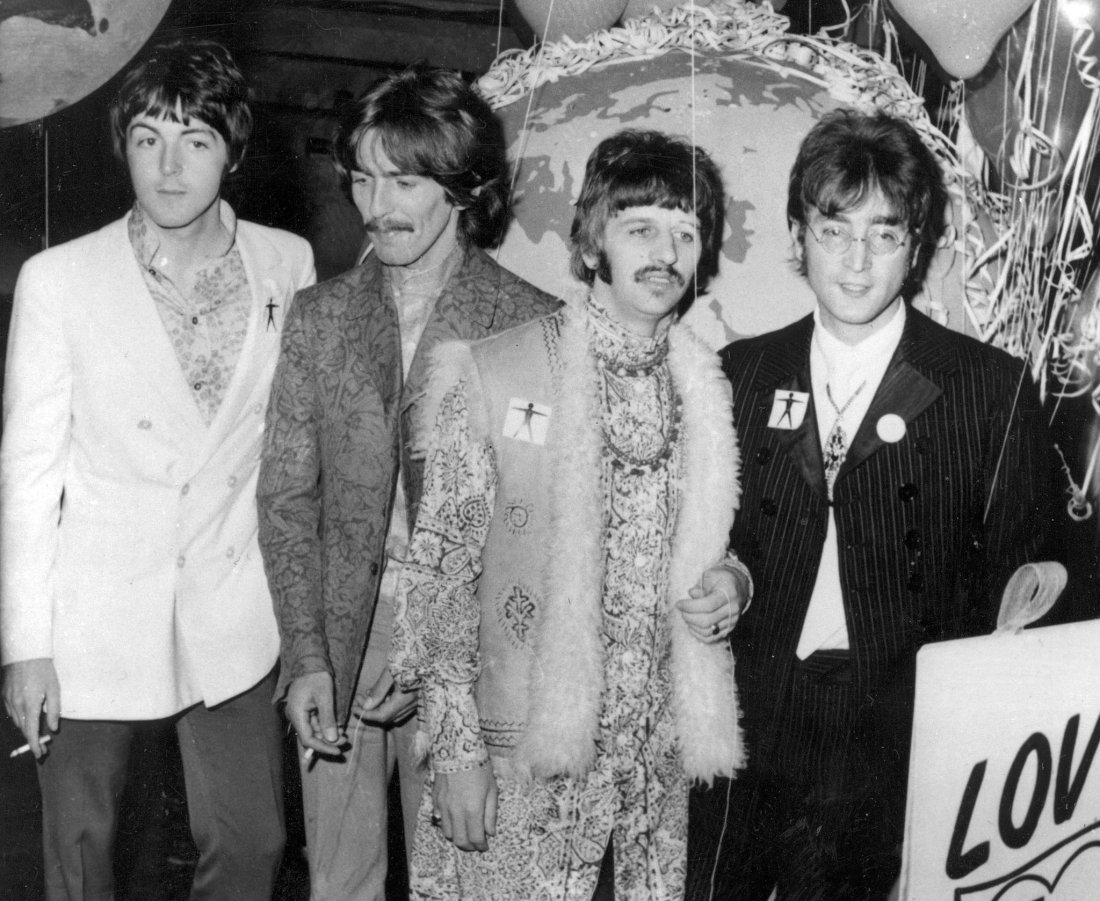
By the time Jimi Hendrix and his Band of Gypsys—released on Capitol Records March 25, 1970—came together for their two-night performance at the Fillmore East on New Years 1970, with Billy Cox on bass and Buddy Miles on drums, the Seattle-born polymath had dropped the gunslinger antics. Along with The Jimi Hendrix Experience.

Playing guitar behind his back, between his legs, making it look as if he were playing it with his teeth
 These performance hacks were learned out on the R&B chitlin’ circuit, backing up Little Richard and the Isley Brothers, in Hendrix’s lean-eating, primary fame stage of the early 1960s. That trick bag landed him opening slots for The Monkees when he started his rock ascension.

But in 1969, things turned volatile, different. There was an extra heaviness in the cultural zeitgeist. Vietnam. The Black Panthers. Protest. Civil Rights. Old society collapsing like Voltron into the music, driving the aesthetic. That shuffling for dinner shit became immediately played. Moldy in fact
 Anything resembling some ʻUncle Tomʻ coonery got cancelled.

Hendrix was sweating. Under pressure from his manager and record company to record a follow-up to the 1968 crossover psychedelic-rock epic Electric Ladyland, he was also required to produce an album’s worth of new material for Capitol Records to satisfy a contract dispute with a former manager. His pop veneer didnʻt serve the evolving “jamming experiments” he had cooking on the horizon. Cox and Miles galvanized Jimi’s embrace of the R&B tradition. Merging it all with a blues root, it produced unparalleled rhythmic stability. One that was lacking before.

On the quintessential funk-rock model “Who Knows,” Hendrix guitar solo-boogies vertically, not horizontally, between Coxʻs low-end corkscrew patterns on bass and Miles’ snare-blasting, foot-innit, timekeeping. Who knew generations later that thickness, this type of bump, would be chopped and sampled for a new music form called hip-hop. Credit Digital Underground (probably Shock G to be specific) for being stealthy in choosing that sample for the groove on 1990ʻs “The Way We Swing.”

But praise the originators, the ancestors, for making folks in the 70s unconsciously snap their damn necks in unison to the big brother beat this trio carved out. Sure, the wild-style solo features on “Power To Love” is Jimi deep in his bag, but it’s all complementary to the in-the-pocket, nimble and quick, bass lines Cox just continually lays down. Itʻs the rock, and an electrified version of jazz legend Ron Carter that just canʻt do any wrong.

“Machine Gun” a career exclamation point, where Hendrix dedicates the song “to all the soldiers that are fighting in Chicago and Milwaukee and New York, oh yes, and all the soldiers fighting in Vietnam”, is an ode to the unrest happening overseas, in the “official” war, and as much about the late 1960s race riots, giving way to blood running down the streets in this country.

The performance gives vivid transparency of war and its foul stench, employing percussive uses of the guitar never heard before. Mirroring the John Coltrane “sheets of sound” approach on Miles Davis’ “Kind Of Blue,” it followed up the political statement of Hendrixʻs “chopped and screwed” version of the national anthem” at Woodstock.

These evolving musical directions, with no specific landing points or limits, were far from pop moves. But producer Chas Chandler was gone. Hendrix was free to delve into his R&B and funk influences. The Jimi Hendrix Experience was dead. A new rhythm section, where the bass and drum were sympatico and hitting, complementing the psychedelic stuff so much that Davis commented, “it freed Jimi from the constraints of the Experience.”

Hendrix rebuilt himself. Stretching his repertoire into a type of swing. Executing it on stage, standing still. And then moving on from us.

House passes historic $2 trillion stimulus despite objections from GOP lawmaker

Despite objections from one Republican (see earlier Blog Post) the US House of Representatives passed the Two Trillion Dollar stimulus package a short time ago.

Breaking News 4.15.2019

CNN 3.27.2020

The House of Representatives on Friday approved the historic $2 trillion stimulus package that passed the Senate earlier this week, overcoming last-minute drama by using an unusual procedural move to thwart a demand by a conservative Republican to force members to vote in person.


The Republican, Rep. Thomas Massie of Kentucky, infuriated members in both parties by bringing them back to Washington amid uncertainty over whether he would request a full roll call vote. That uncertainty forced many to travel during the public health emergency simply to deny his demand in order to ensure swift passage of the measure on Friday.
Republican Rep. Thomas Massie of Kentucky announced Friday that he would request a full roll-call vote, though sources have told CNN there may be procedural steps to deny Massie’s request from requiring a recorded vote.
“I swore an oath to uphold the constitution, and I take that oath seriously,” Massie tweeted just before noon ET, on Friday.


The bill now goes to President Donald Trump’s for his signature as the American public and the US economy fight the devastating spread of Covid-19.
The far-reaching legislation stands as the largest emergency aid package in US history. It represents a massive financial injection into a struggling economy with provisions aimed at helping American workers, small businesses and industries grappling with the economic disruption.
Stimulus II 3.27.2020
House Speaker – San Francisco Congresswoman Nancy Pelosi meets with the media
Key elements of the package include sending checks directly to individuals and families, a major expansion of unemployment benefits, money for hard-hit hospitals and health care providers, financial assistance for small businesses and $500 billion in loans for distressed companies.
House leaders face pressure to pass the legislation as quickly as possible and minimize the risks to their members in the process — and the bill had been expected to be taken up by voice vote, a move that would allow for quick passage and was designed to permit most House members not to return to Washington for a full roll call vote.
Steny Hoyer’s office advised members Thursday evening they were encouraged to be in Washington on Friday at 10 a.m. ET because the bill may not pass that way after all. “There is now a possibility,” the notice from the Maryland Democrat’s office said, that a Republican may force a recorded vote.


Chesa Boudin, His Imprisoned Father, Threat of the Coronavirus in Prisons

David Gilbert, father of San Francisco District Attorney Chesa Boudin, has been imprisoned in New York for nearly 40 years. The coronavirus has put at risk America’s huge imprisoned population.

David Gilbert is 75.  Keeping him behind bars serves no purpose and could result in his succumbing to Covid-19.

The New Yorker 3.26.2020.

Chesa Boudin, the District Attorney of San Francisco, last spoke to his father on the phone a few days ago, and, like everyone these days, they talked about covid-19. His father, David Gilbert, is seventy-five, but the risks he faces if infected by the virus are far more serious than those confronting many other septuagenarians. Gilbert is confined at Shawangunk Correctional Facility, some seventy miles north of New York City.

Should he get sick, he will have to rely on the prison’s staff to help him. “Using the phones or even going to the mess hall is a real risk for him at this point,” Boudin said. “They use very old-school phones that are shared by a large number of inmates, and they don’t work very well. And, so, to have a conversation, you have to get your mouth right up into the mouthpiece that is being used by many, many hundreds of other people.”

Gilbert is among the oldest people in the New York State prison system. In 1981, he and Chesa’s mother, Kathy Boudin, who were both members of the Weather Underground, were involved in the robbery of a Brink’s armored truck, in Rockland County, that resulted in the deaths of one of the company’s guards and two police officers. Kathy, who was sentenced to twenty years to life, was released on parole in 2003; Gilbert is serving a sentence of seventy-five years to life. About his most recent call with his father, Boudin said, “We said goodbye at the end, as we do at the end of every phone call, but this one felt different. It felt heavier and more ominous because I know—and he knows—that there’s a very high likelihood that his prison will go on lockdown, or that he’ll be unable to get back to the phones. And because we know that the reason for that is a disease that very seriously threatens his life.”

David Gilbert II  3.27.2020.jpg

Officials in many states are taking similar actions, including Boudin, who asked his staff at the San Francisco District Attorney’s office to examine the cases of people held in the city’s jails, in order to figure out whom they could release.

“The health-department officials that run our jail medical team are very anxious,” Boudin said. “I mean, I get messages from them repeatedly throughout the day about the jail count, about particular people that they are concerned with that have vulnerabilities, people who are elderly like my father is, who they want me to find ways to get out if it is within my power to do so.”


Steven Zeidman, a professor at the City University of New York School of Law, runs a clinic that assists incarcerated people with applications for clemency. In early March, Zeidman made a list of ten of his clients and sent it to Governor Andrew Cuomo’s office, urging officials to release the men. “With covid-19 entering the state’s prisons, it’s imperative that the governor’s clemency bureau begins taking a hard look at people, particularly those who are deemed to be most at risk. Here’s a list of people, all with exemplary records inside, who are over sixty and have profound evidence of transformation and rehabilitation,” he recalled writing. Among them was Gilbert, who, in the late nineteen-eighties, helped create an organization that used peer counselling to educate incarcerated men about the aids epidemic.

This week, Mayor Bill de Blasio promised to release a few hundred people from New York City’s jails. New Jersey’s Attorney General has agreed to free about a thousand people from the state’s county jails.

As covid-19 has been spreading throughout the country, Boudin has been outspoken in urging criminal-justice leaders to reduce their jail and prison populations. But he also acknowledges the difficulty of doing so. “The decision about whether or not to release a particular individual from custody is often a challenging one,” Boudin told me. “As a law-enforcement official, as a politician, you are always going to have in the back of your mind the fear that someone you release will end up committing another crime, potentially a serious crime, during a period when they otherwise would have been incarcerated. And that fear has driven decision-making for decades in the criminal-justice arena. That fear of a Willie Horton moment has driven decision-making, legislation, executive action around criminal justice.”

 “Crises like this force us all,” he said, “to look in the mirror and make difficult decisions, ask difficult questions about what our priorities are.”

I asked Boudin if he had a message for Cuomo, and he said, “I think Governor Cuomo has been playing a phenomenal leadership role in the face of this crisis.” He went on, “I saw a tweet that he posted today where he said something to the effect of, ‘We’re not willing to sacrifice one to two per cent of New Yorkers. This is not who we are. We will fight to save every life we can. I’m not giving up.’ And it’s that kind of inspiration, that kind of leadership, that is leading people to put his name forward as a Presidential candidate at this late date.

I would just urge him not to forget about people who are incarcerated. We are not willing to sacrifice people who are incarcerated either.” Boudin did not mention his elderly father, in Shawangunk prison, but he repeated the sentiment: “Please don’t forget about people who are behind bars.”

https://www.newyorker.com/news/our-local-correspondents/chesa-boudin-on-his-incarcerated-father-and-the-threat-of-the-coronavirus-in-prisons

Iconoclast Republican Congressman “Mr No” threatens to delay Covid-19 bill

The American public is waiting for legislation which will bring much needed financial and medical relief.

It is no surprise a Republican Rep. Thomas Massie (R., Ky.) may slow down the process. In Congress he is referred to as “Mr. No.”

If you want to voice your concerns to  the Kentucky Congressman you can contact his office aide in Washington, DC.

Laura Lington 
(202) 225-3465
laura.lington@mail.house.gov

Attached is a link to an article about the Congressman in the Cincinnati Enquirer.

https://www.cincinnati.com/story/news/local/northern-ky/2020/03/26/coronavirus-covid-19-thomas-massie-congressman-kentucky-president-trump-quote/2922082001/

Excerpted from The Wall Street Journal 3.26.2020

WASHINGTON—House leaders were scrambling to bring back enough legislators to form a quorum to pass a $2 trillion economic rescue package after a Republican lawmaker suggested he might object to holding the vote using a procedure that avoids putting members on the record.

Rep. Thomas Massie (R., Ky.) told a local radio station that he would vote against the bill, and also suggested to that he might object to allowing the bill to pass by voice vote. If Mr. Massie forced a roll-call vote, the House would need a majority of the chamber—216 votes—in order to proceed with a vote. Otherwise, voting would be delayed until enough lawmakers could return to Washington.

A spokeswoman for Mr. Massie didn’t respond to a request for comment about his plans.

Thomas Massie I 3.26.2020

“We have notified our Members of the possibility that the bill may not pass by voice vote,” the press office for House Majority Leader Steny Hoyer (D., Md.) said in a statement. “The Majority Leader’s Office has sent a notice to Members that if they are able and willing to be in Washington, DC by 10:00 a.m. tomorrow, they are encouraged to do so, while exercising all due caution.”

House Minority Whip Steve Scalise (R., La.) echoed that sentiment.

Many lawmakers had planned to stay away from the Capitol because of the risks of traveling during the coronavirus pandemic.

Congress’s attending physician has cautioned members to use extreme care and deliberation when deciding whether to travel.

The bill, which passed the Senate late Wednesday, is the largest economic-relief package in history and will extend aid to many struggling Americans through direct payments and expanded unemployment insurance, which also cover freelance and gig workers. It will give loans and grants to businesses, refill drained state coffers and send additional resources to sapped health-care providers.

The risk of contagion has prompted Congress to examine its own voting and social practices, which often put members in physical proximity.

The House will first attempt to pass the legislation by a voice vote, which doesn’t require all members to be present. But if the House doesn’t have 216 members, one lawmaker could object to a quorum not being present. A lawmaker could also request to have a roll-call vote, where names are recorded.

President Trump credited the stimulus package for a surge in U.S. stocks this week, saying economic uncertainty remained in the U.S., “but we’ve come a long way.”

Chaos on deck. Coronavirus attacks US aircraft carrier in Pacific Ocean waters

Coronavirus is a Clear and Present Danger to America’s armed forces.

The American military is not immune from Covid-19 and is scrambling to get the situation under control.

CNN – 3.26.2020

On Wednesday, the Pentagon confirmed that Defense Secretary Mark Esper had ordered a 60-day freeze on all overseas US troop movements, affecting 90,000 scheduled deployments, in one of the latest measures to fight the spread of the virus. The order exempts patients such as those aboard the Roosevelt, among others.

There are now 23 sailors who have tested positive for the coronavirus aboard the aircraft carrier USS Theodore Roosevelt, just two days after the Pentagon announced that three sailors aboard the ship had tested positive for the virus, a Navy official has confirmed to CNN.

The Navy says they expect there to be additional positive tests among the crew, with one official telling CNN there could possibly be “dozens” of new cases that emerge. A second official said that were there to be a large number of additional cases, the Defense Department would be unlikely to publicly specify how many of the Navy’s overall cases are amongst members of the crew of the Roosevelt, due to concerns that adversaries such as China or North Korea could see the ship as vulnerable.
Despite the outbreak, Chief of Naval Operations Adm. Mike Gilday said in a statement, “we are confident that our aggressive response will keep USS Theodore Roosevelt able to respond to any crisis in the region.”
USS Roosevelt I 3.26.2020
Earlier in the day, acting Navy Secretary Thomas Modly had said there were “several” more cases onboard the ship, but did not give a specific number.
“We are in the process now of testing 100% of the crew of that ship to ensure that we’re able to contain whatever spread might’ve occurred,” Modly told reporters at the Pentagon at a briefing Thursday morning. There are approximately 5,000 personnel on board the carrier.
The Roosevelt is in the process of pulling into Guam, according to Modly. “No one on the crew will be allowed to leave anywhere into Guam, other than on pier side,” he said.
The ship was last in port in Vietnam more than two weeks ago. It is not clear where the sailors initially contracted the virus. The Navy is now in the process of flying all personnel off the ship.
The Wall Street Journal first reported the increase.
The nearly eightfold spike in the number of positive cases in two days aboard the ship is the latest red flag of how the pandemic is affecting the US military. There is now a total of 280 servicemembers who have tested positive for the novel coronavirus as of Thursday morning, an increase of 53 from the 227 reported on Wednesday. And there are nearly 600 positive cases across the Defense Department, which includes civilians, dependents, and contractors. According to Modly, 133 of those are in the Navy.
Esper also raised the health protection status for all defense installations worldwide, limiting access and encouraging telework across the department.
Despite social distance measures being taken across the department, as they are across the nation, Joint Staff Surgeon Brig. Gen. Paul Friedrichs told reporters at the Pentagon on Wednesday, “we think that we’re going to continue to see this — no surprise — continue to grow” in the next three weeks, the farthest out they are able to model.
President Donald Trump has said he wants to have the economy opened back up by Easter.
“We think the best way to limit that growth or to mitigate that growth are the measures that we’ve been talking about,” said Friedrichs. “I don’t think there’s a great deal of value in speculating on a particular date.”

“The Banality of Evil” Describes several Republican Senators in the US Congress.

These few evil Republicans .. and that is the only appropriate word to describe the likes of Lindsey Graham and several of  his comrades .. who put on display in the public forum their evil and callous world view. These trolls reap obscene benefits from lobbyists, PACS and campaign contributors..  and have the audacity to protest the common citizen receiving a $600 stipend. Samantha Power wrote a Pulitzer Prize book, “A Problem from Hell-America and the Age of Genocide.”   Republican members of Congress who are trying to stop this legislation are the type people Ms. Power was writing about. Or as Hannah Arendt aptly labeled this behavior in 1962, “The banality of evil.”

Excerpted from  the Wall Street Journal 3.25.2020

WASHINGTON—The Senate late Wednesday moved towards voting on an estimated $2 trillion stimulus package designed to shield the economy from the ravages of the new coronavirus pandemic, after the effort hit snags earlier in the day.

The legislation hit a snag on Wednesday when a group of Senate Republicans attempted to amend the legislation to remove the $600 extra weekly payment for those receiving unemployment insurance because it could result in people getting more money while out of work than they did in their jobs.

“This bill pays you more not to work than if you were working,” said Sen. Lindsey Graham (R., S.C.). He, along with a few others, attempted to amend the legislation.

Problem from Hell 3.25.2020.jpg

The $600 across-the-board increase was a bipartisan agreement, reached several days ago and was done because every state has a different unemployment program and creating a program for each state would take too much time, aides from both parties said.

“Some workers, some, may end up coming out ahead…I’m not going to stand here and say that I feel badly about that,” said Sen. Dick Durbin (D., Ill.). “Let’s give them that helping hand and not apologize for it for a minute.”

The Senate was expected to vote Wednesday night on the mammoth bill, though the procedure was delayed when rank-and-file members voiced objections while lawmakers were finalizing the bill’s full text.

The legislation would provide direct payments to many Americans, drastically expand unemployment insurance, offer hundreds of billions in loans to both small and large businesses, refill drained state coffers and extend additional resources to health-care providers.

“A fight has arrived on our shores,” said Senate Majority Leader Mitch McConnell (R., Ky.) on the Senate floor. “We did not seek it. We did not want it. But now, we are going to win it.”

But as Senate leaders rushed to move the bill through the chamber swiftly on Wednesday, protests from Republican lawmakers over the unemployment provisions in the bill threatened to draw out the process further. Sen. Bernie Sanders (I., Vt.), a Democratic presidential candidate, said he would slow down the bill, if the group of Republicans did not withdraw their threat, creating a high-stakes standoff in the final stages of the negotiations.

At the White House, President Trump said that lawmakers were “very close” to passing the deal, which he praised as a boon to American workers. “I will sign it immediately,” he said. Treasury Secretary Steven Mnuchin told reporters at a White House briefing he still expected the bill to pass the Senate Wednesday night.


House Speaker Nancy Pelosi (D., Calif.) said Wednesday that she is optimistic about the legislation and said no decision had been made about when the House would try to take up the legislation, if it clears the Senate as expected.

The House is expected then to attempt quickly to pass the bill by unanimous consent, a procedure that enables the chamber to approve the legislation without lawmakers being present to vote. An objection from even a single member could slow the process. House lawmakers are currently on recess and scattered across the country.

The legislation will provide one-time checks of $1,200 to Americans with adjusted gross income up to $75,000 for individuals and $150,000 for married couples. Individuals and couples are eligible for an additional $500 per child. The government rebates will be pared by $5 for each $100 of income over those thresholds, completely phasing out for individuals whose incomes exceed $99,000, $146,500 for head of households with one child, and $198,000 for joint filers who don’t have children.

Eligible U.S. residents must have a work-eligible social security number to receive such a check and must not be claimed as a dependent by another taxpayer, according to Senate documents. Unlike an earlier proposal crafted by Senate Republicans, the payments won’t be set at a lower level for some low-income Americans.

The checks will be available to those who have no income as well as people who rely on income benefit programs, such as supplemental security income from the Social Security Administration.

Those payments would be in addition to a broad expansion in unemployment benefits, which would be extended to nontraditional employees, including gig workers and freelancers. The agreement is set to increase current unemployment assistance by $600 a week for four months.


What took so long? Coronavirus Hits, and Finally Everyone Is Watching The Wire

After reading an article in the San Francisco Chronicle over 10 years ago in which the Critic called The Wire, “the best television series, ever” I began watching and was hooked.

I have every season on DVD and feel vindicated that The Wire is now receiving the viewership it has always deserved.

The Wire is gritty, violent, realistic and definitely not for the squeamish.

Vanity Fair 3.25.2020

Upon entering indefinite periods of self-isolation, millions of people across the country apparently had the same exact idea: This would be a great time to finally watch The Wire. You know—the Baltimore-set HBO crime drama that critics have never stopped swooning about? The one that offered Idris Elba a breakout role on American television? Yes, that one. You come at the king, et cetera, et cetera, you know how this song goes.

According to Variety, HBO’s parent company, WarnerMedia, says that viewership of The Wire has nearly tripled in the last week on HBO Now, its streaming service.

At last, all the people who silently nodded and smiled whenever the show became a topic of conversation at parties (sigh, remember parties?) are finally playing catchup, using this quarantine season to see what all the fuss is about. Or worse: All the people who have already seen the show are refreshing their memories, arming themselves to pepper their Zoom hangouts with important points such as, “It’s actually the first Dickensian work of television,” or “You know, I prefer season five to season four,” or “How come they never showed that many wires?” (I have never seen The Wire.)

WarnerMedia shared that flagship shows The Sopranos and Sex and the City have also almost doubled in viewership, bringing two of television’s most notorious antiheroes—Tony Soprano and Carrie Bradshaw—back into the spotlight. One can only hope that friends all across this nation are having renewed arguments about who is truly the worst man on Sex and the City. Viewers are also checking out contemporary shows, though. Westworld is the number one show on the streamer, while shows like Euphoria, Big Little Lies, Game of Thrones, His Dark Materials, and the miniseries Chernobyl have all seen boosts in viewership.

The Wire I 3.25.2020.jpg

Dominic West and Michael K. Williams

Streaming has become more important than ever, as millions of people across the world shelter at home to stop the spread of coronavirus. In fact, people have been binging projects with such alarming speed that it’s placed a strain on internet providers. Over in Europe, Netflix has had to take the extra step of reducing its video quality for 30 days to decrease the stress on internet networks. Per the BBC, Netflix said lowering video quality will reduce data consumption by 25%. The streamer has not yet said whether it will take the same step in North America. And for those in need of additional TV recommendations across streamers, we’ve got more than a few suggestions to keep you company.

https://www.vanityfair.com/hollywood/2020/03/coronavirus-the-wire-hbo


Revolution Chemnitz: Neo-Nazi German terror group handed jail terms

A German Court sentenced several Neo-Nazis to prison today.

These thugs had planned a terrorist attack in Berlin on October 2, 2018 during the 29th annual Reunification Day ceremony and festivities.  The commemoration of the reuniting of East and West Germany. A partition which was created at the end of World War II in 1945.

I was in Berlin at the time.

Even in the midst of the Coronavirus the German government pursued this prosecution to ensure justice was served.

Deutsche Welle 3.24.2020 – Photos Lee Heidhues

Eight men were found guilty of being members of a terrorist organization for their involvement in the group “Revolution Chemnitz.” The men planned to launch a civil-war-like revolt in Berlin before they were caught.

The trial went ahead on Tuesday despite the ongoing COVID-19 pandemic, since any interruption of proceedings lasting longer than 10 days would have forced the trial to start over from the beginning.

Eight members of the neo-Nazi group “Revolution Chemnitz” were sentenced to several years in prison by a court in eastern Germany on Tuesday.

In their ruling, the Higher Regional Court in Dresden agreed with prosecutors that the group constituted a terrorist organization.

The ringleader, Christian K., was handed the longest sentence —five years and six months — for founding and being a member of a terrorist group.

The other defendants were sentenced to two years and three months in prison for taking part in “Revolution Chemnitz.” Five of them were also found guilty of severely disturbing the peace, while another was also sentenced for aggravated assault.

topography-of-terror-berlin-i-2018.jpg

Topography of Terror  – Berlin, Germany

The men, aged 22 to 32, allegedly lead the skinhead, hooligan and neo-Nazi scenes in the eastern German city of Chemnitz.

Read more: Defining what it means to be German in a unified country

What is ‘Revolution Chemnitz’?

The group formed in Chemnitz September 2018, in the aftermath of anti-immigrant protests that engulfed the eastern German city.

According to prosecutors, Christian K. invited the other seven members to an online chat where he then posted a document outlining what he wanted the group to achieve.

None of the members objected to the plans, which essentially outlined a call for violent action against “leftists, parasites, Merkel zombies, media dictators and their slaves.”

The group allegedly planned  to orchestrate a civil-war-like rebellion in Berlin on October 2, 2018. Prosecutors based their charges partly on the use of chat logs found on the defendants’ mobile phones.

afd-poster-lubeck-germany-may-2017.jpg

AFD Campaign Poster – Lubeck, Germany

The members of the group were caught by police during a so-called “practice-run” in mid-September when they attacked refugees and a group of young people — one of whom was beaten.

https://www.dw.com/en/revolution-chemnitz-right-wing-german-terror-group-handed-jail-terms/a-52903660


Texas Lt. Gov. Urges Seniors To Sacrifice Themselves Amid Coronavirus

Beyond Shock.  Actually I am not shocked. 

This is what America and the Republican Party under Trump have become.

Trump’s Darwinian fantasy is right out there for everyone to see in plain view.

Talking Points Memo 3.24.2020

Texas Lieutenant Gov. Dan Patrick (R) made the astonishing argument on Monday night that the elderly ought to be willing to die from COVID-19 for the sake of the economy.

Patrick’s comments came as other Republicans, including President Donald Trump, push for the end of social distancing to rescue the sinking economy, even as the coronavirus continues to roil the country.

During an interview with Fox News host Tucker Carlson, Patrick argued that social distancing measures against the coronavirus should be lifted to let Americans go back to work, even if it means older people becoming infected with the illness.

“Those of us who are 70+, we’ll take care of ourselves but don’t sacrifice the country,” Patrick said. “Don’t do that. Don’t ruin this great American Dream.”

The lieutenant governor asserted that grandparents have a “choice” to make in the face of “total collapse” in the economy.

Coronavirus photo 3.24.2020

“We all want to live. We all want to live with our grandchildren as long as we can,” he said. “But the point is our biggest gift we give to our country and our children and our grandchildren is the legacy of our country, and right now, that is at risk.”

https://talkingpointsmemo.com/news/texas-dan-patrick-grandparents-sacrifice-lives-coronavirus-economy

Coronavirus snapshots of life during the Shelter in Place era in San Francisco

March 23, 2020

Every Picture Tells a Story – Ongoing Series

 Photo above – It took a 5.5. mile bike ride through deserted streets in the Shelter in Place environment to find a small package of TP at Laurel Village in the toney Pacific Heights neighborhood.

First photo below – Liz Heidhues displays her Italian roots with the Italian flag to show love and solidarity for her brothers and sisters in Italy.

Forza! AndrĂĄ tutto Bene!

Second photo below – Last week’s door sign at the neighborhood Trader Joe’s Store.

Photos – Lee Heidhues

liz-with-italia-3.23.2020-1.jpg


Trader Joes.jpg