
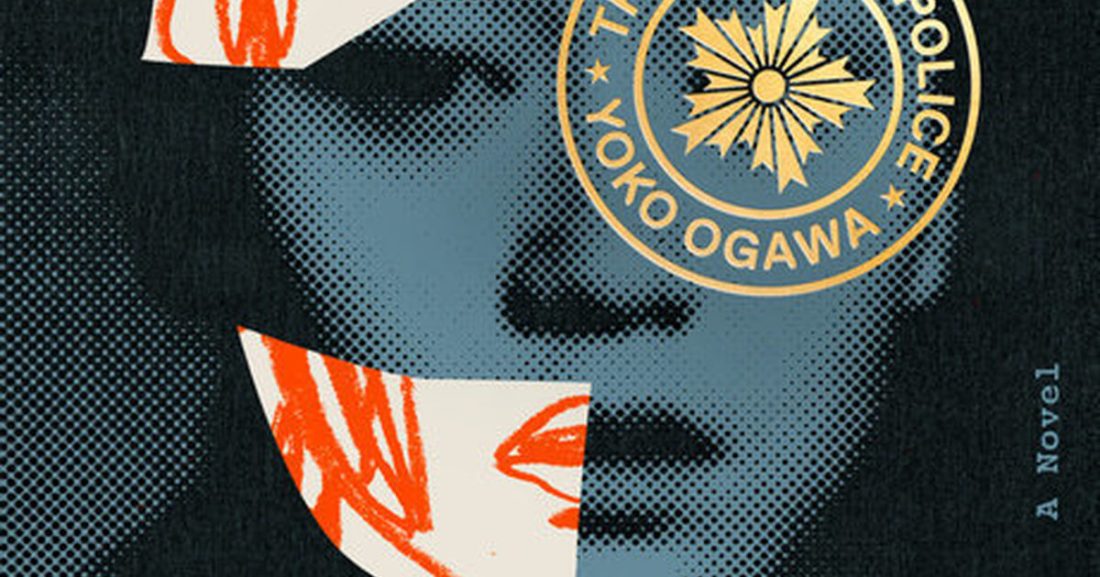
The Memory Police, a Japanese Dystopian Orwellian novel was published in 1994. Finally, it has been translated into English and available. I read about the novel in the ‘Briefly Noted’ section in the 9.9.2019 The New Yorker. The Memory Police fits in well with the just released “The Testaments” by Margaret Atwood.
This is the premise of Yoko Ogawa’s quietly devastating novel, “The Memory Police.” The setting is an unnamed island controlled by a faceless authoritarian government. Our narrator and chief protagonist is a never-named female novelist who is struggling to complete her latest manuscript.
Her parents are dead. She lives alone in the house where she grew up. Her social circle is small, consisting of a handful of neighbors, an old man who lives on a decaying ferryboat and her editor, known only as R. “The island is run by men who are determined to see things disappear,” R tells her. “From their point of view, anything that fails to vanish when they say it should is inconceivable. So they force it to disappear.”
It is the job of this novel’s titular organization to ensure these disappearances take place. The officers of the Memory Police, in their “dark green uniforms, with heavy belts and black boots” operate “efficiently, thoroughly, systematically, and without any trace of emotion.” If they find a toaster hidden in your house, you will be arrested and interrogated. You may also find yourself disappeared.
It’s a grim existence, a fascism of forgetting. But not everyone succumbs to the mass amnesia. A handful of people are able to retain memories of the vanished objects. Some of them become fugitives, hiding in a network of underground safe houses. The narrator’s mother, a sculptor, was one such exception. She kept a cache of disappeared objects in her studio until the Memory Police arrested her. The narrator recalls, “her body came back to us a week later, along with her death certificate.” The editor, R, is another exception. Fearing for his life, he takes up residence in a secret room in the narrator’s house. Keeping him safe from the Memory Police becomes the focus of her life for the remainder of the novel.
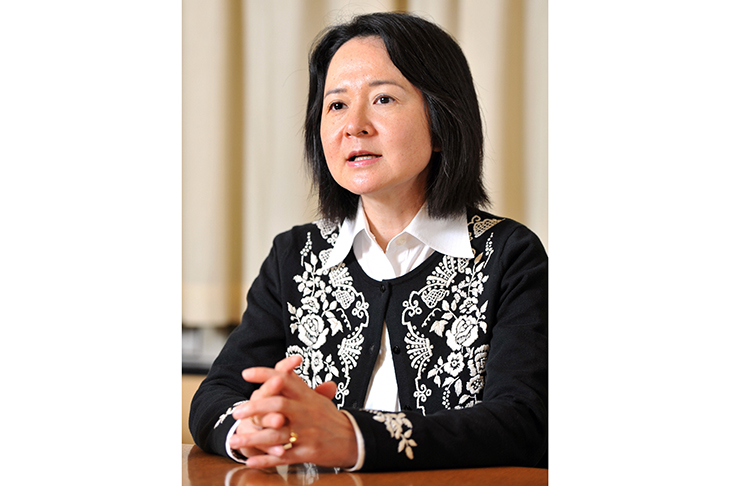
Ogawa writes with a direct, understated style that enhances the uncanniness of the events she describes. Her flat tone matches the passivity of most of the island’s inhabitants, which in turn suggests a capitulation to deeply buried personal and societal trauma. “The disappearances are beyond our control,” a character says to the narrator. “They have nothing to do with us. We’re all going to die anyway . . . so what’s the difference?” The lack of names and other proper nouns gives the book the quality of a supernatural parable. When calendars disappear, the island becomes stuck in an endless winter. As the losses mount, life there becomes increasingly unbearable.
Fortunately, Ogawa’s wry humor keeps “The Memory Police” from drowning in its own gloom. Consider, for example, how many writers would jump at the chance to keep their editors locked up in a secret room!
Excerpts from the narrator’s work in progress are spliced into the book’s main text, providing a welcome change of pace. The novel-within-the-novel is a gothic tale about the relationship between a typing teacher and one of his students, a young woman who loses her voice. It starts out romantic but soon turns sinister. She winds up his captive, locked in a tower with a roomful of broken typewriters. On one level, it’s a funny nightmare about writer’s block; on another, it’s a horror story that harmonizes with the novel’s major motifs — control, captivity and loss of self.
“The Memory Police” alludes to a host of storied works of dystopian fiction, positioning itself in the lineage of George Orwell’s “1984” and Ray Bradbury’s “Fahrenheit 451.” It also calls to mind Anne Frank’s “Diary of a Young Girl.” Yet Ogawa finds new ways to express old anxieties about authoritarianism, environmental depredation and humanity’s willingness to be complicit in its own demise.
Late in the book, R desperately tries to convince the narrator that she still has access to the memories of all those disappeared objects. “I can never remember anything that can satisfy you,” she says. “It’s not about satisfying me,” he replies. “It’s about waking up your sleeping soul.” To which the narrator responds, “I wish it were just sleeping, instead of completely gone.”
Jon Michaud is the author of the novel “When Tito Loved Clara.”
The Memory Police
By Yoko Ogawa
Pantheon. 288 pp. $25.95