
Where’s the outrage?!! San Francisco Sups dangerous attack on a free press

It’s scary and boggles the mind that in “progressive” San Francisco the elected Board of Supervisors feels so threatened by a community newspaper, The Marina Times, that they are taking draconian action.

Given the dire state of affairs in San Francisco I would think these politicians have more on their plate to worry about. High level City officials are being felled by indictments. The economy is suffering. The Pandemic is laying waste to the fibre of this town.

What are these politicans thinking about? Their egos being ruffled by a local community journal.

This is the type of retribution one would expect from a totalitarian regime.

Or the soon to be exiled Donald Trump.

Public Comment 12.4.2020

  • A revision to a contract the City maintains with community newspapers, which singled out a publication called the The Marina Times, raised alarm bells with First Amendment watchdogs

  • A group of Supervisors voted to separate The Marina Times from the City’s advertiser list on the basis of what they deemed illegitimate reporting

  • The action may run afoul of First Amendment law, which contends that governmental bodies must not engage in “viewpoint discrimination”

For First Amendment watchdogs, an item introduced this week at the San Francisco Board of Supervisors didn’t quite pass the smell test.

That was an amendment, introduced by Sup. Dean Preston on Dec. 1, to the routine process of approving a list of community newspapers in which the City places ads for public meetings. This process is enshrined in Proposition J, a 1994 ballot measure that designated the City as “purchaser” of these small advertising contracts, which are based on criteria like distribution and circulation.

This time, Preston singled out one paper, The Marina Times, and posited that the paper be segregated from the list and barred from receiving City advertising, which amounts to a few hundred dollars in monthly revenue.

The reason? Preston, who has received critical coverage in The Marina Times, said he considers their reporting illegitimate, likening the coverage to “disinformation” and “personal attacks,” also citing a tweet that he deemed threatening.

Sup. Hillary Ronen and others chimed in with their own personal grievances towards The Marina Times, a paper known for its critical coverage of City Hall — and in the eyes of some Twitter users, outspoken tweets by Editor-in-Chief Susan Dyer Reynolds. Ronen went so far as to label The Marina Times, which has circulated for 36 years, “a propaganda outfit that presents lies with facts,” though she didn’t cite any specifics.

Ultimately, only Supervisors Peskin, Stefani, Safai and Mandelman dissented on the proposal to single out The Marina Times from the circulation list, and the board will vote on whether to cut off funding to the paper on Dec. 8. Supervisors Preston, Ronen, Haney, Fewer, Walton, Yee and Mar approved the proposal.
Minnesota murder VI5.27.2020

“How many times have we seen [Trump] go after reporters because he doesn’t like what they say? We cannot allow these trends to continue…We must protect local journalism even when we don’t like what they say,” said Sup. Stefani in a heated dissent. “When I first heard about this proposed amendment, I literally could not believe it. I may not always agree with what is printed in The Marina Times. But that is not for me to decide.”

Reporters, yours truly included, were similarly incredulous at the conversation unfolding on Tuesday. Let’s call a spade a spade: Tuesday’s session was a display of retaliation towards a specific news source, with a group of politicians – to be sure, the very same politicians often scrutinized by The Marina Times – openly adjudicating the merits of that publication’s reporting.

“It’s troubling when government officials are making policy decisions based on their perception of whether a media outlet is real or valid journalism,” said David Snyder of First Amendment Coalition, a leading First Amendment law group. “That’s the kind of distinction government officials should not base their policy decisions on. Even if it’s not a violation of the First Amendment, it smacks of state-sponsored punishment of free expression.”

According to David Hudson, professor of law at Belmont University and a fellow at the Freedom Forum Institute, the Board of Supervisors’ actions on Tuesday may constitute “viewpoint discrimination” – a subset of First Amendment law which holds that the government may not discriminate by favoring one set of private speakers over another.

In one famous First Amendment case, Tinker v. Des Moines Independent Community School District (1969), public school officials in Des Moines banned black armbands but allowed students to wear other symbols, such as Iron Crosses and political campaign buttons. In this case, the Supreme Court warned that this represented a singling out of a specific, anti-war, viewpoint.

“From what you describe, this sounds like blatant viewpoint discrimination – a governmental body discriminating against a newspaper based on its coverage,” said Hudson. “That is the essence of viewpoint discrimination, which is anathema to the First Amendment and a free society.”

In theory, Hudson said, the government could try to argue that the speech constitutes government expression, which carries its own framework for what is permissible.

But at minimum, Hudson added, the Board of Supervisors’s actions are “fishy.”

“I just think this is very problematic,” he said.

As for The Marina Times, Reynolds said that losing the City’s advertising wouldn’t be a death knell for the newspaper, but acknowledged that the lost advertising revenue would hurt the paper’s publisher. The advertising revenue amounts to about $3700 per year, according to Reynolds.

City Hall Protest I 5.9.2020

“He’s 73 and very well-respected, and this money means a lot for him,” she said, calling the Supervisors’ vote “vindictive.”

Reynolds defended The Marina Times’ reporting, pointing to a July 2020 article that was the first to identify the relationship between permit expediter Walter Wong, who pled guilty to fraud and money laundering charges, and former San Francisco Public Utilities Commission head Harlan Kelly, who was just charged with fraud as part of the ongoing federal corruption probe of San Francisco officials.

“I love San Francisco and I’m tired of the corruption, and I love the hardworking men and women who have long felt ignored,” Reynolds said. “I do my homework, and not once has any of [the Supervisors] asked me for a retraction at any time. If they don’t like what I say on Twitter, too bad.”

https://www.publiccommentsf.com/post/board-of-supervisors-amendment-to-newspaper-contracts-sets-a-troubling-precedent?fbclid=IwAR1Ns5JpXazUqpc9H78PnZmzPG2cBfrXKoLwVyoFluhj1m8sS9TywiUZb28

Watershed moment decades in the making for advocates of legal weed

Who would have thought that the US House of Representatives would vote to legalize marijuana?

It is a momentous day in American history and is a total refutation of the War on Drug which began over 50 years ago.

Countless lives have been ruined and millions upon millions of dollars have been spent to arrest, prosecute and imprison tens of thousands of citizens.

The majority of whom are people of color whose only offense was to light up.

Nixon War on Drugs 1969

Excerpted from New York Times 12.4.2020

The House on Friday passed sweeping legislation that would decriminalize marijuana and expunge nonviolent marijuana-related convictions, as Democrats sought to roll back and compensate for decades of drug policies that have disproportionately affected low-income communities of color.

The 228-164 vote to approve the measure was bipartisan, and it was the first time either chamber of Congress had ever endorsed the legalization of cannabis. The bill would remove the drug from the Controlled Substances Act and authorize a 5 percent tax on marijuana that would fund community and small business grant programs to help those most impacted by the criminalization of marijuana.

The legislation is, for now, almost certainly doomed in the Republican-led Senate, where that party’s leaders have derided it as a superficial distraction from the work of passing coronavirus relief, as lawmakers inched toward bipartisan compromise after spending months locked in an impasse.

But the bill’s passage in the House amounted to a watershed moment decades in the making for advocates of marijuana legislation, and it laid out an expansive federal framework for redressing the racial disparities in the criminal justice system exacerbated by the war on drugs.

“The effects of marijuana prohibition have been particularly felt by communities of color because it has meant that people from the communities couldn’t get jobs,” Representative Jerry Nadler, Democrat of New York and the chairman of the Judiciary Committee, said in an interview.

Mr. Nadler, who spearheaded the legislation with Senator Kamala Harris, Democrat of California and the vice president-elect, described the collateral consequences of a conviction for marijuana possession as creating “an often-permanent second-class status for millions of Americans.”


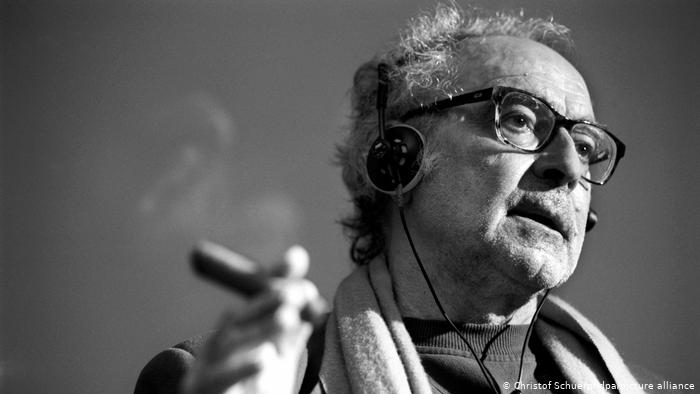
Cinema icon. Nouvelle Vague (New Wave) filmmaker Jean-Luc Godard turns 90

In the world of cinema Jean-Luc Godard is  acknowledged as one of the most accomplished and controversial film makers of all time. Generations of movie goers have watched, analyzed and talked about his work.

Jean Luc-Godard has influenced generations of movie makers. 

Sadly and predictably this movie great, Luc-Godard, has been largely ignored in America.

Despite his huge influence on modern cinema, Godard never received an Oscar nomination for any of his films. In 2010 he was awarded an Academy Honorary Award, but he did not attend the ceremony.

Excerpted from Deutsche Welle 12.3.2020

Jean-Luc Godard is recognized as one of the most influential filmmakers of the 20th century, but his political beliefs contributed to a difficult relationship with the film establishment.

Inspired by the May 68 protest movement that shook Paris and other European cities, Godard became increasingly politically outspoken. With his longtime friend Francois Truffaut, he led protests that shut down the 1968 Cannes Film Festival, to show solidarity with the students and workers.

Jean Luc-Godard III 12.3.2020

Sympathy for the Devil (1968) – Luc-Godard center. Mick Jagger right

Godard’s revolutionary and Marxist rhetoric pervaded both his films and his public statements. He openly criticized the Vietnam War. Between 1968 and 1973, he and Jean-Pierre Gorin made a series of films with a strong Maoist message. The best-known of them is Tout Va Bien (Just Great, 1972), starring Yves Montand and Jane Fonda. But towards the end of 1970s, Godard lost faith in his Maoist ideals.

In the late 1950s and early 1960s, a small group of French filmmakers turned cinema on its head. The Nouvelle Vague, or New Wave, broke all the established rules of filmmaking and rewrote them.

Franco-Swiss filmmaker Jean-Luc Godard was one of the leading lights of this new style of cinema. Critics rate him among the top 10 directors of all time, and he has had a direct influence on the likes of Quentin TarantinoBernardo Bertolucci, Steven Soderbergh and Martin Scorsese.

Born in Paris on December 3, 1930, Godard moved to Switzerland with his family at age 4. For much of his youth he lived on the Swiss side of Lake Geneva, where his father, a physician, ran a clinic. He returned to Paris after the war, to complete his baccalaureate.


Jean Luc-Godard II 12.3.2020.jpg

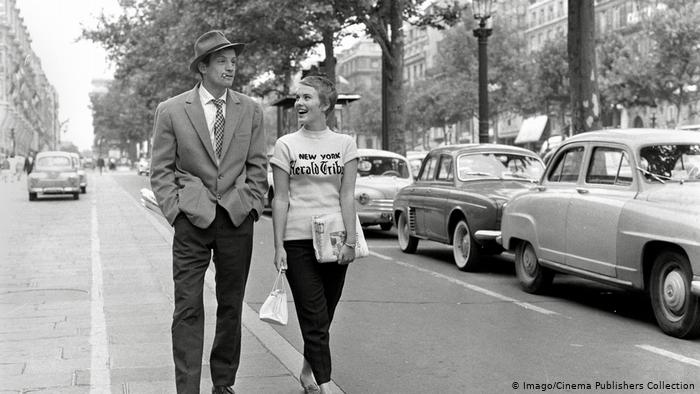
Breathless (1960) – Jean Paul Belmondo and Jean Seberg

He studied at the University of Paris and planned to pursue a career in anthropology. Although he never completed his degree, his interest in ethnology informed his filmmaking style, as he would use documentary film techniques to create what became called “cinema verité.”

His interest in films blossomed in 1950, when he joined the Ciné-Club du Quartier Latin. There he met Claude Chabrol and Francois Truffaut, who would also become influential members of the Nouvelle Vague.

Initially though, his interest in films was purely as a critic, writing for the publication Cahiers du Cinéma.

It wasn’t until 1954 that he was inspired to make his first short film, while working as a laborer on the Grand Dixence dam in Switzerland. With a borrowed camera, he shot Opération Béton (1954; Operation Concrete). The construction company bought the film and used it for publicity purposes.

A keen admirer of German playwright Bertolt Brecht, Godard wanted to translate Brecht’s concept of “epic theater” into the language of film. Over the next few years, Godard, Truffaut and others worked to produce a series of short films. They developed a new take on filmmaking, using lightweight equipment, natural lighting, long takes, sometimes with improvised dialogue. The established rules of continuity fell to the cutting room floor.

Then in 1960, Godard made his first feature film, A Bout de Souffle, (Breathless). The film, produced by Francois Truffaut and starring Jean Seberg and Jean-Paul Belmondo, was the turning point in his career.

A Bout de Souffle heavily referenced American film noir of the 1940s and 50s, but also combined the Nouvelle Vague’s groundbreaking new techniques. The story of a car-thief who shoots a policeman and is then turned over by his girlfriend used hand-held camera work, incidental lighting, actor monologues to camera and jump-cuts.

It was the start of his most successful and influential period of filmmaking.

1960 to 67 was a period of intense activity for Godard, in which he made the dozen films which form his Nouvelle Vague canon.

The most successful was the 1963 feature Le Mépris (Contempt), starring Brigitte Bardot. It was the most expensive film he made, and his only orthodox film, though it took Nouvelle Vague techniques and solidified them as the accepted way of modern cinema.

Jean Luc-Godard IV 12.3.2020

Contempt (1963) – Brigitte Bardot

After Pierrot le Fou (1965), his second film starring Belmondo, he was asked to direct Bonnie and Clyde, but he knocked back the offer, saying he distrusted Hollywood.

Godard’s political views had already appeared in films such as Le petit soldat, about the Algerian War of Independence. But in his final film in the Nouvelle Vague genre, Week-End, he delivered a scathing attack against consumerism and bourgeois society. Then in the closing credits, instead of simply “Fin,” the screen lit up with “Le Fin du Cinéma,” or “The End of Cinema.”

https://www.dw.com/en/nouvelle-vague-filmmaker-jean-luc-godard-at-90/a-55793767


Lethal weapon. Pedestrian killed by car on Geary Blvd. in S.F.’s Richmond District

The streets of San Francisco are increasingly dangerous.

What makes this incident more personal is that we live less than three blocks from where this pedestrian was killed by a careless motorist.

Nobody should forget for a second that cars are lethal weapons.

San Francisco Chronicle 12.2.2020

A yet-unidentified male pedestrian was struck and killed by a car Tuesday night in San Francisco’s Richmond district, police said.

The man, whose age was not immediately known, was struck while crossing the street at the intersection of Geary Boulevard and 38th Avenue. According to Walk San Francisco, a pedestrian advocacy group, he was the 10th pedestrian killed by a car in 2020.

Few details were immediately available on the crash, which occurred at about 6:57 p.m., according to Officer Tiffany Hang of the San Francisco Police Department. An investigation is ongoing. The pedestrian was declared dead at the scene, and the driver of the vehicle remained at the site and cooperated with police, Hang said.

According to Walk San Francisco, 10% of pedestrians struck by a car traveling 20 mph die compared to 40% at 30 mph and 80% at 40 mph. A proposal to reduce speed limits on five major streets near facilities serving senior citizens — including Geary Boulevard — is being studied by the Municipal Transportation Agency.

The San Francisco Medical Examiner’s Office said the deceased man has not yet been identified.

Dangerous Geary Boulevard in San Francisco

The intersection with 38th Avenue is just outside the most dangerous stretches of Geary Boulevard, but pedestrian advocates say that the city street, wide and straight for most of its length, encourages some motorists to speed.

“Geary is an incredibly dangerous street with high speeds and is designed in a way that makes people think they can drive in a way they shouldn’t,” said Marta Lindsey, a spokeswoman for Walk San Francisco.

While traffic has decreased during the pandemic, she said, speeds have increased in San Francisco and nationwide.

“The trends we’ve seen with increased speeds are leading to a surge in traffic fatalities,” she said.

With the agency grappling with budget troubles induced by the pandemic and shelter in place orders, pedestrian advocates hope the goals of Vision Zero won’t be left behind.

“We just can’t let those things get lost in the midst of the budget crisis,” Lindsey said.

https://www.sfchronicle.com/crime/article/Pedestrian-killed-by-car-on-Geary-Blvd-in-15770397.php

Rebecca through the decades as classic Du Maurier noir novel and in the cinema

Joe Morgenstern is the Pulitzer Prize winning film critic at the Wall Street Journal. After reading his review of the latest adaption of Rebecca I sent him the following.

I have been reading your reviews for years. They are generally excellent.

Re Rebecca. I first read the book. My daughter gave it to me.  Great read.

Next watched the Hitchcock 1940 adaption.

Now I am watching the Netflix version you reviewed October 22.

I agree the competition, Du Maurier and Hitchcock, is tough.

Still, I like it.  This is 2020. 

Not 1938 when Daphne Du Maurier wrote the story.

Not 1940 when the Hitchcock movie was released to great acclaim.

The latest version fits in with the times. I like the cinemaphotography, the soundtrack, the cast, the costumes.

And, as usual, Kristin Scott Thomas is stellar.

I think the review was a bit tougher than necessary. 

Wall Street Journal – Joe Morgenstern 10.22.2020

Who could have guessed that the film with a modern perspective on gender politics was the one made 80 years ago?

When a studio announces plans to remake a beloved Hollywood classic, it’s tempting to guess what they’re going to do with it. In the case of “Rebecca,” a 1940 Alfred Hitchcock drama starring Joan Fontaine and Laurence Olivier, the remake wasn’t produced by a conventional studio but by Netflix, the streaming giant that sometimes threatens to replace Hollywood. Still, anyone who knows the Hitchcock film might have made the same guesses that I did when I first heard the news. And we would have been right in the obvious ways, but hard put to imagine how unlovable the Netflix version would be, and how it would handle, or, rather, mishandle the essential element of feminism that was implicit in the original.

Alfred Hitchcock 11.30.2020.jpg

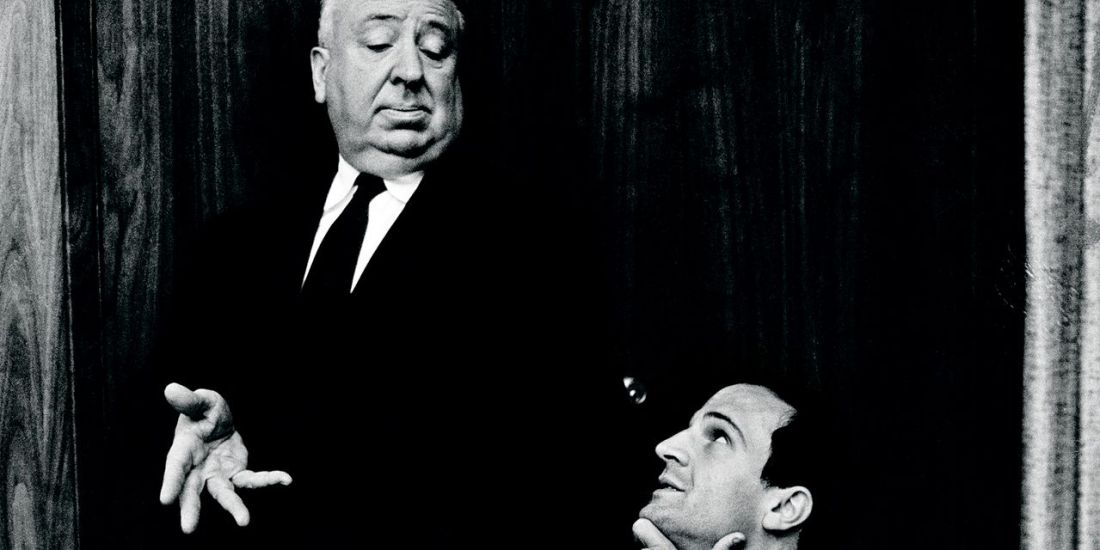
Alfred Hitchcock and Francois Truffaut

The earlier film, which won an Oscar for best picture, was an adaptation—or “picturization,” as the opening credits quaintly put it—of a bestselling Daphne du Maurier novel. The production attained classic status because the director was already a master of his medium, the performances were exceptional and the story was appealing, even though Hitchcock wasn’t a great fan of his own creation. He had butted heads with the producer, David O. Selznick; found Olivier troublesome to work with; felt the screenplay lacked humor; and, as he confided to François Truffaut, didn’t consider the end result a Hitchcock picture. All the same, audiences loved it for its gothic romance in which an unnamed young woman is swept off her feet by an older and extremely wealthy widower, then grows obsessed with his late wife, the Rebecca of the title, whose memory haunts her husband and blights their new marriage.

Rebecca III 11.30.2020.jpg

In the remake, directed by Ben Wheatley, the action begins, as before, in Monte Carlo, where the heroine (Lily James) meets her husband-to-be, Maxim de Winter (Armie Hammer), in a luxurious hotel. Ardent and naïve, she’s the paid companion of an unpleasant American dowager. Dashing but moody, he’s enchanted by her beauty and bright spirit, and proposes to her on the spot. Predictably, the opulence quotient has been redoubled, at the very least. Monte Carlo glitters as it didn’t before, and in color, of course, as photographed by Laurie Rose, rather than the black and white of the old production, which looked to be lower-budget than it was. Maxim’s modest MG roadster has accordingly been upgraded to a gleaming 3.5-liter Bentley convertible that is better at holding the camera, if not the road, as it zips along the Grande Corniche.

Just as predictably, Maxim’s estate in England, Manderley, has become superstately, though what’s lost amid the vast rooms and long halls swarming with a huge staff is the fogbound mystery of the place as it was visualized in the Hitchcock version. And what was once, in the days of the restrictive Motion Picture Production Code, a delicately implied lesbian relationship between Rebecca and the menacing housekeeper, Mrs. Danvers, is now clearly stated and yearningly recalled. That’s a gain, and all the more so since Mrs. Danvers, the pivotal character originally played by an almost impassive Judith Anderson, is now played by the excellent Kristin Scott Thomas. With help from the screenplay by Jane Goldman, Joe Shrapnel and Anna Waterhouse, Ms. Scott Thomas makes Danvers as sympathetic as the housekeeper’s implacable hostility to the new Mrs. De Winter will allow.

The Netflix film’s notable losses, however, flow from parallel power failures, neither of them impacting Manderley’s lights or overstocked refrigerators. The first one involves an almost total absence of electricity between Maxim and his young wife. However difficult Laurence Olivier may have been in the eyes of his director, he was brilliant onscreen; Maxim’s torment and charm were intense in equal measure. Joan Fontaine’s hallmark was haunted vulnerability, but she brought stirring strength to the role as her character gained confidence and maturity. Both Ms. James and Mr. Hammer are skilled performers, as well as attractive ones, and they go through the motions of a passionate love affair, but any passion between them is indicated rather than felt.

The second failure turns on a power relationship at the center of the plot. The housekeeper, Mrs. Danvers, is pivotal because, in her isolation and jealousy, she makes Maxim’s new wife so miserable that there’s no possibility of the latter saving herself, let alone her marriage—until she finds the courage to assert her place in the household and in Maxim’s life. Her turning point in the Hitchcock film comes when Danvers has been rattling on about what Mrs. De Winter—meaning Rebecca—would or wouldn’t have done. “I’m Mrs. De Winter now!” the heroine declares, and a new chapter in her life begins.

It’s a classic line that bespeaks a feminist position long before feminism found its full voice, but there’s no trace of it in the remake. Instead of growing from a sweet young thing into a strong woman who is Maxim’s equal, this bride stays scared and vulnerable until close to the end, when the script turns her implausibly into a sort of Nancy Drew doing detective work for the husband she adores.


Hairline fractures. Joe Biden injured playing football with family dog, Major

President-elect Biden and the country would be better served taking his German Shepherds for a brisk walk rather than playing football.

Nobody will fault him for leaving that sport to the younger generations.

Delaware Online 11.29.2020

Breaking News 4.15.2019

President-elect Joe Biden fractured his foot while playing with his dog, an injury his doctor on Sunday said will require him to wear a walking boot for several weeks.

Biden twisted his right ankle Saturday afternoon. His office reported the injury Sunday, saying the 78-year-old was being examined “out of an abundance of caution.” Biden arrived at Delaware Orthopaedic Specialists at 1096 Old Churchmans Road in Stanton shortly after 4 p.m.

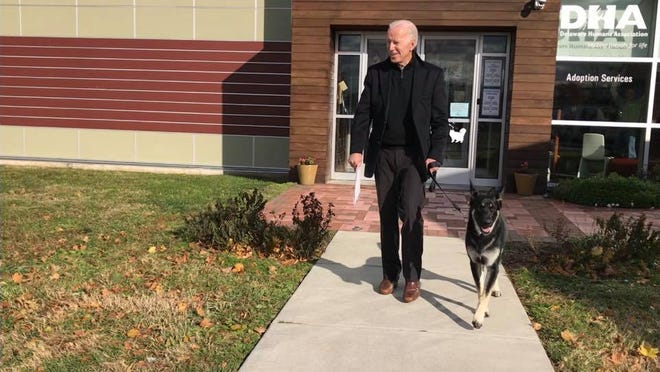
Biden was playing with Major, one of his two German shepherds, according to his office. The Biden family adopted Major from the Delaware Humane Association in 2018, 10 years after acquiring their first dog, Champ.

He left around 6:30 p.m. to go to an imaging center for an additional scan. Reporters said Biden was visibly limping when he left the doctor’s office, but was walking without a crutch or other aid. A van blocked reporters and photographers from seeing Biden enter the facility.

A secret service vehicle is parked in front of Delaware Orthopaedic Specialists in Stanton.

Delaware Orthopaedic Specialists – Wilmington

Although initial x-rays showed no fracture, a follow-up CT scan found hairline fractures in his lateral and intermediate cuneiform bones (found midfoot), according to Dr. Kevin O’Connor, the director of executive medicine at GW Medical Faculty Associates and Biden’s personal doctor.

“It is anticipated that he will likely require a walking boot for several weeks,” O’Connor said in a statement.

Biden and Major II 11.29.2020.jpg

Dr. Jill Biden with the family dogs, Champ and Major

https://www.delawareonline.com/story/news/politics/joe-biden/2020/11/29/joe-biden-twists-ankle-while-playing-his-dog/6458703002/

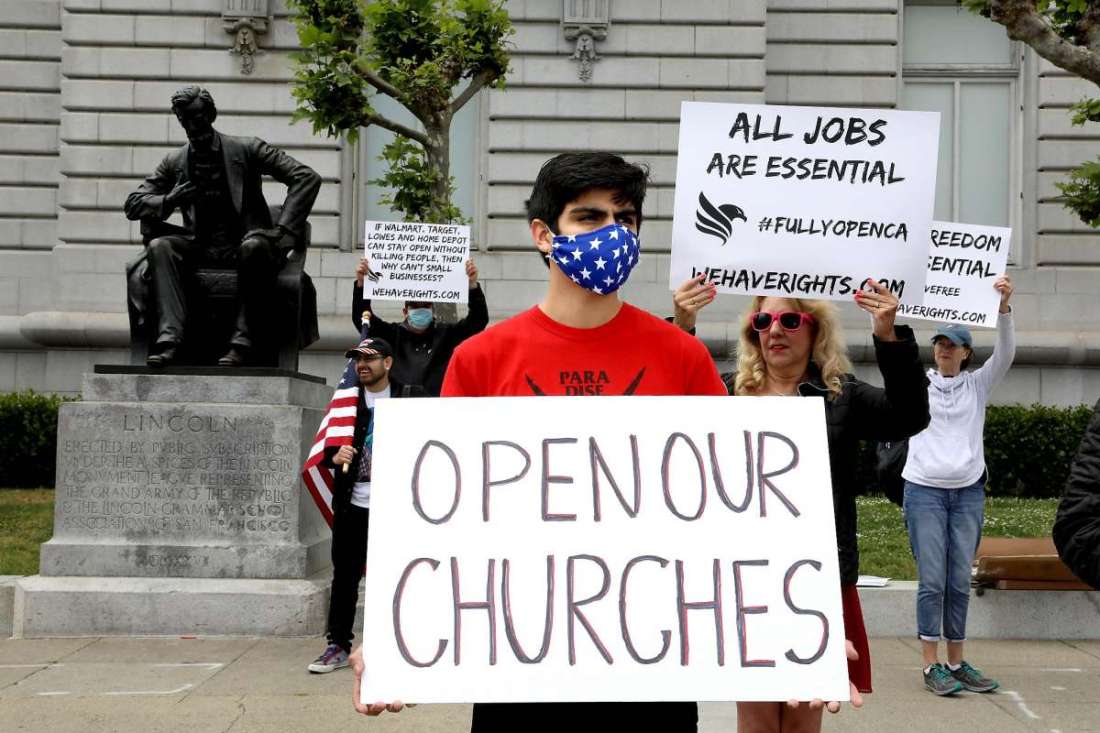
SF lands in purple tier restriction zone. Archbishop encourages disobedience.

San Francisco has entered the strict, yet prudent, Purple tier of Pandemic restrictions. The purple regimen will start on Sunday.

 The biggest howl  protest is coming from the local Archbishop Salvatore Cordileone. The archbishop is speaking in disengenuous tongues when he proclaims he is, “absolutely committed to public safety in conducting worship services.”

If the Archbishop was being honest and seriously looking after his parishoners he would be telling them to Deal with It and obey the health experts orders.

The Archbishop is not the only religious leader encouraging civil disobedience. The pastor at Temple Baptist Church Community is joining the disobedience brigades.

Excerpted from San Francisco Chronicle 11.28.2020

 San Francisco, Archbishop Salvatore Cordileone said he plans to confer with lawyers to potentially pursue legal action against the indoor church ban in San Francisco and San Mateo counties, calling it “blatant discrimination” and pointing to the Supreme Court’s recent decision barring restrictions on religious services in New York.

“Catholics in San Francisco are absolutely committed to public safety in conducting worship services,” he said in a statement. “Our protocols require masks, social distancing, sanitation and ventilation. But the government still chooses to treat worship as less important than shopping for shoes.”

SF Churches III  7.1.2020.jpg

Temple Baptist Church Community in San Francisco plans to meet in person Sunday at 10 a.m., said senior pastor Gregory Chisholm, noting that the service will be over by the time the restrictions take effect at noon. Chisholm said the church already streams the service on Youtube and Facebook and will continue to do so. “We’re in unity with our city officials,” Chisholm said. “We’re here to bless the city, bless the mayor and officials, we’re in total unity.”

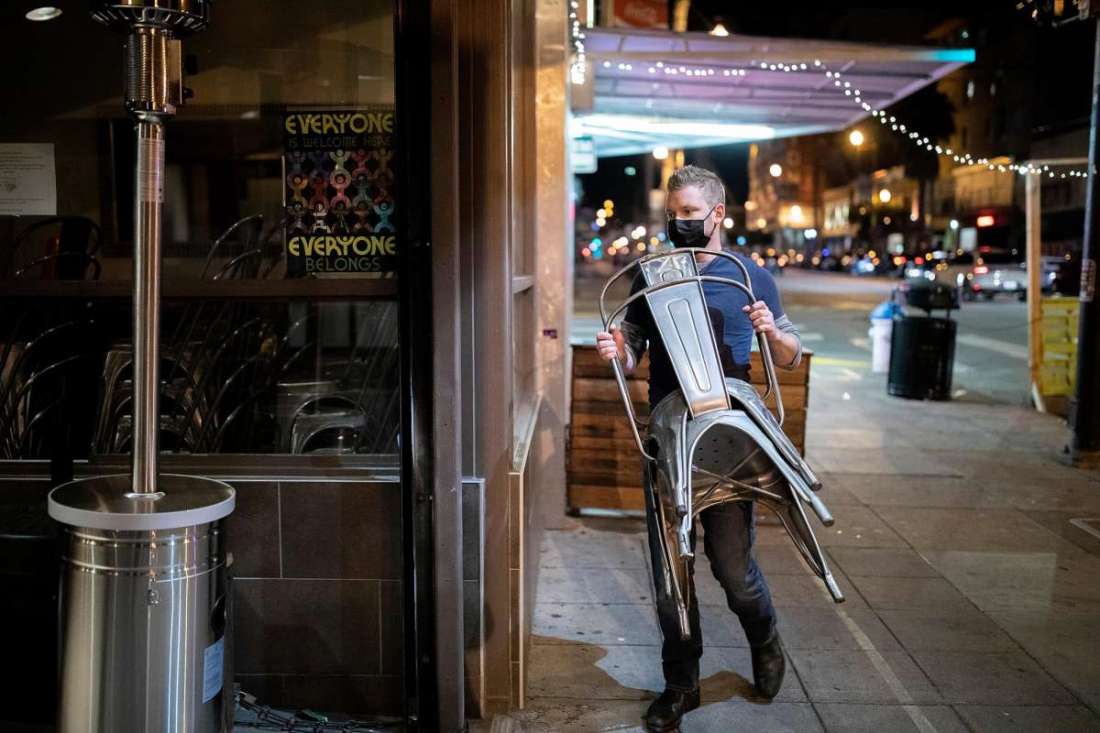
The move to purple will also shut down indoor operations such as museums, movie theaters, gyms and places of worship. Additionally, San Francisco will close its outdoor carousels, Ferris wheels and recreational train rides — which includes the new 150-foot-tall SkyStar Observation Wheel in Golden Gate Park.

The curfew will be in effect from 10 p.m. to 5 a.m. starting Monday, and it requires people to stay at home during those hours except for essential activities, including permitted jobs, grocery shopping, doctor visits and walking the dog or exercising. Most other Bay Area counties are already subject to the curfew.

SF Purple Zone I 11.28.2020.jpg

“This is about protecting ourselves, our families, and our community, and getting us to a better place so we can get people back to work and support our small businesses,” Mayor London Breed said in a statement. “Every single person needs to do what they can over the next few weeks.”

It’s a sharp fall for San Francisco, which was in the least-restrictive yellow tier less than a month ago. The city has reported an average of 130 new cases a day this week, compared to 73 per day in the first week of November.

SF Purple Zone II 11.28.2020.jpg

https://www.sfchronicle.com/bayarea/article/San-Francisco-lands-in-purple-tier-curfew-to-15760117.php#photo-20295797


A beautiful San Francisco sunset in late November

Every Picture Tells a Story – Ongoing series

November 27, 2020

During this horrific pandemic which is extending its tentacles around the United States there are still moments of beauty.

These pictures were taken at the Seawall in Sutro Heights Park adjacent to the Pacific Ocean

Sutro Park III 11.25.2020.jpg


sutro-park-vi-11.25.2020.jpg

Sutro Park IV 11.25.2020

The Trump impact. Nazi appears in Marin County. Caught on video posting swastika

The person to be applauded is the Marin County young man who confronted this scum.

Don’t think it is anyone other than “lame duck (55 days to go)” Trump who is responsible for legitimizing American crazies the past four years.

Now these perverse people are making their presence felt in such liberal enclaves as Marin County. President-elect Biden garnered 82% of the vote in the election.

At least Marinites can say this perverted person entered Fairfax from out of the County to post his abhorrent swastika in Fairfax.  

Question.  Why are Marin County authorities hesitating?  This guy should be charged with a hate crime.  

San Francisco Chronicle 11.26.2020

Marin County authorities are deciding whether to file hate-crime charges against a Livermore man who was captured on video putting swastika stickers on public and private property in Fairfax, police said Wednesday.

Fairfax resident Noah Mohan, 21, was walking his puppy with his girlfriend in Fairfax shortly before 3:45 p.m. Monday when he noticed a man across the street placing swastika stickers around town with the phrase, “We are everywhere.”

Mohan filmed the subsequent exchange and posted a shortened version on Instagram. In the video, Mohan ripped the sticker off a post and walked over to the man, asking him, “Why are you putting up Nazi stickers?”

The man responded that he believes in the ideology.

He went on to falsely say that the Auschwitz concentration camp was not real. Mohan said the man was wearing sunglasses with “SS” insignia.

Fascism and Trump II 8.26.2020

Fairfax police Lt. Rico Tabaranza said the man is a Livermore resident and has not been arrested or cited. But after an investigation and follow-up conversations with witnesses, “We are in contact with and collaborating with the District Attorney’s Office for pending charges, which some are hate-related crimes.”

“As an officer in this town, I’ve been here for 11 years, I haven’t seen anything close to this,” Tabaranza said. “It’s disheartening. There is no room for this type of hate in this community.”

Fascism and Trump III 8.26.2020

“I can tell you that we have several crimes being requested for charges at the D.A.’s office,” Tabaranza said. “Some of those are related to hate-related crimes. And some are not, like vandalism. It just has to meet a certain criteria, and it’s up to the D.A.’s office to determine whether or not its chargeable.”

District attorney’s officials could not be reached for comment Wednesday evening.

Mohan told The Chronicle he filmed the man and pressed him to leave because he did not want him in his hometown. Mohan followed the man through the downtown area and stopped near a parking lot, where the man said he was parked.

“If you stop filming me, I will leave right now,” the man could be heard saying. “I gotta go home.”

Mohan told him repeatedly to leave the city, and the man repeatedly said that he would drive away and leave if Mohan stopped filming. He continued filming until police arrived a few minutes later.

Mohan could be heard in the video telling his girlfriend to leave the area after noticing a pocket knife clipped to the man’s pant pocket. He said that while the man did not point it at anyone during the confrontation, Mohan feared for her safety because she is Black and Filipina.

Tabaranza said the knife the man was carrying was removed immediately as a safety precaution. It was a “legal folding pocket knife that anyone can carry,” Tabaranza said, noting that the knife was not brandished in a threatening manner during the confrontation.

Nazi Symbol 1.15.2019

In the man’s questioning by police, Tabaranza said, he reiterated his “ideology” to officers.

“He did admit to the fact that he was posting these stickers. We got pretty much his statement, his ideology of why he was spreading this type of propaganda in our town,” Tabaranza said.

He urged Fairfax residents to call police if they see anyone posting “hate-filled propaganda” and to “try not to intercede by confronting people, because we definitely don’t want a physical altercation.”

https://www.sfchronicle.com/bayarea/article/Man-caught-on-video-posting-swastika-stickers-15755517.php

South Dakota Gov’s War on Tribal Sovereignty Is Going to Get People Killed

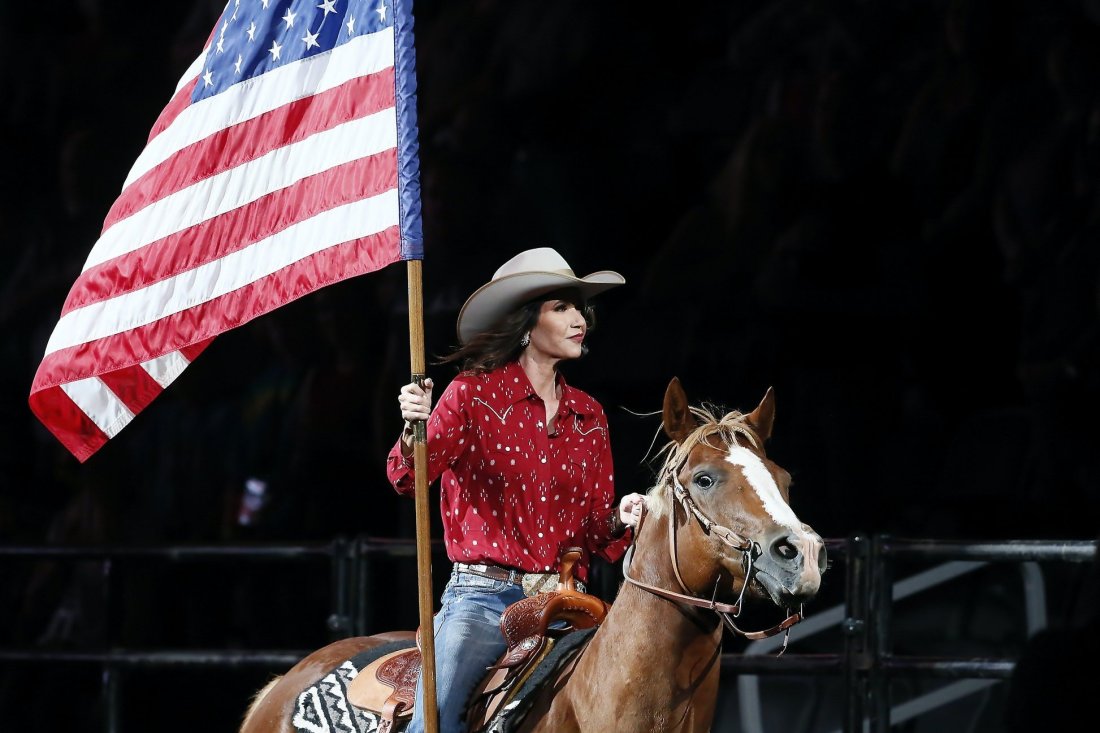
South Dakota Governor Kristi Noem may be a rising star in the Republican Party.  She is also a clear and present danger to the indigenous population in her state.

Excerpted from The New Republic 11.25.2020

The Republican governor has fueled South Dakota’s pandemic spiral, and she’s trying to take tribal nations down with her.

In late September, third-term Rapid City, South Dakota Republican mayor and ex–police chief Steve Allender, making reference to the influx of homeless residents from the nearby Pine Ridge Reservation, told reporters, “The homeless that are here from out of town should go home immediately.”

native american I 11.25.2020.jpg

On the same night Camp Mniluzahan went up, Allender had police try to clear it out. The following morning, the mayor held a press conference in which he blew off a little steam. “I swear, every conversation about the homeless in the last month has been peppered with phrases like, ‘stolen land,’ and ‘treaty violations,’ and ‘getting land back,’” Allender said. He went on to accuse the organizers of wanting to “hold the government accountable for something that happened 150 years ago, or 500 years ago.” 

National Bison Range 9.16.2017.jpg

Photo – Lee Heidhues

There does not exist a descriptor that adequately captures the levels of cruelty and malice required to pursue such policies while South Dakotans die. But, if pressed for one, “fucking insane” seems to do the trick.

South Dakota currently ranks second in the nation for Covid-19 cases, and first in hospitalizations.

On Saturday, the state reported its highest daily death total of the year. Yet, as of writing, Republican Governor Kristi Noem has refused to take action in response to the uncontrolled spread in her state, rejecting measures as simple and effective as a mask mandate. She described her decision to dig in on mass death as a matter of good manners and mutual respect. “If folks want to wear a mask, they are free to do so,” she tweeted at the end of October. “Those who don’t want to wear a mask shouldn’t be shamed into it, and govt should not mandate it. We need to respect each other’s decisions. In SD, we know a little common courtesy can go a long way.”

Montana National Bison Range 9.16.2017.jpg

Photo – Lee Heidhues

Around the same time, the Indian Health Service’s Great Plains area, consisting of the Dakotas, Nebraska, and Iowa, posted its highest-yet increase in Covid-19 cases. Unsurprisingly, while officials like Noem effectively cheered on the death toll, tribal governments and community leaders have taken matters into their own hands, enforcing checkpoints and lockdowns of their own.

This isn’t a power grab by tribes: It’s an act of survival. “The nearest health facility is a three-hour drive in Rapid City, for critical care. And our health facility is basically just—we only have eight beds,” Cheyenne River Sioux Tribe Chairman Harold Frazier told NPR in May. “There’s only one respiratory therapist. You know, there’s probably about over 10,000 residents here that live on the reservation. So if we were to have a massive outbreak, where are they going to go?”

native american II 11.25.2020

As Noem was bragging about getting to breathe on Trump and throwing her support behind a superspreader event in July, Frazier and the Cheyenne River Sioux Tribe government established checkpoints along roads entering the tribe’s reservation to check incoming vehicles to slow the spread of the virus. The stops were noninvasive and quick-moving, the kind of screening people face when walking into some restaurants and other shops across the country. But Noem fought the checkpoints, claiming that the CRST did not have the jurisdiction to stop traffic.

https://newrepublic.com/article/160198/kristi-noems-war-tribal-sovereignty-going-get-people-killed