Nazis on the Rise. AfD’s Björn Höcke: Firebrand of the German far right

A profile:  The German version of Donald Trump.

Deustche Welle  2.7.2020

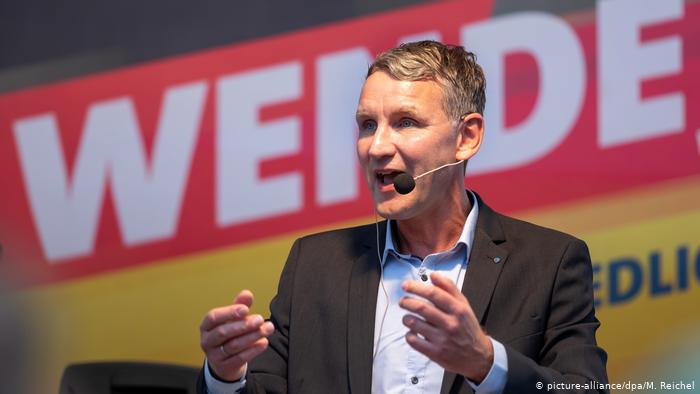
Nearly a quarter of voters in Thuringia voted for the far-right AfD last fall. The party’s state boss, Björn Höcke, a man who is cheered and jeered across the nation, symbolizes the AfD’s hard-right surge.

 

AFD Poster Lubeck Germany May 2017
Photo – Lubeck Germany – Lee Heidhues May 2017

Earlier this monththe far-right populist Alternative for Germany (AfD) party caused a political earthquake in the eastern German state of Thuringia, sending shockwaves across the nation. It did so by withdrawing its own candidate for state premier at the last minute during a parliamentary vote and instead backing Thomas Kemmerich of the business-friendly Free Democratic Party (FDP). Ultimately, AfD support secured victory for the FDP politician, and though Kemmerich stepped down the next day, the compact that Germany’s parties had sworn to — the promise of never working with the AfD — had been broken by the FDP and politicians from Chancellor Angela Merkel’s Christian Democratic Union (CDU). There can be little doubt that Björn Höcke, Thuringia’s extraordinarily polarizing AfD party leader, was behind the plot.

Read more: A disgrace for Germany

Highly divisive figure

Höcke’s ability to rile voters is infamous, and it was on full display last October, in the run-up to state parliamentary elections. When Höcke takes the stage things get very loud, with some in the crowd cheering him with chants of “Höcke, Höcke,” while others boo and scream “Nazis out.”

On that October day in the small Thuringian town of Bad Langensalza, the growing division in German society could not have been clearer, and no one seemed to enjoy the agitated mood more than Höcke himself. He threw up his arms to greet his supporters as he took the stage, wearing a smirk that would remain for the duration of his speech.

Höcke is undoubtedly the most divisive politician in the country. But when Thuringians went to the polls on October 27, he also led his party to historic gains, taking 23% of the vote — making the AfD the state’s second most popular party. Opinions polls showed, however, that only 8% of voters would have voted for him as state premier.

Still, for many in his own party, Höcke is a man who is too far to the right of the political spectrum. It is not hard to imagine why, Höcke has called for a “180-degree turnaround” in the way Germany looks at its past, and he regularly uses expressions like “degenerate” or “total victory” in his speeches — despite the fact that as a former history teacher he knows full well which dark chapter of German history he is conjuring up.

Axel Salheiser, a right-wing extremism researcher in the eastern German city of Jena, says the speeches that Höcke and many other AfD politicians deliver are riddled with words and phrases “confusingly similar” to those used by the Nazis.

Read more: Nazi ‘bird shit’ and the limits of free speech in Germany

Playing with racial stereotypes

On stage in Bad Langensalza, Höcke knows just what to say to get those sitting at beer-drinking tables at the event up on their feet and cheering. Most gathered here are angry about Chancellor Angela Merkel’s immigration policy, especially her decision to open Germany’s borders to allow hundreds of thousands of immigrants primarily fleeing civil wars into the country back in 2015.

Many complain that establishment parties don’t care about them. They call Merkel the “Führer of the regime,” they complain about the “elites,” and when Höcke rails against the “cartel parties” they eat it up.

Read more: Merkel slams ‘unforgivable’ far-right backed state premier vote

Another ingredient in Höcke’s recipe for success is playing with racial stereotypes. Sometimes he labels the entire African population “propagators,” at others he claims that thousands of German youths “experience school as a fearful place, because African thugs mob, terrorize and beat them there.”

Though many gathered in Bad Langensalza would not agree with Höcke’s way of presenting his argument, they also don’t condemn it. One AfD politician says his colleague Höcke’s words are often taken out of context. A supporter at the rally says: “He should tone it down a bit, especially with elections coming. But he’s right about everything.” The man says Germany has enough poor people of its own, and doesn’t need to spend money on “foreigners.”

Read more: Germany’s far-right AfD aims at a forgotten demographic

Björn Höcke (center) at a demonstration of his far-right AfD party and the Pegida movement in Chemnitz, Germany in September 2018 (picture-alliance/dpa/R. Hirschberger)Höcke (center) at a demonstration of his far-right AfD party and the anti-immigrant Pegida movement in Chemnitz, Germany in September 2018

‘The Wing’ versus the rest of the AfD

As in many other eastern German states, Thuringia’s AfD is dominated by an extreme-right contingent known as “The Wing.” It is estimated that as many as 40% of AfD party members identify themselves with the movement and Höcke, its leader.

On the political scale, far-right extremism researcher Salheiser says The Wing falls somewhere between “right-wing radical and far-right extremist.” Germany’s intelligence services treat the group as suspicious, and a court ruling last September found that it is legally acceptable to label Höcke a fascist.

The aim of Höcke and his supporters is to push the AfD further to the right. Höcke himself has no problem marching arm-in-arm with right-wing extremists, as he did in the eastern German city of Chemnitz in September 2018. But more moderate AfD politicians who seek to present the party as more centrist see Höcke as a thorn in their side. Two years ago, the party’s national executive board sought to have Höcke’s membership revoked, but that plan was shot down by a court of arbitration. Höcke himself has said he intends to expand his influence within the party.

Read more: Open-minded Germans must speak up to counter rightward drift

But Höcke didn’t only attract supporters last fall in Bad Langensalza. A number of people vehemently opposed to his presence also came. One of those people was Pastor Dirk Vogel. Pastor Vogel was furious that the AfD had chosen his parish church as the backdrop for its campaign event.

Vogel thinks Höcke is divisive, that he is exclusionary, and that he is condescending when speaking to and about people from other cultures. Although Vogel quietly watches from afar, others scream “out with Höcke,” while others simply weep. Jeering them from the stage, Höcke calls them “communist Nazis” and suggests they should take medication.

Höcke rarely speaks with media outlets, whom he and many AfD voters denigrate. He has given very few interviews since he walked out of one with German public broadcaster ZDF ahead of last fall’s elections. He ended that interview by telling reporters that he may well become a very interesting political figure in Germany in the not-too-distant future. The thought may thrill some, but for others it would be a nightmare come true.

https://www.dw.com/en/afds-bj%C3%B6rn-h%C3%B6cke-firebrand-of-the-german-far-right/a-52297134
 

Germany in chaos: Protesters rally in Dresden, denounce pact with far right

The Neo Nazis are rising in Germany.  Fortunately the public is motivated to take to the streets and call out the danger.

Sadly, politics in America do not reach this fever pitch of activism in the face of an increasingly demagogic and dictatorial leadership in Washington.

It could well be that America is taking the slow road to Fascist leadership.

The citizenry is allowing the scourge of  fascism to prevail, through willful ignorance.

Deutsche Welle 2.15.2020

Thuringia’s controversial election pact and Dresden’s day of remembrance have stirred memories of Germany’s Nazi past. Thousands of protesters took to the streets of Dresden and Erfurt for marches against the far right.

Thuringia I 2.25.5020.jpg

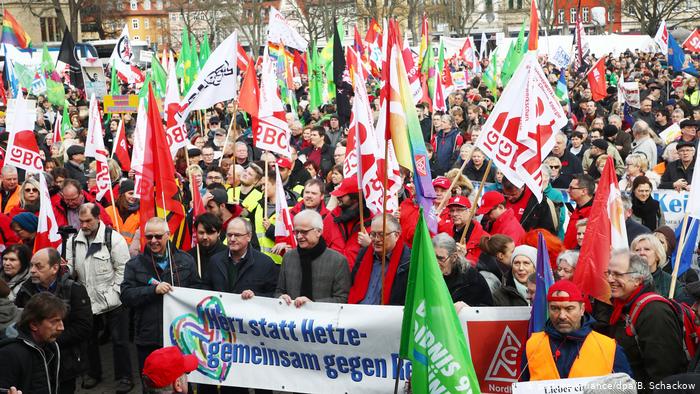
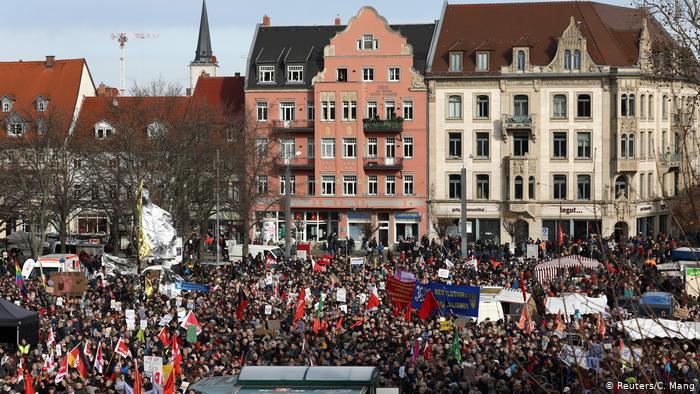
Thousands of people took to the streets of the German cities of of Dresden and Erfurt on Saturday to demonstrate against political deals with the far-right Alternative for Germany (AfD) party.

The Erfurt protest was the latest response to a controversial vote that saw politician Thomas Kemmerich elected as premier of the state of Thuringia after the business-friendly FDP and center-right Christian Democrats (CDU) made a secret pact with the far-right AfD.

The decision broke a political taboo in Germany, caused nationwide outrage, and prompted the resignation of German Chancellor Angela Merkel’s likely successor Annegret Kramp-Karrenbauer as head of the ruling CDU.

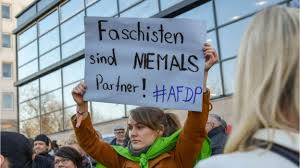
During Saturday’s rally, many protesters in Erfurt, the capital of Thuringia, held up placards which read: “No pact with fascists” or “No place for Nazis” as they gathered at Erfurt cathedral square.

Busloads of activists

Thuringia II 2.25.5020.jpg

Organizers said at least 50 busloads of people from all over Germany had descended on Erfurt. An estimated 18,000 people participated in the protests, according to organizers.

“By making a pact with the AfD, the CDU and FDP opened the door of power to the extreme right,” said a spokeswoman for the “Unteilbar” (Indivisible) movement, made up of union and charity workers, artists and politicians. Thanks to the unrelenting protests, “we, as civil society, have managed to slam this door shut again.”

Michael Rudolph, chair of the DGB Hesse-Thuringia branch told German public broadcaster MDR that Saturday’s demonstration would not be the end of the protest against the vote.

The scandal in Thuringia unfolded when Kemmerich, an FDP politician was elected on February 5 thanks to the AfD’s backing. He won by one vote against the popular Left politician Bodo Ramelow.

In the face of massive pressure from Berlin, Kemmerich resigned after just three days in office.

Parallel demo in Dresden

Anti-fascist counter-demonstrators, meanwhile, forced a route change on a far-right march in Dresden on Saturday.

“On a day like this, you can’t just stand idly by. We are here to say that this is not our Dresden,” Jan, a 27-year-old counter-protester, told DW, with his face partially covered. “There is no room for Nazis in this city — not now, not ever.”

DW correspondent Dana Regev reported that around several hundred neo-Nazis had begun their “funeral march” from the city’s central station.

https://www.dw.com/en/germany-protesters-rally-in-dresden-erfurt-denouncing-political-pacts-with-far-right/a-52387989


Alameda DA closes the door on prosecution of Home occupiers


The needless expenditure by law enforcement for frivolous and retaliatory action to satisfy the needs of a few is obscene.

Property speculators need to be told. There must be limits on their sense of entitlement. Property rights are not without limits.  The People are more important.

To get attention and results it takes a radical step. Housing prices are obscene. People are being evicted. The Oakland mothers will not be prosecuted.  The Alameda District Attorney took the correct position in not causing further anquish to these  women and their families.

San Francisco Chronicle 2.14.2020

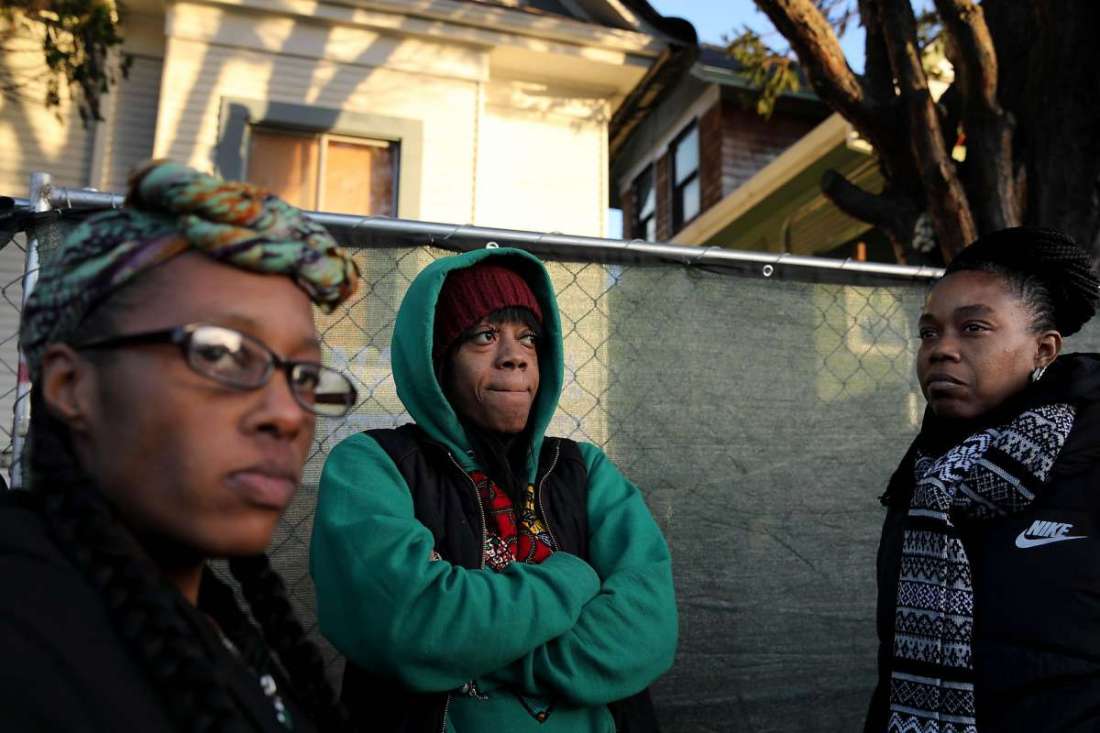
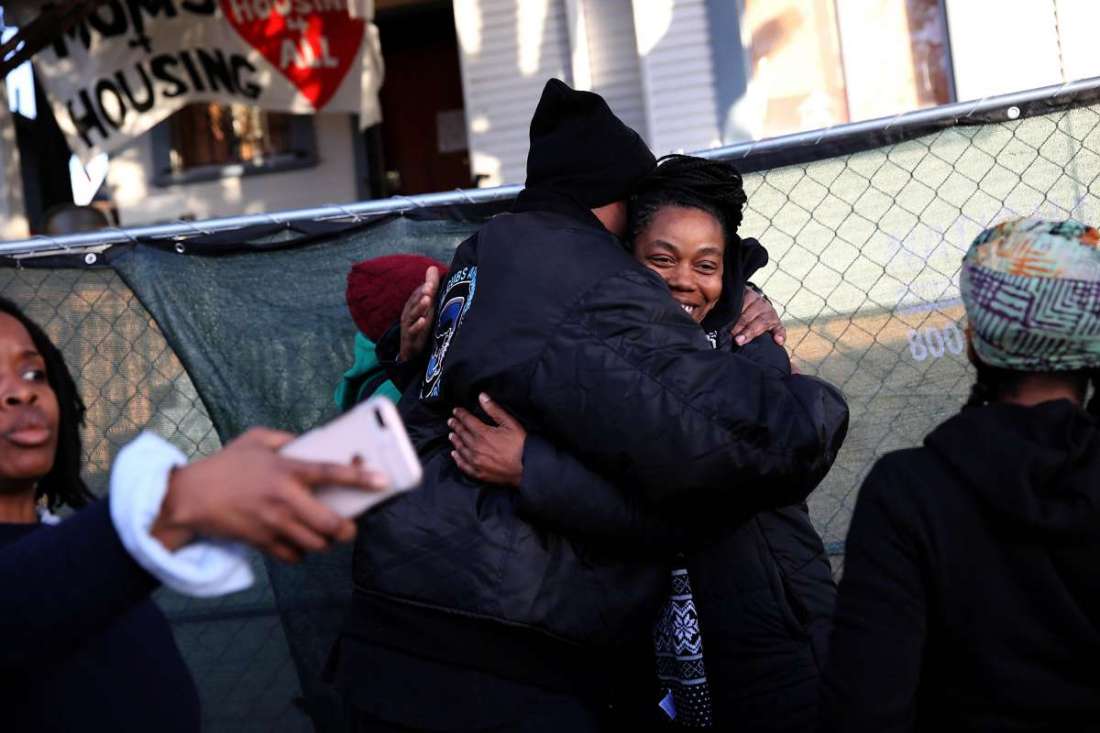
The Alameda County district attorney has declined to file charges against four people, including the two members of Moms 4 Housing arrested last month when a judge ordered the eviction of mothers living without permission in a vacant West Oakland home.

District Attorney Nancy O’Malley quietly dropped the case on Thursday.

Moms 4 Housing I 2.14.2020.jpg

Her decision concluded a dramatic chapter in the region’s acute housing crisis that gained national attention when sheriff’s deputies in riot gear and armored vehicles evicted a rotating group of four homeless mothers who took up residence in the empty house in November to highlight the shortage of affordable housing.

The saga escalated on Jan. 14, when the deputies arrested Tolani King, 46, Misty Cross, 38, and Jesse Turner, 25; all of Oakland, and Walter Baker, 28, of Berkeley.

They faced charges of resisting eviction and obstructing a peace officer, and have been out on bail.

On Friday, with the charges dropped, Moms 4 Housing — now a nonprofit group — issued a statement calling on the Sheriff’s Office to disclose how much it spent to evict the mothers and send in the tanks, and to explain why they did it.

“Residents of Alameda County have the right to know the county’s justification for using tanks to remove nonviolent mothers from a previously vacant home, and to know the cost to the taxpayers for such behavior,” the group said in a statement.

The operation, which ended when police quelled the two-month act of civil disobedience, removed the women and boarded up the home.

Meanwhile, Wedgewood Properties, which owns the Magnolia Street home and specializes in house-flipping, agreed in January to sell it to a nonprofit affordable-housing group, which in turn would give it to the mothers.

But as the mothers resolved their housing dilemma, their legal troubles persisted — until now.

“We declined to file charges,” Teresa Drenick, a spokeswoman for the district attorney’s office, said Thursday.

Earlier, King, Cross and their supporters, Turner and Baker, received a notice to appear Thursday at an Oakland courthouse. They showed up with nearly two dozen other supporters expecting to be arraigned. But a deputy told them they weren’t on the court schedule.

The uncertainty inflamed the sense of injustice among the four and their advocates.

“Not knowing if you will be charged or might be charged, this is unacceptable. This is ridiculous,” said Carroll Fife, regional director of Alliance of Californians for Community Empowerment, an organization working with Moms 4 Housing.

In an effort to avoid another “Moms 4 Housing”-style protest and help resolve Oakland’s shortage of affordable housing, Oakland Councilwoman Nikki Fortunato Bas introduced legislation on Jan. 30 that she said would give landlords an incentive to offer tenants, affordable housing developers and land trusts first right of refusal when selling a property.

The proposal doesn’t yet specify what the incentive would be. The city’s Community and Economic Development Committee is expected to take up the issue on March 24.

https://www.sfchronicle.com/bayarea/article/Moms-4-Housing-D-A-won-t-file-criminal-charges-15057307.php#photo-18884960

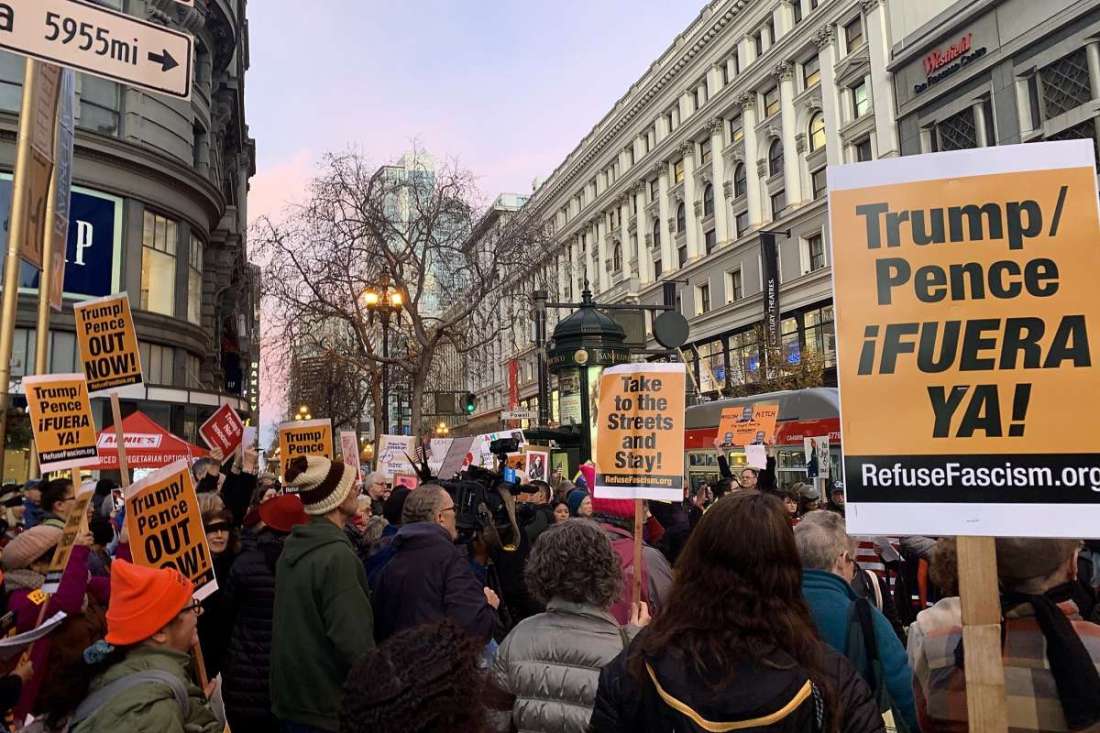
Pelosi constituents tear up cowardly Republicans who sold their integrity

“Are you an American or a Republican?  U can’t be both?”

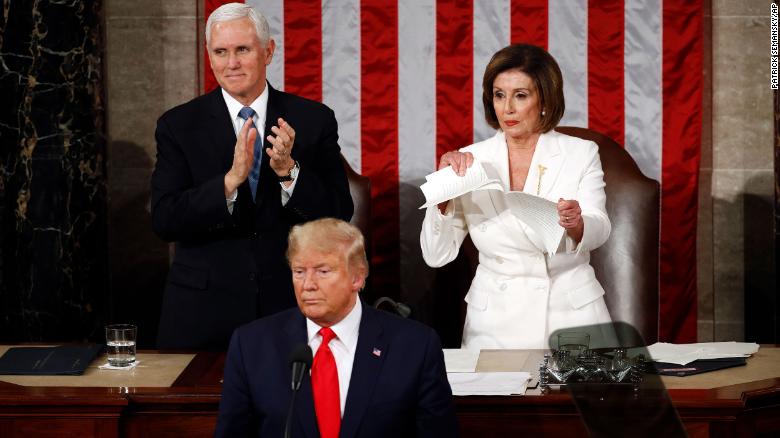
San Francisco will continue to show the way for Progressive values exemplified by Speaker Nancy Pelosi who tore up The wannabe President’s mindless and incendiary  speech in front of the worldwide media and her Congressional companions.

It sent the clueless Republicans into bloviation overdrive.

This poster says it all about the spineless, cowardly and totally cowed by the Clown in the White House Republicans who allowed this Huckster to walk away and continue his destruction of the nation’s political system.

Not one shred of integrity has been exhibited by these trolls.

San Francisco Chronicle 2.5.2020

Dozens of protesters rallied at Market and Powell streets in San Francisco Wednesday afternoon to protest the acquittal of President Trump, accusing the GOP of a cover-up.

Activists with community organization Indivisible SF organized the gathering to protest Trump, who was acquitted Wednesday by the Senate of both impeachment charges of abusing his power and obstruction of Congress.

Megan McCrea, 34, said the United States’ system of checks and balances failed when the Senate acquitted Trump, calling the verdict a “cover-up.” She joined dozens of other participants and speakers in calling for people to register to vote ahead of the November election.

Trump protest 2.5.2020.jpg

“(Trump) is now completely emboldened to do any lawless behavior that he wants to do to try to get reelected,” McCrea said.

Indivisible activists said the gathering was part of a nationwide day of action calling for accountability in what they call a “cover-up” by the GOP-controlled Senate to protect Trump from removal from office.

Some protesters pulled black handkerchiefs over their eyes, others pulled knitted pink caps over their heads, and chanted, “Move Trump, get out the way, get out the way, Trump, get out the way,” to the beat of a Ludacris song. One woman dressed in a red cape and white bonnet, the style of enslaved women in Margaret Atwood’s dystopian book, “The Handmaid’s Tale.”

Theresa Kaviani, of Lafayette, wore a green khaki jacket with the phrase, “I do care, and you should to” in white lettering — a response to the jacket First Lady Melania Trump wore the day she visited a shelter for migrant children near the Texas border.

“I heard them reading out the verdict and I think this country has allowed our democracy to die, I really do,” Kaviani said through tears, her voice breaking. “I think it’s emotional whenever a criminal is acquitted.”

Paul Hazell, and his husband, Graham Cruiskshank, both 52 of Richmond, thrust handmade caricatures of US Senate Majority Leader Mitch McConnell and Trump in the air and listened to speakers take turns at the microphone near the cable car turnaround, joining in on chants of, “Vote him out.”

Hazell said the Senate’s decision illustrates the Republican party’s “denial of truth and the unwillingness to look” at evidence or hear from potential witnesses in the trial.


Cruiskshank said he felt a sense of responsibility to protest the acquittal on behalf of his students at Pacifica’s Oceana High School, whom he says have disclosed fears of being targeted by the Trump Administration’s rhetoric because they are undocumented immigrants or they identify as LGBTQ.

“Right now we’re left with one primary option, and that is the election,” Cruiskshank said. “We all have to get behind that (Democratic) candidate, even if that wasn’t our first choice. We have to rally.”

https://www.sfchronicle.com/bayarea/article/Protesters-rally-in-San-Francisco-against-15034087.php#photo-18989523


Speaker Pelosi trashes failed TV game show host posing as President

Every Picture Tells a Story

2.5.2020  State of the Union

It takes a Woman leader to put this disgraceful representative of America in his place.

 The trash can.

BuzzFeed 2.5.2020

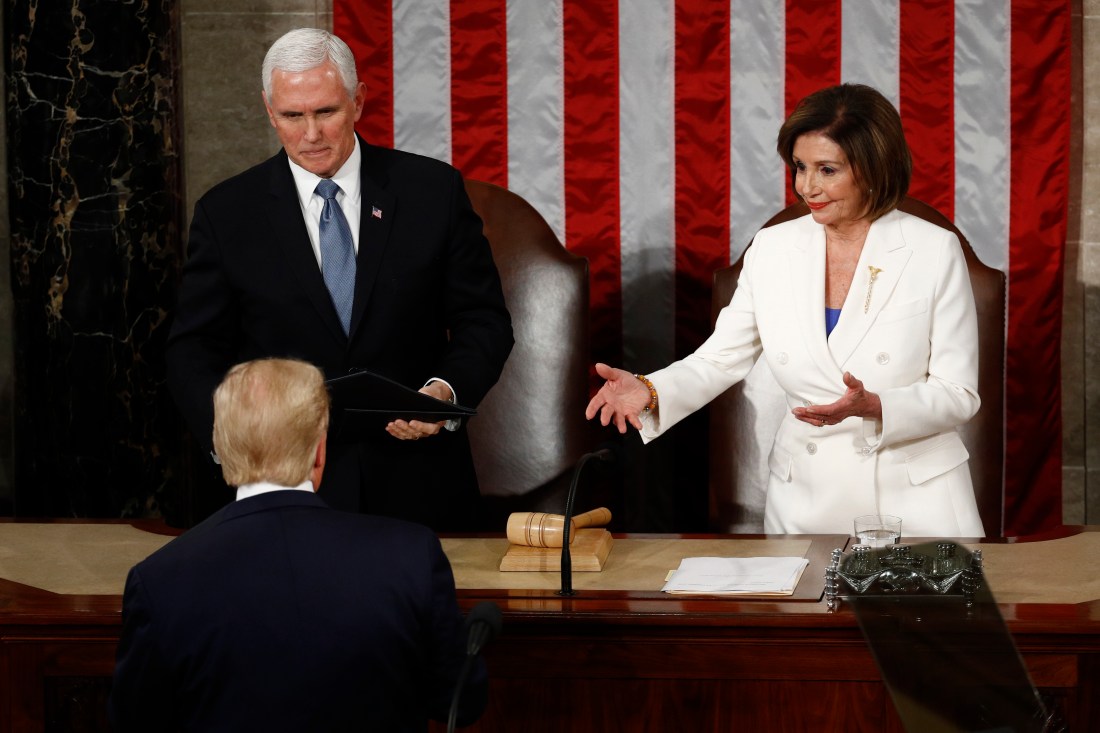
It took zero time before the tension between President Trump and House Speaker Nancy Pelosi was evident at the State of the Union address on Tuesday when the impeached president ignored her outstretched hand to greet him.

Pelosi Rips Up II 2.5.2020.jpg

https://www.buzzfeednews.com/article/salvadorhernandez/trump-nancy-pelosi-outstretched-hand-sotu

‘Hitler in Hell’: George Grosz masterwork unveiled in Berlin

Tonight is the yearly American “State of the Union” address given by the President.

Meanwhile, in Germany a historic piece of artwork has been unveiled.

There’s an old saying, “Be careful what you wish for it just might come true.”

America is becoming like Weimar in 1920’s Germany.  Tonight we saw the President refusing to shake the hand of the Speaker of the House, Nancy Pelosi.  At the end of the President’s speech, Speaker Pelosi in front of the worldwide television cameras tore up a copy of the President’s speech.
Meanwhile, the President’s sycophant like cheer leaders in the audience were chanting “Four more years!!!!” thinking about this November’s election. The President’s feverish supporters are giving him unprecedented Imperial powers.

The short sightedness of this total loyalty is that one day a person not of their Neo fascist persuasion will come into power. 

Deutsche Welle 2.4.2020

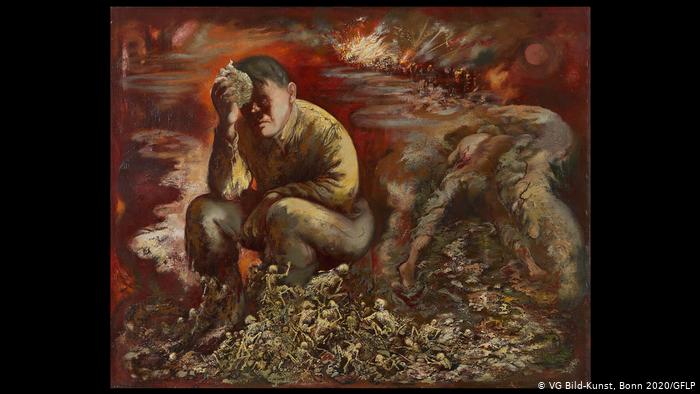
The exiled painter described his 1944 work as “Hitler as a fascist monster or as an apocalyptic beast.” After more than 75 years in a private collection, the masterpiece is now in public hands and was unveiled Tuesday.

George Grosz was a pioneer of irreverent Dada art in Berlin, an ardent critic of war and nationalism who went into exile before Hitler seized power in 1933.

In 1944, while living in the US, he completed a painting that portrays Hitler as a monster dictator reigning over an underworld of mass death and destruction. Titled Cain or Hitler in Hell, the masterwork has been privately owned (by the Grosz family) since its creation, but in 2019 was acquired by the German Historical Museum in Berlin (DHM).

The painting was officially unveiled today in Berlin, with Minister of Culture, Monika Grütters, Raphael Gross, President of the German Historical Museum Foundation, and Markus Hilgert, General Secretary of the Cultural Foundation of the German Federal States, in attendance.

Purchased by the DHM with the support of the federal government and the Cultural Foundation of the German Federal States, the acquisition marks a major coup for the institution as the painting is considered one of the outstanding works created by a German artist in exile after the rise of the Nazi regime.

Hitler in Hell, as it is known, will soon be on view to the public as part of the museum’s permanent collection.

Confronting Hitler

“We are very grateful that this important testimony of German exile art during National Socialism could be secured for our collection,” said Raphael Gross on February 4 at the official unveiling at the DHM in central Berlin. “Especially with regard to our new permanent exhibition, which we are currently designing, it will be a central object that tells us a lot about the artistic confrontation with Hitler and National Socialism.”

Read moreNew Objectivity art: The anti-expressionism Weimar movement

Grosz, who gained a reputation for his highly political Dada art during the Weimar Republic, was a World War One veteran who became a trenchant critic of German nationalism and joined the Sparticist uprising in 1918.

As a communist and fierce anti-Nazi who condemned the emergence of fascism throughout Europe, it was no wonder that he emigrated to the US shortly before Hitler came to power in 1933. Soon after, the Nazis labelled his work “degenerate art” and removed it from the public collections in the so-called German Reich.

George Grosz' Dada collage from 1918 mocks the Prussian generals and religious leaders at the heart of a disastrous war (VG Bild-Kunst, Bonn 2011)George Grosz’ Dada collage from 1918 mocks the Prussian generals and religious leaders at the heart of a disastrous war

By the late 1930s, Grosz  began to work again in his New York home, reviving many of his former themes as Hitler fomented world war and news of the Nazi death camps spread. Cain or Hitler in Hell is considered one of the main works of this era. Grosz himself described the picture as a representation of “Hitler as a fascist monster, or as an apocalyptic beast, consumed by his own thoughts.”

The artist equated Hitler with the figure of Cain, who in the bible is presented as the archetypal murderer and the first in human history

Repatriating ‘degenerate art’

The German Minister of State for Culture, Monika Grütters, noted at the unveiling that many of George Grosz’ paintings were in fact destroyed by the Nazis after they confiscated 285 of his works from public collections.

“By purchasing one of his most important paintings, we are making a mark for reparation, and honoring one of the most talented artists in the Weimar Republic,” she said. “Since its creation in 1944, the work Cain or Hitler in Hell has lost none of its power.”

George Grosz at work in his Long Island studio in 1940 (Archiv Ralph Jentsch, Rom.)George Grosz at work in his Long Island studio in 1940
“On the contrary: George Grosz’ apocalyptic vision of terror looks like an appeal, like a warning against forgetting, in view of the renewed anti-Semitism in our society,” she continued. “It is works of art like this that help us learn the right lessons from history.”

Back in Berlin

“This decidedly political picture shows how Grosz develops his critical formal language in exile,” said Markus Hilgert of the Cultural Foundation of the German Federal States. “It is important to me that young people in particular have access to the painting and are able to deal with the artist’s critical view of National Socialism.”

He added that it was important to fulfill the Grosz family’s wish that the painting is shown permanently where Grosz was born and also died. Though the artist became a US citizen in 1938, he returned to his home city with his wife in 1958, where he died a year later.

https://www.dw.com/en/hitler-in-hell-george-grosz-masterwork-unveiled-in-berlin/a-52252359

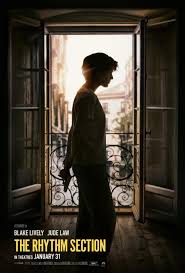
‘The Rhythm Section’ Gritty, Anti-Bond Thriller About the Futility of Revenge

I was immediately attracted to “The Rhythm Section” when I saw the trailer. 

I had no idea at least one critic would write the film is about the futility of revenge and guaranteed I will be viewing it in the theater soon.

The Rhythm Section is the 2020 version of “In the Fade” the 2017 German film “inspired by True Events.”

Mick LaSalle in the San Francisco Chronicle gives the film the top rating in his review. The Little Man falling off the chair. Following is another critic’s review.

Indie Wire – Kate Erbland – 1.31.2020

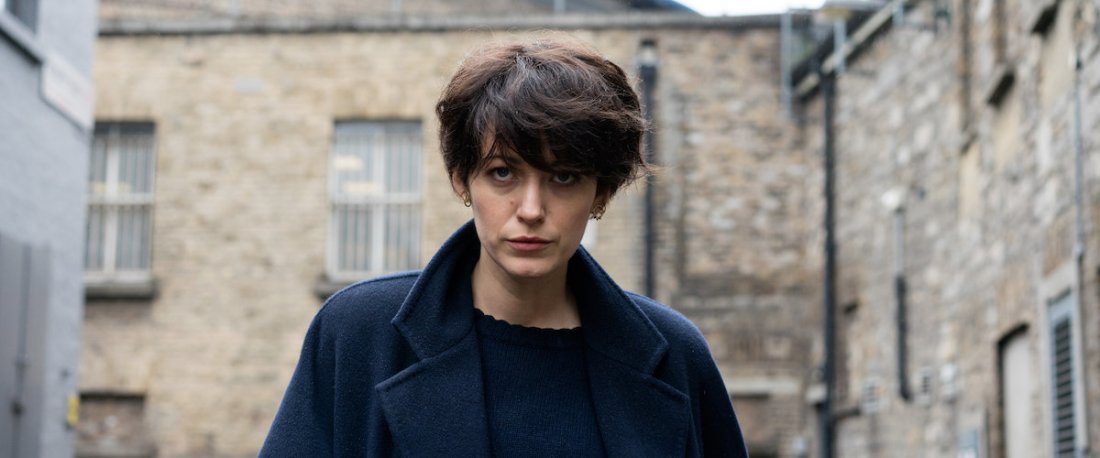
Forgive the inscrutable title: Reed Morano’s “The Rhythm Section” will explain away its awkward name in due time, though it will likely only inspire viewers to wish for something even weirder to try to sum up the filmmaker’s third feature film. A gritty, anti-James Bond thriller about the futility of revenge and the limits of violence, “The Rhythm Section” might as well be called “This Hurts a Lot,” because the Blake Lively-starring adaptation of Mark Burnell’s novel leaves a mark on both its star and audience. “I’m not looking to get healed,” Lively’s Stephanie huffs at someone halfway through the dark drama, about as close to an ethos as her nihilistic anti-heroine has to offer.

That’s not to say she’s not compelling, or that she doesn’t start to evolve as the mystery winds on. It’s less a film about secret spies and global conspiracies (though that stuff is there, too) than an exploration of the price of guilt and the weight of trauma. Lively makes off with one of her best performances ever, and one that makes an unexpected case for giving the actress a real action franchise next time around. One of contemporary cinema’s most underrated chameleons, Lively throws herself into the role with real gusto (that the actress injured herself so badly during a fight scene that production had to be put on hold is not in the least bit surprising, as unfortunate as it was).

The physicality of Lively’s performance goes beyond those fight scenes, however — and these are impressive fight scenes, gritty and bruising, every punch and grunt jumping off the screen. She’s tasked with embodying not just an untested, accidentally made assassin, but a woman living in visceral trauma. The globe-trotting, time-spanning film opens at Stephanie’s lowest point: Three years after a horrific tragedy that took her entire family (mom, dad, brother, sister, all introduced during flashbacks that play over the film’s credits), the former Oxford whiz kid is living in a makeshift London brothel when a new client reveals he’s really an undercover reporter with a crazy story to tell.

Stephanie’s family died in a plane crash, but what Keith (Raza Jaffrey) tells her only further twists the knife into her life-consuming rage and guilt: it wasn’t some random accident, it was an act of terrorism that claimed hundreds of lives in the process of offing one major target. With nothing left to lose, Stephanie eventually opts to seek out all associated parties and take care of them — “violently,” she explains to one ally — despite having zero background in fighting, spying, espionage, or any other related dark arts.

It’s a compelling plot, but not a complex one, as its straight arrow slowly melts into something needlessly complicated. Stephanie’s rage is understandable, but some of the twists that follow from it are improbable and the relationships she forms along the way are unlikely (especially one that takes root in the film’s final act). Burnell’s script (the author adapted his own novel for the film, his first venture into filmmaking) works hard to sell Jude Law’s appearance as an unexpected mentor, and he and Lively exhibit enough chemistry as at-odds allies to smooth over the wrinkles in their association. (Sterling K. Brown, essentially stepping in as the male lead in the film’s second half, doesn’t make out as easily.)

The film is, given Morano’s background in cinematography, gorgeously shot, often taking its cues from Stephanie’s limited point of view. Cinematographer Sean Bobbitt’s compositions are both chilly and evocative, and serve Morano’s hard-hitting fight sequences well, adding heft to already gutting scenes. A dizzying single-take car chase halfway through the film appears to be lensed by someone sitting in the seat next to Stephanie, and serves as one hell of a cinematic rebuttal of other, more polished sequences in similar films.

For all its bite, there’s still a razor-thin edge of black comedy running through the film even in its darkest moments, a risk that pays off while others falter. (Law’s anonymous former MI6 agent pushes an ailing Stephanie to shape up through rigorous training, and Lively’s responses earn the laughs she and Morano easily layer in.) A dissonant soundtrack of cheeky songs is more distracting than anything, and often it’s Hans Zimmer’s (literally) pulse-pounding score that proves most effective at driving tension and emotion.

The film’s greatest asset is baked right in: Stephanie isn’t an instant super-spy, despite her drive and Jude Law-issued training. That’s not enough to suddenly turn anyone into a new wave James Bond, and that she falters at essential moments is what keeps “The Rhythm Section” pulsating along through an ending as messy and big as Stephanie’s pain itself. That it all but begs for a sequel (Burnell’s book has, so far, spawned three followup novels) is its final trick, not because actioners like “The Rhythm Section” always seem to be next in line for the franchise treatment, but because it’s unique enough to actually deserve to cut through the scrum. Not every thriller gets a happy ending, but at least Stephanie makes hers hit hard enough to matter.

https://www.indiewire.com/2020/01/the-rhythm-section-review-blake-lively-reed-morano-1202207516/

Willie Brown’s take on Feds takedown of a San Francisco City Hall insider

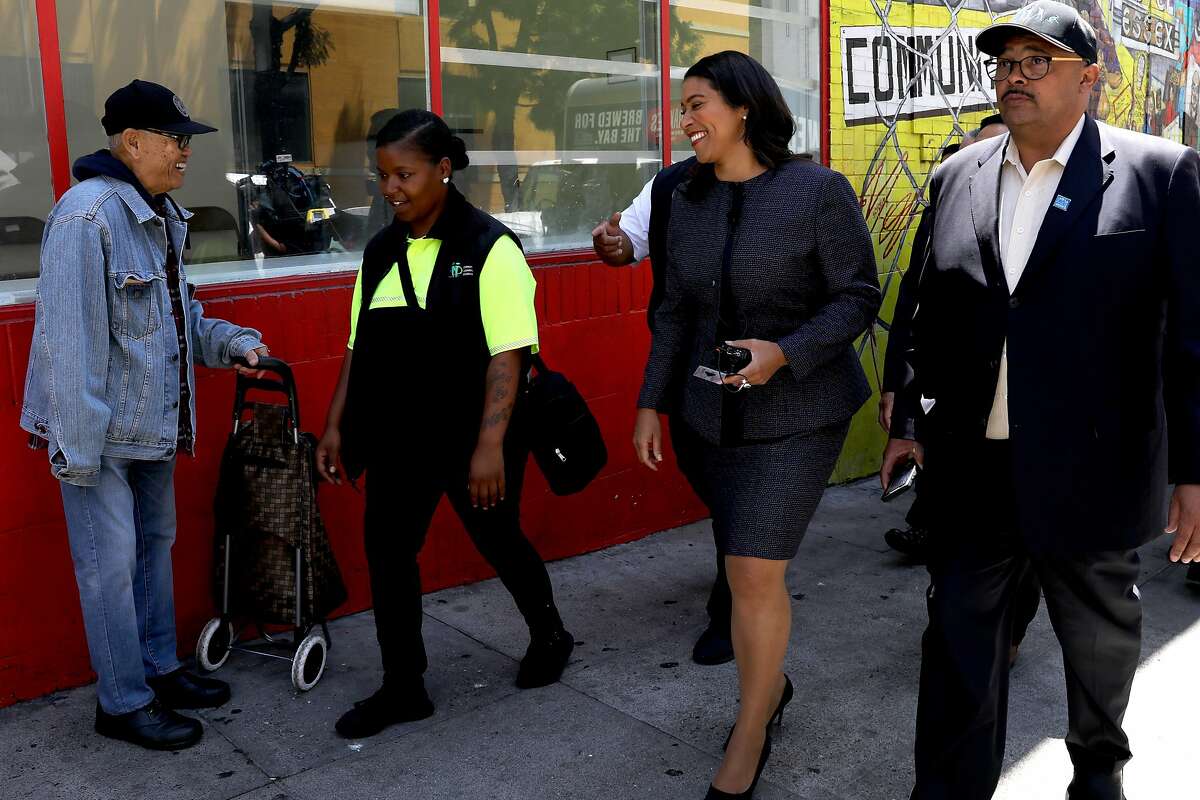
I thought that Da Mayor would take the low key approach in discussing the Feds bust of Mohammed Nuru – Department of Public Works (DPW) director.

The former Mayor, San Francisco  political and social fixture and now must read Sunday columnnist  dissects the story in a way only he can.

San Francisco Chronicle – Willie Brown – 2.1.2020

LOCAL // WILLIE’S WORLD

SF corruption scandal: Your good name is worth more than a tractor

Photo of Willie Brown

If Mohammed Nuru did what he’s accused of, it’s hard to figure what the head of San Francisco’s Public Works department was thinking.

Nuru and restaurateur Nick Bovis are in the middle of the city’s biggest corruption scandal in years. They allegedly tried to bribe an airport commissioner to help Bovis land a chicken restaurant lease at SFO. They allegedly cut inside deals aimed at getting Bovis a contract to supply portable toilets. Nuru allegedly accepted trips and fancy wine to help a Chinese developer with a building project, and he allegedly had a city contractor pour concrete at his Colusa County vacation home and got a free John Deere tractor in the deal to boot.

A chicken restaurant, portable toilets and a tractor. That would be pretty low-rent material to risk your career and good name for.

Nuru’s lawyer says he’s looking forward to answering the charges in court, and I want to believe Nuru is innocent. Because the guy in the criminal complaint filed by federal prosecutors last week isn’t the one I knew when I was mayor.

Nuru came to Public Works after I took office. He’s been described as a guy who couldn’t be beat when it came to getting a street fixed, and that’s definitely true. Ed Lee, whom I put in charge of Public Works, recognized that and promoted him to deputy director in 2000.

Nuru ran a nonprofit gardening program for homeless people on the side, and he did get into hot water for having some of the workers campaign for Gavin Newsom when he first ran for mayor. He survived that and Newsom kept him on, and when Lee became mayor, he put Nuru in charge of Public Works.

Lee and Nuru were close friends, as well. At times, they would drive around town after work with brooms in the trunk. If they saw something that needed picking up, they stopped and picked it up.

Nuru was a can-do guy whom just about every supervisor could call to get a job done in their district. There’s nothing wrong with that. Public officials from all political stripes do favors for their constituents, their friends and their supporters. Friendly union leaders, nonprofit heads, developers and the like are in and out of City Hall full time.

https://www.sfchronicle.com/bayarea/williesworld/article/SF-corruption-scandal-Your-good-name-is-worth-15021356.php


February 28 on Netflix ‘Babylon Berlin’ Season 3. German spellbinder series

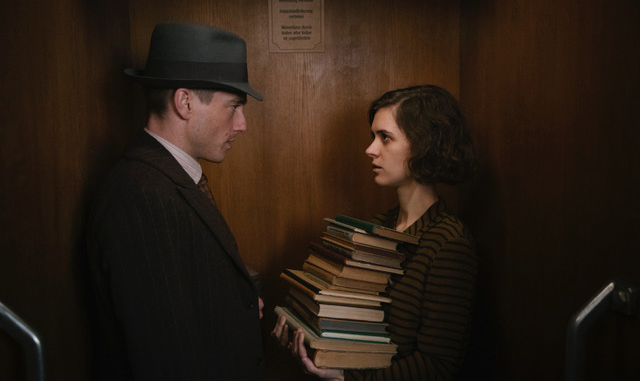
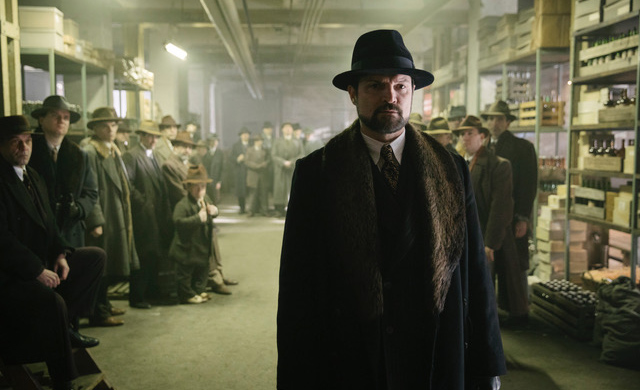
The fantastic German series Babylon Berlin which takes a deep dive into Weimar as the Nazi regime ascends. It is must watching. In this election year where Trump continues to shred American institutions Babylon Berlin is a sobering, albiet fictionalized, account of life in a country where Nazi rule is on the horizon.

Excerpted from Variety 12.20.2019

BERLIN — Described as continental Europe’s most expensive show ever, epic crime drama “Babylon Berlin” debuted on Sky’s streaming service on Jan. 24, now set in 1929, with a new murder mystery, based on “The Silent Death”, the second novel in Volker Kutscher’s trilogy, though the same intent: To trace with large artistic ambition yet historical accuracy the origins of Nazism.

Events unspool in fall 1929, in the weeks of tumult sparking Black Friday’s stock market crash.

A world premiere on Dec. 16 hinted, with its creators’ and cast comments, at what’s new, and the series’ growing relevance to the present day.

Produced again by Berlin-based X Filme Creative Pool, pan-European pay TV giant Sky, German public network ARD Degeto and Munich-based production-sales house Beta Film, Season 3 follows police Inspector Gereon Rath (Volker Bruch) and flapper clerk Charlotte Ritter (Liv Lisa Fries) as they investigate the murder of an actress on a film set. Meanwhile, Germany’s covert rearmament gathers pace as both the Black Reichswehr and Communists conspire to bring down democracy. None of which halts Berlin’s extraordinary nightlife.

History did not turn out as Germans expected, at least in 1929. In Season 3 Ep. 1, Charlotte and her sister rehearse dreams for the future , Charlotte still intent on becoming Germany’s first female homicide detective. Audiences will watch with a glimmer of hope for her, but also with a sense of disquieted premonition.

Babylon berlin 3 I 2.1.2020.jpg

The series diverges from its source material as co writer-show runners Tim Tykwer, Achim von Borries and Henk Handloegten slow down the pace of historical events using the crime-driven plot to explore the social and political unrest of a time that is frequently overlooked due to the dramatic dimension of what comes immediately after.

When Tim Tykwer was at school, the Weimar Republic was pretty well skipped. You had to get onto Hitler immediately: “So many people ask when seeing the series,:’How can I know so much [about what happened] after 1933 and so little about the five years before, [given] how important they were?’”

Capturing the era, “Babylon Berlin” plays with genre, turning on an even more mysterious crime, dramatizing and nuancing events in shades of grey while holding true to history.

It’s no easy feat to examine the past. At a press conference in December in Berlin, all three directors stressed their sense of the responsibility as the series has become a point of reference -yes, that is the scale of the show- for Germany’s collective ideas about the Weimar Republic.

“It’s sort of exciting for us,” Tykwer commented.”It’s been a really popular show among young audiences in Germany. Many young people even see it in school.”

As Season 3 unfolds against the transition from cinema’s Silent Era of cinema to the talkies, we get to see three prominent directors of Germany’s current generation play with their own cinematic heritage as they enroll German Expressionism, giving nods back to films like Fassbinder’s “Alexanderplatz” and Lang’s “Mabuse,” – an approach that can also be felt in Tom Tykwer and Johnny Klimek’s score that carries a 1920’s essence but with a very modern edge.

This revisit of German cinema recalls Sigfried Kracauer’s classic study “From Caligari to Hitler” in which the exiled German author went as far to argue that the rise of fascism was embedded in a collective subconscious: Signs of it could be found in the cinema of the time. Whether his reading is correct or not, “Babylon Berlin” puts center-stage in its broad wide historical panorama the same question that originated Kracauer’s book: How can a liberal society fall to the forces of autocracy?

Some answers to that question were already given in Seasons 1 and 2, as Rath, Ritter and Councillor August Benda, head of the Berlin Political Police, fight what seems an increasingly lone battle against supporters of the covert rearmament of a Germany humiliated and brought to its knees by a punitive Treaty of Versailles.

Shot back-to-back on a budget of above €40 million ($44.4 million, at current exchange rates), Seasons 1 and 2 were sold by Beta Film to more than 100 territories. By jus before October’s Mipcom’s trade fair in Cannes, Season 3 had pre-sold to over 100 territories too – a remarkable performance – and is set to premiere not only on Sky in Germany and then the U.K. but also on ARD in Germany. It has closed the U.S. (Netflix), Italy (Sky and Rai), France (Canal Plus) and Spain (Movistar Plus). among some of its larger sales.

German Berlinale Competition. ‘Dark tones’ for dystopian times

Starting February 20, 18 films from 18 countries, 16 of them world premieres, will compete for the Golden and Silver Bears in Berlin. A past focus on star power will give way to darker themes that aim to “open our eyes.”

Jeremy Irons is the 2020 head of the Berlin Film Festival Jury. In 2019 Juliete Binoche was head of the Jury which awarded the Silver Bear award to “System Crasher” shown above.

Deutsche Welle 1.31.2020

On Wednesday the Berlinale International Film Festival leadership team revealed the movies that will compete for its top prizes under the “Competition” heading. The festival runs from February 20 to March 1 in the German capital.

With a new artistic director, Carlo Chatrian, and managing director, Mariette Rissenbeek, at the helm of the 70th Berlinale, films have been selected that are “part of a bigger picture,” Chatrian said at the press conference.

It is “the end of an epic and exciting journey where we have encountered more than 6,800 films from the whole world — short as well as feature-length films, documentaries and fiction films,” he added.

The Competition programme includes 18 films from 18 countries with 16 world premieres, as well as one documentary form. The selection appears to be a homage to film art rather than big names. The two US directors in the running, Kelly Reichardt (“First Cow”) and Eliza Hittman (“Never Rarely Sometimes Always”), have an indie film pedigree and have not utilized A-list stars.

Berlin Film Festival IV 1.31.2020

Remake of ‘Berlin Alexanderplatz’

German cinema will be very prominently represented: Christian Petzold will present his new film “Undine” starring German actors Paula Beer and Franz Rogowski. The remake of Alfred Döblin’s 1929 novel Berlin Alexanderplatz by German-Afghan filmmaker Burhan Qurbani is also eagerly anticipated.

Chatrian is a film connoisseur who previously headed the renowned Locarno Film Festival in Switzerland. The selection he announced seemed to address past criticism of the Berlinale’s middling competition entries that aimed for mainstream appeal.

A number of recognized directors are taking part in the 2020 Competition, and others are Berlinale alumni, but above all the selection is marked by its global diversity.

Tsai Ming-Liang from Taiwan, Hong Sangsoo from South Korea, Rithy Panh from Cambodia, Briton Sally Potter, French director Philippe Garrel, as well as French duo Benoit Delepine and Gustave Kervern, are some of the better-known names. American enfant terrible Abel Ferrara is directing a co-production from Italy, Germany and Mexico called “Siberia.”

There are a number of other international co-productions in the selection, incuding “The Intruder” from Argentina/Mexico and “All the Dead Ones” from Brazil/France.

A total of five films with German production funds are running in the race for the Golden Bear, the best picture award.

The premiere of the film “DAU. Natasha” by Ilya Khrzhanovskiy and Yekatarina Oertel, which portrays the life of Soviet physicist Lev Davidovich, combines funding from Germany, Ukraine, the UK and the Russian Federation.

‘Predominance of dark tones’

“The Competition films tell intimate and earth-shattering, individual and collective stories that have an enduring effect and gain their impact from their interplay with the audience,” Chatrian said. “If there is a predominance of dark tones, this may be because the films we have selected tend to look at the present without illusion — not to cause fear, but because they want to open our eyes.”

Berlin Film Festival I 1.31.2020.jpg

Opening film: “My Salinger Year”

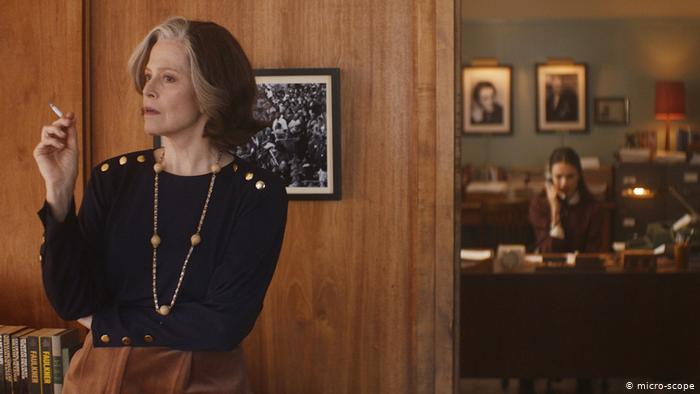
The 70th Berlinale will open with the Canadian-Irish film “My Salinger Year.” Based on the memoir by Joanna Rakoff, director Philippe Falardeau tells the story of a young writer who works as an assistant to a successful literary agent (played by Sigourney Weaver), and who gets the job of responding to fan mail for cult author J.D. Salinger. Sigourney Weaver is expected to attend the premiere.

There will also be representation from Iran, which traditionally has a strong presence in Berlin. Director Mohammad Rasoulof presents “There is No Evil,” a story from his home country that is again caught in geopolitical crosshairs.

Chatrian said that all the directors would present their works in Berlin in person, and he hoped that Rasoulof could also do so. In the past, Tehran has repeatedly refused to allow local film directors, including banned filmmaker Jafar Panah, to travel to major festivals.

Gender balance?

In 2019, former Berlinale director Dieter Kosslick signed the 5050×2020 pledge to achieve gender equality. Of the 18 competition films for 2020, a third were directed by women. Chatrian described the “process” as ongoing.

Managing director Rissenbeek promised that an overall majority of the other festival sections would be directed by women. She added that the year’s proportion of women in the entire Berlinale programme, even behind the scenes, is relatively high.

https://www.dw.com/en/berlinale-competition-boasts-dark-tones-for-top-prizes/a-52190386