San Francisco politics. Dept. Building Inspecton pushes out planning commish

The real scandal is with the Department of Building Inspection not Planning Commissioner Dennis Richards.

The Commissioner is totally correct in labeling DBI, “a cancer on this City.”

If Richards was part of the DBI in crowd, none of this would be happening.

He is being pushed out because he knows too much and tells it truthfully.

Building Inspection is the worst entrenched bureaucracy in San Francisco.

There has never been a Mayor with the political will to go in there and clean up the place. 

San Francisco Examiner 12.20.2019

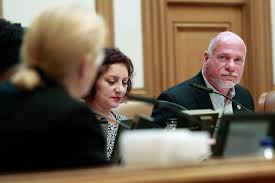
After publicly criticizing the San Francisco Department of Building Inspection and allegedly violating tenant law, Planning Commissioner Dennis Richards will be taking a leave of absence from his duties on the commission, the San Francisco Examiner has learned.

Richards pushed back against allegations, describing DBI as “a cancer on this city” at a recent Planning Commission hearing, and even indicating that he would sue the department. He also defended violating a 2014 tenant buyout law by describing his failure to report deals struck with four tenants of the property as an “oversight.”

Richards has not been present for the last two meetings of the commission, which is currently in the midst of vetting candidates for the vacant position of planning department director, a spokesperson for the department confirmed.

Board of Supervisors President Norman Yee told the Examiner on Friday that Richards, who was appointed to the commission in 2014, notified him of his intent to take some time to tend to personal matters and address permitting issues at a Mission District property he co-owns.

The Examiner reported previously that Richards had nine permits revoked in October on a house at 3426-32 22nd St. he initially purchased with an LLC for $2.7 million and planned to sell for $7.5 million. Richards was reprimanded by DBI for allegedly performing work on the house that exceeded the permits he had obtained.

Dennis Richards III 12.20.2019

Richards is also accused of failing to report tenant buyouts at the property in accordance with local law.

Richards did not respond to the Examiner’s request for comment on Friday.

In his role as a commissioner, Richards is required to work closely with the DBI, and his statements have led Yee to question whether Richards’ continued tenure on the commission could lead to a conflict of interest.

Yee told the Examiner Friday that Richards informed him during a phone call earlier this week that he needed a temporary break from his duties.

“He asked whether it makes any sense for him to take a leave from the commission for a short period, so he can clear personal issues …and address some of the permit stuff,” said Yee, who added that Richards penned a letter with his request that he planned to submit to the Planning Commission.

On Friday, the commission’s secretary said that the letter had not yet been submitted.

Commission President Myrna Melgar said that she also has not yet received Richards’ written communication, but confirmed that she spoke with him on Wednesday evening and that Richards “told me verbally that he had this conversation with Supervisor Yee and that he would be taking a leave of absence from the commission.”

Melgar said that Richards had told her he would be out through February.

Both Yee and Melgar were confident that Richards’ absence would not impact the ongoing selection process for planning director.

“Right now there are six people on the commission,” said Yee. “If they are working together to get the best director, what they should do is have some consensus regarding the person they want. It shouldn’t be a three-three split. If it is, in my mind, whoever [the candidate] is shouldn’t be the one they decide on.”

Melgar declined to disclose details about the selection process but said that the remaining members of the commission “are still going at it.”

In regard to the open question of whether Richards should step down due to a possible conflict of interest, Yee said that Richards’ leave of absence “provides breathing room for me to think about that.”

“There are allegations, but you don’t want to base a decision just on allegations,” he said.

https://www.sfexaminer.com/news/embattled-planning-commissioner-to-take-leave-of-absence/


PG&E profit increase blocked; CEO projects five more years of blackouts

I had to read this article a couple of times. I’m shocked at the audacity of Pacific Gas & Electric.

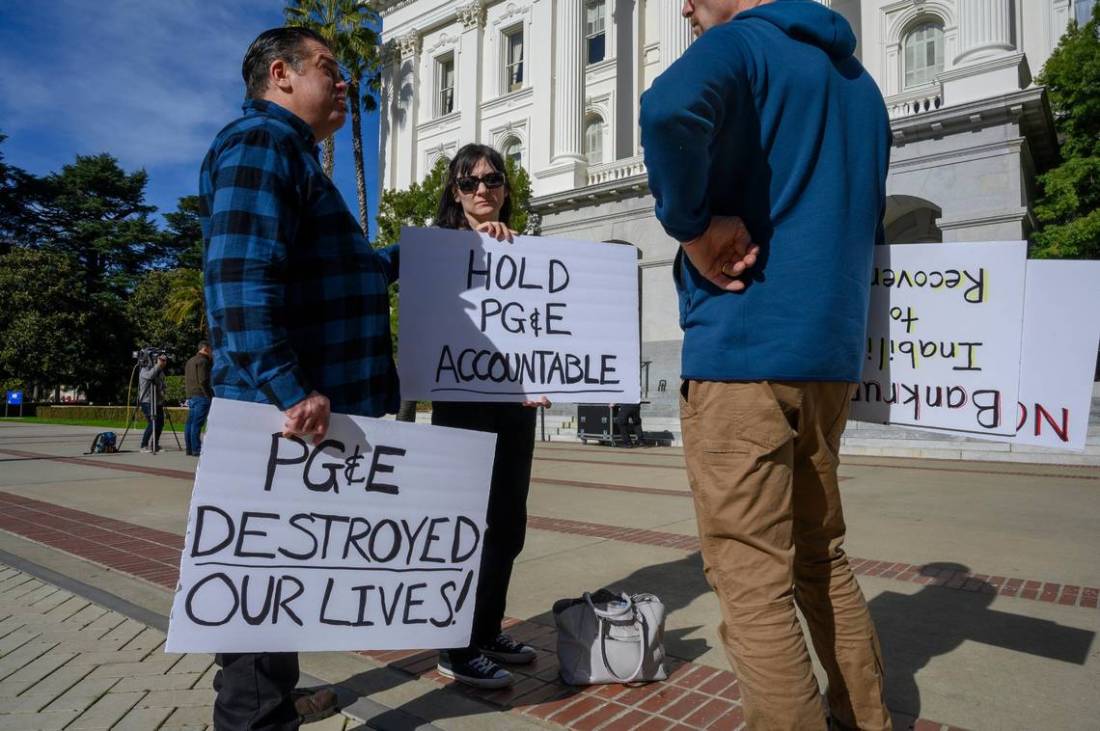
PG&E had the nerve to request that California regulators allow its profit margins to be increased at the expense of ratepayers. PG&E is in bankruptcy. The public utility is responsible for the series of catastrophic wildfires which have burned through California.

Fortunately the California Public Utilities Commission denied the request.

PG&E stopped paying dividends to its shareholders in 2017.  So, who would benefit from the increase in profit margins?

San Francisco Chronicle 12.19.2019

Pacific Gas & Electric Co. and other California utilities can’t raise their profit margins even as they face billions of dollars in wildfire liabilities, the California Public Utilities Commission ruled Thursday.

PG&E Rate Increase I 12.19.2019.jpg

In response to the CPUC denial of a higher profit margin on Thursday, PG&E said it expects to invest $28 billion through 2024 to expand and protect its electric and gas infrastructure.

“We recognize that any increase to customer bills can be challenging, and PG&E is committed to keeping costs as low as possible while meeting our responsibilities to safely serve our customers,” the company said.

PG&E, Southern California Edison, Southern California Gas and San Diego Gas & Electric had sought higher profits to help attract investors.

But the commission said new state policies such as a law passed this year that creates a $21 billion wildfire fund would help the utilities. It unanimously rejected the profit increase.

The decision blocks higher customer bills that could have started in January and means PG&E’s profit margin will stay at 10.25%. In April, PG&E sought to increase profit margins to 16%, with a monthly bill increase of 7%, or $7.85, for average residential electricity customer. The average residential gas customer would have seen a monthly 7.7% increase, or $4.25 per month.

People’s bills can rise due to other factors; PG&E didn’t have finalized information on other rate changes because other regulatory decisions haven’t been made.

Also on Thursday, PG&E Corp. CEO Bill Johnson testified in Washington before the Senate Committee on Energy and Natural Resources about his company’s vulnerability to wildfires and its efforts to prevent them.

After apologizing for his company’s role in starting deadly blazes, Johnson urged senators to fund initiatives including making communities more resilient against wildfires; forest management; and sharing of military satellite data for wildfire detection.

Remembering the Leslie Salt Mountain: Bay Area’s odd, glistening landmark

Stanford researcher Michael Wara, who also testified at the Senate committee hearing, discussed PG&E’s use of planned blackouts to stop its equipment from sparking more fires. The outages in 2019 “likely cost customers more than $10 billion,” he said.

Johnson said it would take five years for PG&E to stop using large-scale blackouts, though he noted San Diego Gas & Electric was still using “surgical” outages 12 years after it began the fire-prevention measure.

The timeline Johnson outlined appeared to be shortened from an estimate he gave state utility regulators in October, when he said the blackouts could go on for a decade, though with diminishing reach.

“We do plan to underground more distribution lines … but this is not going to be a complete answer,” Johnson said.

Sen. Joe Manchin, D-W. Va., asked about the company’s financial strength given its bankruptcy: “Are you going to make it?”

“I’m not the Wikipedia of bankruptcy,” Johnson said, noting he’d only arrived at PG&E this year. He discussed the settlements the company had recently reached with wildfire victims, insurers and government bodies. “Who the eventual owner will be will be decided in Bankruptcy Court,” he added. He said the costs of the bankruptcy would not be borne by consumers, though they would shoulder some cost of upgrades planned before the bankruptcy filing.

Asked about climate change and PG&E’s shift to cleaner energy sources, Johnson said that “in the short term” the utility would “put safety first,” prioritizing infrastructure fixes and fire-prevention measures over clean energy, “but this will not get in the way of meeting California’s energy goals.”

https://www.sfchronicle.com/business/article/PG-E-blackouts-could-go-on-for-five-years-CEO-14919406.php

The Battle of France: Ballerinas dancing the Paris streets in protest

On a day when the American political class and the bloviating masses step into the morass of Impeachment,  this slice of culture news from across the Atlantic gives us some perspective on the important things in life. There’s more to life than talk talk talk.

Wall Street Journal 12.18.2019

PARIS—President Emmanuel Macron wants to overhaul France’s pension system, and the country’s railway unions aren’t the only militant force standing in his way.

Ballerinas are marching in the vanguard. They usually perform at the country’s vaunted opera house, the Palais Garnier, but now they are hopping mad.

Photo above – Dancers backstage last year at the Palais Garnier. PHOTO: STEPHANE DE SAKUTIN/AGENCE FRANCE-PRESSE/GETTY IMAGES

At issue is the delicate matter of when France’s finest male and female dancers should be allowed to hang up their ballet shoes and begin drawing a national pension. For centuries, the retirement age has stood at 42, but Mr. Macron’s government wants to stretch their limits by at least two more decades.

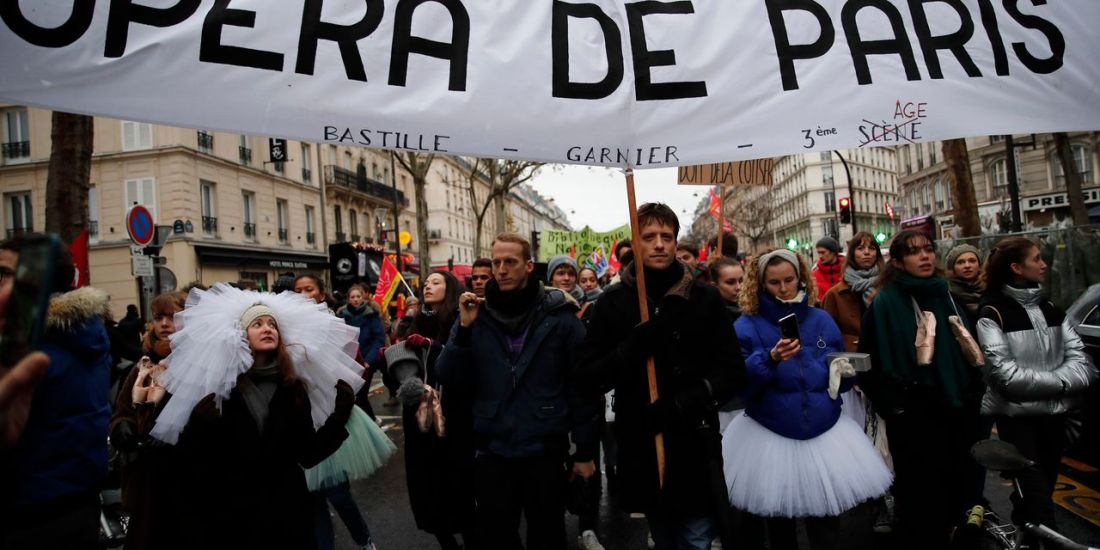
The Paris Opera Ballet, as the company is known, has put its foot down. Dancers have taken to the streets, marching with tutus over their trousers and handing out protest leaflets.

“There’s no way they can take this away from us,” Matthieu Botto, a 32-year-old who joined the company’s dance school at the age of 12, said of his approaching retirement. “We’ve earned it.”

Paris Ballet II  12.18.2019.jpg

The dancers are hitting high society—the bulk of the ticket holders—where it hurts. Joined by the Paris Opera’s musicians and singers, the dancers went on strike Dec. 5, forcing the Palais Garnier and Opéra Bastille, another landmark venue where the company performs, to shut down just as some of the season’s biggest productions were under way.

Gloria Browne-Marshall, a playwright and law professor at John Jay College of Criminal Justice, traveled from New York to catch the last performance of “Lear” at the Palais Garnier on Saturday night. She bought a new dress and had a friend fly in from Ireland for the occasion, only to see the opera canceled hours before curtain time.

“I kept holding hope until the last minute,” she said. “I still can’t accept it. It’s too painful just to think about it.”

Dancers backstage last year at the Palais Garnier. PHOTO: STEPHANE DE SAKUTIN/AGENCE FRANCE-PRESSE/GETTY IMAGES

Dancers say the physical demands of their profession mean they must glide into their golden years earlier. They begin dancing as children with dreams of attaining the rank of étoile, the lauded soloists who command the spotlight. Many never attend high school, making it hard to find jobs once their dancing days are over. They are flames that burn brightly—and briefly.

The very notion of special treatment, however, is anathema to Mr. Macron’s agenda. The government wants to consolidate 42 different pension plans—each with varying retirement ages and benefits—into one universal system with a retirement age of 62. That would lump ballerinas in with office workers, train conductors and nurses.

“The system will be the same for all French people, with no exceptions,” Prime Minister Édouard Philippe said last week.

Ballet’s retirement benefits date to the 17th century under Louis XIV, the Sun King. The monarch earned that moniker after starring as Apollo, the sun god, in the “Ballet de la Nuit,” one of 70 roles he played before the royal court.

Louis XIV would go on to found the Royal Academy of Dance, the precursor to the Paris Opera Ballet, before retiring from ballet at the age of 32. He continued to reign as king for another 44 years.

The Palais Garnier was erected in the 19th century under Napoleon III. With gilded balconies and a 7-ton bronze and crystal chandelier, the theater gave Paris pride of place in the ballet world. Later, the ceiling was painted by Marc Chagall with scenes from ballets and operas.

“When I was a little girl, dancing at the Paris Opera was my dream,” said Marion Barbeau, a 28-year-old ballerina.

She left home at age 11 to enter the Paris Opera Ballet’s school, known for cutthroat competition and where trainees are known as “little opera rats.”

When the strike began, Ms. Barbeau was scheduled to perform as a soloist in “Raymonda,” French choreographer Marius Petipa’s depiction of the love story between a young countess and the knight Jean de Brienne.

“I’m very disappointed not to dance that ballet, but it felt necessary” Ms. Barbeau said, adding that she might leave the company if Mr. Macron’s changes go through.

A spokeswoman for the Paris Opera said they were waiting for proposals from the government.

If the government insists on making dancers perform beyond a youthful age, it won’t be pretty, said Alexandre Carniato, a dancer who has met with the government to press the company’s case.

“If they keep us until we’re 62, no one will want to come and see us dance,” he said.

Training and performing at that level takes a heavy toll on dancers’ bodies. Many suffer from arthritis, and some require hip replacements as young as 30.

A leaflet for a faux ballet passed out by protesting dancers. PHOTO: YANN CHAILLOUX

Ballet dancers have hit the streets in protest, passing out leaflets for a mock ballet. The faux piece, called “Seniors,” is scheduled for Garnier’s 2039-2040 season. It stars an elderly ballerina tiptoeing toward her partner, who is using a walker. Sponsors include makers of hearing aids and dentures.

At 41, Mr. Carniato said he can already hear Father Time knocking. He has danced since the age of 6, and his knees and ankles ache.

He had hoped to retire from the stage next year and begin teaching. Starting salaries for dance teachers, however, are just over the minimum wage and only about half of his €2,500 monthly salary, or close to $2,800, that he earns at the Paris Opera Ballet. He was counting on a pension of around €1,000 to make up the difference.

“I grit my teeth and keep going,” he said. “I need to keep smiling. When I’m on stage, the audience should not see that I’m in pain,” he said.

https://www.wsj.com/articles/macrons-stiff-opposition-in-pension-battle-angry-ballerinas-11576604116?mod=searchresults&page=1&pos=1

Impeachment: Missoula, Montana rally draws protesters, supporters

It boggles the mind how anyone can support this worthless lying buffoon who has done more to destroy Democracy in three years than any President in the history of the country.  

Only in this country could such a clown be President. I don’t know if this is a commentary on the Huckster abilities of the current President or the 63 million voters who drank his kool aid.

It’s amazing. The folks who are being screwed the most by this Shyster are his most vocal supporters.  Go figure.

The Missoulian

December 17, 2019

A boisterous crowd representing both sides of the impeachment inquiry into President Donald Trump took to the streets — literally, at some points — of Missoula on Tuesday.

On the eve of the U.S. House vote on impeachment in Washington, D.C., Missoula police continually herded protesters back to the sidewalks on East Front Street in front of Republican U.S. Sen. Steve Daines’ local office.

“I’m from New York, and when he was doing his thing there — didn’t want to pay people, bankruptcy, bankruptcy, bankruptcy — it was a big hit on the city,” said Tom Marino of Missoula. “To a lot of people, when you mention Trump, it’s a four-letter word. Now he’s doing it to the country.”

Missoula Impeachment II 12.17.2019

“It’s a nice mix. I just hope it’s peaceful and everyone respects one another,” said John Cummings, who held a pro-impeachments sign with battery-powered light bulbs across the top. “We both have a right to be here.”

Cummings said he’s done a lot of gay rights work. “You learn in Montana you’ve got to be out there if you’re doing gay rights work. So this is a good way to do this here,” he said.

But Cummings and 125 or so other Missoulians took issue with that opinion.

“I can’t imagine when they swear to defend the Constitution and then they don’t want any witnesses in the Senate,” said Cummings. “They just want a show trial. It doesn’t sound right to me.”


At one point nearly an hour into the dueling rallies a red SUV forced its way out of the parking lot and through a knot of demonstrators, where most of those waving and chanting in favor of impeachment were amassed. Witnesses said four people were hit, though no one was injured.

Some people pounded on the car as it barged onto the street. 

“The car was just leaving the parking lot,” Lt. J.C. Denton of the Missoula Police Department said. “Some people say it may have bumped them. There were no injuries. We’re looking into it, and we took a report.”


The opposing groups, numbering more than 200 at the peak of the rally, showed up for one of more than 500 “Impeach and Remove” rallies across the nation and elsewhere in Montana, including in Hamilton, Kalispell and Whitefish.


The rallies were organized by groups like MoveOn.org and the Democratic group Stand Up America, which says on its website that its community began in the weeks after the 2016 election and has focused on “strengthening our democracy across the country, standing up to Trump’s corruption and pushing Congress to draft articles of impeachment and vote to impeach Donald Trump.”


Missoula County’s Republican Party committee leaders organized the counter rally, with at least a third of the crowd waving flags, standing and chanting in support of Trump.

“I’m sure other communities are doing the same thing,” said Keith Baer of Missoula, a Republican committee member. “It’s important to show our support for President Trump. There’s absolutely nothing proved as far as wrongdoing where President Trump is concerned. President Trump is meeting with results. Better employment, protection for the country, opening up markets.”


At first the two sides intermingled, sometimes exchanging heated words. As dusk turned to dark and traffic on the busy street increased, some crossed to the south side of the street and Trump supporters were pushed to the side.


Debbie Woodahl stood on the other side of the street and took an opposing view.

“He’s the best president we’ve ever had in this country and he’s been wrongly accused before he was even elected,” she said. “We stand with him and support him 100%.”

Her husband, Doug, said he wasn’t sure what good all the shouting and sign-waving was doing.


“But we knew these guys were going to do this, so we decided to come down and support our president. If nothing else we’ll let them know that he’s got a lot of support.”

Montana’s lone House member, Greg Gianforte, will weigh in on the impeachment vote Wednesday. His position on impeachment is well-known.


“Adam Schiff, Nancy Pelosi, and House Democrats have been obsessed with overturning the results of the 2016 election since President Trump was elected,” Gianforte said Tuesday in a statement to the Missoulian. “Nancy Pelosi claimed a vote to impeach President Trump would need bipartisan support, but because they failed to make the case, they have none. The American people see through Democrats’ hyper-partisan impeachment efforts, which have been a sham since day one.”

Missoula MT 1.21.2019.JPG

Wintertime in Missoula – Photo by Donna Warren

3 Stories illustrate San Francisco today. Homeless rights, PG&E, Oracle says bye

Say what you will about San Francisco but it’s true, there’s never a dull moment. It’s a tough town and it takes a strong will to survive.

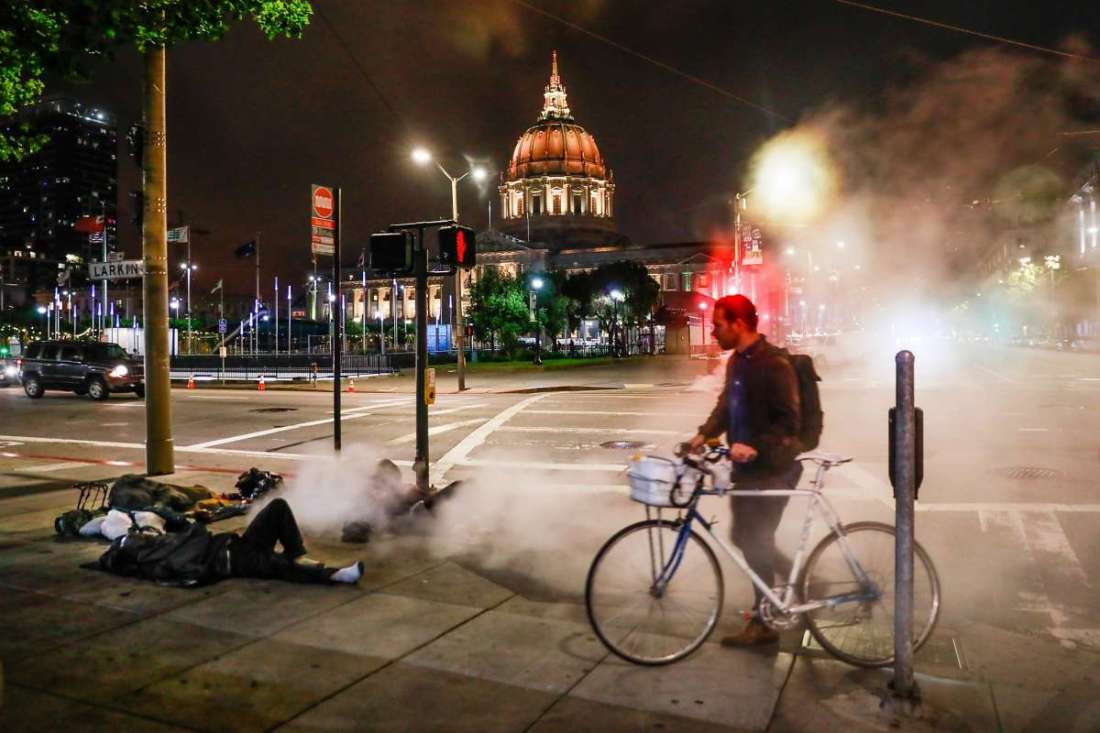
In one day there are three stories which are illustrative of the current political atmosphere in San Francisco. Links to the three stories published in the San Francisco Chronicle are attached.

San Francisco I 12.16.2019.jpg

December 16, 2019

San Francisco III 12.16.2019

Grave of high-ranking Nazi Reinhard Heydrich opened in Berlin

We can never forget the absolute Horror of  the Nazi regime.

In reading the Deutsche Welle article I am struck by the reference to Philip K. Dick’s “The Man in the High Castle” (1962) which is a disturbing dystopian novel and a hit television series on Amazon.

Deutsche Welle 12.15.2019

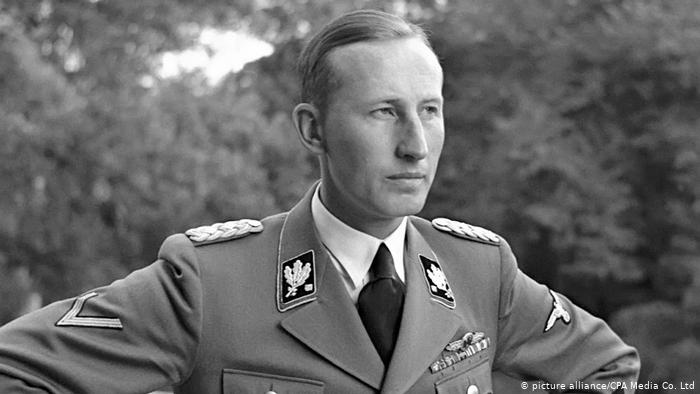
Unknown perpetrators opened the unmarked grave of senior SS officer Reinhard Heydrich, one of the main architects of the Holocaust, in Berlin. According to preliminary information, nothing was removed, police said.

German police were looking for suspects after the Berlin grave of high-ranking Nazi Reinhard Heydrich was opened, German media reported on Sunday.

Heydrich served as head of the Reich Main Security Office under SS leader Heinrich Himmler. The security office controlled the Gestapo and Nazi security services.

Heydrich was also one of architects of the genocide the Nazis committed against Jewish people.

He had been tasked with finding “a final solution to the Jewish question” by Hermann Göring, another top aide of Nazi leader Adolf Hitler.

Hitler dubbed Heydrich “the Man with the Iron Heart.” Other names attributed to him include “the Butcher,” “the Hangman” and “Himmler’s Evil Genius.” Some speculated that Heydrich, who was 15 years younger than Hitler, aspired to one day lead Nazi Germany.

Man in the High Castle I 12.15.2019

This possibility was explored in works of speculative fiction such as Robert Harris’ Fatherland and Philip K. Dick’s The Man in the High Castle.

In early 1942, Heydrich chaired the top-secret Wannsee conference in Berlin, which finalized Nazi Holocaust plans. In May of the same year, he was attacked by a British-trained team of Czech and Slovak operatives and eventually died in Berlin in June. He was buried with top honors.

No gravestones for senior Nazis

After the Allied forces won the war and occupied Berlin in 1945, they removed markings from the graves of all major Nazi leaders to prevent them from being used as rallying points for Nazi sympathizers. Heydrich’s grave is also currently unmarked.

An employee of Berlin’s Invalids’ Cemetery discovered that the grave had been opened this Thursday, police told the mass-circulation Bild. Police have opened an investigation over grave defilement.

Early findings indicate that “nothing was removed” from the grave, a police source was quoted as saying by the daily Tagesspiegel.

While the motive for the opening of Heydrich’s grave was not immediately clear, a similar case in the year 2000 saw left-wing extremists open the alleged grave of Horst Wessel, Berlin leader of Nazi SA Storm Troopers. The left-wing group said they had taken out Wessel’s skull and thrown it into the Spree River after neo-Nazis started gathering at his grave.

The police, however, denied that any remains were removed and claimed that the grave was actually the resting place of Wessel’s father and not the Nazi sympathizer himself.

https://www.dw.com/en/grave-of-high-ranking-nazi-reinhard-heydrich-opened-in-berlin/a-51685541


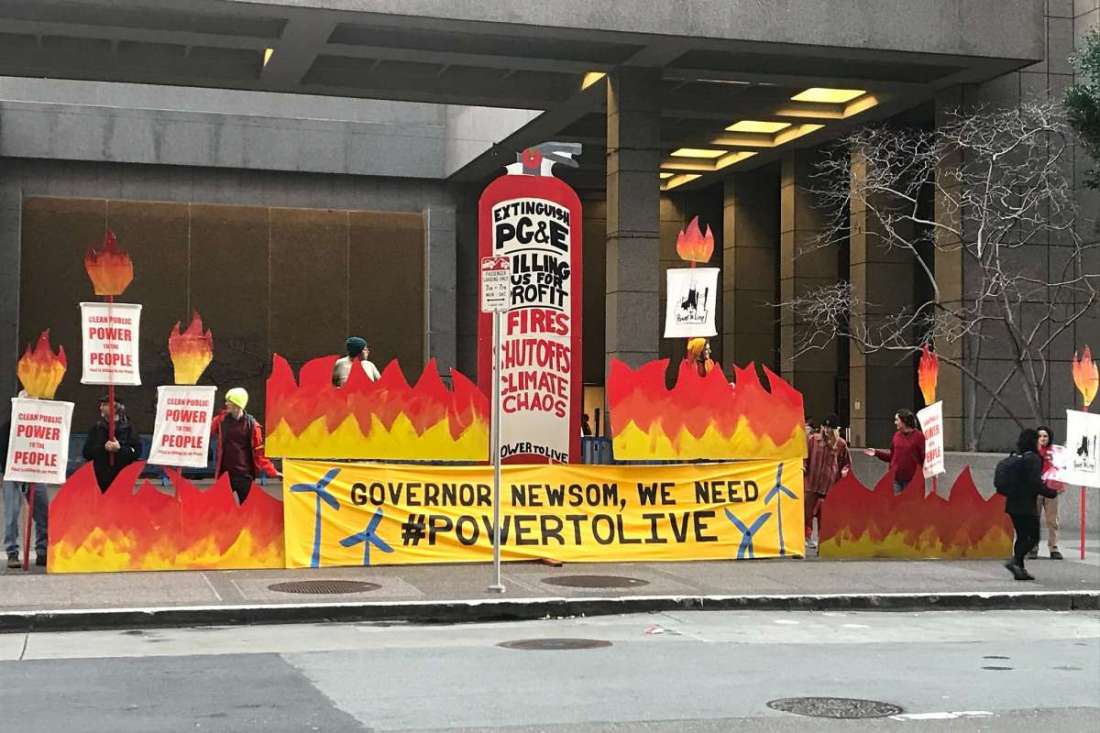
PG&E helped fund career of California governor he accuses of ‘corporate greed.’

California Governor Gavin Newsom came down hard on California’s beleagured PG&E utility earlier today when he rejected its latest plan to exit bankruptcy. (see attached link)

https://www.sfchronicle.com/california-wildfires/article/Gov-Newsom-rejects-PG-E-s-reorganization-plan-14906105.php

The following article from the Washington Post, far away from Newsom’s home base is illustrative of the cozy relationship between public utilities and the politicians who oversee them.

Is this an example of biting the hand which feeds you?

Washington Post 11.13.2019

California Gov. Gavin Newsom has accused his state’s largest utility company of mismanaging funds he said it should have used to upgrade an aging electrical grid prone to deadly wildfires.

But over the past two decades, Newsom, a Democrat, (shown below) and his wife have accepted more than $700,000 from the Pacific Gas & Electric Co., its foundation and its employees as the utility has supported his political campaigns, his ballot initiatives, his inauguration festivities and his wife’s foundation, including her film projects, according to records reviewed by The Washington Post.

PG&E Bankruptcy IV 12.13.2019.jpg

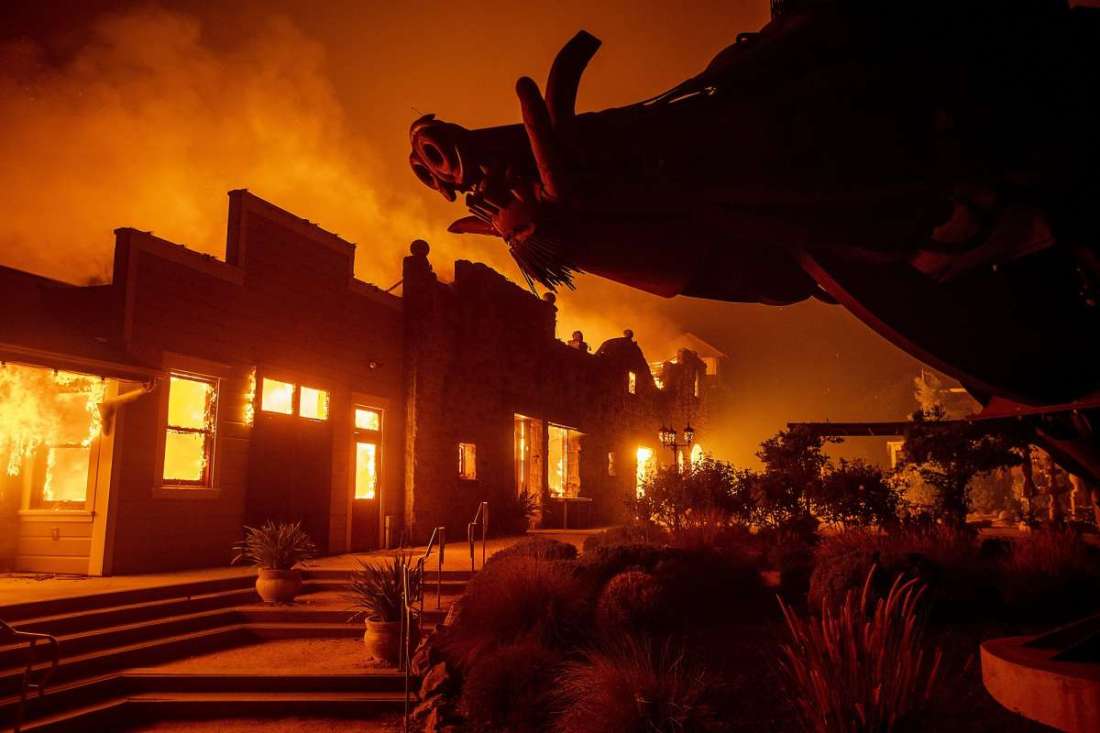
The contributions illustrate Newsom’s ties to the company responsible for wildfires that have killed at least 85 people and caused billions of dollars in damage over the past three years. The governor has slammed PG&E for paying bonuses to executives and cash dividends to its investors instead of spending more on infrastructure upgrades that could have prevented the fires.

“As it relates to PG&E, it’s about dog-eats-dog capitalism meeting climate change,” Newsom said at a news conference last month. “It’s about corporate greed meeting climate change. It’s about decades of mismanagement. It’s about focusing on shareholders and dividends over you and members of the public.”

He added that he while can forgive the company for not predicting the degree of impact climate change has had on California, “I will not forgive them for not making the kind of investments in their equipment – hardening and undergrounding and anticipating this new reality of which they have had ample time to anticipate.”

Records show PG&E has spent at least $227,000 on Newsom’s political campaigns and committees supporting them over his two decades in public office, helping to fund his rise from San Francisco mayor to one of the country’s most influential Democratic leaders. PG&E employees have spent an additional $70,000 on his campaigns. The company gave $25,000 for his mayoral inaugural costs and $25,000 to city ballot measures that he supported.

Between 2011 and 2018, the utility’s philanthropic arm gave $358,000 to the Representation Project, a nonprofit group founded by Jennifer Siebel Newsom, the governor’s wife. The PG&E Corporation Foundation also gave $10,000 to the PlumpJack Foundation, a charity led by his sister, Hilary Newsom, according to information provided by PG&E.

The company gave enough money to be listed as an associate producer in the credits for two of Jennifer Siebel Newsom’s documentary films. It also hosted high-profile screenings of the films at its offices, including in the atrium of its San Francisco skyscraper in 2011.

The payments are not unusual for PG&E, one of the most politically active companies in California state and local politics and a prolific contributor to Bay Area charities. PG&E spent $5.3 million on state and local political campaigns in 2017 and 2018, the company said in a court filing this year, with Newsom receiving more of that money than any other single candidate.

PG&E’s political and philanthropic spending, along with executive compensation and shareholder payouts, are determined by the holding company PG&E Corp. Its subsidiary, the PG&E Co., is a regulated monopoly that must negotiate its revenue and expenses with state regulators every three years.

Still, the money PG&E contributed to the campaigns of Newsom and other politicians could have been used to put power lines underground or clear brush that leads to wildfires, said David Pomerantz, executive director of the Energy and Policy Institute, a San Francisco-based utilities watchdog.

PG&E Bankruptcy III 12.13.2019.jpg

“Every dollar that PG&E spends on a campaign contribution right now is one they should be spending to hasten the transition to a safer, more distributed electrical grid,” Pomerantz said.

PG&E, an investor-owned utility whose largest shareholders include hedge funds Knighthead Capital Management and Abrams Capital Management, filed for bankruptcy in January, declaring itself unable to pay the billions of dollars in mounting liabilities from repeated seasons of wildfires. Its market value is about $3.4 billion, after losing more than $30 billion in equity value over the past two years.

When a federal judge asked PG&E in July to explain why its political spending was “more important than replacing or repairing the aging transmission lines,” the company said it needs to make the concerns of its employees, customers and shareholders known to policymakers.

“Like many individuals and businesses, PG&E participates in the political process,” Ari Vanrenen, a spokeswoman for the company, said in an emailed statement. “PG&E holds itself to the highest standards of public disclosure and compliance with applicable laws and regulations.”

Vanrenen said the utility has invested $27 billion in its electric system over the past decade, including $3 billion in vegetation management and tree trimming. The company is actively moving some of its power lines underground, but PG&E estimates that process costs about $3 million per mile, or more than three times the cost of building overhead lines. By that estimate, converting all 18,000 miles of its overhead lines to underground lines would cost more than $50 billion.

Gov. Newsom declined a request to be interviewed. When asked about PG&E’s campaign contributions at a news conference earlier this month, he said the money has never affected his decisions in office.

“If the suggestion is that somehow I am influenced by that, you’re wrong,” Newsom told a reporter from Sacramento news channel ABC10. “There’s not one thing you can point to during my tenure as governor.”

Nathan Click, a spokesman for Newsom, said in an emailed statement that the governor has “used every tool at his disposal” to hold PG&E accountable, including passing a law that he said created new safety requirements for PG&E if it wants to access a state wildfire relief fund.

PG&E Bankruptcy I 12.13.2019

Click said Newsom stopped taking contributions from PG&E after his election in November 2018. There is no record of the company contributing to his inaugural events or future gubernatorial campaign since then. Still, a week after the election, his wife’s Representation Project held its annual gala at San Francisco’s historic Ferry Building and listed PG&E as a main sponsor.

Caroline Hellman, executive director of the nonprofit, told The Post in an email that the organization stopped taking donations from PG&E “upon Gov. Newsom taking office,” which happened in January.

In interviews, Nathan Ballard and Steve Kawa, two of Newsom’s former advisers, said the politician never gave PG&E any special treatment. Kawa pointed to Newsom’s effort as lieutenant governor to pressure the company to close its Diablo Canyon nuclear power plant, which PG&E petitioned to keep active despite concerns it is vulnerable to earthquakes.

“It is impossible to curry favor with Gavin Newsom,” said Ballard, a longtime Newsom friend and communications adviser. “He has a very strong sense of right and wrong, and he has a long track record of voting against his closest allies and making policy decisions that displease his closest allies.”

Ballard is on the board of Jennifer Siebel Newsom’s nonprofit. PG&E is a client of his public relations firm.

PG&E was despised by many Californians long before the recent wildfires. Cast as the villain of “Erin Brockovich,” the Oscar-winning 2000 film based on a true story about PG&E’s role in contaminating the water supply in a small California town in the 1990s, PG&E has also been blamed for exploding manholes covers, accused of falsifying safety records and criticized for charging some of the highest electricity rates in the country.

Some public officials have distanced themselves from PG&E by returning or donating funds they received from the utility.

Gov. Jerry Brown, a Democrat and Newsom’s predecessor, returned $9,000 to PG&E in 2017 after the utility was convicted of six federal felonies for failing to prevent a pipeline explosion that killed eight people and destroyed 38 homes in San Bruno in 2010. Filings show that PG&E gave Brown and committees supporting him more than $300,000 for his statewide campaigns.

Timothy Grayson, a Democrat and state assembly member for Contra Costa County, said he donated the $6,500 he received from PG&E to his local United Way charity after meeting with constituents who had lost their homes to last year’s wildfires.

“When we saw the pain on their faces, the tears in their eyes and the brokenness of having lost everything, there was no doubt in my mind that the right thing to do was to take the money from those who were responsible for the fire and give it to those who were most impacted by the fire,” Grayson said.

RL Miller, the chair of the California Democratic Party’s environmental caucus, said Newsom should return the funds he has taken from PG&E.

“Doing so will show that he’s committed to genuine reform,” Miller said in an email.

Newsom’s spokesman declined to comment on whether the governor would consider returning any funds.

– – –

As mayor of San Francisco from 2003 to 2010, Newsom became a rising star in California politics. Corporations such as PG&E that were seeking city contracts were banned from contributing to local political campaigns but found other ways to show their support.

As Newsom faced off against eight other candidates in his first run for mayor, he had championed two city ballot measures – a ban on aggressive panhandling and an overhaul of the city’s welfare program – that helped raise his profile and put him over the top in the race. The utility chipped in $15,000 to support the efforts, campaign finance records show, and later gave $10,000 to support a measure he backed for citywide WiFi.

PG&E’s foundation was also among the largest donors to both of Newsom’s mayoral inaugurals, giving a total of $25,000, city records show.

John Avalos, who later served on the city’s Board of Supervisors, said that in those years, PG&E was the biggest player in city politics and philanthropy, because the technology sector was still young.

“You couldn’t be mayor in San Francisco without having the backing of PG&E,” Avalos said. “They were like the anchor, the one percent – the rich and powerful that determine the outcome of elections.”

The company’s equipment repeatedly raised concerns about public safety. In 2005, an underground equipment failure in the city’s financial district led to an explosion that burned a woman, set fire to a Polo Ralph Lauren store and forced several square blocks to close.

“If this happens again, PG&E is in real trouble,” Newsom told the San Francisco Chronicle at the time.

The utility continued to support Newsom as he clashed with the more liberal wing of California’s Democratic Party. When some called for San Francisco to take over its own electrical power grid – a ballot measure supported by eight of 11 district supervisors – Newsom sided with PG&E’s campaign to oppose it. Newsom told the Chronicle at the time that there was “no groundswell” of city residents calling for a takeover of the power grid.

The company spent more than $10 million to defeat the proposition and hired a consultant, Eric Jaye, who was also Newsom’s longtime friend and political adviser. The measure failed. Jaye declined to comment for this report.

As Newsom’s profile continued to rise, the utility made sure to follow. The mayor made one of his first big appearances on the national stage when he hosted a Democratic National Convention party in Denver in 2008. Called “Unconventional 08,” it was described by one media outlet as “hundreds of sweaty hipsters dancing in an art gallery.” The event, sponsored by PG&E, featured comedian Sarah Silverman and the indie band Cold War Kids.

Two years later, a natural-gas pipeline owned by the utility exploded into flames in a residential neighborhood called Crestmoor in San Bruno. Eight people died, and an entire block was destroyed. Authorities blamed the explosion on the company’s failure to properly maintain its gas lines.

California regulators determined that in the years before the fire, PG&E had taken in revenue of hundreds of millions more dollars than was authorized by the state and that it had significantly underspent on maintenance and infrastructure needs.

Regulators wrote in their report that “dividends, stock repurchases, bonuses, and image were of greater importance to management.” In the years before the disaster, they pointed out, PG&E paid its investors $2.5 billion in cash dividends and set aside more than $150 million for incentive pay to top executives.

In response, PG&E submitted a report conducted by an outside management consultant, who said that the California Public Utilities Commission report had been based on incorrect assumptions and that PG&E had actually overspent on maintenance and capital expenditures.

Jerry Hill, who represents San Bruno in California’s state Senate, said that he stopped taking donations from the utility after the explosion and that appearing at fundraisers with the company’s executives fell out of favor.

“I don’t think there is any love for PG&E in the legislature, even after they have made those millions of dollars in contributions,” Hill said.

– – –

When Newsom was elected lieutenant governor in 2010, his wife’s career had begun to take off.

Jennifer Siebel Newsom’s documentary “Miss Representation,” examining how women are portrayed in media, premiered at the Sundance Film Festival in 2011. Four years later, she premiered “The Mask You Live In” there.

Both films list “Pacific Gas & Electric Company” as an associate producer. It is not clear how much the utility gave to support “Miss Representation,” but tax returns for its foundation report a $25,000 donation for “The Mask You Live In.”

As Gavin Newsom neared a gubernatorial campaign, the foundation upped its financial support to his wife’s causes.

Between 2011 and 2018, PG&E’s foundation gave $358,000 to the Representation Project, the nonprofit associated with Jennifer Newsom’s film production, according to tax records and a list provided by PG&E. That is about 4 percent of the $8.6 million the nonprofit reported in contributions and grants during that time period.

Tax records show Jennifer Newsom earned $150,000 for her work at the nonprofit in 2017.

In 2017, PG&E executive Brandon Hernandez joined the board of the Representation Project, the tax records show. He attended its annual gala as a “champion sponsor,” which required a donation of $25,000. Records indicate he left the board after that year. In an email, he said he is no longer employed by PG&E.

Gavin Newsom’s gubernatorial campaign raised more money from PG&E – $270,000 – than any of his previous campaigns. But becoming governor forced him to confront the company’s problems, which were beginning to grow into a statewide crisis.

Just two days after the November 2018 election, a PG&E transmission line fell and sparked the Camp Fire, the deadliest and most destructive blaze in California’s history. Two months later, PG&E filed for bankruptcy.

The governor shepherded a bill through California’s legislature that created a $21 billion state fund from which PG&E and other utility companies could pay claims to victims of future wildfires. The law required companies to meet spending targets on safety initiatives and gave PG&E a deadline for exiting bankruptcy if it wanted to access the funds: June 30, 2020.

Newsom escalated his public criticism of PG&E last month, when the company shut off power to millions of residents in an attempt to prevent more fires. In a terse news conference on Nov. 1, Newsom threatened a public takeover of the company if it does not find a way out of its bankruptcy.

“PG&E as we know it may or may not be able to figure this out,” Newsom said at the event. “If they don’t, we are not going to sit around and be passive.”

https://www.sfchronicle.com/business/article/PG-E-helped-fund-the-careers-of-California-14826790.php

Video reveals San Francisco police shot man while he was running away

The SFPD shooting of Jamaica Hampton is a sad but all too common episode.  The fact SFPD fired eight shots and him Hampton three times has all but disapeered from the mainstream San Francisco Media.

As of Wednesday Hampton was still hopitalized in critical condition.

It is the community news outlets which are keeping this latest tale of SFPD behavior alive.

Mission Local 12.11.2019 – By  and 

A San Francisco town hall meeting regarding last weekend’s Mission District shooting by SFPD  will be held at 6 p.m. on Tuesday, Dec. 17, at Cesar Chavez Elementary School, at 825 Shotwell St., between 21st and 22nd.

Video of Saturday morning’s police shooting of Jamaica Hampton reviewed extensively by Mission Local reveals the 24-year-old was not shot while purportedly assaulting an officer — but rather, while attempting to escape a pair of them. Hampton was shot, at least once, while running from one officer and in the direction of another, following an extended foot chase. 

He was hit in what appeared to be his front left midsection or upper leg about a minute into the video clip, and collapsed into the middle of 23rd Street. A clutch of San Francisco Police Department officers subsequently stripped his clothing and applied resuscitation efforts as blood pooled on the double yellow lines.

While Mission Local was able to review the footage thoroughly, we were unable to obtain permission to publish it online.

In the video, Hampton appeared to be holding an object in his hand — potentially the bottle with which he allegedly struck an officer moments before. That alleged attack is not caught on the footage observed by Mission Local.

Rather, it begins with a pair of officers running, guns drawn, eastbound on 23rd Street, attempting to contain the fleeing Hampton. He bobs and weaves between parked cars and runs about the sidewalks and the streets in an effort to elude the officers — who have their guns drawn throughout. At several points, Hampton ceases running, and both officers take aim at him and have a clear line of fire. Since there is no sound in the video, it is unclear what directions the officers were giving to Hampton. But, rather than surrender, he would then break off running again.

In the pivotal sequence, he sprints off the sidewalk on the south side of 23rd, past an SUV, and past one officer. He then heads onto the opposite sidewalk on the north of the street and begins running west, toward Mission Street — before abruptly cutting between two parked cars and darting into the street.

At this point he is running in the direction of the second officer, who was standing in the middle of 23rd Street — though, it appears, not directly at him. That officer fires at least once at Hampton, from a range of perhaps six to eight feet and what looks to be a 45-degree angle from the running suspect. 

Hampton doubles over and hits the ground. He appears to attempt to get up, but he cannot.

Eyewitness accounts following the 8:33 a.m. Saturday incident reported an officer with a bloody face and what appeared to be a broken nose, and the SFPD confirmed an officer was hospitalized along with Hampton.

The  Dec. 7 incident was the city’s first police shooting in 2019 and, in fact, its first since June 2018.

At a Tuesday night demonstration in front of Mission Police Station, Mission District activists were surprised when Hampton’s mother, Tana, unexpectedly showed up and asked organizers to address the crowd. Tana Hampton, who had made the trip to the city from Sacramento, identified the shooting victim as her son. The SFPD confirmed on Wednesday in a press release that Jamaica Hampton was the man involved in the Saturday incident. He was approached by police responding to a suspected burglary and then allegedly assaulted an officer before “an officer-involved shooting occurred,” according to the press release. 

Hampton had struggled with substance abuse. Family spokeswoman Dyne Biancardi said he’d relocated to the city from Sacramento for a treatment program. Jamaica Hampton had been homeless “for a while,” according to Biancardi.

Wednesday’s SFPD press release announced that Hampton had been booked on the charges of assault with a deadly weapon other than a firearm (two counts), battery with injury on a peace officer (two counts), battery resulting in serious injury (two counts), and obstructing or resisting an “executive officer” in the performance of duties, by use of threats, force of violence (two counts).

Biancardi lives a few blocks away from where the shooting occurred. She told reporters she was initially contacted by Jamaica Hampton’s brother. She then waited outside of Jamaica Hampton’s hospital room for five hours, she said. Biancardi, who is also a lawyer, said the Jamaica Hampton had been shot in the leg and that it was unlikely he would be able to walk the same way again.

Hampton’s sister, Brittany, told Mission Local that the family’s attempts to visit Hampton in the hospital were barred by sheriff’s deputies, who said they were acting on the orders of the District Attorney. Our calls to the DA have not been returned.

The Hampton family hopes to visit Jamaica Hampton this afternoon.

Above: Jamaica Hampton’s interview with CityTeam, a nonprofit. The video was published on Oct. 29, 2019 via Youtube.

A medical worker told media gathered Wednesday morning at San Francisco General Hospital that Hampton had been shot three times in his legs. SFPD officers purportedly shot at Hampton eight total times.

Brittany Hampton told Mission Local that the SFPD contacted her and said no charges would be filed against her brother. SFPD spokesman Sgt. Michael Andraychak, however, denied that any charges had been dropped. “The press release is accurate,” he said.

https://missionlocal.org/2019/12/video-reveals-police-shot-jamaica-hampton-while-he-was-running-not-while-he-was-allegedly-assaulting-officer/


Giant ferris wheel to spin in Golden Gate Park to celebrate 150th anniversary

WHAT NEXT?????

THE 150 FOOT HIGH FERRIS WHEEL WOULD BE BETTER POSITIONED AT THE BEACH CHALET SOCCER FIELD..A SITE WHICH IS ALREADY AN ENVIRONMENTAL DEGRADATION AND A NIGHTIME EYESORE THANKS TO THE RAPACIOUS MINDERS OF SAN FRANCISCO CITY HALL

TWO TRAVESTIES WHICH ARE THE CURRENT SAN FRANCISCO CAN BE VIEWED IN ONE PLACE

San Francisco Chronicle – Steve Rubenstein 12.12.2019

A 150-foot-high ferris wheel — a smaller version of the behemoths in London and Las Vegas — will be spinning round and round in Golden Gate Park, starting next year.

GGP Ferris Wheel 12.12.2019.jpg

Dan Murphy, a San Francisco birdwatcher and member of the conservation committee of the local Audubon Society, said the wheel would undoubtedly pose a hazard to birds, which could fly into it and be killed, similar to the way birds are killed by flying into tall buildings.

“If the wheel is lighted at night, that’s a problem,” he said. “If we’re trying to preserve wildlife, a giant ferris wheel may not be the best way to do it.”

The giant wheel will hoist riders aloft in six-passenger cabins for a 12-minute ride that will cost $18 a head, the mayor’s office announced on Thursday. Seniors and kids under 13 pay $12.

The attraction, being called an “observation wheel,” is among the attractions planned for the park’s 150th anniversary. Plans call for the wheel to be installed at the east end of the music concourse and to spin for 11 months, beginning April 4.

“We want to give people a new way to appreciate the beauty of our city,” Mayor London Breed said. “This wheel is just the first of many exciting announcements.”

The wheel coming to San Francisco is considerably smaller than the 550-foot wheel in Las Vegas ($25 a ride), the 544-foot wheel in Singapore ($24), the 443-foot wheel in London ($40), the 215-foot wheel in Vienna ($13) and the 200-foot wheel in Chicago ($16).

It would be the first giant ferris wheel in San Francisco since the world’s fair of 1894, which featured a 120-foot wheel.

Schneider said the wheel’s presence in the park was “only temporary.”

“The city is not biting off a long term commitment,” he said. “And a ride on the wheel is a nice little break from whatever’s happening on the ground.”

The top of the wheel is roughly the same height as the observation deck of the adjacent deYoung Museum. Admission to the observation deck is free.

The 1,017-acre park, created largely on sand dunes in 1870, attracts 24 million visits a year.

https://www.sfchronicle.com/bayarea/article/Giant-ferris-wheel-to-spin-in-Golden-Gate-Park-to-14902986.php#photo-18748451

How to look after your mental health

Daily living is tough.  Here is an overview of what constitutes a methodology to look after your mind….and body.

Excerpted from Deutsche Welle 12.11.2019

“Mental wellbeing is the sense of being comfortable with who we are and what we are and where we sit in the world,” says Chris O’Sullivan from the Mental Health Foundation in the UK.

While the term “mental health” usually conjures thoughts of mental ill-health, like depression, anxiety and addiction, researchers like O’Sullivan say it’s important to think about mental wellbeing as more than just having or not having symptoms.

It can be helpful to think about mental health as a spectrum, on which your position is likely to fluctuate throughout life. 

Mounting evidence suggests positive mental wellbeing is linked to our physical health and the connections we build with others. Here are some practical, everyday things to keep in mind for your mental wellbeing. Note: If you’re in the thick of a severe mental illness, these tips might not be useful for you.

Being active 

Your mind is attached to a body. Movement has been shown to release chemicals in our brains that make us feel good. It can help you sleep better, reduce feelings of stress and anxiety, improve memory and cognition, and even potentially mean you’ll have a better chance at experiencing positive events throughout the day.

“There’s very strong evidence for the role of exercise in both prevention and treatment of mild and moderate depression and anxiety,” O’Sullivan told DW. “So doing some exercise, even though when you’re in the pits of depression it’s the thing you’ll least likely feel like doing, can help.”

Although technically “being active” doesn’t just mean running and working out — it can also include activities that increase your heart rate, like gardening, vigorous cleaning, and cycling to work — studies show the positive effects are higher when these things are combined with moderate to high intensity exercise.

Going outdoors has also been shown to improve people’s state of mind — in a 2015 study, scientists compared the brain activity of healthy people after they took a 90 minute walk in a natural setting or an urban one. Those that took a walk in nature had reduced activity in the prefrontal cortex, which is a region active when we’re anxious or focusing on negative emotions.

Read more: Opinion: Optimists are stupid. Serves them right.

Eating well 

A growing body of literature suggests eating well — a balanced diet rich in fruit and vegetables and low in processed foods — is a key part of feeling well. Nutrition, or lack thereof, has been found to affect the formation of human brain cells, particularly in the part of the brain that is associated with mood regulation.

Recent research has found a link between bad eating habits and bad moods, finding that a plant-rich, anti-inflammatory diet can help prevent depression. This is in part because of the way inflammation affects our gut microbiota, which increasing evidence suggests has a remarkable impact on our mood and behavior.

A healthy diet, O’Sullivan adds, also means being conscious of how much alcohol you drink. “Monitoring and controlling your relationship with alcohol and drugs is a big one,” he says. “A lot of suicides are associated with alcohol use.”

Sleeping sweet spot

While it’s not known exactly how long it would take a person to directly die from lack of sleep — an American high school student once stayed awake for 11 days and 25 minutes — many of us know that not getting enough at least makes us feel a bit closer to death.

Research shows that sleep deprivation can negatively affect our mood, concentration and even our emotional intelligence.

Wellness II 12.11.2019.jpg

“Generally, we don’t sleep as much as we should,” O’Sullivan says. “But we know sleep is very closely related to mental health.” Whether enough is five hours or eight and a half is dependent on the individual, but experts recommend finding your sleeping sweet spot — and try sticking to it.

For people who aren’t able to sleep through the night, like shift workers and parents of young children, studies have shown that short naps of around 20 minutes— long enough to doze off, but not long enough to enter a deep sleep — are a fairly effective way of catching up.

https://www.dw.com/en/how-to-look-after-your-mental-health/a-50324457