Ex-editor of Jewish paper arrested. Assaulted cop during Jan. 6 Coup

Lee Heidhues 3.16.2023

What was the editor of The Jewish Press thinking when he participated in the attempted Coup d’etat in Washington on January 6, 2021?

The Feds apparently have video evidence of Elliot Resnick’s participation. The optics are not good.

The 23 page criminal indictment lays out the details in granular fashion. Click the link according to access the Department of Justice file.

Excerpted from The Times of Israel and The Guardian 3.16.2023

In a new arrest on Thursday, a former top editor of an Orthodox Jewish newspaper in New York was arrested on charges that he interfered with officers trying to protect the Capitol on January 6.

The former editor of an Orthodox, right-wing Jewish news site was arrested Thursday and charged with assaulting a police officer during the January 6, 2021, storming of the US Capitol by then-US president Donald Trump’s supporters.

Elliot Resnick, a 39-year-old New Yorker who had been the editor of the Jewish Press at the time of the insurrection, was also charged with the felonies of obstructing an officer from performing their duties during an incident of civil disorder, entering and remaining in restricted grounds, disorderly conduct in restricted grounds and demonstrating in a Capitol building, according to a press release from the US Attorney’s Office for the District of Columbia.

Resnick was arrested in New York and was slated to make a court appearance later Thursday.

Videos show Resnick grabbing the arm of a police sergeant spraying a chemical irritant to stop rioters entering the building, the affidavit says. Another officer tried to remove Resnick’s hand from the sergeant’s arm, the agent wrote.

Federal prosecutors in Washington have reportedly told court officials a thousand more people could be charged in relation to the deadly January 6 Capitol attack.

Matthew Graves, the US attorney in Washington DC, sent a one-page letter to the chief judge of Washington DC federal court, apprising her of the potential deluge of defendants, Bloomberg News reported.

The correspondence provides details on what the US attorney general, Merrick Garland, has described as “one of the largest, most complex and most resource-intensive investigations in our history”.

Graves said in the letter that justice department officials estimated that another 700 to 1,200 defendants could face charges. That would nearly double the number of criminal cases relating to January 6, Bloomberg noted.

WASHINGTON D.C., USA – JANUARY 6: Security forces respond with tear gas after the US President Donald Trumps supporters breached the US Capitol security in Washington D.C., United States on January 06, 2021. Pro-Trump rioters stormed the US Capitol as lawmakers were set to sign off Wednesday on President-elect Joe Biden’s electoral victory in what was supposed to be a routine process headed to Inauguration Day. (Photo by Tayfun Coskun/Anadolu Agency via Getty Images)

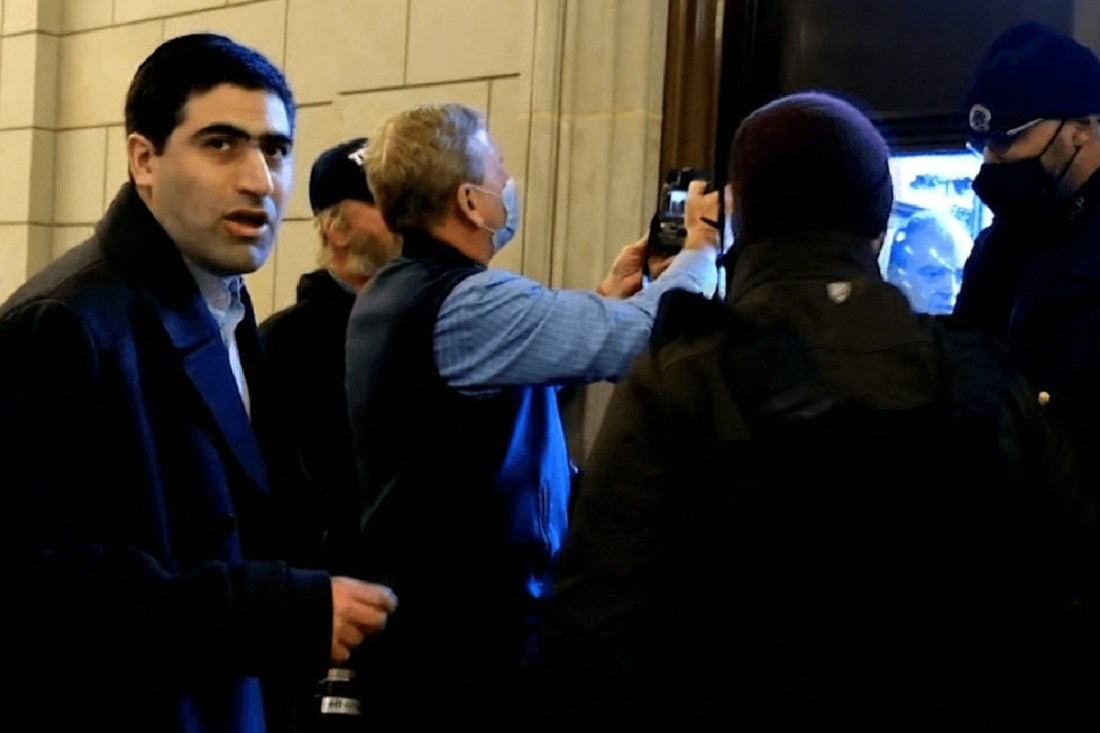
Elliot Resnick, 39, was chief editor of the Jewish Press when he joined the crowd at the Capitol, according to an FBI affidavit.

Clay Kaminsky, an attorney representing Resnick, declined to comment.

The Jewish Press, based in Brooklyn, bills itself as the largest independent weekly Jewish newspaper in the US.
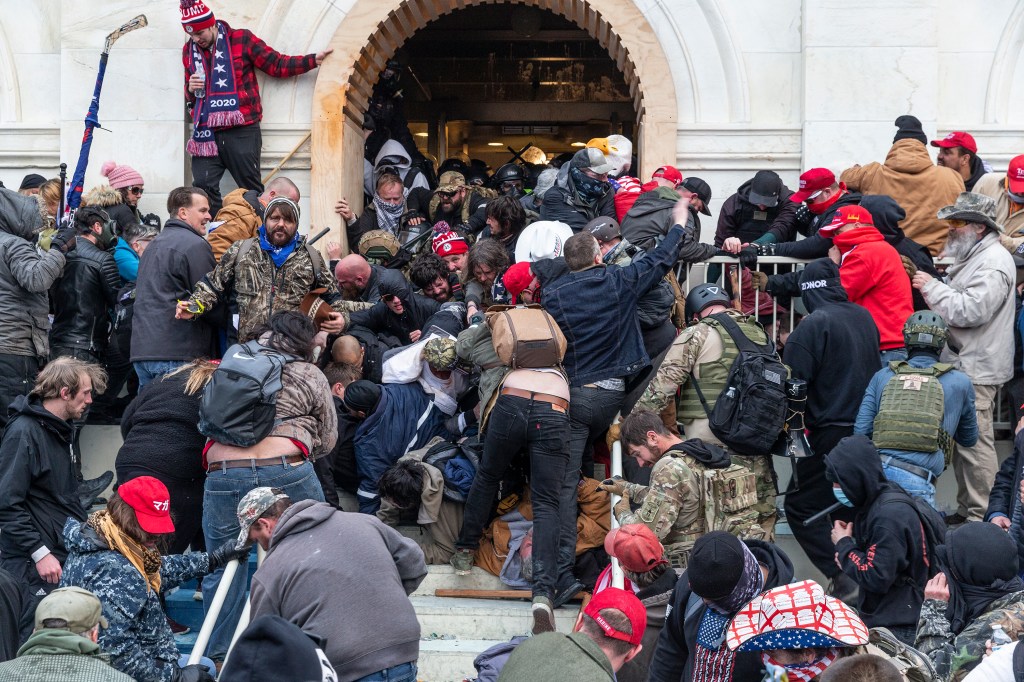
WASHINGTON DC, DISTRICT OF COLUMBIA, UNITED STATES – 2021/01/06: Rioters clash with police trying to enter Capitol building through the front doors. Rioters broke windows and breached the Capitol building in an attempt to overthrow the results of the 2020 election. Police used batons and tear gas grenades to eventually disperse the crowd. Rioters used metal bars and tear gas as well against the police. (Photo by Lev Radin/Pacific Press/LightRocket via Getty Images)

Politico reported in April 2021 that video showed Resnick inside the Capitol. Resnick later wrote an article defending the riot without acknowledging his presence that day, Politico noted.

At the time, the Jewish Press publisher, Naomi Mauer, told Politico the newspaper believed Resnick “acted within the law”. The editorial board said Resnick had been “covering the rally and the rest of the day’s terrible events”.

https://www.timesofisrael.com/ex-editor-of-jewish-paper-arrested-for-assaulting-cop-during-jan-6-capitol-storming/

https://www.theguardian.com/us-news/2023/mar/16/january-6-capitol-attack-deluge-charges

Top Photo – Elliot Resnick at the Capitol – January 6, 2021

Downed drone “US…direct party to fighting between Moscow and Kyiv”

Lee Heidhues 3.15.2023

News continues to come out about the American MQ-9 Reaper Drone downed in the Black Sea on Tuesday. In addition to the Moscow Times piece below today’s interview with Intercept journalist Jeremy Scahill sheds more light on the subject.

Jeremy Scahill emphatically reminds viewers that Vladimir Putin is totally responsible for the continuing aggression against Ukraine. What his reporting also makes perfectly clear is that the American military consciously engages in these spy games. It is a regular part of the increasingly tense relationship between Washington and Moscow.

https://www.democracynow.org/2023/3/15/jeremy_scahill_ukraine_russia_usa?jwsource=cl

Excerpted from The Moscow Times 3.15.2023

Moscow said Wednesday it would try to retrieve the wreckage of a U.S. military drone that crashed over the Black Sea in a confrontation that Washington blamed on two Russian fighter jets.

The United States uses MQ-9 Reapers for both surveillance and strikes and has long operated over the Black Sea keeping an eye on Russian naval forces.

Reapers can be armed with Hellfire missiles as well as laser-guided bombs and can fly for more than 1,100 miles (1,770 kilometers) at altitudes of up to 15,000 meters (50,000 feet), according to the US Air Force.

Russia also warned against “hostile” U.S. flights as tensions simmered and Russia denied its Su-27 military aircraft had clipped the propeller of the unmanned Reaper drone.

Kyiv meanwhile countered that the incident over international waters was evidence the Kremlin wants to draw the United States into the conflict in Ukraine.

“I don’t know whether we’ll be able to retrieve it or not but it has to be done. And we will certainly work on it,” Russian Security Council secretary Nikolai Patrushev said in televised remarks.

Nikolai Patrushev said the incident was further proof that the United States is a direct party to fighting between Moscow and Kyiv and said Russia had a responsibility to “defend our independence and our sovereignty.”

Russia’s Defense Ministry said it had scrambled jets after detecting a U.S. drone over the Black Sea and denied causing the crash.

The Pentagon said the drone was on a routine mission when it was intercepted “in a reckless, environmentally unsound and unprofessional manner.”

Russia said the aircraft had lost control but White House national security spokesman John Kirby said the U.S. “obviously” refuted the denial.

He added the United States was trying to prevent the fallen drone from getting into the wrong hands.

“We’ve taken steps to protect our equities with respect to that particular drone — that particular aircraft,” Kirby told CNN.

Russia’s campaign in Ukraine has led to heightened fears of a direct confrontation between Moscow and the NATO alliance, which has been arming Kyiv to help it defend itself.

Reports of a missile strike in eastern Poland in November briefly caused alarm before Western military sources concluded it was a Ukrainian air defense missile, not a Russian one.

Several U.S. Reapers have been lost in recent years, including to hostile fire.

One was shot down in 2019 over Yemen with a surface-to-air missile fired by Huthi rebels, the U.S. Central Command said at the time.

https://www.themoscowtimes.com/2023/03/15/russia-races-to-salvage-us-drone-wreckage-in-black-sea-a80484

Russian jet hits US drone over Black Sea – “brazen violation.”

Lee Heidhues 3.14.2023

Today’s ongoing USA-Russia ‘Spy v. Spy’ drama.

Why a Russian fighter aircraft would strike an unmanned American drone over the Black Sea raises a lot of questions. Perhaps the Russians believe the drone was conducting surveillance of Russian operations in Ukraine.

Whatever the reason the incident only serves to ratchet up already tense relations between Washington and Moscow.

Deutsche Welle 3.14.2023

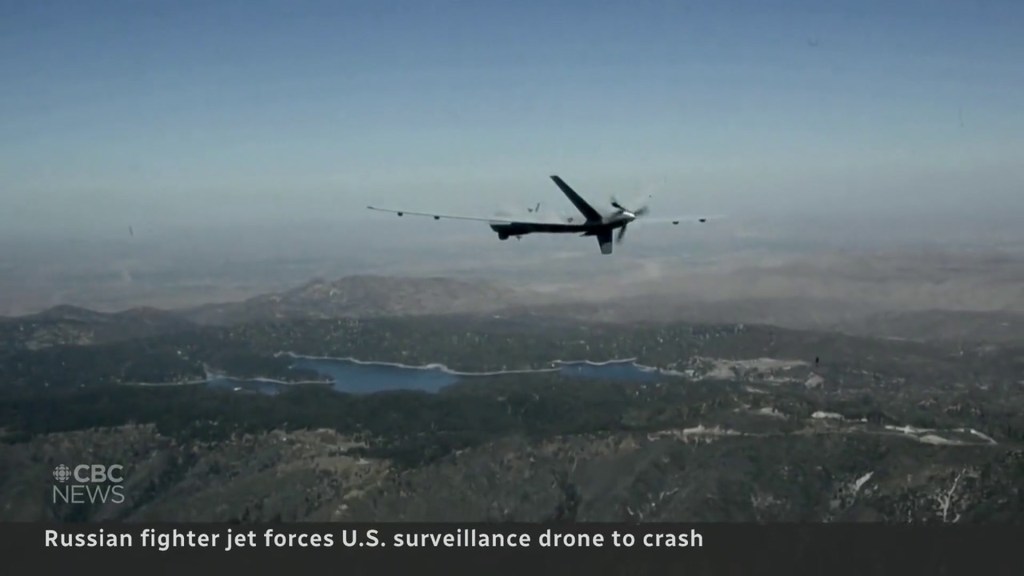
The US said it summoned the Russian ambassador on Tuesday, after a Russian fighter jet forced down a US military “Reaper” surveillance drone over the Black Sea.

The US said that a Russian fighter jet struck the propeller of the surveillance drone in “brazen violation of international law.”

Black Sea adjacent to Ukraine where Russian fighter aircraft downed an American drone

Ned Price, the spokesman for the State Department, said, “We are summoning the Russian ambassador to the State Department.”

Moscow said the American drone sharply maneuvered and crashed after an encounter with Russian jets near Crimea, but insisted that Russian fighter jets didn’t fire weapons or hit the drone.

The Russian Defense Ministry said their fighters from air defense forces on duty were in the air to identify the “intruder” over the Black Sea.

The Russian ambassador to Washington, Anatoly Antonov, described the US drone flight as a “provocation,” saying there was no reason for US military aircraft and warships to be near Russia’s borders.

Speaking after meeting US Assistant Secretary of State for Europe Karen Donfried, Antonov added that Moscow wants “pragmatic” ties with Washington and “don’t want any confrontation between the US and Russia.”

US Air Force General James Hecker, who oversees the US Air Force in the region, said in a statement, “Our MQ-9 aircraft was conducting routine operations in international airspace when it was intercepted and hit by a Russian aircraft, resulting in a crash and complete loss of the MQ-9.” 

The US military added the incident followed a pattern of dangerous behavior by Russian pilots operating near aircraft flown by the US and its allies, including over the Black Sea.

Spy v. Spy in the Sky – A most dangerous game

US National Security Council spokesman John Kirby told reporters they don’t “need to have some sort of check-in with the Russians before we fly in international airspace. There’s no requirement to do that nor do we do it.”

The Black Sea lies between Europe and Asia and is bordered by Russia and Ukraine, among other countries.

https://www.dw.com/en/ukraine-updates-us-summons-russian-ambassador-over-drone/a-64976178

Channel News Asia 3.14.2023

The Russian fighter jet on Tuesday (Mar 14) dumped fuel on the American drone over the Black Sea and then collided with it, causing the drone to crash, the US military said, slamming the manoeuvre as “reckless”.

A Russian Su-27 jet fighter similar to the aircraft involved in Tuesday’s incident. PHOTO: VADIM SAVITSKY/TASS/ZUMA PRESS

US European Command said two Russian Su-27 fighters intercepted the unmanned MQ-9 Reaper over international waters and one clipped its propeller.

“Several times before the collision, the Su-27s dumped fuel on and flew in front of the MQ-9 in a reckless, environmentally unsound and unprofessional manner,” it said.

Moscow denied causing the crash of the drone, which the Pentagon said was on a routine ISR (intelligence, surveillance, reconnaissance) mission.

American MQ-9 ‘Reaper’ drone downed over the Black Sea by Russian fighter aircraft

https://www.wsj.com/video/watch-pentagon-calls-russian-collision-with-us-drone-reckless/CA0798A4-7BAC-4DCC-9EBB-B999E025773B.html

“As a result of a sharp manoeuvre … the MQ-9 unmanned aerial vehicle entered an uncontrolled flight with loss of altitude and collided with the surface of the water,” the Russian Defense Ministry said, adding that the two Russian jets had no contact with the US aircraft and did not use their weapons.

“We are engaging directly with the Russians, again at senior levels, to convey our strong objections to this unsafe, unprofessional intercept, which caused the downing of the unmanned US aircraft,” spokesman Ned Price told reporters.

https://www.channelnewsasia.com/world/russian-jet-causes-american-drone-crash-over-black-sea-us-3346931

“We’ll be able to return to our regular crisis programming.”

Lee Heidhues 3.13.2023

Since last Friday I have been trying to sort through all the events surrounding the collapse of Silicon Valley Bank, the intervention by the Feds and, now, a blizzard of reporting on what comes next.

It took a column by Nobel Prize winning economist Paul Krugman to clear the air and provide a reality check.

Excerpted in The New York Times – Paul Krugman 3.13.2023

If there is one thing almost all observers of the economic scene have agreed about, it is that the issues facing the U.S. economy in 2023 are very different from those it faced in its last crisis, in 2008.

Back then we were dealing with collapsing banks and plunging demand; these days banking has been a back-burner issue and the big problem has seemed to be inflation, driven by too much demand relative to the available supply.

While the value of bank deposits is federally insured, that insurance extends only up to $250,000. S.V.B., however, got its deposits mainly from business clients with multimillion-dollar accounts — at least one client (a crypto firm, of course) had $3.3 billion at S.V.B. Since S.V.B.’s clients were effectively uninsured, the bank was vulnerable to a bank run, in which everyone rushes to withdraw money while there’s still something left.

And the run came. Now what?

Even if the government had done nothing, the fall of S.V.B. probably wouldn’t have had huge economic repercussions. In 2008 there were fire sales of whole asset classes, especially mortgage-backed securities; since S.V.B.’s investments were so boring, similar fallout would be unlikely. The main damage would come from disruption of business as firms found themselves unable to get at their cash, which would be worse if S.V.B.’s fall led to runs on other medium-size banks.

That said, on precautionary grounds government officials felt — understandably — that they needed to find a way to guarantee all of S.V.B.’s deposits.

It’s important to note that this doesn’t mean bailing out stockholders: S.V.B. has been seized by the government, and its equity has been wiped out. It does mean saving some businesses from the consequences of their own foolishness in putting so much money in a single bank, which is infuriating — especially because so many tech types were vocal libertarians until they themselves needed a bailout.

Indeed, probably none of this would have happened if S.V.B. and others in the industry hadn’t successfully lobbied the Trump administration and Congress for a relaxation of bank regulations, a move rightly condemned at the time by Lael Brainard, who has just become the Biden administration’s top economist.

A notice hangs on the door of Silicon Valley Bank (SVB) located in San Francisco, California, U.S. March 10, 2023. REUTERS/Krystal Hu

The good news is that taxpayers probably won’t be on the hook for much if any money.

It’s not at all clear that S.V.B. was actually insolvent; what it couldn’t do was raise enough cash to deal with a sudden exodus of depositors. Once things have stabilized, its assets will probably be worth enough, or almost enough, to pay off depositors without an infusion of additional funds.

And then we’ll be able to return to our regularly scheduled crisis programming.

Political Oscars – anti-war classic, Navalny and Women Talking

Lee Heidhues 3.12.2023

The Academy Awards would not be complete without at least one political statement.

This year there were three.

It’s a telling statement about the state of political discourse in the United States when the best international film is stridently anti-war German production.

The best documentary film is about a Russian dissident who is imprisoned for standing up to Vladimir Putin.

The best adapted screenplay Academy Award went to Women Talking, written and directed by Sarah Polley.

This is the first win for Sarah Polley, who was nominated for the same award in 2007 for “Away From Her.”

“I want to thank the Academy for not being mortally offended by the words women and talking so close together,” Ms. Polley said in her acceptance speech.

Perhaps those privileged members of the Motion Picture Academy of Arts and Science want to send a message that says, “We care.”

It begs the question. Where are the courageous dissidents in the United States?

I am sure there are many who are fighting for environmental justice, civil rights and a fair justice system. You just don’t often read or hear about these people in the mainstream media.

The wealthy are too busy worrying about the their holdings at the failed Silicon Valley Bank and breathing a sigh of relief that Washington has bailed them out of their predicament.

The rest of America is too busy obsessing over the soon to be indicted wastrel Donald Trump and how this criminal charge will impact his run for the White House in 2024.

Excerpted from Deutsche Welle 3.12.2023

All Quiet on the Western Front wins best international film

Midway through the evening, German production All Quiet on the Western Front won the Academy Award for best international film.

The Netflix original film brought audiences a gruesome anti-war message almost a hundred years after the original book by Erich Maria Remarque was published.

Navalny wins best documentary amid Russia’s invasion of Ukraine

A documentary about jailed Russian opposition leader Alexei Navalny has won the Oscar for best documentary feature.

Navalny explores the poisoning that nearly killed the Kremlin critic in 2020 and his subsequent detention upon his return to Moscow in 2021.

“My husband is in prison just for telling the truth. My husband is in prison just for defending democracy,” his wife, Yulia Navalnaya, said at the ceremony.

“Alexei, I am dreaming of the day when you will be free and our country will be free. Stay strong, my love.” 

https://www.dw.com/en/oscars-updates-german-picture-bags-best-international-film/a-64963221

There’s nothing like a bank panic to make for a relaxing weekend.

Lee Heidhues 3.10.2023

Bank failures are akin to a tsunami in the financial world.

The collapse of Silicon Valley Bank is a world wide story receiving major headline coverage.

The collapse of this bank, 16th largest in the United States, holds particular relevancy in the Bay Area.

The Standard, an online publication in San Francisco, was founded by prominent venture capitalists. Its current online edition has eight stories about the collapse of SVB. https://sfstandard.com/ A lead story being headlined ‘Bay Area Investors Clamor for Government to Step up After Silicon Valley Bank Meltdown.’

The Wall Street Journal is playing the story across the front page of its online edition. The last sentence in the editorial is the most telling about what America’s leading financial publication is really thinking.

But nobody, least of all central bank oracles, should be surprised that there are now bodies washing up on shore as the tide goes out. Investors will have to brace for what could be some heavy weather ahead.

Following is the WSJ editorial.

Wall Street Journal editorial 3.10.2023

There’s nothing like a bank panic to make for a relaxing weekend.

https://www.wsj.com/articles/svb-financial-pulls-capital-raise-explores-alternatives-including-possible-sale-sources-say-11de7522

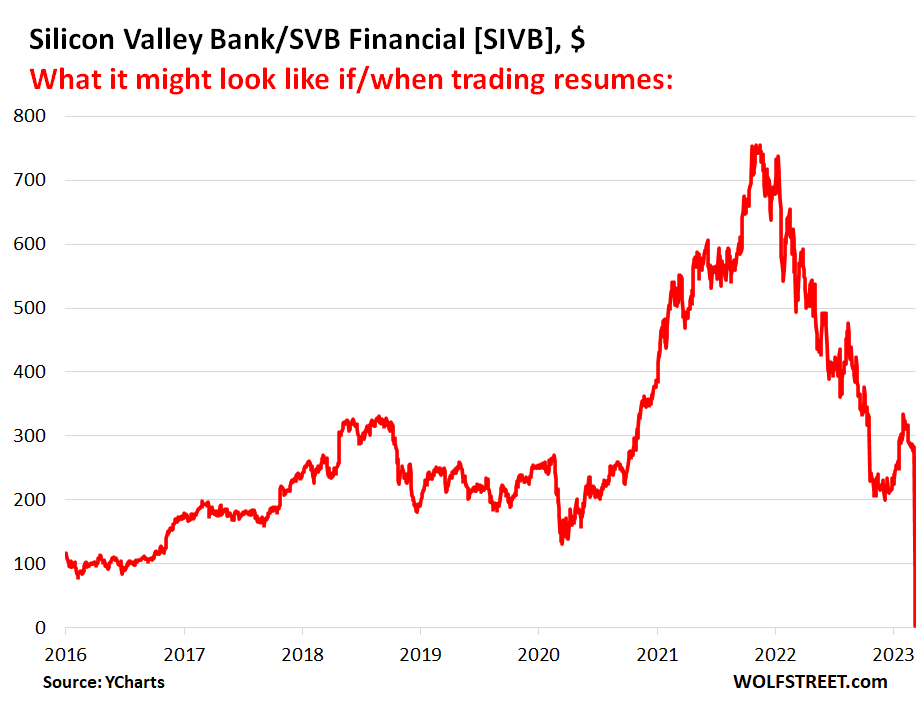
Markets took another header on Friday, as regulators closed Silicon Valley Bank (SVB), the 16th largest U.S. bank and the biggest to fail since the 2008 crisis. This came days after Silvergate Capital announced it is liquidating its bank. Cracks in the financial system emerge whenever interest rates rise quickly after an easy-credit mania, and the surprise is that it took so long.

The Federal Deposit Insurance Corporation took over SVB on Friday and may have to collect more bodies by the time the Federal Reserve is done correcting its easy-money mistakes. At least that seems to be the fear of investors, judging by the sharp selloff in regional bank stocks like First Republic Bank (-14.8%) and PacWest Bancorp (-37.9%).

SVB’s customers include leading venture-capital firms and tech startups, including some Chinese firms that need offshore accounts to raise foreign capital. San Diego-based Silvergate is smaller but grew in recent years by serving crypto companies.

What the two have in common is that they lacked diverse deposit bases and fell victim of a classic banking strategy of borrowing short and lending long. Although their liabilities were backed by putatively safe assets like Treasury bonds, when interest rates rise the bonds that banks hold lose value. They have to be held to maturity or incur losses when sold.

SVB and Silvergate incurred steep losses as they sold bonds to compensate for fleeing deposits. A regulatory crackdown on crypto also spurred Silvergate customers to bail, sticking it with even bigger losses.

Silvergate on Wednesday said it would liquidate “in light of recent industry and regulatory developments.” Its crypto ties may have made it too politically toxic for another bank to take over. While regulators will surely flog Silvergate’s failure as a warning not to serve the crypto industry, its concentrated deposit base was the main cause of its demise.

SVB’s business model was more durable but still vulnerable to market shocks. Rising interest rates have made it hard for its startup clients to raise fresh equity. As its customers drew down deposits, SVB had to sell bonds at a loss. SVB disclosed this week that it had lost $1.8 billion on securities sales and would need to raise $2.25 billion in equity.

Cops stand guard over the bankrupt Silicon Valley Bank

This stoked fears of insolvency, which caused customers and investors to bolt. It was reportedly searching for a buyer on Friday, and we hope regulators didn’t pre-empt potential private investors by closing SVB so quickly on the same day.

Bank of America and J.P. Morgan rescued smaller banks during the 2008 crisis. But banks may be reluctant to do that again since regulators last time punished them for the sins of their foster children. The takeover of SVB will presumably cost the FDIC money to repay insured depositors.

But if SVB was doomed, it is better to let it fail than have the government bail it out, despite what one hedge-fund lord suggested this week. Didn’t we learn from the 2008 crisis that the feds’ rescue of Bear Stearns encouraged everyone to believe that Lehman Brothers would be rescued too?

There doesn’t appear to be any obvious systemic risk to the financial system from the SVB and Silvergate failures, and market discipline needs to prevail unless there is danger of a larger financial breakdown. SVB investors and customers benefited from the government’s easy money. Why should they also benefit from a government lifeline after taking risks with that easy money?

This week’s bank failures are another painful lesson in the costs of a credit mania fed by bad monetary policy. The reckoning always arrives when the Fed has to correct its mistakes. That was the story of 2008, and it’s the eternal lesson that economic historian Charles Kindleberger taught in “Manias, Panics, and Crashes.” We saw the first signs of panic in last year’s crypto crash and the liquidity squeeze at British pension funds.

Now it’s hit the U.S. financial system, and there are likely to be more casualties. Treasury Secretary Janet Yellen said Friday that the U.S. banking system “remains resilient,” but that’s what Fed officials Ben Bernanke and Tim Geithner thought before the 2008 panic.

While big banks today are much better capitalized than before the 2008 financial crisis, some regional and small banks with less diverse deposit bases may be vulnerable to shocks. Some may be over-exposed to industries such as commercial real estate that are under stress. The Fed will have to be careful as it continues its anti-inflation campaign.

But nobody, least of all central bank oracles, should be surprised that there are now bodies washing up on shore as the tide goes out. Investors will have to brace for what could be some heavy weather ahead.

https://www.wsj.com/articles/silicon-valley-bank-silvergate-capital-markets-fdic-federal-reserve-c66be86a?mod=opinion_lead_pos1

Hamburg, Germany scene of American style violence

Lee Heidhues 3.9.2023

Germany has been rocked by a mass shooting at a Jehovah’s Witness center in the port city of Hamburg.

Hamburg’s Mayor called the mass killing “shocking.”

This type violence is a rarity in Germany where there are strict gun control laws.

In America where guns are as easy to purchase as hamburgers random mass violence is all too common.

The New York Post 3.9.2023

At least six or seven people were killed and eight others were injured during a shooting inside a church in Hamburg, Germany, on Thursday.

Hamburg police reported that shots were fired inside a Jehovah’s Witness center in the Gross Borstel district at around 9 p.m. local time, resulting in “several” fatalities. 

German news sites reported that seven people were gunned down and eight others were wounded. Police officials said the gunman is likely among the dead found at the scene. 

https://www.france24.com/en/europe/20230309-several-killed-in-shooting-at-church-in-northern-german-city-of-hamburg

“There were about four periods of shooting,” student Laura Bauch told German news agency dpa. “There were always several shots in these periods, roughly at intervals of 20 seconds to a minute.

“We only know that several people died here; several people are wounded, they were taken to hospitals,” police spokesman Holger Vehren said, without confirming an exact number of casualties. 

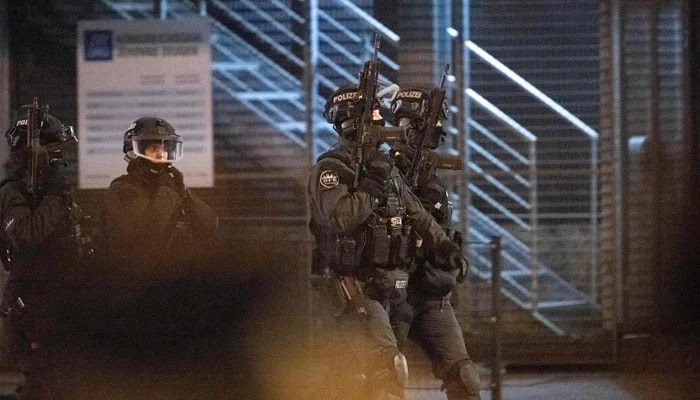
Residents in the area received a shelter-in-place order amid the police investigation, while cops responded to the three-story building.

German police at the scene of the mass shooting in Hamburg

Officers who responded to the mass shooting found people with gunshot wounds on the ground floor and then heard the sound of a gun firing from a floor above. They discovered a person who had been fatally shot upstairs and believe that person may have been the shooter, Vehren said. 

Investigators were still attempting to verify that the casualties were the work of a lone gunman, police officials said early Friday. 

Nearby residents told local media they heard a barrage of gunshots and saw a person running from floor to floor during the shooting. 

Gregor Miesbach, who can see the building from his home, said he heard at least 25 shots in an interview with the German news station NonstopNews. 

He said he heard gunshots and then took out his phone and filmed a person entering the building through a window followed by the sound of gunfire. The figure briefly reappears in a courtyard on the property and then re-enters the building and more shots can be heard. 

After police arrived on the scene, Miesbach said, he heard one last gunshot about five minutes later. 

Heavily armed German law enforcement in Hamburg

The mayor of Hamburg, Germany’s second-largest city, called the shooting “shocking” in a tweet. 

“I extend my deepest sympathy to the families of the victims. The forces are working at full speed to pursue the perpetrators and clarify the background,” Mayor Peter Tschentscher tweeted.

https://nypost.com/2023/03/09/six-killed-seven-injured-in-hamburg-germany-church-shooting/

2023 Best Documentary Oscar Nominees-Look back at a classic

Lee Heidhues 3.8.2023

The Academy Awards are this Sunday.

I always pay attention to the category of feature length documentaries which tend to balance art and politics.

One of my favorite winning documentaries is the 2003 ‘The Fog of War Eleven Lessons from the Life of Robert S. McNamara.’ Defense Secretary under Presidents Kennedy and Johnson. Born in San Francisco’s Richmond District on 10th Avenue, McNamara had a corporate career before joining the Kennedy Administration in 1961as Secretary of Defense His role in the Vietnam War was pivotal and a crucial factor in the disastrous American involvement.

https://en.wikipedia.org/wiki/The_Fog_of_War

Excerpted from Vogue – Taylor Antrim 2.13.2023

If you’re looking for suspense at the Oscars, focus your attention on the documentary-feature-film category. It’s a nail-biter, a true toss-up, with five near-perfect movies (representing my second-favorite set of nominees in the race).

The quality is all the more remarkable given the state of the overheated nonfiction-film sector, where streamers hungry for low-cost, Tiger King–style hits are commissioning anything and everything—docs on Ted Bundy! Crypto! Abercrombie & Fitch!—creating a bubble of mixed quality and raising certain ethical questions along the way. Finding a great doc has started to feel a little like…well, finding anything on your overstuffed, weirdly undernourished streaming homepages.

But let me say it again: These five Oscar nominees are truly great—they do the magic trick of edifying you with real-world facts while also transporting you with emotionally rich narratives. Their subjects cover geopolitics, activism, love, and heartbreak. Here’s a guide, with some predictions thrown in. Watch as many as you can and join me on the edge of my seat when the winner is read out next month.

NAVALNY
All That Breathes
ALL THE BEAUTY AND THE BLOODSHED
Fire of Love
A House Made of Splinters

https://www.vogue.com/article/guide-to-documentary-film-category-oscars-2023

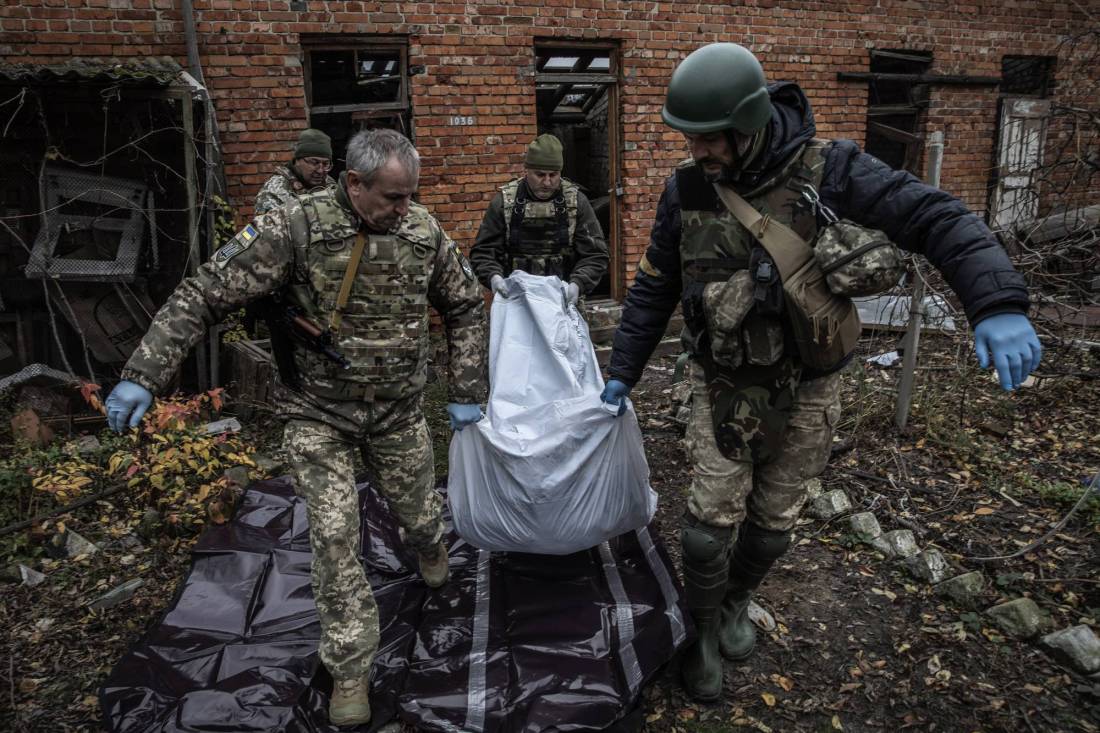
Top photo – The fog of war in Ukraine

U.S. carried out Nord Stream 2 operation at Biden’s direction

Lee Heidhues 3.7.2023

America’s paper of record, The New York Times, published a detailed investigative piece whose ultimate conclusion is that the United States had no involvement in the September 2022 explosion that seriously damaged the Nord Stream 2 pipeline which is supposed to carry natural gas from Russia to Germany under the Baltic Sea.

The Biden administration has consistently maintained that it was not involved. Now the results of “new intelligence reviewed by U.S. officials suggests that a pro-Ukranian group carried out the attack.”

The public may never know who was responsible if Washington has its way.

Excerpted from The New York Times 3.7.2023

WASHINGTON Last month, the investigative journalist Seymour Hersh published an article on the newsletter platform Substack concluding that the United States carried out the operation at the direction of President Biden. In making his case, Mr. Hersh cited the president’s pre invasion threat to “bring an end” to Nord Stream 2, and similar statements by other senior U.S. officials.

U.S. officials say Mr. Biden and his top aides did not authorize a mission to destroy the Nord Stream pipelines, and they say there was no U.S. involvement.

Early last year, President Biden, after meeting with Chancellor Olaf Scholz of Germany at the White House, said Mr. Putin’s decision about whether to attack Ukraine would determine the fate of Nord Stream 2. “If Russia invades, that means tanks and troops crossing the border of Ukraine again, then there will be no longer a Nord Stream 2,” Mr. Biden said. “We will bring an end to it.”

When asked exactly how that would be accomplished, Mr. Biden cryptically said, “I promise you we’ll be able to do it.”

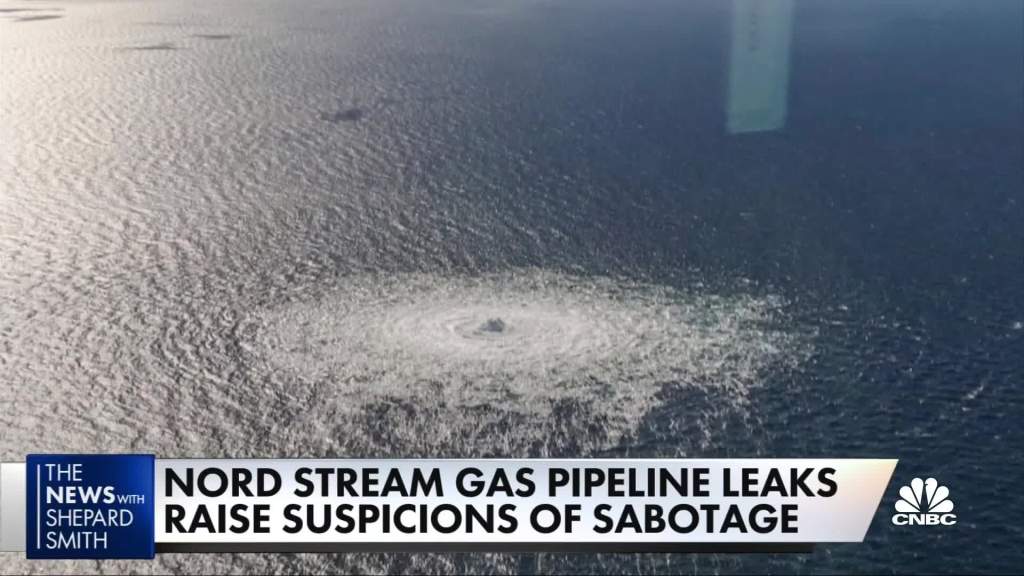
Since the explosions along the pipelines in September, there has been rampant speculation about what transpired on the sea floor near the Danish island of Bornholm.

Poland and Ukraine immediately accused Russia of planting the explosives, but they offered no evidence.

Russia, in turn, accused Britain of carrying out the operation — also without evidence. Russia and Britain have denied any involvement in the explosions.

New intelligence reviewed by U.S. officials suggests that a pro-Ukrainian group carried out the attack on the Nord Stream pipelines last year, a step toward determining responsibility for an act of sabotage that has confounded investigators on both sides of the Atlantic for months.

U.S. officials said that they had no evidence President Volodymyr Zelensky of Ukraine or his top lieutenants were involved in the operation, or that the perpetrators were acting at the direction of any Ukrainian government officials.

Any suggestion of Ukrainian involvement, whether direct or indirect, could upset the delicate relationship between Ukraine and Germany, souring support among a German public that has swallowed high energy prices in the name of solidarity.

The brazen attack on the natural gas pipelines, which link Russia to Western Europe, fueled public speculation about who was to blame, from Moscow to Kyiv and London to Washington, and it has remained one of the most consequential unsolved mysteries of Russia’s year-old war in Ukraine.

Ukraine and its allies have been seen by some officials as having the most logical potential motive to attack the pipelines. They have opposed the project for years, calling it a national security threat because it would allow Russia to sell gas more easily to Europe.

Officials who have reviewed the intelligence said they believed the saboteurs were most likely Ukrainian or Russian nationals, or some combination of the two. U.S. officials said no American or British nationals were involved.

The pipelines were ripped apart by deep sea explosions in September, in what U.S. officials described at the time as an act of sabotage. European officials have publicly said they believe the operation that targeted Nord Stream was probably state sponsored, possibly because of the sophistication with which the perpetrators planted and detonated the explosives on the floor of the Baltic Sea without being detected. U.S. officials have not stated publicly that they believe the operation was sponsored by a state.

Nord Stream 2 pipeline – Across the Baltic Sea to Germany

The explosives were most likely planted with the help of experienced divers who did not appear to be working for military or intelligence services, U.S. officials who have reviewed the new intelligence said. But it is possible that the perpetrators received specialized government training in the past.

Nord Stream 1 and Nord Stream 2, as the two pipelines are known, stretch 760 miles from the northwest coast of Russia to Lubmin in northeast Germany. The first cost more than $12 billion to build and was completed in 2011.

Nord Stream 2 cost slightly less than the first pipeline and was completed in 2021, over objections from officials in the United States, Britain, Poland and Ukraine, among others, who warned that it would increase German reliance on Russian gas. During a future diplomatic crisis between the West and Russia, these officials argued, Moscow could blackmail Berlin by threatening to curtail gas supplies, on which the Germans had depended heavily, especially during the winter months. (Germany has weaned itself off reliance on Russian gas over the past year.)

Sunday morning flames demolish 2 unit building in San Francisco

Lee Heidhues 3.5.2023

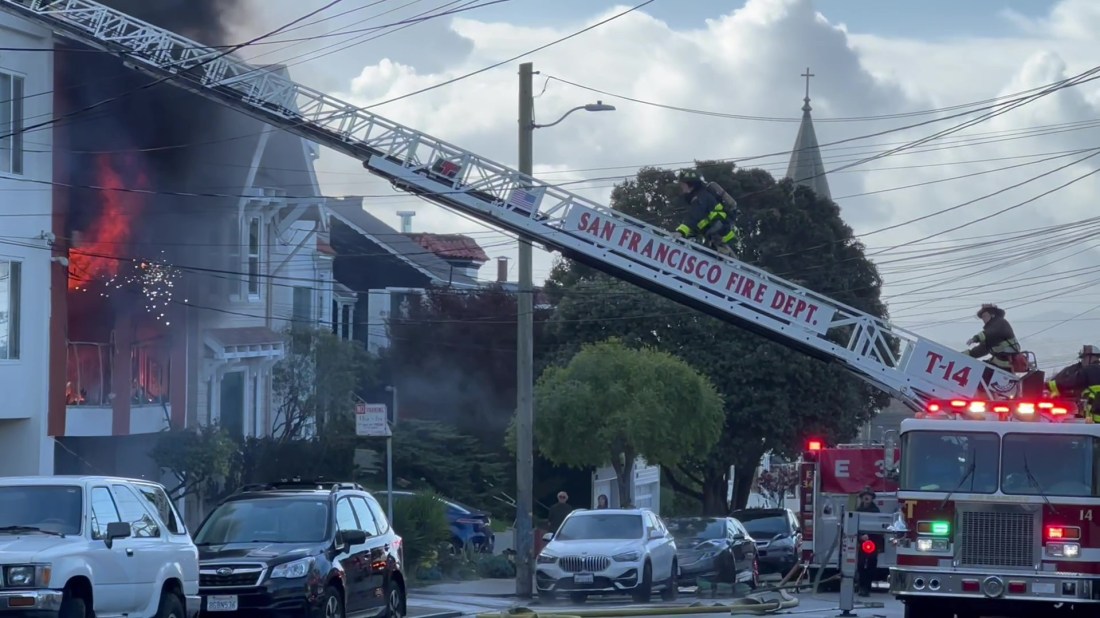
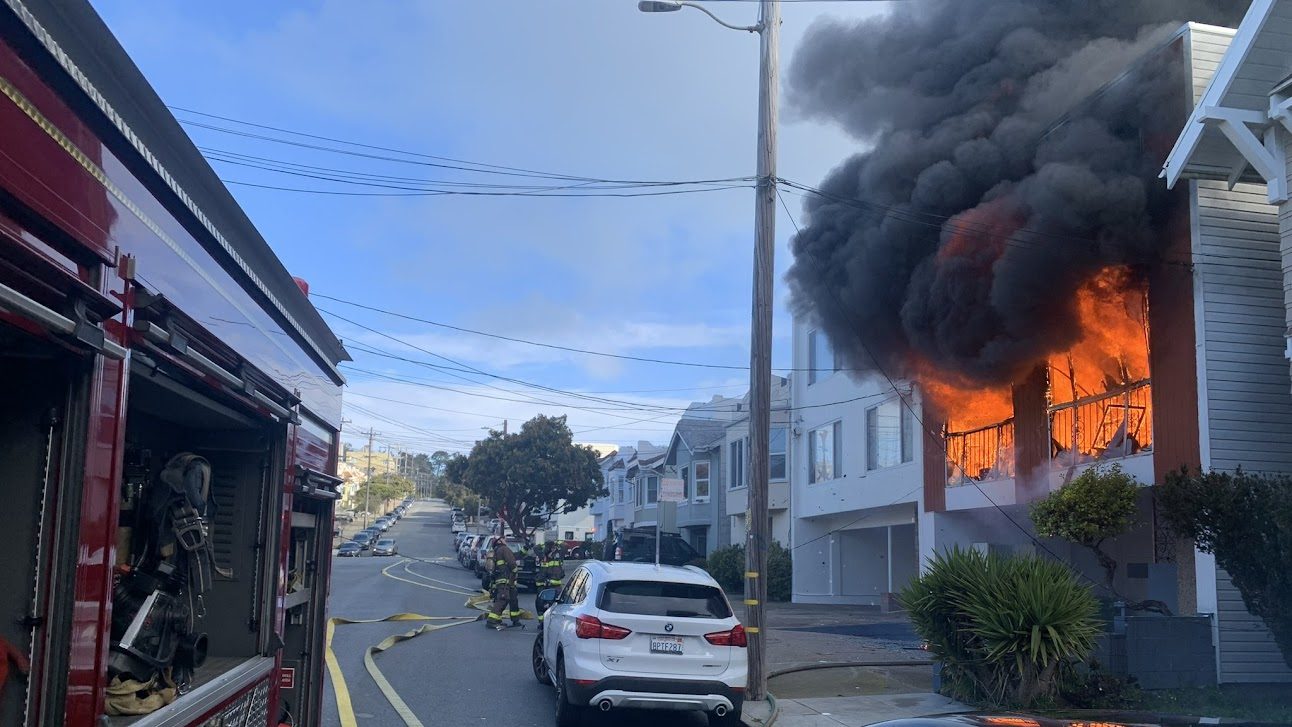
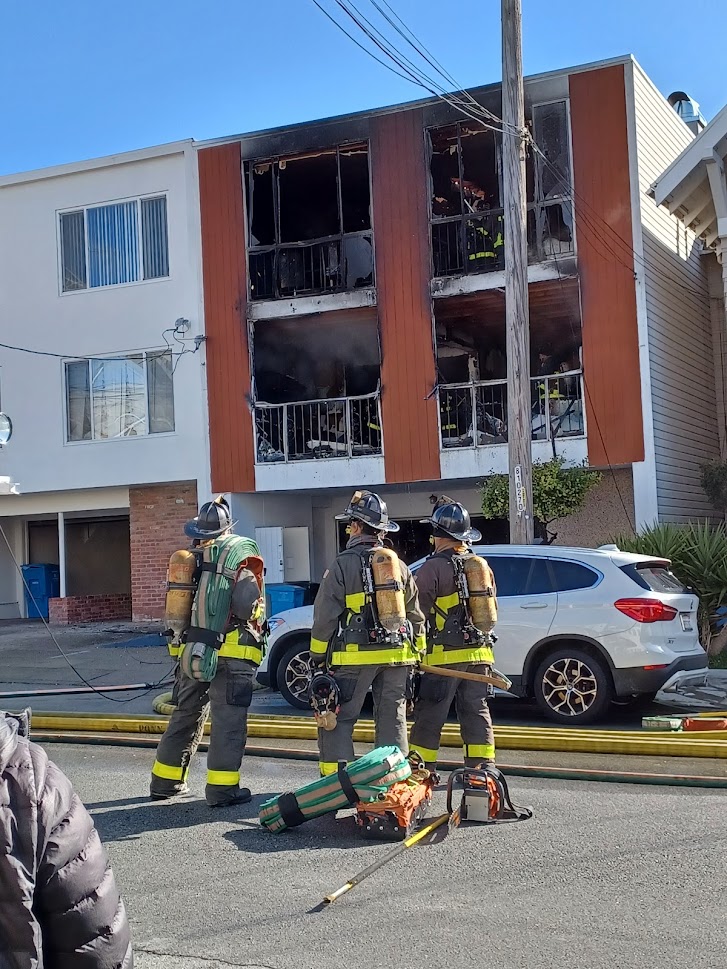
Inferno in the outer Richmond neighborhood – photo San Francisco Fire Department
The Sunday morning inferno

The normal Sunday morning tranquility was broken when fire trucks and emergency vehicles came rumbling down the block past our home in the normally quiet outer Richmond District.

I stepped outside to see smoke billowing from a home on the next block and a mass of fire fighters extinguishing the blaze.

The fire started when the elderly resident of the two unit building was cooking with oil. Flames rose up through the kitchen flue causing the blaze which destroyed the building. Fortunately he got out safely and nobody was injured.

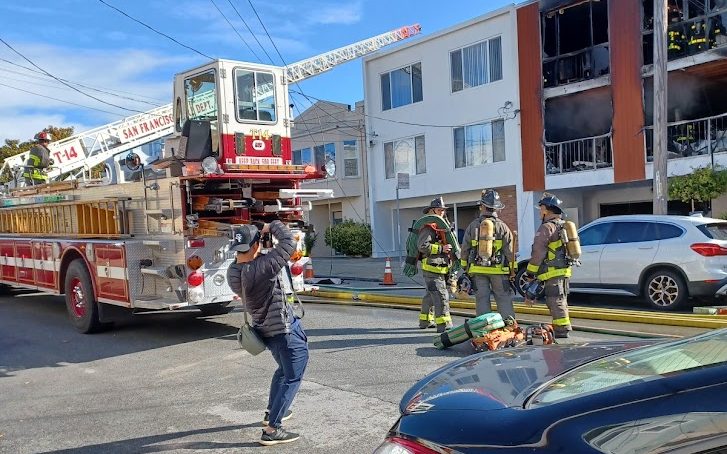
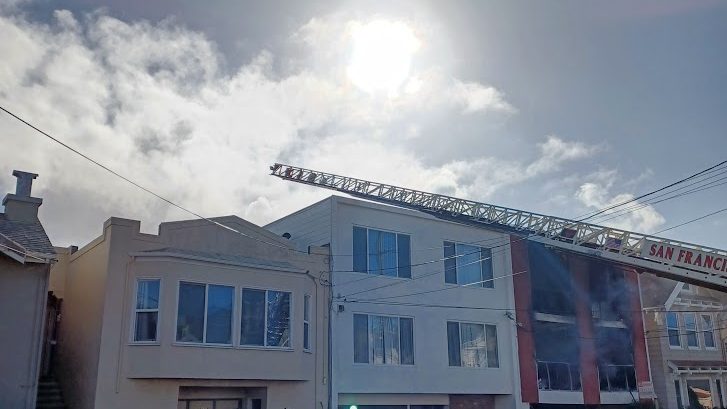
A firefighter scales the ladder

The fire quickly went to two alarms and four San Francisco Fire Department battalions responded to extinguish the blaze. Because of the efficient and professional work of the fire fighters the buildings on either side of the conflagration were not damaged.

According to the SF Fire Department over 70 firefighters were dispatched to fight the blaze.

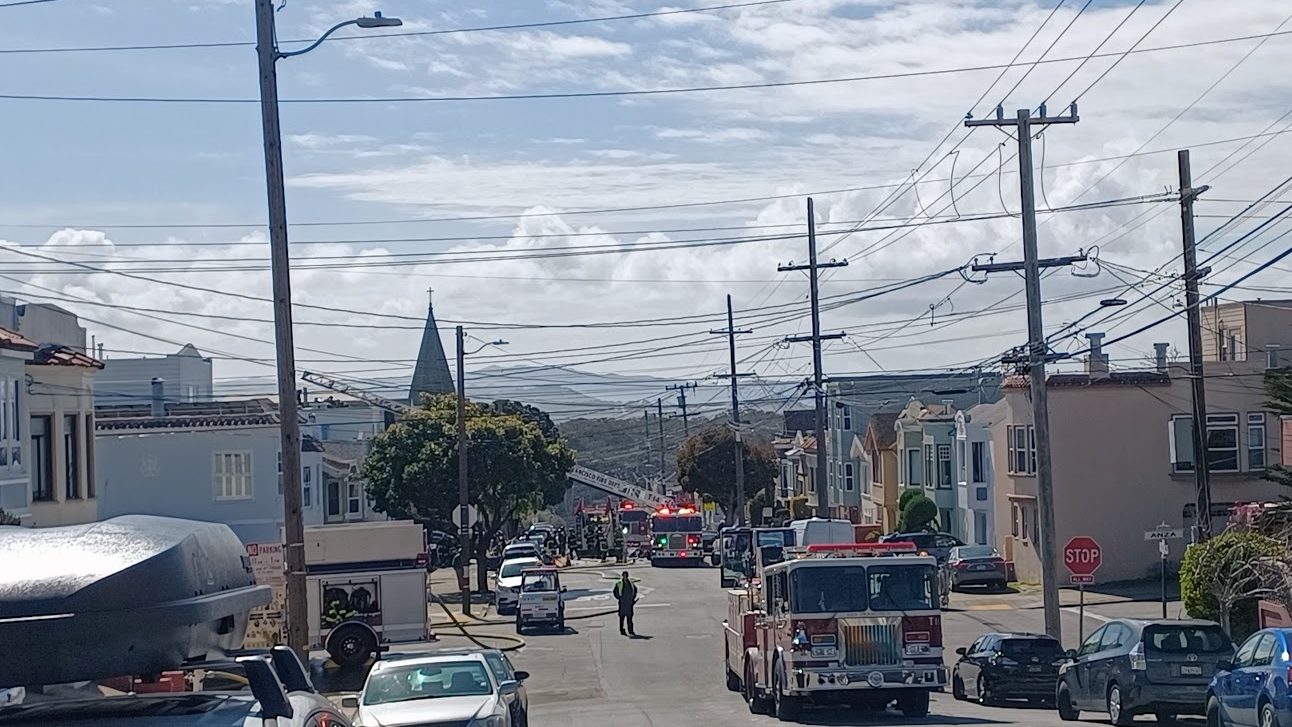
Looking down the block at the scene of the conflagration. St. Thomas the Apostle steeple in the background.
Fire fighters look on at the fire destroyed building
Firefighters surveying the burnt out wreckage of the Sunday morning blaze in the outer Richmond neighborhood
A trio of firefighters whose sole job is to assist any of their comrades should they be injured.
A photographer documents the blaze
Smoke billows from the burning building.
Some of the San Francisco firefighters on the job on Sunday morning
The Sunday morning sun looms over the site of the blaze
San Francisco Fire Department battalion chiefs console owner of fire destroyed property.
The fire hydrant adjacent to Donna the Drain. Its recently cleaned condition enable the excess water to flow freely into the SFPUC system
Fire fighters utilized the fire hydrant at the corner to extinguish the blaze. The hydrant was readily accessible as long time Public Utilities Commission volunteer drain maintainer Liz Heidhues, keeper of ‘Donna the Drain’, had thoroughly cleaned the corner location after the fierce Saturday rainstorms.
There was plenty of equipment on stand by to ensure the blaze was eradicated and to care for anybody who may have been injured. Fortunately the medical teams were not necessary.

Top photo – Firefighters approach the Sunday morning blazing inferno as neighbors look on incredulously