
San Francisco City Hall shills turning historic park into a carnival show

January 13, 2020

Shill Definition. An accomplice of a hawker, gambler, or swindler who acts as an enthusiastic customer to entice or encourage others.

SAN FRANCISCO HAS BEEN SOLD ANOTHER BILL OF GOODS BY AN OUT OF TOWN HAWKER IN THE GUISE OF COMMEMORATING OUR HISTORY.

GREED..GREED…GREED….JUST ANOTHER INANE CLUELESS ENVIRONMENT DESTROYING EXTRAVAGANZA BROUGHT TO YOU BY THE CORPORATE SERVANTS AT CITY HALL

January 13, 2020

SF OCEAN EDGE HAS PUT OUT THIS CALL TO ACTION.

New bright, artificial lighting proposed for Golden Gate Park:

A 140 ft., lighted ferris wheel, 19 new spotlights on top of the Bandshell –

Write letters and attend a hearing on 1/15/20 to protest this project!

This proposal has already been approved at the Recreation and Park Commission.  But, because the Music Concourse is a City landmark, this project requires a Certificate of Appropriateness (COA).  There will be a hearing on the COA on January 15th, at 12:30 p.m. at the Historic Preservation Commission (HPC), City Hall, Room 400.  Please attend and support our wildlife and parkland – as parkland!

GG Park Concourse I 1.13.2020

You can also write to the HPC to register your concern.  Please copy us on your letters.

Send copies to – sfoceanedge@earthlink.net

The Recreation and Park Department is planning to install a 140 foot high ferris wheel in the Music Concourse for the 150th Golden Gate Park Anniversary celebration.  The ferris wheel will have glass booths and be lighted with LED lights every evening until 10:00 p.m. for up to one year.  After 10:00 p.m., the ferris wheel will be lighted with bright LED security lights.  In addition, RPD plans to flood the Bandshell with new lighting and to place 19 spotlights on the roof of the Bandshell, pointing up to the sky.

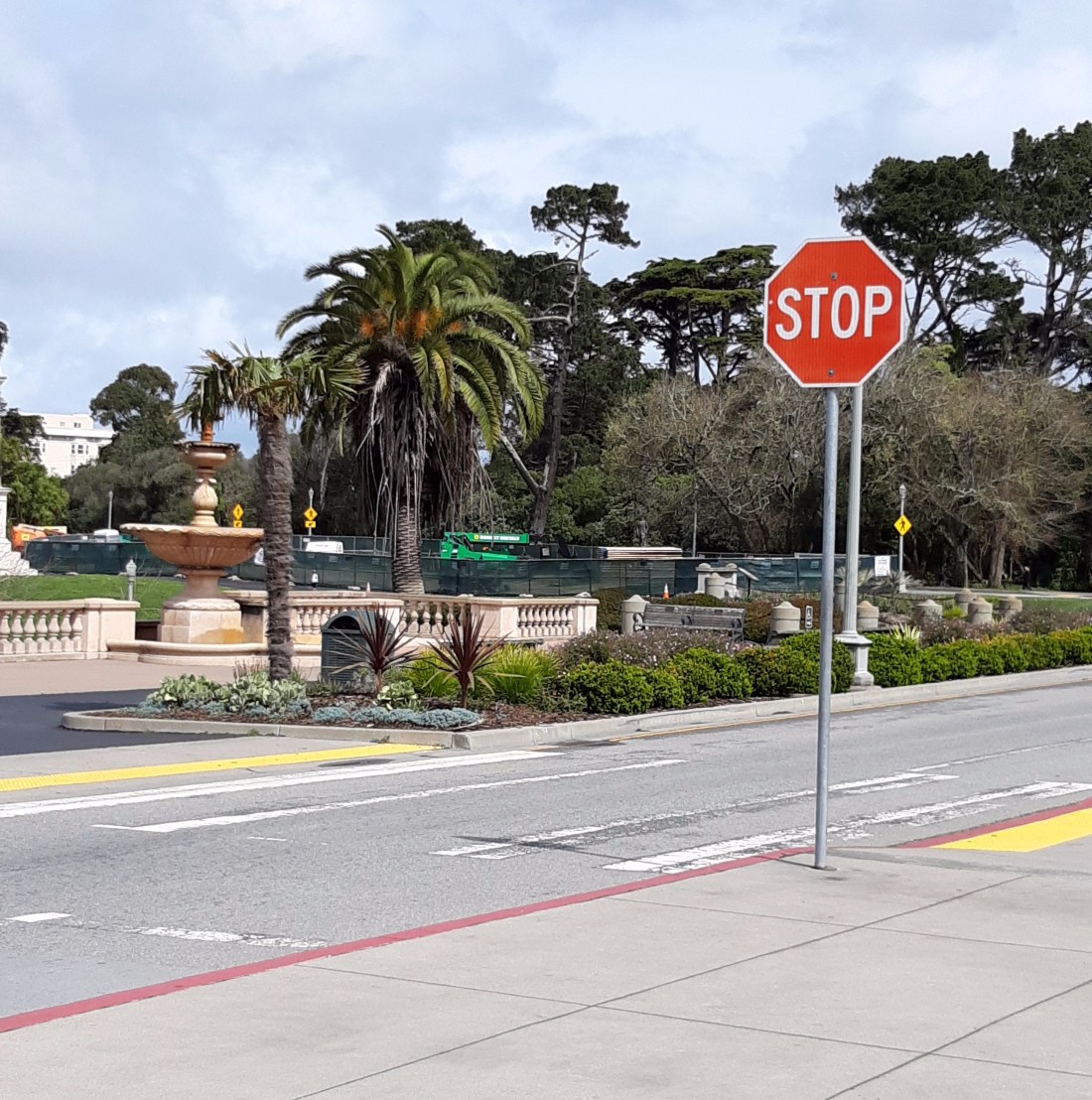
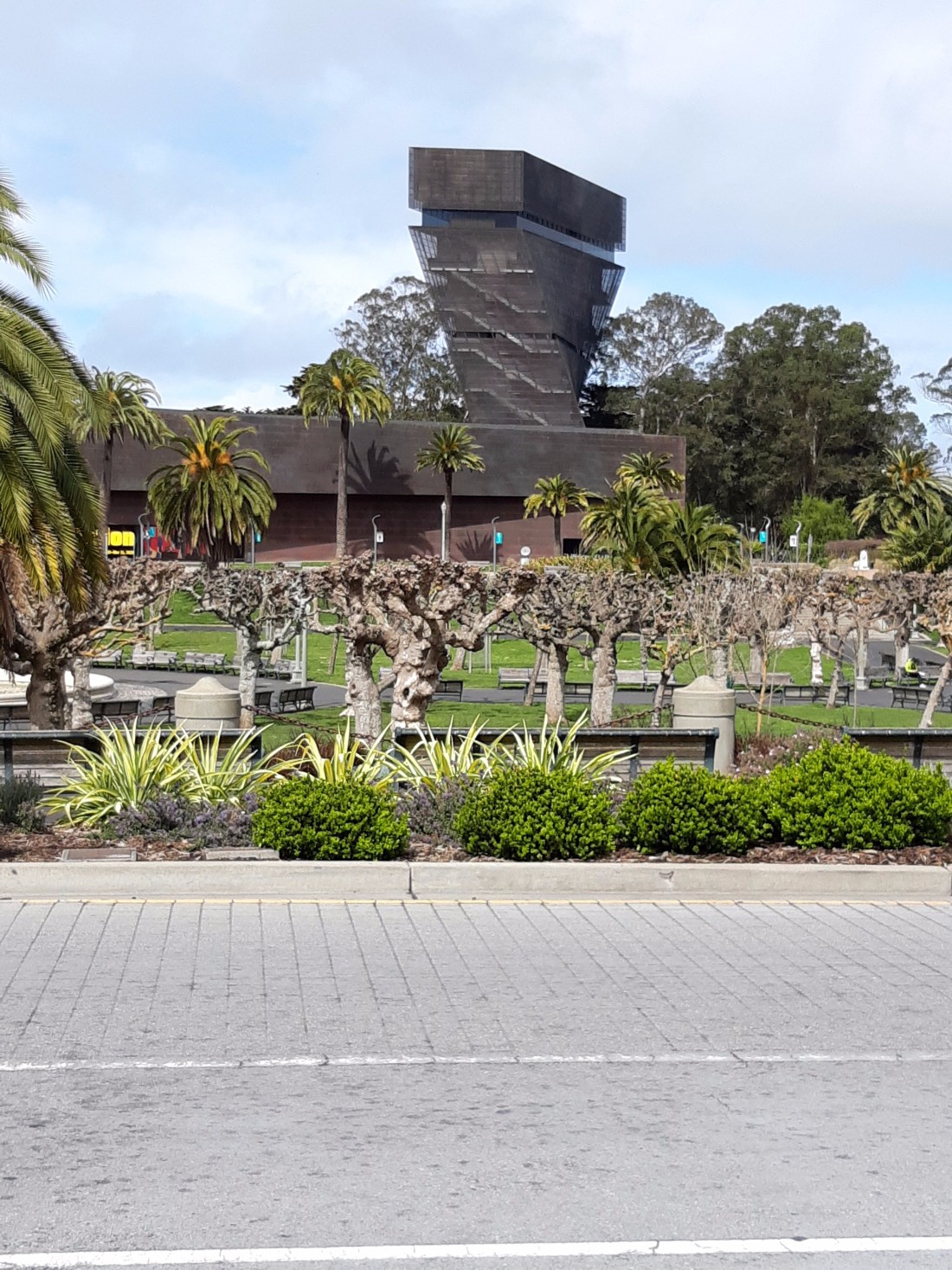
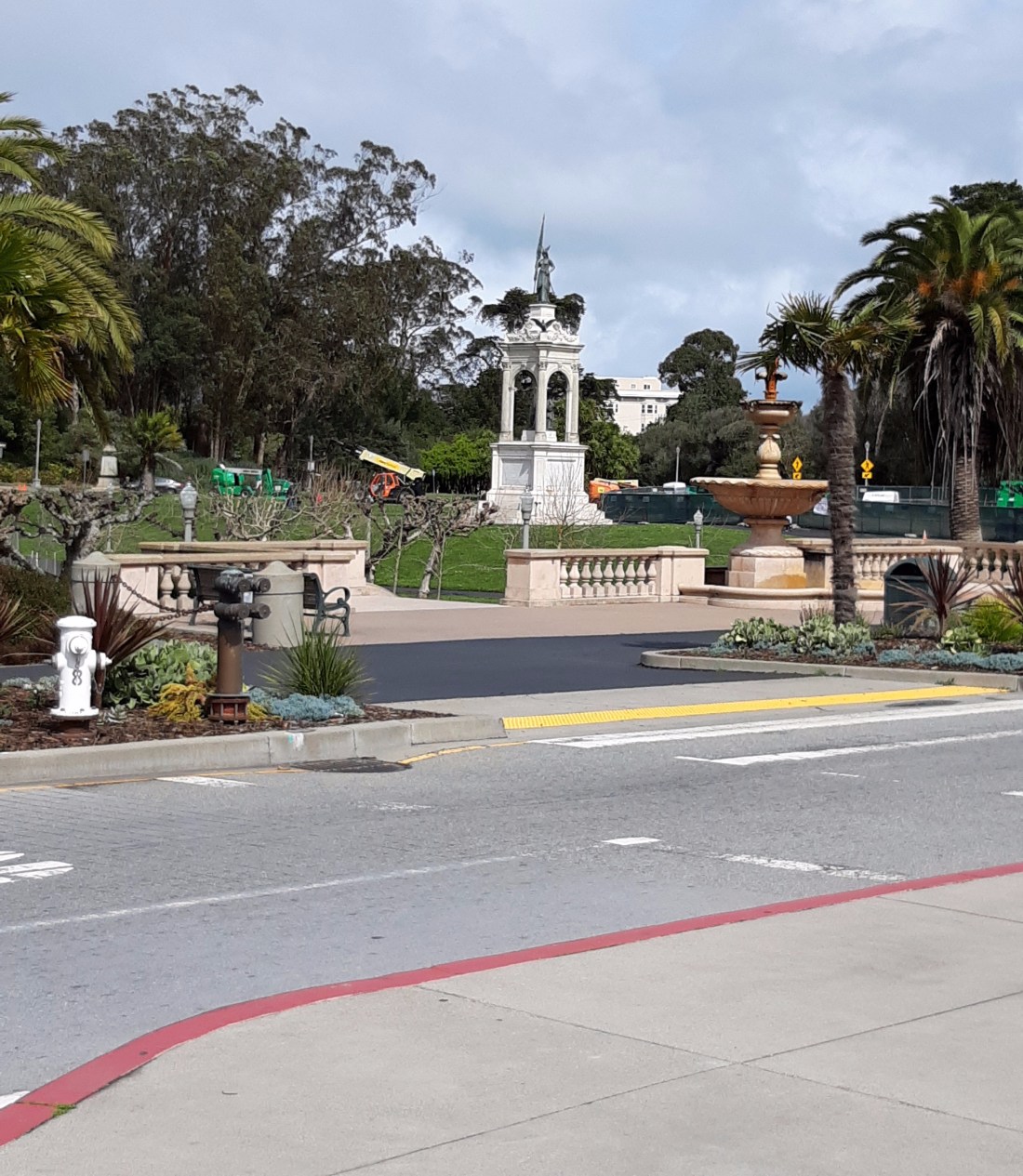
  GGP is primarily a landscape park, not an amusement park or a carnival.  In the Golden Gate Park Master Plan, the Department of Recreation and Park’s own planning guide, lighting is intended to be limited in Golden Gate Park overall and in the Music Concourse specifically. In fact, neither the Bandshell nor the area where the ferris wheel will be placed are designated as areas to be lighted in this City document.

GGP Ferris Wheel 12.12.2019

An observation wheel is not listed as a historic feature of the Music Concourse in any of the historic preservation documents. The cumulative impacts of a lighted observation wheel and spotlights on the Bandshell are being ignored by this proposal.

Much of this will take place during the migration and nesting seasons. Habitat in Golden Gate Park is already stressed with the over 13 million visitors that enter the Park every year.  Placing rotating glass in a park with bright lights and nearby spotlights is a recipe for disaster for birds.  Lighting the Park beyond and above what is there now (including new lights at the tennis courts and the light show at the Conservatory of Flowers) deprives all wildlife of the darkness it needs to survive and to thrive.

Environmental groups have weighed in with letters of concern about this project and its impact on wildlife in Golden Gate Park, including the Sierra Club, RaptorsAreTheSolution, and Coyote Yips.

Aaron Jon Hyland, AIA, NCARB

President, SEAT 1 Historic Architect

aaron.hyland.hpc@gmail.com

Diane Matsuda

Vice-President, SEAT 7 At Large

dianematsuda@hotmail.com

415.693.1321

Kate Black

Commissioner, SEAT 6 Real Estate Professional

kate.black@sfgov.org

415.575.9121

Chris Foley

Commissioner, SEAT 5, Preservation Professional

chris.foley@sfgov.org

415.558.6309

Richard S.E. Johns

Commissioner, SEAT 4 Historian

RSEJohns@yahoo.com

415.640.3240

Jonathan Pearlman

Commissioner, SEAT 3 Architectural Historian

jonathan.pearlman.hpc@gmail.com

Lydia So

Commissioner, SEAT 2, Historic Architect

lydia.so@sfgov.org

Taylor, Michelle (CPC)

Senior Preservation Planner

michelle.taylor@sfgov.org

Jonas P. Ionin

Commission Secretary

jonas.ionin@sfgov.org


Seahawks season ends with a crash landing in frigid Wisconsin.

Pete Carroll, Seahawks coach, looks skyward for guidance as his flock ends the season with a crash landing.

A championship game between San Francisco and Seattle would have been nail biting time. Instead the 49ers will meet Green Bay.  A team they demolished 37-8 last November at Levi’s Stadium.

The Seattle stormed back from a 28-7 deficit but couldn’t get over the hump.

Now the 49ers will meet the Packers for a Super Bowl ticket next Sunday

Seattle Post Intelligencer 1.12.2020

GREEN BAY, Wis. (AP) — The Seattle Seahawks were routinely Super Bowl contenders just a few years ago thanks in large part to their dominant defense.

That’s no longer the case.

Seattle’s defense bent and then broke Sunday, surrendering 344 total yards and committing costly penalties in a season-ending 28-23 loss to the Green Bay Packers in the NFC divisional round. It was yet another rough outing for a defensive unit that struggled to stop anyone all season.

Seattle has now lost nine straight at Lambeau Field and is 1-9 all-time in the Packers’ home stadium.

Seahawks III 1.12.2020.jpg

Aaron Rodgers celebrates in frigid Green Bay

The pieces that led the Seahawks to back-to-back Super Bowl appearances in 2014 and 2015 are mostly gone. Richard Sherman is with the 49ers, Earl Thomas is a member of the Ravens and Kam Chancellor is retired. Malcolm Smith, who was the Super Bowl MVP for the Seahawks in 2014, and Michael Bennett are both in Dallas.

K.J. Wright and Bobby Wagner are still there. Wagner’s 136 postseason tackles are the most in the NFL since 2012. Wagner led the league with 159 tackles this regular season. But Wagner and the Seattle defense haven’t been the same without a shutdown secondary.

Davante Adams did whatever he wanted Sunday, torching the Seattle defense for a franchise playoff-record 160 yards and two touchdowns on eight catches. Aaron Jones added two scores, including one with Jadeveon Clowney on the sideline with an injury to his midsection. The Seahawks did manage two sacks on Aaron Rodgers, who passed Dan Marino for eighth on the all-time list of career postseason passing yards, but failed to force a single turnover and couldn’t get off the field when it needed to.

The Packers’ offense, which struggled to find consistency all season, was 9 of 14 on third down and 3 for 3 in the red zone.

The Seahawks finished 2019 with the 26th-ranked defense in the NFL. Seattle had the 27th-ranked passing defense and was ranked 22nd against the run.

https://www.seattlepi.com/sports/article/Seattle-defense-struggles-in-season-ending-loss-14970143.php


The Conversation. An early and disturbing look at the Surveillance State

The Conversation is a most disturbing film. Shot in San Francisco in the mid 1970’s the film was awarded the top prize at Cannes.  The opening scene in Union Square is timeless.  It is available on Amazon Prime.

The New Yorker – Michael Sragow

The Conversation IV 1.12.2020.jpg

The writer-director Francis Ford Coppola took a suggestion from his fellow-filmmaker Irvin Kershner to check out the expanding world of electronic eavesdropping, and developed it into a near-triumph about a guilt-wracked bugging master named Harry Caul (Gene Hackman), who believes that he hears intimations of murder on his surveillance tapes. When it premièred, in 1974, the movie’s technological tricks and sleek corporate backdrop evoked Watergate. Thanks to Walter Murch’s keen, intuitive sound montage and Hackman’s clammy, subtle performance, the movie captures a more elusive and universal fear—that of losing the power to respond, emotionally and morally, to the evidence of one’s own senses. Bespectacled and balding, Hackman conveys a clumsy sensitivity that compensates for the wispiness of the script; he’s abetted by John Cazale, as Caul’s assistant; Allen Garfield, as Caul’s competitor; and Cindy Williams, Frederick Forrest, and Robert Duvall, as the trio involved in the homicide plot.

The Conversation III 1.12.2020

https://www.theguardian.com/film/filmblog/2015/apr/22/my-favourite-cannes-winner-the-conversation

https://www.rogerebert.com/reviews/great-movie-the-conversation-1974

Nashville Skyline. “Tell me it Isn’t True” they’re singing in Baltimore tonight

What a Shock. The Tennessee Titans totally dominate the Top Seed Baltimore Ravens and move to the AFC Championship game.

The appropriate song is “Tell Me It Isn’t True” from Bob Dylan’s Nashville Skyline album. 

Last week the Titans knocked off the New England Patriots.  Now This!!!!!

Breaking News 4.15.2019

USA Today 1.11.2020

BALTIMORE — Just like we all expected, right?

In a stunning and brilliant performance, the sixth-seeded Tennessee Titans crushed the top-seeded Baltimore Ravens on the road Saturday night, winning 28-12 to advance to their first AFC Championship Game since the 2002 season.

It was an absolutely clinical performance by Tennessee, which only just squeaked into the postseason but has found new life with ex-Dolphin Ryan Tannehill under center. Tannehill threw for a pair of touchdowns, Derrick Henry did Derrick Henry things (above) and the Titans’ defense made Lamar Jackson look mortal.

Baltimore, meanwhile, watched its franchise-best 14-2 season crumble, leaving some fans in shocked silence and others trudging toward the exit by the start of the fourth quarter.

https://www.usatoday.com/story/sports/nfl/titans/2020/01/11/tennessee-titans-baltimore-ravens-score-afc-playoffs/4445567002/


49ers demolish Vikings’ season with overwhelming ground attack

Let the Minnesota newspaper talk about the San Francisco 49ers overwhelming playoff win made possible by a relentless ground attack.

Next stop. NFC championship game against either Green Bay or Seattle next Sunday afternoon.

Minneapolis Star Tribune  1.11.2020

– The Vikings’ season ended at Levi’s Stadium on Saturday, with a defeat so resounding that it dulled the euphoria of a last-second playoff win over the Saints for the second time in three years.

nfl-playoff-ii-1.11.2020.jpg

But where their 38-7 loss to the Eagles in the NFC Championship Game two years ago felt like they’d been felled by a lightning strike, their 27-10 loss to the 49ers in the NFC divisional playoffs on Saturday saw the Vikings pummeled by an opponent that was methodical, unrelenting and, in the end, unquestionably superior.

Were the Vikings drained playing six days after an emotional wild-card win over the Saints (or physically depleted from a grueling season’s worth of games and practices)? Were they simply outclassed by the speed and ferocity of a 49ers defense that had answers for them at practically every turn?

Answering those questions will now be the offseason task of a regime that has reached the playoffs three times in five years — and made its case for stability after beating the 13-3 Saints on the road on Sunday — but as the season ended in San Francisco, what stood out most was perhaps the size of the gap between the Vikings and the team that will host the NFC Championship Game next Sunday.

The Vikings managed only seven first downs, running for just 21 — and no first downs — yards against a defense that beat the Vikings at the point of the attack and used fast linebackers to close off angles. It left Kirk Cousins vulnerable to San Francisco’s pass rush as he worked to convert third-and-longs, and aside from a deep ball that Stefon Diggs turned into a 41-yard touchdown, the quarterback appeared out of phase with his top two receivers at critical moments.

He misfired on a throw near the goal line for Diggs late in the second half, in what turned out to be the Vikings’ last decent chance to tie the game. With the Vikings down 17-10 in the second half, Richard Sherman intercepted a pass that Adam Thielen didn’t appear to be in position to catch.

http://www.startribune.com/vikings-season-ends-with-27-10-loss-to-49ers/566913882/

San Francisco DA Boudin keeps campaign vow. Begins immediate staff overhaul

DA Chesa Boudin vowed during his year long campaign to bring change to the District Attorney’s office. He moved in that direction today dismissing several hold over deputy district attorneys in face to face meetings.

DA Boudin will now move to put in place attorneys whom he feels can best assist him in implementing his vision of restorative justice. The mainstream media with a push from the SFPD and those who oppose his vision will speak loudly in the coming days.

Now is the time for those who worked tirelessly to elect Chesa to stand up again in his behalf.

San Francisco Chronicle 1.10.2020

Newly elected San Francisco District Attorney Chesa Boudin fired multiple prosecutors on Friday afternoon as he reshapes the office and begins implementing his progressive vision two days after being sworn in.

At least six attorneys were fired, possibly more, including several managing attorneys in the office’s criminal division.

“I had to make difficult staffing decisions today in order to put in place a management team that will help me accomplish the work I committed to do for San Francisco,” Boudin said in a statement.

Among those fired, according to multiple sources, were Michael Swart, managing attorney of the office’s Homicide Unit, Todd Barrett and Linda Allen, managing attorneys in the General Felonies Unit, Ana Gonzalez, managing attorney in the office’s Gang Unit, Tom Ostly, a trial attorney in the Crime Strategies Unit and Kara Lacey, a felony trial attorney.

Allen prosecuted Jamal Trulove, who was convicted for a 2007 murder and sentenced to 50 years to life. He was later acquitted during a retrial in 2015 and won a $13.1 million settlement from the city after a jury found the officers in the case fabricated evidence and failed to disclose exculpatory evidence.

Boudin brought Trulove in as an advisor during his transition to help create a second look and conviction integrity unit.

Several attorneys in the office spoke to The Chronicle on the condition of anonymity because they were not authorized to speak to reporters. The attorneys described a tense afternoon Friday, in which Boudin called the people he fired into his office one-by-one to deliver the news.

The effect on the morale of the other attorneys, they said, was devastating. Many people in the office, though, were relieved to still have jobs, the sources said.

The move was reminiscent of when Terence Hallinan was elected district attorney in 1995 and promptly fired 14 attorneys — or 10% of the 116 prosecutors in the office at the time— after being sworn in. Currently, there are around 135 prosecutors in the office of roughly 300 employees.

But unlike Hallinan, who delivered three-paragraph letters to the attorneys he axed, Boudin fired nearly all of the attorneys face-to-face. Those who had already left the office for the day, he told over the phone.

All of the prosecutors are “at will” employees and not subject to civil service protections. The city charter allows Boudin to fire them without giving a reason. Some of the fired attorneys, though, said they may pursue legal action.

Some were not surprised by the firings. Boudin ran on a campaign promising to end charging gang enhancements and many observers expected him to disband the Gang Unit, which Gonzalez headed.

Swart is a hard-charging homicide prosecutor known for his brash style in the courtroom. Ostly was an attorney in the Crime Strategies Unit. He was in the middle of prosecuting a multi-million dollar fencing bust announced last month by interim District Attorney Suzy Loftus.

Boudin was sworn in by Mayor London Breed on Wednesday night and delivered a rousing speech to hundreds of his supporters in which he promised to confront racial disparities in the criminal justice system, work to end mass incarceration, and hold police more accountable in cases of brutality.

He was elected in November in a tight race between four candidates. Boudin, a former deputy public defender, ran the furthest to the left, promising to reshape the city’s legal system.

Boudin also promised to focus on violent crime, leaving many in the office questioning why he let go many of his most experienced felony attorneys.

https://www.sfchronicle.com/bayarea/article/New-SF-District-Attorney-fires-multiple-14966620.php

The Catch. ‘Ask for Bud’: What the 49ers ticket market looked like in 1982

The January 10, 1982 playoff game referenced here was arguably the best 49ers game in the team’s history.

I was there, sitting in Section 28 in the upper deck with a fantastic view of The Catch by Dwight Clark which propelled the Niners to their first ever Super Bowl.

I was hoarse from yelling for the next two days.

San Francisco Chronicle 1.9.2020

A modern reading of classified ads for 1982 NFC Championship game tickets between the 49ers and Dallas Cowboys proves that every one of the sellers was a loser.

Assuming they weren’t unloading surplus seats, or putting the money directly into 1982 Apple stock, there is no way even a couple hundred dollars per ticket was worth missing out on the 49ers’ 28-27 win in “The Catch” game, arguably the single greatest sporting event in Bay Area history.

But the most striking takeaway, when looking at the old classifieds, is the incredible hassle of ticket transactions in 1982. Say what you want about the effect of screen time on our social skills. At least no one has to make a long-distance call to Larry in Napa to find out what “or best offer” means.

With Saturday’s, Jan. 11, divisional playoff game between the 49ers and Minnesota Vikings, we searched the Chronicle archive to find out how people sold 49ers playoff tickets in the 1980s, before StubHub, the internet and smartphones. The only possible way to explain this to someone under 30 years old is with the classified ads themselves …

A San Francisco Chronicle classified advertisement from Jan. 7, 1982.

A San Francisco Chronicle classified advertisement from Jan. 7, 1982.

Photo: Chronicle archive

This was always the first step in securing a ticket transfer in 1982: You picked up your landline, dialed seven numbers on your rotary phone (Oakland and Palo Alto were still in the 415 area code!) and asked for Bud.

That started a half-day chain of events that might involve driving 55 miles, meeting in a Mill Valley McDonald’s, somehow realizing you were at the wrong Mill Valley McDonald’s, finally finding Bud and maybe walking away with a ticket for the agreed price.

A San Francisco Chronicle classified advertisement from Jan. 7, 1982.

A San Francisco Chronicle classified advertisement from Jan. 7, 1982.

Photo: Chronicle archive

Looking in three days of San Francisco Chronicle classifieds before the NFC playoff game, $325 was the most expensive ticket. These prices were considered to be insane; the team was just two years past a 2-14 season, when it was difficult to even give away 49ers tickets.

The least-expensive seats we found in the classified ads cost $35, but let’s put an asterisk next to that. Bay Area crime rates were high in 1982, so the reasonable classifieds assumption was that any ticket priced below $75 was being sold by someone who wanted to participate in a kidnapping or robbery.

A San Francisco Chronicle classified advertisement from Jan. 7, 1982.

A San Francisco Chronicle classified advertisement from Jan. 7, 1982.

Photo: Chronicle archive

A collect call, kids, was a move made with the help of an operator — think Siri, but a real person — who would facilitate a deal to reverse long-distance charges so they were paid by the recipient of the call. (What are long-distance charges? Additional telephone fees, established to ensure that if your girlfriend went to a different college, you would quickly have to break up.)

It’s the 1982 ticket sale version of a home buyer making an offer with no contingencies. An act of good faith, from someone who wanted everybody else to do the work.

A San Francisco Chronicle classified advertisement from Jan. 7, 1982.

A San Francisco Chronicle classified advertisement from Jan. 7, 1982.

Photo: Chronicle archive

Not a lot to say about this, except dedicated Chronicle classified readers of years past know that while bartering was still common in the classified ads in 1982, it’s very doubtful this seller ever got his sports car or pickup truck. The classified kept running until the day of the game.

A San Francisco Chronicle classified advertisement from Jan. 7, 1982.

A San Francisco Chronicle classified advertisement from Jan. 7, 1982.

Photo: Chronicle archive

This is the hero of our story.

Not only are the tickets being offered at below-gouging prices, but the seller makes it clear they’re refusing to hand the tickets over to Dallas Cowboys fans. #Salute

SUBSCRIBER BENEFIT

Did you know you have 10% off at San Francisco Wine School?

Not sure how the seller enforced this. I’m hoping that Mr. 584-6248 or Ms. 587-4085 gave each potential buyer a quiz, confirming that the caller knew that Fred Quillan was the starting center for the 49ers, and Dwight Hicks was the team’s interception leader with nine.

A San Francisco Chronicle classified advertisement from Jan. 7, 1982.

A San Francisco Chronicle classified advertisement from Jan. 7, 1982.

Photo: Chronicle archive

The 50-yard-line seats were the most expensive for the 1982 49ers/Cowboys game, but everyone in 2019 knows these were the ones to buy. You’re not paying for the ticket, you’re paying for the memory. And whoever bought these tickets for $166 each was probably about 10 yards away from Dwight Clark’s franchise-changing “The Catch.” (Or 130 yards away, depending on the end zone.)

Tickets at Levi’s Stadium for this weekend’s NFC Division playoff game against the Minnesota Vikings are going for between $222 and $23,500 on the secondary market. After looking at the classified marketplace in 1982, that seems like a pretty fair deal.

Peter Hartlaub is The San Francisco Chronicle’s pop culture critic. Email: phartlaub@sfchronicle.com Twitter: @PeterHartlaub

Jan. 10, 1982: The scoreboard after the San Francisco 49ers victory over the Dallas Cowboys at Candlestick Park.

Jan. 10, 1982: The scoreboard after the San Francisco 49ers victory over the Dallas Cowboys at Candlestick Park.

Photo: Mike Maloney / The Chronicle 1982

Feds & SFPD take aim at new DA. File”gang enhancements” in US Court

DA Chesa Boudin has been in office barely 24 hours and the vultures are already circling. Federal charges for a local incident with “gang enhancements” are being moved to US District Court.

The charges stem from a shoot out in San Francisco’s Western Addition in March 2019. 

The previous DA declined to pursue “gang enhancements” against the accused.

The Feds conveniently ignore the fact DA Boudin had no involvement in this case.

Nonetheless, the Feds and SFPD are already casting their indictment in terms of holding Chesa Boudin accountable for the move to Federal Court.

DA Boudin has vowed to end the gang enhancement charging policy.  He calls it racist and unnecessary.

Gang Enhancements III 1.9.2020

This is the kind of pressure DA Boudin can expect for the next four years.

San Francisco Chronicle 1.9.2020

Federal authorities in San Francisco announced charges Thursday against two alleged gang members in a March shootout at the city’s Fillmore Heritage Center that left one man dead and five others injured — including a bystander who was shot in the spine and paralyzed from the waist down.

Officials from the U.S. attorney’s office, FBI and San Francisco Police Department underscored their collaborative partnership in announcing the charges against Robert Manning, 28, and Jamare Coats, 26, who were indicted by a federal grand jury on counts of using a firearm in a violent crime resulting in death and being felons in possession of a firearm.

The charges carry a possible death sentence.

Thursday’s indictment by the feds comes after local prosecutors filed less serious weapons charges against Coats and another defendant shortly after the incident.

Coats and Manning, authorities said, are members of the notorious Mac Block street gang and sprayed bullets at an armed rival on a crowded sidewalk outside the cultural center at 1330 Fillmore St. during a funeral for a self-proclaimed “drug kingpin.”

“An event like this is completely unacceptable,” said Jack Bennett, special agent in charge of the FBI’s San Francisco field office. “The streets of San Francisco cannot and will not be used as a playground for gang warfare. We won’t allow it, and we will pursue those who try. Those wannabe kings of the street don’t have a throne waiting for them. They will have a federal prison cell waiting for them.”

Attorneys for the defendants did not immediately return calls seeking comment.


The March 23 shooting stunned the Fillmore neighborhood and stalled the revival of its newly reopened heritage center — an African American cultural center that was built in 2007 to bring jazz and blues back to the district.

The shooting prompted concerns that the nonprofits that had recently been operating the center did not have adequate resources, including security, to run the facility. Supervisor Dean Preston, whose district includes the Fillmore, said he is scheduling community meetings to create a plan to re-open the center.

Thursday’s charges came one day after San Francisco’s newly elected district attorney, Chesa Boudin, was sworn in to office. Boudin campaigned on a platform of ending the use of gang enhancements, which he has called “racist.” Statistics show people of color are disproportionately charged with gang enhancements.

Gang enhancements add years to a felony charge, and defendants must be found guilty of participating in a “criminal street gang” while knowing its members have committed “a pattern of criminal gang activity.”

U.S. Attorney David Anderson said Thursday’s charges highlight that gangs continue to unleash violence in San Francisco.

“As long as they’re about their work, we’ll be about our work as well,” he said.

San Francisco Police Chief Bill Scott said his department will continue to investigate gang cases and put resources into its gang task force despite the district attorney’s policy changes.

“We’re going to keep doing what we do,” Scott said. “Laws change. People change. But our job remains the same — to protect the city. And it would not be wise to back off on how we do business because of a decision by the current district attorney.”

The bloodbath happened on a busy Saturday night around 8:30 p.m. Mourners packed the heritage center for the funeral of Ron Newt, a self-styled “gangsta pimp” and flashy San Francisco businessman, who died at age 69.

Inside the building, 25-year-old San Leandro resident Mister Dee Carnell Simmons III flashed a pistol to Coats and others, who ran outside to their vehicles to retrieve handguns, prosecutors with the San Francisco district attorney’s office wrote in court documents.

Two minutes later, Coats and two others ran back to the heritage center to confront Simmons, who had come outside, prosecutors said.

A witness told police that Simmons whipped out his handgun first and bullets started to fly, according to court papers.

Simmons shot at the group as Coats and others returned fire, prosecutors said. In the end, Simmons lay dead on the pavement while five bystanders were wounded, including a 27-year-old man who was shot in the spine and paralyzed from the waist down, police said.

Prosecutors filed gun charges against Coats and Sean Harrison, 25, but did not file murder charges. California law requires prosecutors to prove beyond a reasonable doubt that a defendant did not act in self defense in a murder case.

“The charges were brought based on the evidence,” said Alex Bastian, a spokesman for the San Francisco district attorney’s office. “We asked to detain both individuals without bail, and the judge agreed. Since then, the federal government has filed charges, and the case is now with them.”

Chief Scott said the Police Department is “very fortunate” to have the partnerships with federal authorities to “hold these individuals accountable.”

Coats has a criminal history that includes two state prison stints for illegal gun charges. Federal authorities filed gun charges against him in July while he was in custody and unsealed a superseding indictment against him and Manning on Thursday.

https://www.sfchronicle.com/crime/article/Alleged-gang-members-federally-indicted-in-deadly-14962680.php#photo-18858499

African Swine Fever: Chinese pork prices high ahead of New Year’s celebrations

Pork consumption isn’t the ideal food for the body. Here is another reason to forego this carnivore delight.

Deutsche Welle 1.9.2020

An African swine fever outbreak has decimated China’s pork stocks, keeping food prices high and contributing to overall high inflation. The high prices will make Chinese New Year’s feasts more expensive.

An ongoing African swine fever outbreak in China is squeezing the country’s pork supply, keeping prices up and contributing to high inflation, according to numbers released Thursday by the National Bureau of Statistics.

Swine Fever II 1.9.2020

Harmless to humans, African swine fever broke out in China in August 2018. Since then, authorities have since been forced to cull more than a million pigs to try and contain the spread of the disease.

Forecasters expect shortages to continue, as many Chinese farmers have stopped raising pigs and others will need to rebuild their herds.


Government data shows pork prices nearly doubled in December 2019 compared to the same month in 2018. Food prices overall increased by 17.4% in the same period.

The shortage comes ahead of pork-laden feasts celebrating the Lunar New Year on January 25. The government has been attempting to stop the increase in pork prices by releasing more than 100,000 tons of frozen meat from stored reserves over the past several weeks.

Read moreSieren’s China: Swine fever also has Europe over a pork barrel

Although pork prices remain high, there was some success slowing the increase compared with the November 2019 time frame, during which year-on-year prices had risen by 110%.

With positive changes in hog production, a release of pork from central and local reserves to the market, as well as a rise in imports, the pork supply situation has eased slightly,” the National Bureau of Statistics said.

China is the world’s largest producer and consumer of pork, and increased import demand has spiked pork prices worldwide.

Year of the expensive pig 

The consumer price index in China, a gauge of retail inflation, rose 4.5% year-on-year in December 2019. That is the same as November’s inflation rate, which was the highest since 2012. For the full year of 2019, consumer prices rose 2.9%.

The index has been rising consistently over the past year, as swine fever decimated pig herds across China.

Read moreChina offers olive branch on US pork and soy imports

https://www.dw.com/en/chinese-pork-prices-high-ahead-of-new-years-celebrations/a-51944853


Chesa Boudin, son of radicals, looks to become SF district attorney

It was nearly one year ago that DA Chesa Boudin announced his long shot and, at the time, seemingly improbable candidacy. Here is the Post from January 15, 2019 with a link to the SF Chronicle article announcing Chesa’s candidacy.

Chesa Boudin is a caring, intelligent and motivated person. His election as District

Attorney will be a history making event in the criminal justice system.


leeheidhues's avatarLee's Perspective

Chesa Boudin is a caring, intelligent and motivated person. His election as District Attorney will be a history making event in the criminal justice system.

San Francisco Chronicle 1.15.2019

https://www.sfchronicle.com/crime/article/Chesa-Boudin-son-of-imprisoned-radicals-looks-13533584.php

View original post