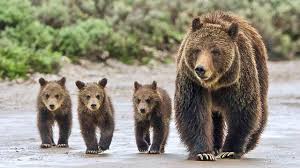
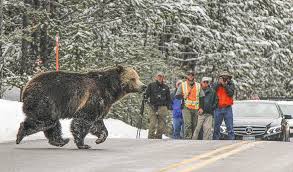
The practical impact will be that people who shoot, kill, and maim animals for bloodthirsty sport will be able to go out and slaughter this endangered wildlife.
There is no humane reason to allow the murder of these grizzlies which have roamed the earth for hundreds, if not thousands, of years.
The Senators are facilitating murder. Shame on them all.
The Missoulian 9.8.2020
U.S. Sen. Steve Daines has co-sponsored a bill to remove Endangered Species Act protection from grizzly bears in the Greater Yellowstone Ecosystem and prevent any court challenge. The bill gets its first hearing before the Senate Environment and Public Works Committee on Wednesday morning.
The bill hearing comes two days before Montana’s Grizzly Bear Advisory Council delivers its report to the state Environmental Quality Council with recommendations for grizzly management. One member of that council, Stoltze Land and Lumber President Chuck Roady, will testify on Wednesday in favor of the bill.
However, another council member, Nick Gevock of the Montana Wildlife Federation, said his organization objected to the bill. “This is a top-down approach, and we don’t need this,” Gevock said on Tuesday. “States need to adopt solid plans that are sound scientifically and legally. They had them, and then they changed them in 2016 as the delisting came down. They were told the plans were deficient by the Fish and Wildlife Service staff, and they went ahead anyway.”
“The key is we had solid conservation plans that ensured we’d have wolves on the landscape,” Gevock said. “The courts said the state-based plans are not adequate. Wyoming wanted the ability to potentially kill hundreds of bears. We need to go back and redo our plans.”
Fellow Republican Sen. Mike Enzi of Wyoming authored the 80-word Grizzly Bear Management Act of 2019, which would reissue the Department of Interior’s 2017 delisting rule for Greater Yellowstone grizzlies “without regard to any other provision of statute or regulation that applies to the issuance of such rule. Such reissuance (including this section) shall not be subject to judicial review.” Rep. Liz Cheney, R-Wyoming, authored an identical companion bill in the House of Representatives. The hearing can be viewed on video at 8 a.m. Mountain Time on Wednesday.
That delisting rule was rejected by both a Missoula U.S. District Court judge and the U.S. Ninth Circuit Court of Appeals due to problems with the state grizzly management plans and failure to use best available science. Both courts ordered the states and the U.S. Fish and Wildlife Service to redo their plans.
Between 700 and 800 grizzly bears inhabit the 9,209-square-mile Greater Yellowstone Ecosystem and recovery area including Yellowstone National Park and parts of Montana, Wyoming and Idaho. It is one of six recovery areas in the Lower 48 states where grizzly bears have had ESA protection as a threatened species since 1975. The U.S. Fish and Wildlife Service, which oversees grizzly recovery, has failed twice to delist those grizzlies in 2007 and 2017.
Another approximately 1,000 grizzly bears roam the Northern Continental Divide Ecosystem and recovery area, which covers about 8,900 square miles along the spine of Montana’s Rocky Mountains from the Canadian border south almost to Missoula and Helena. Those bears are considered a distinct population segment from the GYE bears and other recovery areas, and would not be affected by a GYE delisting.
“The science has long proven that the grizzly bear population in the Greater Yellowstone Ecosystem has fully recovered,” Daines said on Tuesday. “Delisting the grizzly bear is in the best interest of our communities, public safety, the ecosystem, wildlife, and the grizzly bear itself. Montana has proven they can conserve and manage the species and it’s time to return management to the state.”
The court rulings against the 2017 delisting rule particularly faulted the three state wildlife agencies for rejecting FWS advice about proper formulas for estimating grizzly populations. The rulings also questioned how removing protections from one recovery area might affect populations in other areas, several of which have few or no bears and depend on the more productive areas for recruitment.
The bill’s blocking of judicial review is similar to a provision which U.S. Sen. Jon Tester, D-Montana, used to delist gray wolves in Montana, Idaho and Wyoming in 2011. The Montana Wildlife Federation supported that delisting because Montana had a strong management plan for wolves in place.
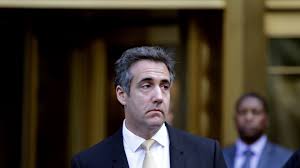
Michael Cohen is a convicted perjurer and what he writes about Trump needs to be taken skeptically.
Cohen was Trump’s “fixer” and enforcer. Before his fall was well regarded by his boss.
His conviction for perjury was the result of lying to Congress to protect Trump.
Trump didn’t care. Cohen’s demise is yet another example of Trump jettisoning people when they are no longer useful.
Even if only 50 percent of what Cohen writes is true in his forthcoming book, the indictment of this horrific man is just another reason to send him packing in 57 days.
Vanity Fair – The Hive 9.6.2020
Early glimpses of Disloyal, the forthcoming memoir by Donald Trump’s former attorney and personal fixer Michael Cohen, feature new allegations of the president’s blunt racism and deep admiration of Vladimir Putin. Describing his former boss as “a cheat, a liar, a fraud, a bully, a racist, a predator, a con man,” Cohen—a convicted felon who has lied to Congress—alleges Trump is “guilty of the same crimes” that landed him in federal prison, a three-year sentence he is still serving.
As the Associated Press reported, the White House has capitalized on Cohen’s lack of credibility in denying the claims. “He readily admits to lying routinely but expects people to believe him now so that he can make money from book sales,” White House spokesman Brian Morgenstern said in a statement, calling the memoir “fan fiction.”
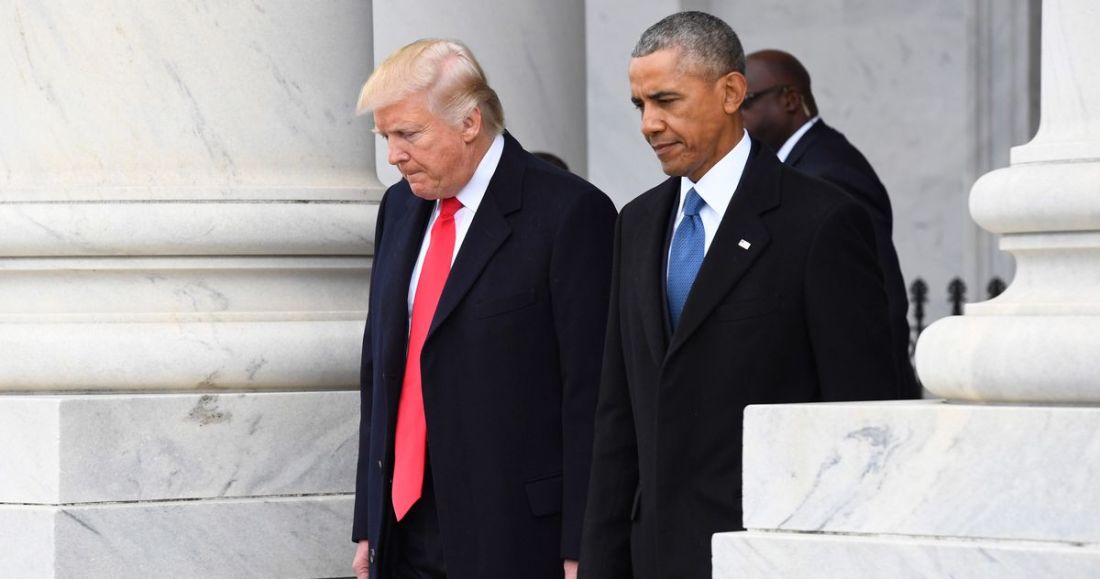
In the book, Cohen paints Trump’s “hatred and contempt” of Barack Obama as a full-fledged obsession, beginning long before his own 2016 presidential bid, according to CNN. Noting Trump’s “low opinion of all Black folks,” Cohen recalls him ranting after Obama’s victory in 2008: “Tell me one country run by a black person that isn’t a s—hole. They are all complete f—ing toilets.”
When South African President Nelson Mandela died in 2013, Trump allegedly said, “Mandela fucked the whole country up. Now it’s a shithole. Fuck Mandela. He was no leader.” (CNN also notes Trump belittled and “fired” an actor playing Obama in a video, which was apparently supposed to air during the 2012 Republican National Convention.)
According to Cohen, per the Washington Post, Trump claimed Obama only got into Columbia University and Harvard Law School because of “fucking affirmative action.” Cohen said that Trump—who, of course, helped fuel the racist birther crusade against Obama—privately described his predecessor as a “Manchurian candidate.” Also, during the 2016 campaign, Trump allegedly told Cohen, “I will never get the Hispanic vote. Like the Blacks, they’re too stupid to vote for Trump. They’re not my people.”
Michael Cohen – convicted Trump “fixer”
Trump was allegedly enamored by Putin’s all-encompassing power, Cohen writes. In describing Trump’s sycophantic praise of Putin, Cohen said Trump admired the Russian president because he was able “to take over an entire nation and run it like it was his personal company—like the Trump Organization, in fact.” Cohen also argues that Trump, who himself expected to lose the 2016 race, cozied up to Putin with a real estate development project in mind, seeing the Russian president as a way to a proposed Trump Tower project in Moscow. “The whole idea of patriotism and treason became irrelevant in his mind,” Cohen writes. “Trump was using the campaign to make money for himself: of course he was.”
All those cosmetics which guys and gals apply to improve their looks are not much use during the mask wearing time of Covid-19.
The beauty industry, along with many sectors of the global economy, is struggling.
Could be the natural look, sans all those chemical laden cosmetics, is the new look.
Wall Street Journal 9.2.2020
The coronavirus pandemic is changing the face of the makeup business, but sales are expected to bounce back once there is a vaccine.
“The pandemic has given women permission to wear less makeup,” said Stephanie Wissink, equity analyst at Jefferies.
In the past, women typically continued to buy small items such as lipstick during an economic downturn. That was even when they couldn’t afford far more expensive luxuries such as vacations. In the industry, this is known as the “lipstick index.” Masks appear to have shifted that behavior.
“The lipstick index has been substituted by the moisturizer index,” Fabrizio Freda, chief executive of Estée Lauder, said on the company’s earnings call.
With no clear end date to coronavirus restrictions in sight, makeup sales are likely to remain depressed and will continue to weigh on the results of beauty companies.
Last week, Ulta Beauty Inc. ULTA 1.04% reported that makeup sales, which accounts for about half of the retailer’s revenue, are still below pre-pandemic levels. It declined to 43% of the retailer’s sales in its fiscal second quarter, down 4 percentage points from last year. Despite weak makeup sales, the company posted better-than-expected profit, as consumers made fewer trips to the store but spent more when they shopped. Ulta said it earned 73 cents a share on sales of $1.2 billion, down 28% from a year ago.
Makeup sales were already softening for about the past two years partly because of some consumers’ increasing preference for a more natural look. According to research firm Mintel, U.S. retail sales of color cosmetics are projected to be down 10.6% in 2020.
A lack of blockbuster makeup trends—such as contouring, which helped boost industry sales about five years ago—hasn’t given consumers much to get excited about. Now, fewer social occasions, remote work and increased demands for women with children are further curbing interest in products.
On its recent fiscal fourth-quarter earnings call, beauty giant Estée Lauder Cos. also pointed to weaker makeup sales. Estée’s makeup sales fell 61%, because of the impact of Covid-19 on consumer preferences, the company reported.
Ulta’s stock has been volatile. Shares sank to $128.52 on March 18 but rebounded to $252.08 on June 5. On Monday, Ulta shares closed down 2% to $232.18.
Estée Lauder shares sank to $144.38 on March 23 but the stock’s rebound has generally been steady since mid-May. Shares closed Monday down 0.54% to $221.72.
For both stocks, and other beauty companies such as Coty Inc., skin care has been a bright spot. Some consumers have used having more time at home to develop skin-care regimens using face creams, lotions and serums.
Burgeoning online sales have also been a growth driver for many beauty companies. Ulta said e-commerce sales soared more than 200% in its fiscal second quarter. The use of technology that enables consumers to virtually “try on” makeup or take makeup classes is also helping these companies stay engaged with consumers online.
Demand for makeup for the coming holiday season may be soft if social distancing curtails in-person parties and consumers’ spending is reduced. In addition, a generally downbeat outlook for travel may continue to dampen makeup sales at airport duty-free stops for the rest of the year, some analysts say.
The hope is that much of this may abate once the pandemic ends. Certain shifts caused by the pandemic are likely to remain, however, especially if changes such as working from home are permanent.
Consumers’ increased appetite for skin-care products is likely to still grow, says Erinn Murphy, managing director at Piper Sandler & Co. Curbside pick up, where customers buy items online and pick them up outside the store, is poised to continue, too.
Still, this sector relies on touch. So long as health and safety concerns persist, consumers may be less likely to try new brands and experiment with new products, analysts say. Without a vaccine, social occasions and fresh innovation, makeup sales are likely to stay depressed.
Never mind it is Spare the Air Day, fires are raging and the Pandemic shows no sign of abating. It’s easy to forget that America leads the planet in Covid-19 fatalities.
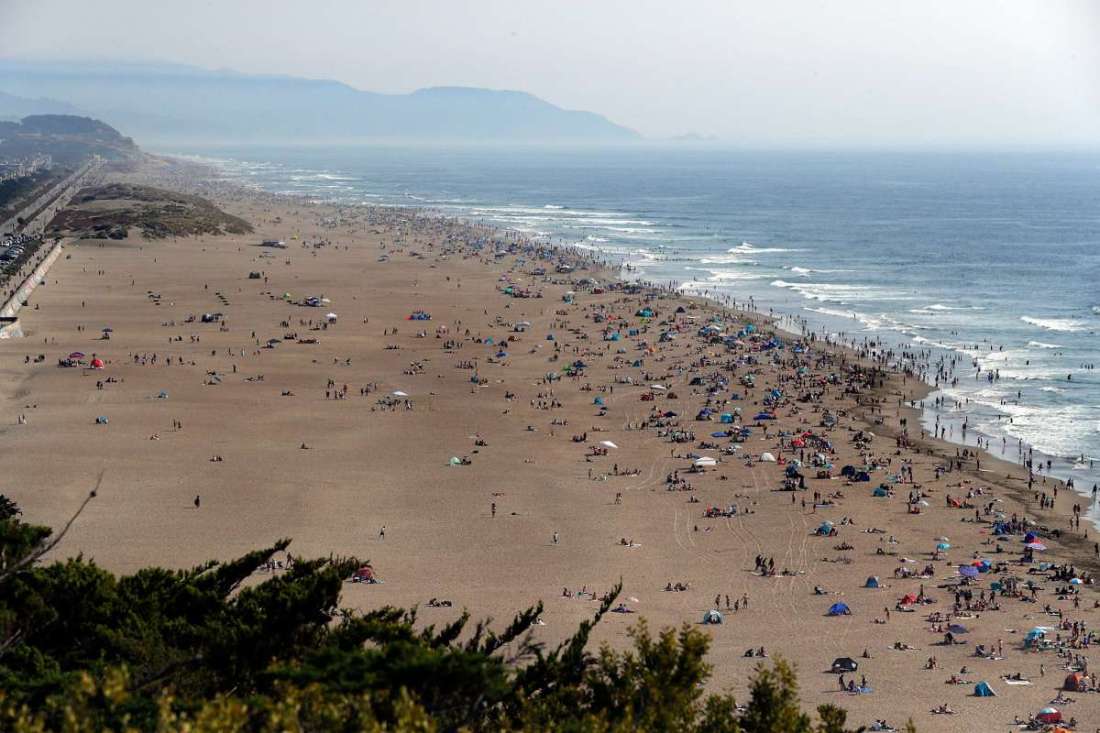
Soon we will reach the 200,000 death mark. So, what. It’s time to head for the seashore as the packed San Francisco Ocean Beach photo above illustrates.
For Americans it’s only “What about me?” It’s a holiday weekend. So hop in your car. Drive the fossil fuel burning vehicles, totally blow off social distancing and party like there’s no ramifications for this absurd behavior.
No wonder a buffoon like Trump is President of the United States. People get what they deserve.
San Francisco Chronicle 9.6.2020
Even as much of the state sizzled in triple-digit temperatures Sunday and air conditioners strained the power grid to the max, fears of rolling blackouts again did not come to pass as people saved energy.
With Ocean Beach closed off, motorists attempted to flee the acrid smoke by heading to Marin beaches. But northbound lanes of the Golden Gate Bridge were stopped dead, and the route to the Marin Headlands was backed up to the toll plaza. In Corte Madera, a sign on Highway 101 warned motorists that access routes to Stinson Beach were closed.
Napa and Sonoma counties also face the prospect of a different type of weather-related outage: fire-prevention shut-offs starting late Monday evening and lasting well into Wednesday. A red flag warning will be in effect during that time period, and Pacific Gas and Electric Co. wants to prevent wind-related damage to its equipment from starting another wildfire.
Those outages may affect about 17,000 people in Napa County — in Calistoga, St. Helena and unincorporated areas — and 600 people in Sonoma County —in Cloverdale, Rohnert Park and unincorporated areas.
On Sunday, heat records for Sept. 6 had fallen throughout the Bay Area, including marks of 100 in downtown San Francisco, well past the previous record of 92 degrees, established on Sept. 6, 1904, 102 in downtown Oakland and 110 in Napa. Also showing record heat were Livermore, Richmond, Kentfield, Redwood City, Half Moon Bay, San Jose and Gilroy.
Monday could see Livermore reach 110 degrees and Napa hit 103 degrees.
But late in the day, the heat will start to break as strong offshore winds sweep through. The National Weather Service has issued a red flag warning starting at 10 p.m. Monday for the North Bay mountains, East Bay hills and Santa Cruz Mountains.
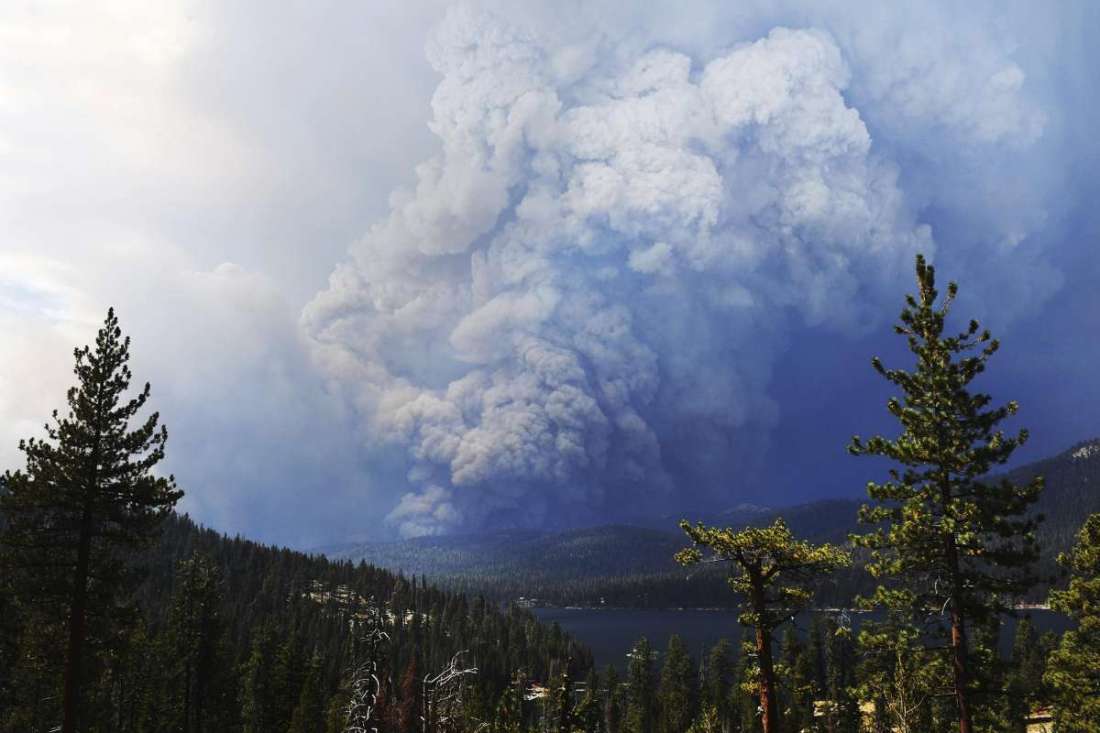
The Creek Fire burns near Huntington Lake on Saturday. The blaze has contributed to concerns over the state’s power grid by shutting down a Madera County power station.
“In the next few days we will deal with stronger winds pushing through, as the high pressure starts pushing out and low pressure starts pushing in,” said weather service meteorologist Brayden Murdock. “That gradient between the high and the low could cause winds of up to 50 miles per hour in the highest elevations.”
Normally the breakdown of the high-pressure winds brings with it the cooling onshore flow, but the fog will not show itself until midweek at the earliest, Murdock said.
“Unfortunately there is not a lot of humidity recovery in it, so overnight temperatures will remain warm,” Murdock said. “We will be dealing with those dry conditions on top of the winds until Wednesday.”
San Francisco was not quite as hot as the Labor Day weekend blast furnace of 2017, but the air quality was far worse.
Sunday afternoon was so hazy that from Golden Gate Heights in the Outer Sunset, you could not see the coastline 30 blocks west. The normal refuge of Ocean Beach was complicated when Mayor London Breed ordered parking lots closed after a gathering of Burning Man devotees Saturday.
The American government continues to show its total disregard for the rule of law.
The latest outrage propagated by the American administration is to sanction the chief prosecutor of the International Criminal Court.
Why? In her role as prosecutor Fatou Bensouda, according to her Gambian countryman Modou Joof, considered prosecuting “US soldiers who committed unspeakable atrocities against civilians in Afghanistan.”
Excerpted from Deutsche Welle 9.4.2020
In 2017, ICC Chief Prosecutor FatouBensouda advised the court to consider seeking charges for human rights abuses committed during the war in Afghanistan, particularly rapes and torture alledgedly committed by US troops and the Central Intelligence Agency.
Afghanistan became a party to the ICC in 2003.
Germany has added its voice to criticism of US sanctions against two top officials at the International Criminal Court (ICC).
German Foreign Minister Heiko Maas on Friday described the sanctions, which include freezing the US assets of chief prosecutor Fatou Bensouda and one of her aides, as “a serious mistake.”
His comments follow calls from France and EU on Thursday for Washington to withdraw the sanctions.
French Foreign Minister Jean-Yves Le Drian said in a statement that the US sanctions were “a grave attack against the court and beyond that a questioning of multi-lateralism and the independence of the judiciary. France calls on the United States to withdraw the announced measures.”
Josep Borrell, the EU’s foreign policy chief, said the US sanctions were “unacceptable” and “unprecedented.”
“The International Criminal Court plays an essential role in delivering justice to the victims of some of world’s most horrific crimes. Its independence and impartiality are crucial characteristics of the court’s work, which are fundamental for the legitimacy of its judgment,” Borrell said in a statement urging the US to reverse course.
Speaking on Wednesday, Pompeo said the US would not tolerate what he called the ICC’s “illegitimate attempts to subject Americans to its jurisdiction.”
In a 2017 interview with DW, Bensouda, who has headed the ICC since 2012, emphasized that her decisions are driven by the law.
“I am a prosecutor, I gather my evidence and I take it to the judges, independent judges who have also been elected by the Assembly of State Parties of the ICC. If they do not agree with my evidence, they would throw it out,” she told DW.
Bensouda also stressed in the 2017 DW interview that the tribunal had “jurisdiction over war crimes, crimes against humanity and genocide when it happens on the territory of a state party.”
Who is Fatou Bensouda?
The Banjul-born lawyer served as The Gambia’s justice minister from 1998-2000 under president Yahya Jammeh. Before that, she was state counsel and deputy director of public prosecutions to Jammeh’s predecessor, Dawda Jawara.
Jammeh dismissed her over her work in prosecuting rights abuses. At the time, human rights groups credited Bensouda for the speedy prosecution of crimes committed against women and children.
Bensouda went to the ICC in 2004 when she was elected as deputy prosecutor — a position she held until 2012 when she succeeded the Argentine Luis Moreno Ocampo as the ICC’s chief prosecutor.
She also presided over cases against the former Ivorian president Laurent Gbagbo and those of Kenyan President Uhuru Kenyatta and his deputy William Ruto. The Kenyan leader was charged with crimes against humanity over a wave of post-election violence in 2007 and 2008. The charges were later dropped due to a lack of evidence.
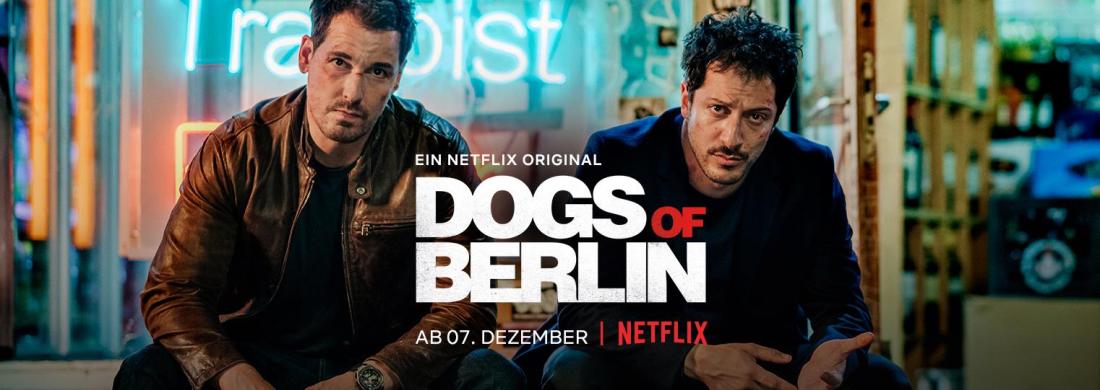
Continuing to expand my effort to stay away from all things Trump and explore culture outside America in 2020 I have begun watching the 10 part German series “Dogs of Berlin” available on Netflix.
It’s a multi-cultural police drama which delves into the societal conflicts impacting German life. “Dogs of Berlin” is fast paced, well acted and continuously entertaining.
You could say that “Dogs of Berlin” is the 21st century version of “Babylon Berlin,” the multi-season drama, which explores life in the underbelly of the Weimar Republic in pre-Nazi Germany.
Excerpted from Deutsche Welle 12.6.2018
Only the second German-language TV series produced on Netflix’s global streaming network after the hit supernatural thriller Dark(though historical detective drama Babylon Berlin also played on the service), Dogs of Berlin is a rollicking and often brutal drama series with a gangsta rap soundtrack that dives deep into the German capital’s criminal underbelly — and its social heterogeneity.
Contrasting milieus
Dogs of Berlin‘s labyrinthine plot revolves around two unconventional cops, Erol Birkan and Kurt Grimmer, who investigate the murder of German-Turkish football star Orkan Erdem. There’s a long list of potential suspects: Neo-Nazis from the former East Berlin district of Marzahn; the Turkish family clan related to the victim; some crazy football fans; or the illegal sports betting mafia. A far-reaching conspiracy might even lead to the capital’s highest political office.
To uncover the truth, the two very different investigators are reluctantly brought together for a mission that will reveal much about their own contradictory pasts.
Dogs of Berlin director and mastermind Christian Alvart describes Kurt Grimmer (Felix Kramer, who appeared in Netflix’s Dark) as the “morally questionable policeman who used to be a neo-Nazi and escaped the scene.”
By contrast, Erol Birkan (played by Fahri Yardım, best-known for his turn in Almanya: Welcome to Germany) is “a super liberal, Turkish, gay policeman, the upright hero so to speak, principled and with good character.”
Bad cop, good cop: Kurt Grimmer (Felix Kramer) and Erol Birkan (Fahri Yardim)
“These contradictions and gray areas are for me a central point of this series,” said Alvert, who is also the series scriptwriter and originally conceived with the conflicted Kurt Grimmer character for a novel he was writing.
Contemporary German storytelling
“I was simply convinced that we have to do something like this in this country,” he said.
Katharina Schüttler plays Kurt Grimmer’s wife Paula, a home accessories shop owner who also gets caught up in the underworld intrigue
So while Dogs of Berlin was the first idea developed by Alvart and his Berlin-based production company, Syrreal Entertainment, he decided not to go down the conventional German TV route.
As a result, his idea for an original German production is only the second to be produced by Netflix after Dark — though more are rumored to be in the works.
“Dogs of Berlin tells a compelling and modern German story that dives into the Berlin underworld,” said Erik Barmack. “We are thrilled that he will realize our second Netflix original that will be completely written, produced and shot in Germany.”
Berlin as a microcosm
Having lived in the German capital since 1996, Alvert has always wanted to make a series that embodied the city’s manifold worlds.
“In Berlin you sooner or later realize that this is not just a city, but actually many very different cities in one,” he said. “It has a massive impact on your life, whether you are born as Mahmud in Neukölln, Siegfried in Zehlendorf or Tom in Marzahn.”
Dog of Berlin seeks to cross through these different Berlins, a city the director believes is a microcosm of the broader world. “The city is basically another main character in this series,” said Alvert.
The series’ gangsta soundtrack adds to the underworld atmosphere.
In doing so, the series also aims to ask some bigger questions. Can one escape from the environment into which one was born? Are we dogs or masters? By exploring the diverse milieus of the German capital where cultures and lifestyles constantly collide, the series, shot exclusively in Berlin and environs, inspires the viewer to find answers.
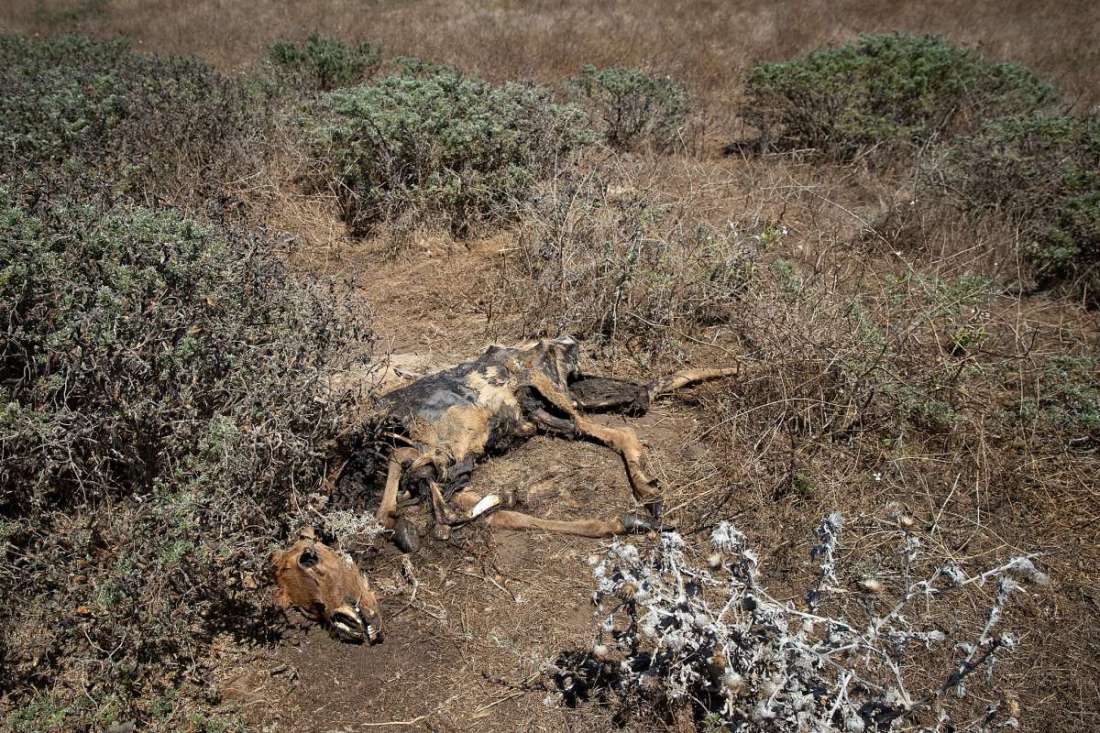
An environmental disaster is in danger of decimating the Tule Elk in Marin County.
At risk are the hundreds of Tule Elk who are in danger of death through dehyrdation. Pt. Reyes National Seashore is closed to the public because of fire danger and drought caused by the recent wildfires.
Dedicated and determined citizens have taken it upon themselves to ensure that the Tule Elk have enough water to survive in these dangerous times.
Excerpted from San Francisco Chronicle 9.1.2020
The tule elk, whose magnificent antlered presence is one reason about 2.5 million people visit Point Reyes National Seashore each year, may be at risk of dying from dehydration, say wildlife advocates who fear a repeat of the drought conditions that wiped out nearly half of a herd five years ago.
A vigilante group of 12 elk activists carried 150 gallons of drinking water into the Tomales Point Tule Elk Reserve Sunday night in defiance of National Park Service closure orders. Point Reyes has been shuttered since Aug. 18 as the lightening-sparked Woodward Fire smolders on the park’s southern shore.
The activists used 40-pound jugs carried by hand from a truck to fill two steel troughs, said Jack Gescheidt, who participated in the clandestine nighttime water drop.
“We are doing this because we care,” Gescheidt said Monday, “This is the National Park Service’s job.”
Park administrators condemned the unauthorized entry and water drop.
“Taking action without permits and permissions from the National Park Service and while the park is entirely closed to all public access due to the Woodward Fire is unlawful,” park officials said in a statement Tuesday morning.
The clash over the elks’ access to drinking water is the latest installment in a long-standing battle over the management of the peninsula’s tule elk herds.
The fight has pitted environmentalists, cattle ranchers and the Park Service against one another. Conservationists would have the cattle ranches kicked off the peninsula; the ranchers, who lease their fields from the park, would rather see the elk moved elsewhere — or eliminated.
In sustaining populations of both elk and cows, the park has sought to balance two competing priorities: native wildlife conservation and sustainable farming. The cattle ranches go back generations to the years after the Gold Rush, when hunters cleared the peninsula of elk to make way for grazing pastures. Balancing present-day environmental and cultural considerations is no easy task, said Christine Beekman, the park’s outreach coordinator.
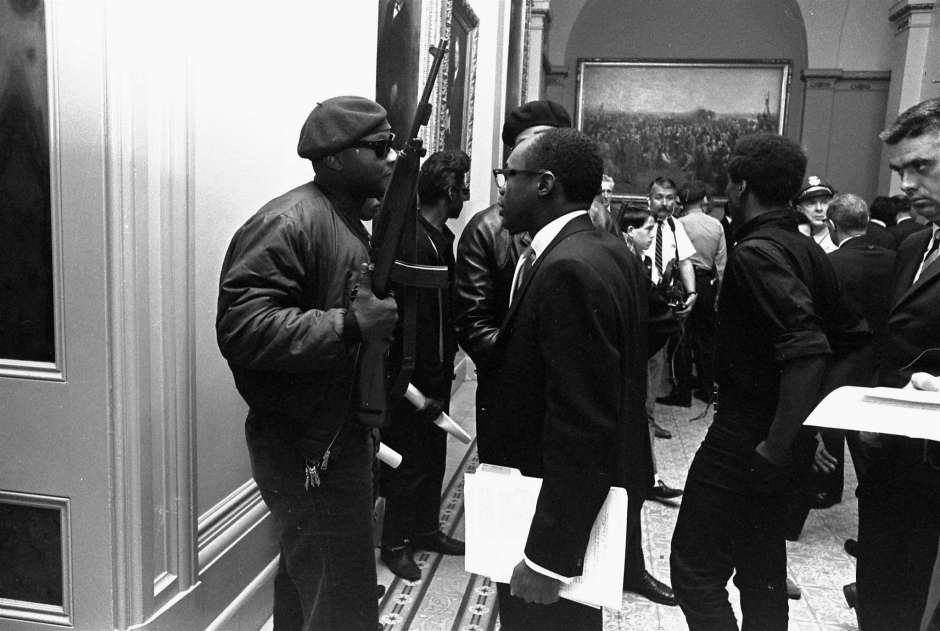
I was in the California State Assembly chambers on May 3, 1967 when a posse of Black Panthers marched into the legislature brandishing their weapons.
The magazines were not loaded.
The Panthers were protesting the brutality inflicted upon them by the Oakland cops. The Panthers wanted the legislature to know they had to be able to defend themselves.
The general public did not view the situation in a similiar manner. Following the Panthers incursion into the legislative chamber law enforcement cracked down viciously on the Black Panthers.
My reason for being there was a journalism assignment for the College of Marin Times. I went to Sacramento with the political reporter for the Independent Journal, Wat Tatkeshita and accompanied him on his beat.
By coincidence I was present at a pivotal moment in the history of the up to the time generally unknown outside the Bay Area Black Panther Party.
Back in Marin I wrote a story which is today somewhere out in news world cyberspace.
Photo above – A young Assemblyman Willie Brown parleying with a Panther.
San Francisco Chronicle Warren Olney
In 1966, it was legal to openly carry loaded firearms in California — a legacy of the Gold Rush. In Jackson, a Sierra foothills town that retained that era’s flavor, one state senator was often seen wearing a holstered pistol.
But the Black Panther Party, founded the year before, 1966, in Oakland, was engaged in perfectly legal, if unorthodox, lobbying. Its leaders, including Seale and Huey Newton, openly carried loaded guns to protect black people from racist police. In response, Oakland’s Republican Assemblyman Don Mulford had proposed a measure abolishing open carry in California. He called it the “Panther Bill.”
But a year later, the Legislature abolished open carry. It took a moment of racial dramatics at the state Capitol in Sacramento, where I was a reporter.
One May 3, in 1967, Gov. Ronald Reagan was scheduled for lunch with eighth-grade schoolkids on the Capitol grounds. He’d been elected just a few months before, and the presence of a Hollywood-star-turned politician had increased the size of the press corps.
As the new team for KRON-TV in San Francisco, my cameraman and I were jostling for space on the steps of the staircase that descends to 10th Street on the Capitol’s west side. Veteran newspaper reporters were grumbling about the trivial “picture stories” they were now being required to cover.
About two dozen African American men and women, some wearing leather jackets and black berets, started toward the Capitol carrying rifles, shotguns and pistols. They were not holding the weapons in a threatening manner; they were pointing them in the air as they marched into the building. The news horde — with cameras rolling — stumbled backward ahead of them, up the carpeted inner stairs and into the chamber of the Assembly, where a session was under way.
When the armed group entered the chamber, Democrats and Republicans dived under their desks as the president pro tem called for order. Meanwhile, one of the armed men began a harangue about “gun control.” Speaking to the TV cameras, he denounced “the racist California Legislature” for “keeping the black people disarmed and powerless.”
After about five minutes, three State Capitol Police officers showed up at the back of the chamber, and asked the demonstrators to hand over their guns. In a startling gesture, the little army complied.
The officers then led the way to another part of the building. The news crowd followed along, shouting questions: “Who are you? What are you here for?”
But the armed demonstrators had made their point; they weren’t talking any more. The Capitol Police determined that the guns were not loaded. (Some reporters’ accounts said the guns were brought in loaded, and later unloaded inside the Capitol, but I don’t remember it that way). Even if they had been, that was legal under state law, so long as they weren’t pointed at anyone. The demonstrators took their weapons back to the cars on 10th Street, and drove away.
They were gone … but just for the moment.
The Black Panther Party for Self-Defense’s 1967 Sacramento appearance was reported nationally as an “invasion” by newspapers and TV (KRON included). Bobby Seale, who read the statement indicting the Legislature as “racist,” would later run for mayor of Oakland.
As it turned out, the Panthers’ opposition was a dismal failure. The “Panther Bill” — gun control that it was — had the support of the National Rifle Association of the day. The 120-member Legislature (with six blacks, three women, and all the rest white men) overwhelmingly passed the measure. Reagan signed it into law saying, “There’s no reason why on the street today a citizen should be carrying loaded weapons.”
Today, the NRA advocates guns in all kinds of public places. But open carry is still illegal in California. Now as then, the real issue is not the guns being carried but, rather, who does the carrying.
Big banks are joining the ranks of those being severely impacted by the Pandemic.
The pain is a lot more than just the masses who are being denied help by a selfish band of Republicans in Congress. The hurt is now moving into corporate America.
Excerpted from Wall Street Journal 8.30.2020
Profits are down. Margins are low. Banks are bracing for a wave of soured loans. On the other hand, they’re raking in fees and deposits.
Profits
Net income for the banking industry as a whole plunged 70% from a year before to $18.78 billion, according to the FDIC report. It was up slightly from the first quarter, but both periods represent the lowest quarterly income since early 2010. The profits are skewed by the big four banks, JPMorgan Chase & Co., Bank of America Corp., Citigroup Inc. and Wells Fargo & Co., which make up roughly half the drop. The FDIC said the 4,624 community banks in its data actually posted an aggregate increase in net income of $202.5 million.
The coronavirus threw the U.S. banking system into extreme gyrations.
The normally unexciting quarterly industry report from the Federal Deposit Insurance Corp., released last week, showed in stark detail how the pandemic is ensnaring banks big and small.
Profits tumbled as the banks put aside billions for loan losses. Margins hit an all-time low. Fee income hit a record high. Customers flooded banks with more deposits than they had ever seen, so much so that the nation’s safety net for bank failures fell below a legal limit.
Banks, a gauge for the broader economy, have signaled they anticipate a longer, deeper recession than they first expected in the spring. Though much of the economy has held up relatively well, the banks say government stimulus and other temporary reprieves have likely delayed the pain, not overcome it. Many lenders are bracing for a wave of defaults.
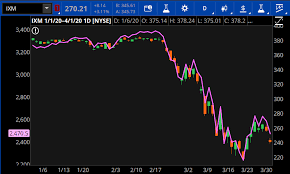
The turmoil has made it hard to see how banks will grow profits, one reason shares have failed to rally along with the market.
“The banks have been flooded by cash and it’s hard to know what to do with it,” said Brian Foran, an analyst at Autonomous Research. “That narrative is not an attractive investment story.”
Provisions
Profits were sunk by increased credit loss provisions, money the banks stash aside to deal with potential future loan trouble. The banks parked away $62 billion in the second quarter, on top of $53 billion in the first quarter.
Margins
Banks were whacked with the lowest lending margin in the history of the FDIC’s data, which goes back to 1984. The average net interest margin, the difference between what the banks make on loans and pay out on deposits, shrank to 2.81% compared with 3.39% a year ago. The Federal Reserve slashed interest rates to near zero in March, and emergency cuts hit income faster than the banks could reduce their deposit costs.
Fee income
With the Fed expected to keep interest rates low for the foreseeable future, banks will need to increase fees or find other ways to replace some of that income. In the second quarter, revenue from non-lending operations increased 7% for the industry, hitting a new record. It was boosted by investment banking, mortgage fees and by smaller banks selling loans.
Deposits
For the second quarter in a row, deposits increased by more than $1 trillion. There has been $2.4 trillion added in six months, five times any other six-month period, and roughly equal to the deposits of the entire industry in 1984. The big four banks have taken in $900 billion of the year’s gains.
The surge was so quick that the FDIC insurance fund fell to just 1.3% of all deposits, breaching its legal requirement of holding enough to cover 1.35% of all deposits.
The agency expects the deposits to normalize and said the fund would self-correct.
When the Wall Street Journal is trumpeting the damage to the economy the Republicans are on notice.
Do your job and pass another Stimulus package NOW which includes an adequate weekly payout for displaced and unemployed American workers.
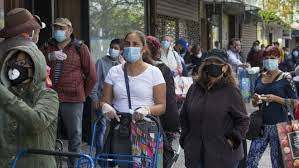
It’s appalling that Congress, led by Republicans in the Senate, continue to stiff working class Americans who are having trouble paying rent and putting food on the table.
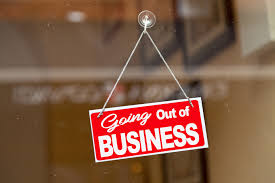
The beacon of capitalism, The Wall Street Journal, puts the issue very graphically on page one in its weekend edition.
Excerpted from the Wall Street Journal 8.29.2020
As companies brace for years of pandemic-related disruption, thousands of furloughed workers are told they won’t be coming back
A new wave of layoffs is washing over the U.S. as several big companies reassess staffing plans and settle in for a long period of uncertainty.
The outlook reflects an acceptance by corporate executives that they will have to contend with the pandemic and its economic fallout for a longer period than they had hoped. Some CEOs and other executives suggest more pain is ahead, said David Rubenstein, co-executive chairman of Carlyle Group, CG -2.07% a private-equity firm with around $220 billion in assets under management.
“Privately, some of them may hint that they probably won’t need as many workers as they once thought,” Mr. Rubenstein said. “They’ll have to reinvent their businesses in ways that they hadn’t done before.”
MGM Resorts InternationalMGM 4.60% and Stanley Black & Decker Inc. SWK 3.79% recently told some employees furloughed at the outset of the coronavirus pandemic that they wouldn’t be put back on the payroll. And companies bringing back the majority of furloughed workers, including Yelp Inc. YELP 1.91% and Cheesecake Factory Inc., CAKE 8.34% are making reductions as they adjust to the new reality that many coronavirus-related closures won’t be resolved this fall.
The latest layoffs come as there have been glimmers of an economic recovery. Many employers have rehired some workers after cutting jobs this spring, pushing the U.S. unemployment rate down to 10.2% in July after it nearly touched 15% in April, according to federal data. Some salaried workers and executives are seeing their pandemic pay cuts restored. That has led some to theorize that the economy is increasingly proceeding on two tracks, as companies modifying operations or shutting down entire divisions determine that they need fewer people, especially lower-income workers.
A survey of human-resources employees released by Randstad RiseSmart found nearly half of U.S. employers that furloughed or laid off staff because of Covid-19 are considering additional workplace cuts in the next 12 months.
New applications for unemployment benefits, a proxy for layoffs, have hovered around one million a week for much of the summer. A drop in jobless claims one week tended to be snuffed out within a few weeks when claims rose again. Summer unemployment has improved since March, when a peak of about seven million people applied for jobless benefits in one week, but the numbers remain stubbornly high.
Economists say the new layoffs reflect a shift in corporate thinking toward a more protracted crisis.
“Companies that thought they could either cut wages temporarily or cut costs temporarily or hold on are now finding out that the weakness of the pandemic is now longer than they hoped,” said Diane Swonk, chief economist at Grant Thornton.
Following casino shutdowns and furloughs in March, MGM Resorts said it would lay off 18,000 furloughed workers in the U.S. as the global travel slowdown impedes the gambling industry’s recovery. The job cuts, which start Monday, represent about one-fourth of the company’s prepandemic workforce of 68,000 U.S. employees.
American Airlines said that unless it receives more federal aid, it will furlough 17,500 union workers and move forward with 1,500 layoffs in its management ranks this fall. Flight attendants, 8,100 of whom are furloughed, would be the most affected. Airlines agreed not to terminate employees or cut pay rates through the end of September as a condition of taking $25 billion in federal funds.
United Airlines said it would furlough 2,850 pilots, which is 600 more than it had anticipated, as it seeks more federal aid. United has warned that as many as 36,000 of its employees could be eliminated Oct. 1 if the airline doesn’t get more government help. The union that represents United’s pilots called it tragic that the carrier hasn’t provided more options to allow pilots to leave voluntarily. Delta Air Lines Inc. DAL 3.80% said it would let go of 1,941 pilots.
After furloughing or reducing hours for more than 10,000 workers earlier this year, tool maker Stanley Black & Decker said that in October it will permanently lay off 1,000 of them but bring back 9,300 to a full-time schedule. Chief Executive Officer James Loree told investors on a recent call the cuts are part of a $1 billion cost reduction.



















 Lee's Perspective