49ers demolish Vikings’ season with overwhelming ground attack

Let the Minnesota newspaper talk about the San Francisco 49ers overwhelming playoff win made possible by a relentless ground attack.

Next stop. NFC championship game against either Green Bay or Seattle next Sunday afternoon.

Minneapolis Star Tribune  1.11.2020

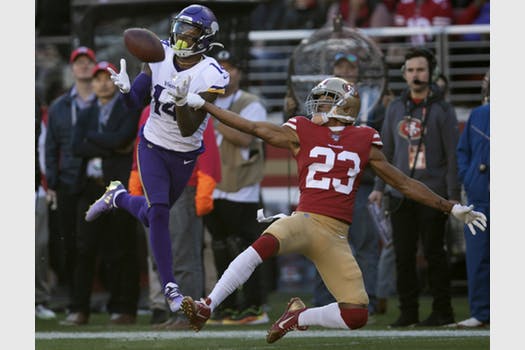
– The Vikings’ season ended at Levi’s Stadium on Saturday, with a defeat so resounding that it dulled the euphoria of a last-second playoff win over the Saints for the second time in three years.

nfl-playoff-ii-1.11.2020.jpg

But where their 38-7 loss to the Eagles in the NFC Championship Game two years ago felt like they’d been felled by a lightning strike, their 27-10 loss to the 49ers in the NFC divisional playoffs on Saturday saw the Vikings pummeled by an opponent that was methodical, unrelenting and, in the end, unquestionably superior.

Were the Vikings drained playing six days after an emotional wild-card win over the Saints (or physically depleted from a grueling season’s worth of games and practices)? Were they simply outclassed by the speed and ferocity of a 49ers defense that had answers for them at practically every turn?

Answering those questions will now be the offseason task of a regime that has reached the playoffs three times in five years — and made its case for stability after beating the 13-3 Saints on the road on Sunday — but as the season ended in San Francisco, what stood out most was perhaps the size of the gap between the Vikings and the team that will host the NFC Championship Game next Sunday.

The Vikings managed only seven first downs, running for just 21 — and no first downs — yards against a defense that beat the Vikings at the point of the attack and used fast linebackers to close off angles. It left Kirk Cousins vulnerable to San Francisco’s pass rush as he worked to convert third-and-longs, and aside from a deep ball that Stefon Diggs turned into a 41-yard touchdown, the quarterback appeared out of phase with his top two receivers at critical moments.

He misfired on a throw near the goal line for Diggs late in the second half, in what turned out to be the Vikings’ last decent chance to tie the game. With the Vikings down 17-10 in the second half, Richard Sherman intercepted a pass that Adam Thielen didn’t appear to be in position to catch.

http://www.startribune.com/vikings-season-ends-with-27-10-loss-to-49ers/566913882/

San Francisco DA Boudin keeps campaign vow. Begins immediate staff overhaul

DA Chesa Boudin vowed during his year long campaign to bring change to the District Attorney’s office. He moved in that direction today dismissing several hold over deputy district attorneys in face to face meetings.

DA Boudin will now move to put in place attorneys whom he feels can best assist him in implementing his vision of restorative justice. The mainstream media with a push from the SFPD and those who oppose his vision will speak loudly in the coming days.

Now is the time for those who worked tirelessly to elect Chesa to stand up again in his behalf.

San Francisco Chronicle 1.10.2020

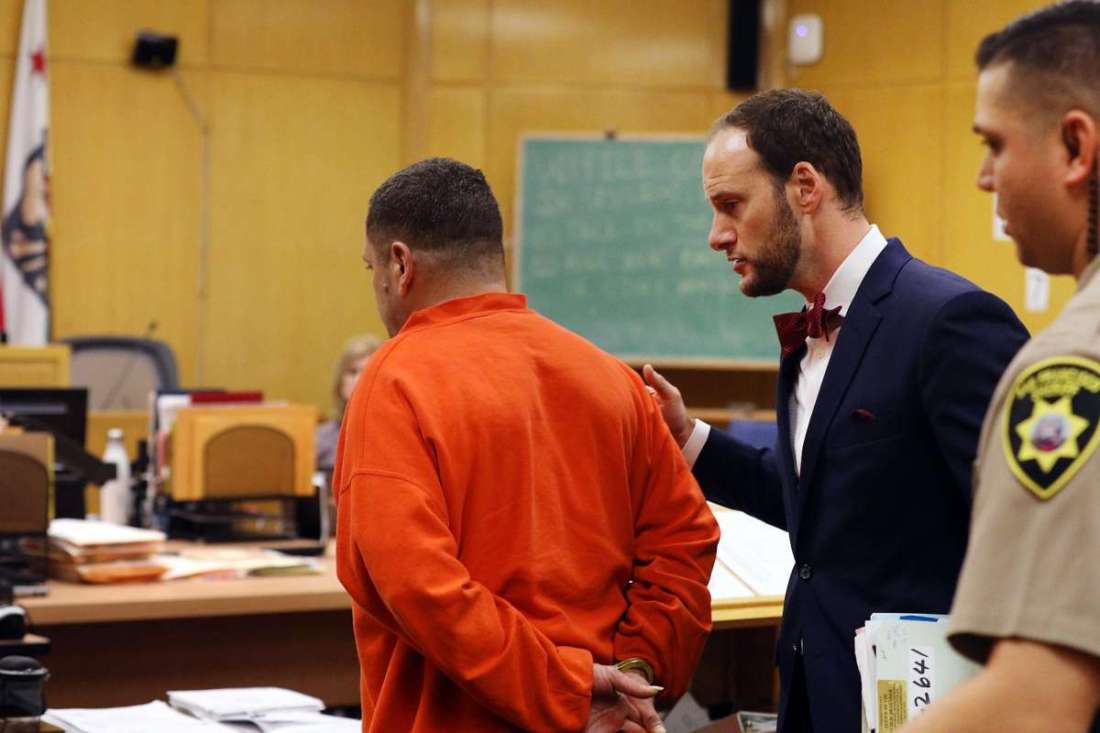
Newly elected San Francisco District Attorney Chesa Boudin fired multiple prosecutors on Friday afternoon as he reshapes the office and begins implementing his progressive vision two days after being sworn in.

At least six attorneys were fired, possibly more, including several managing attorneys in the office’s criminal division.

“I had to make difficult staffing decisions today in order to put in place a management team that will help me accomplish the work I committed to do for San Francisco,” Boudin said in a statement.

Among those fired, according to multiple sources, were Michael Swart, managing attorney of the office’s Homicide Unit, Todd Barrett and Linda Allen, managing attorneys in the General Felonies Unit, Ana Gonzalez, managing attorney in the office’s Gang Unit, Tom Ostly, a trial attorney in the Crime Strategies Unit and Kara Lacey, a felony trial attorney.

Allen prosecuted Jamal Trulove, who was convicted for a 2007 murder and sentenced to 50 years to life. He was later acquitted during a retrial in 2015 and won a $13.1 million settlement from the city after a jury found the officers in the case fabricated evidence and failed to disclose exculpatory evidence.

Boudin brought Trulove in as an advisor during his transition to help create a second look and conviction integrity unit.

Several attorneys in the office spoke to The Chronicle on the condition of anonymity because they were not authorized to speak to reporters. The attorneys described a tense afternoon Friday, in which Boudin called the people he fired into his office one-by-one to deliver the news.

The effect on the morale of the other attorneys, they said, was devastating. Many people in the office, though, were relieved to still have jobs, the sources said.

The move was reminiscent of when Terence Hallinan was elected district attorney in 1995 and promptly fired 14 attorneys — or 10% of the 116 prosecutors in the office at the time— after being sworn in. Currently, there are around 135 prosecutors in the office of roughly 300 employees.

But unlike Hallinan, who delivered three-paragraph letters to the attorneys he axed, Boudin fired nearly all of the attorneys face-to-face. Those who had already left the office for the day, he told over the phone.

All of the prosecutors are “at will” employees and not subject to civil service protections. The city charter allows Boudin to fire them without giving a reason. Some of the fired attorneys, though, said they may pursue legal action.

Some were not surprised by the firings. Boudin ran on a campaign promising to end charging gang enhancements and many observers expected him to disband the Gang Unit, which Gonzalez headed.

Swart is a hard-charging homicide prosecutor known for his brash style in the courtroom. Ostly was an attorney in the Crime Strategies Unit. He was in the middle of prosecuting a multi-million dollar fencing bust announced last month by interim District Attorney Suzy Loftus.

Boudin was sworn in by Mayor London Breed on Wednesday night and delivered a rousing speech to hundreds of his supporters in which he promised to confront racial disparities in the criminal justice system, work to end mass incarceration, and hold police more accountable in cases of brutality.

He was elected in November in a tight race between four candidates. Boudin, a former deputy public defender, ran the furthest to the left, promising to reshape the city’s legal system.

Boudin also promised to focus on violent crime, leaving many in the office questioning why he let go many of his most experienced felony attorneys.

https://www.sfchronicle.com/bayarea/article/New-SF-District-Attorney-fires-multiple-14966620.php

The Catch. ‘Ask for Bud’: What the 49ers ticket market looked like in 1982

The January 10, 1982 playoff game referenced here was arguably the best 49ers game in the team’s history.

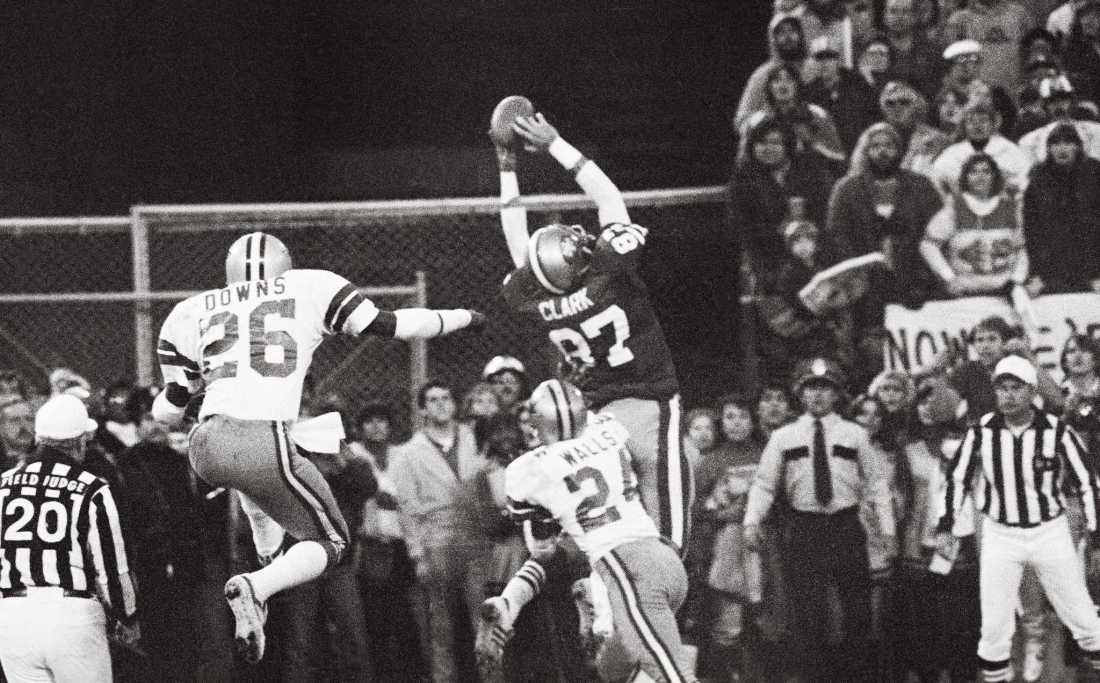
I was there, sitting in Section 28 in the upper deck with a fantastic view of The Catch by Dwight Clark which propelled the Niners to their first ever Super Bowl.

I was hoarse from yelling for the next two days.

San Francisco Chronicle 1.9.2020

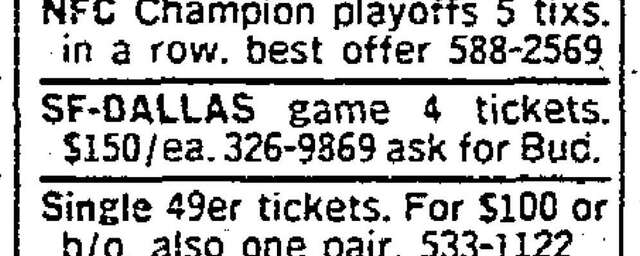
A modern reading of classified ads for 1982 NFC Championship game tickets between the 49ers and Dallas Cowboys proves that every one of the sellers was a loser.

Assuming they weren’t unloading surplus seats, or putting the money directly into 1982 Apple stock, there is no way even a couple hundred dollars per ticket was worth missing out on the 49ers’ 28-27 win in “The Catch” game, arguably the single greatest sporting event in Bay Area history.

But the most striking takeaway, when looking at the old classifieds, is the incredible hassle of ticket transactions in 1982. Say what you want about the effect of screen time on our social skills. At least no one has to make a long-distance call to Larry in Napa to find out what “or best offer” means.

With Saturday’s, Jan. 11, divisional playoff game between the 49ers and Minnesota Vikings, we searched the Chronicle archive to find out how people sold 49ers playoff tickets in the 1980s, before StubHub, the internet and smartphones. The only possible way to explain this to someone under 30 years old is with the classified ads themselves …

A San Francisco Chronicle classified advertisement from Jan. 7, 1982.

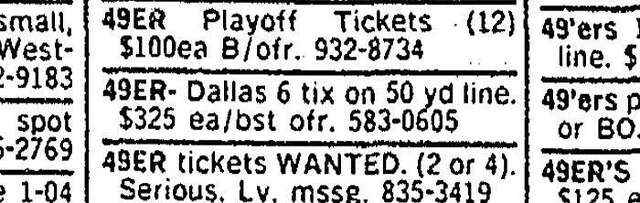
A San Francisco Chronicle classified advertisement from Jan. 7, 1982.

Photo: Chronicle archive

This was always the first step in securing a ticket transfer in 1982: You picked up your landline, dialed seven numbers on your rotary phone (Oakland and Palo Alto were still in the 415 area code!) and asked for Bud.

That started a half-day chain of events that might involve driving 55 miles, meeting in a Mill Valley McDonald’s, somehow realizing you were at the wrong Mill Valley McDonald’s, finally finding Bud and maybe walking away with a ticket for the agreed price.

A San Francisco Chronicle classified advertisement from Jan. 7, 1982.

A San Francisco Chronicle classified advertisement from Jan. 7, 1982.

Photo: Chronicle archive

Looking in three days of San Francisco Chronicle classifieds before the NFC playoff game, $325 was the most expensive ticket. These prices were considered to be insane; the team was just two years past a 2-14 season, when it was difficult to even give away 49ers tickets.

The least-expensive seats we found in the classified ads cost $35, but let’s put an asterisk next to that. Bay Area crime rates were high in 1982, so the reasonable classifieds assumption was that any ticket priced below $75 was being sold by someone who wanted to participate in a kidnapping or robbery.

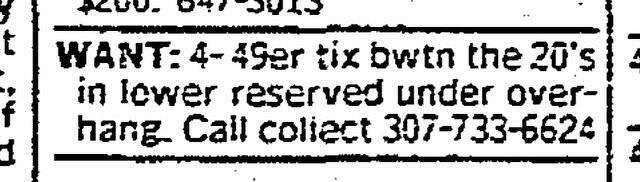
A San Francisco Chronicle classified advertisement from Jan. 7, 1982.

A San Francisco Chronicle classified advertisement from Jan. 7, 1982.

Photo: Chronicle archive

A collect call, kids, was a move made with the help of an operator — think Siri, but a real person — who would facilitate a deal to reverse long-distance charges so they were paid by the recipient of the call. (What are long-distance charges? Additional telephone fees, established to ensure that if your girlfriend went to a different college, you would quickly have to break up.)

It’s the 1982 ticket sale version of a home buyer making an offer with no contingencies. An act of good faith, from someone who wanted everybody else to do the work.

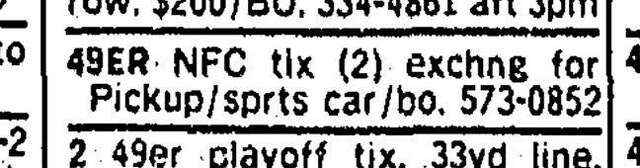
A San Francisco Chronicle classified advertisement from Jan. 7, 1982.

A San Francisco Chronicle classified advertisement from Jan. 7, 1982.

Photo: Chronicle archive

Not a lot to say about this, except dedicated Chronicle classified readers of years past know that while bartering was still common in the classified ads in 1982, it’s very doubtful this seller ever got his sports car or pickup truck. The classified kept running until the day of the game.

A San Francisco Chronicle classified advertisement from Jan. 7, 1982.

A San Francisco Chronicle classified advertisement from Jan. 7, 1982.

Photo: Chronicle archive

This is the hero of our story.

Not only are the tickets being offered at below-gouging prices, but the seller makes it clear they’re refusing to hand the tickets over to Dallas Cowboys fans. #Salute

SUBSCRIBER BENEFIT

Did you know you have 10% off at San Francisco Wine School?

Not sure how the seller enforced this. I’m hoping that Mr. 584-6248 or Ms. 587-4085 gave each potential buyer a quiz, confirming that the caller knew that Fred Quillan was the starting center for the 49ers, and Dwight Hicks was the team’s interception leader with nine.

A San Francisco Chronicle classified advertisement from Jan. 7, 1982.

A San Francisco Chronicle classified advertisement from Jan. 7, 1982.

Photo: Chronicle archive

The 50-yard-line seats were the most expensive for the 1982 49ers/Cowboys game, but everyone in 2019 knows these were the ones to buy. You’re not paying for the ticket, you’re paying for the memory. And whoever bought these tickets for $166 each was probably about 10 yards away from Dwight Clark’s franchise-changing “The Catch.” (Or 130 yards away, depending on the end zone.)

Tickets at Levi’s Stadium for this weekend’s NFC Division playoff game against the Minnesota Vikings are going for between $222 and $23,500 on the secondary market. After looking at the classified marketplace in 1982, that seems like a pretty fair deal.

Peter Hartlaub is The San Francisco Chronicle’s pop culture critic. Email: phartlaub@sfchronicle.com Twitter: @PeterHartlaub

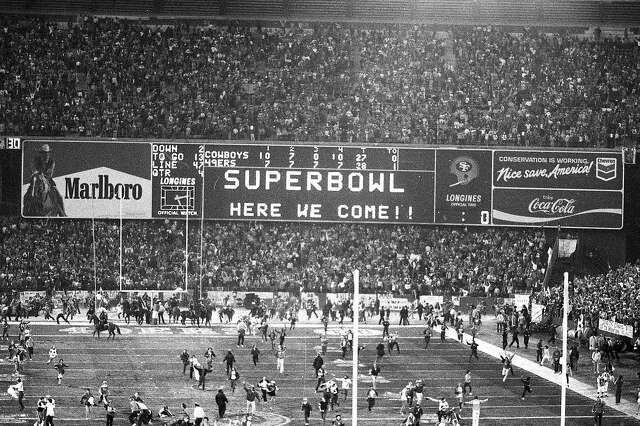
Jan. 10, 1982: The scoreboard after the San Francisco 49ers victory over the Dallas Cowboys at Candlestick Park.

Jan. 10, 1982: The scoreboard after the San Francisco 49ers victory over the Dallas Cowboys at Candlestick Park.

Photo: Mike Maloney / The Chronicle 1982

Feds & SFPD take aim at new DA. File”gang enhancements” in US Court

DA Chesa Boudin has been in office barely 24 hours and the vultures are already circling. Federal charges for a local incident with “gang enhancements” are being moved to US District Court.

The charges stem from a shoot out in San Francisco’s Western Addition in March 2019. 

The previous DA declined to pursue “gang enhancements” against the accused.

The Feds conveniently ignore the fact DA Boudin had no involvement in this case.

Nonetheless, the Feds and SFPD are already casting their indictment in terms of holding Chesa Boudin accountable for the move to Federal Court.

DA Boudin has vowed to end the gang enhancement charging policy.  He calls it racist and unnecessary.

Gang Enhancements III 1.9.2020

This is the kind of pressure DA Boudin can expect for the next four years.

San Francisco Chronicle 1.9.2020

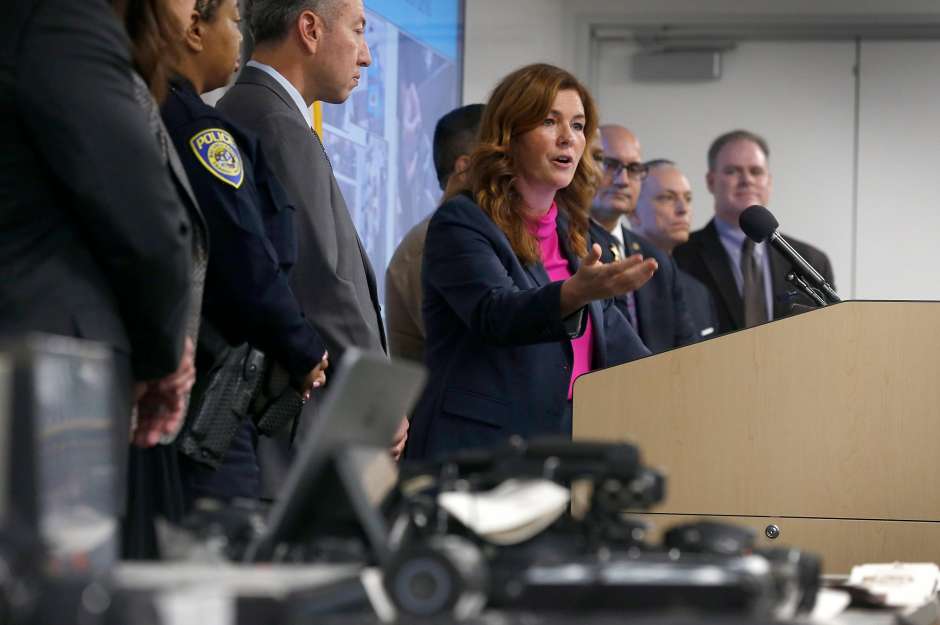
Federal authorities in San Francisco announced charges Thursday against two alleged gang members in a March shootout at the city’s Fillmore Heritage Center that left one man dead and five others injured — including a bystander who was shot in the spine and paralyzed from the waist down.

Officials from the U.S. attorney’s office, FBI and San Francisco Police Department underscored their collaborative partnership in announcing the charges against Robert Manning, 28, and Jamare Coats, 26, who were indicted by a federal grand jury on counts of using a firearm in a violent crime resulting in death and being felons in possession of a firearm.

The charges carry a possible death sentence.

Thursday’s indictment by the feds comes after local prosecutors filed less serious weapons charges against Coats and another defendant shortly after the incident.

Coats and Manning, authorities said, are members of the notorious Mac Block street gang and sprayed bullets at an armed rival on a crowded sidewalk outside the cultural center at 1330 Fillmore St. during a funeral for a self-proclaimed “drug kingpin.”

“An event like this is completely unacceptable,” said Jack Bennett, special agent in charge of the FBI’s San Francisco field office. “The streets of San Francisco cannot and will not be used as a playground for gang warfare. We won’t allow it, and we will pursue those who try. Those wannabe kings of the street don’t have a throne waiting for them. They will have a federal prison cell waiting for them.”

Attorneys for the defendants did not immediately return calls seeking comment.


The March 23 shooting stunned the Fillmore neighborhood and stalled the revival of its newly reopened heritage center — an African American cultural center that was built in 2007 to bring jazz and blues back to the district.

The shooting prompted concerns that the nonprofits that had recently been operating the center did not have adequate resources, including security, to run the facility. Supervisor Dean Preston, whose district includes the Fillmore, said he is scheduling community meetings to create a plan to re-open the center.

Thursday’s charges came one day after San Francisco’s newly elected district attorney, Chesa Boudin, was sworn in to office. Boudin campaigned on a platform of ending the use of gang enhancements, which he has called “racist.” Statistics show people of color are disproportionately charged with gang enhancements.

Gang enhancements add years to a felony charge, and defendants must be found guilty of participating in a “criminal street gang” while knowing its members have committed “a pattern of criminal gang activity.”

U.S. Attorney David Anderson said Thursday’s charges highlight that gangs continue to unleash violence in San Francisco.

“As long as they’re about their work, we’ll be about our work as well,” he said.

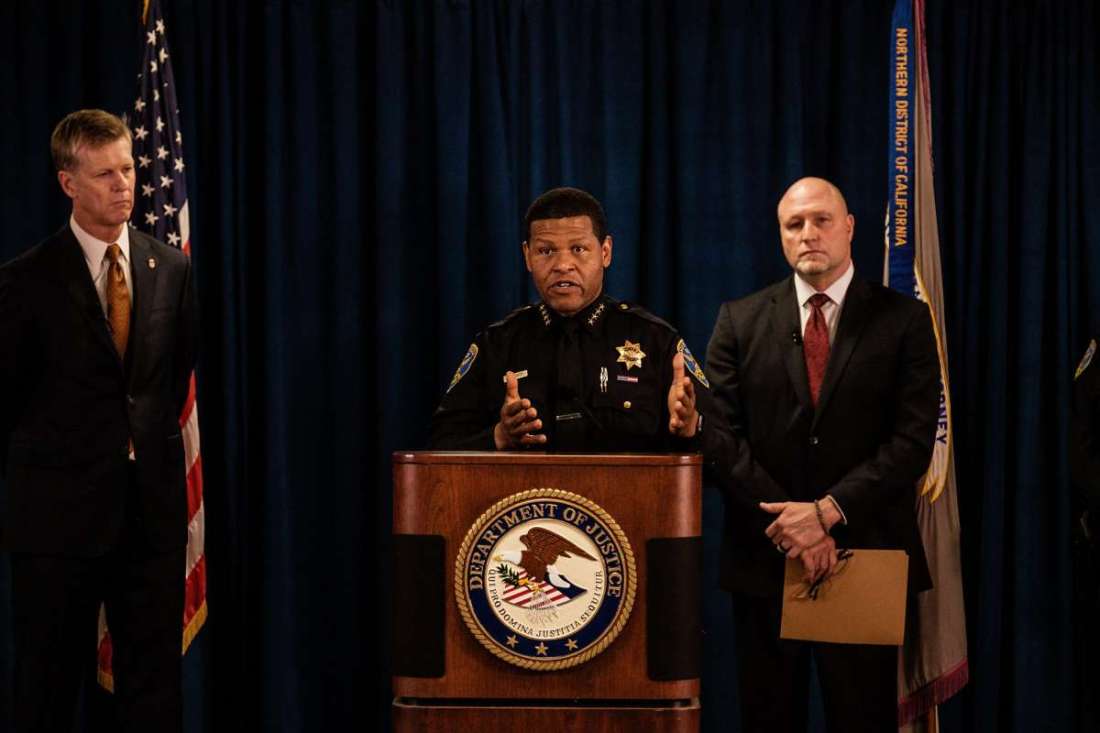
San Francisco Police Chief Bill Scott said his department will continue to investigate gang cases and put resources into its gang task force despite the district attorney’s policy changes.

“We’re going to keep doing what we do,” Scott said. “Laws change. People change. But our job remains the same — to protect the city. And it would not be wise to back off on how we do business because of a decision by the current district attorney.”

The bloodbath happened on a busy Saturday night around 8:30 p.m. Mourners packed the heritage center for the funeral of Ron Newt, a self-styled “gangsta pimp” and flashy San Francisco businessman, who died at age 69.

Inside the building, 25-year-old San Leandro resident Mister Dee Carnell Simmons III flashed a pistol to Coats and others, who ran outside to their vehicles to retrieve handguns, prosecutors with the San Francisco district attorney’s office wrote in court documents.

Two minutes later, Coats and two others ran back to the heritage center to confront Simmons, who had come outside, prosecutors said.

A witness told police that Simmons whipped out his handgun first and bullets started to fly, according to court papers.

Simmons shot at the group as Coats and others returned fire, prosecutors said. In the end, Simmons lay dead on the pavement while five bystanders were wounded, including a 27-year-old man who was shot in the spine and paralyzed from the waist down, police said.

Prosecutors filed gun charges against Coats and Sean Harrison, 25, but did not file murder charges. California law requires prosecutors to prove beyond a reasonable doubt that a defendant did not act in self defense in a murder case.

“The charges were brought based on the evidence,” said Alex Bastian, a spokesman for the San Francisco district attorney’s office. “We asked to detain both individuals without bail, and the judge agreed. Since then, the federal government has filed charges, and the case is now with them.”

Chief Scott said the Police Department is “very fortunate” to have the partnerships with federal authorities to “hold these individuals accountable.”

Coats has a criminal history that includes two state prison stints for illegal gun charges. Federal authorities filed gun charges against him in July while he was in custody and unsealed a superseding indictment against him and Manning on Thursday.

https://www.sfchronicle.com/crime/article/Alleged-gang-members-federally-indicted-in-deadly-14962680.php#photo-18858499

African Swine Fever: Chinese pork prices high ahead of New Year’s celebrations

Pork consumption isn’t the ideal food for the body. Here is another reason to forego this carnivore delight.

Deutsche Welle 1.9.2020

An African swine fever outbreak has decimated China’s pork stocks, keeping food prices high and contributing to overall high inflation. The high prices will make Chinese New Year’s feasts more expensive.

An ongoing African swine fever outbreak in China is squeezing the country’s pork supply, keeping prices up and contributing to high inflation, according to numbers released Thursday by the National Bureau of Statistics.

Swine Fever II 1.9.2020

Harmless to humans, African swine fever broke out in China in August 2018. Since then, authorities have since been forced to cull more than a million pigs to try and contain the spread of the disease.

Forecasters expect shortages to continue, as many Chinese farmers have stopped raising pigs and others will need to rebuild their herds.


Government data shows pork prices nearly doubled in December 2019 compared to the same month in 2018. Food prices overall increased by 17.4% in the same period.

The shortage comes ahead of pork-laden feasts celebrating the Lunar New Year on January 25. The government has been attempting to stop the increase in pork prices by releasing more than 100,000 tons of frozen meat from stored reserves over the past several weeks.

Read moreSieren’s China: Swine fever also has Europe over a pork barrel

Although pork prices remain high, there was some success slowing the increase compared with the November 2019 time frame, during which year-on-year prices had risen by 110%.

With positive changes in hog production, a release of pork from central and local reserves to the market, as well as a rise in imports, the pork supply situation has eased slightly,” the National Bureau of Statistics said.

China is the world’s largest producer and consumer of pork, and increased import demand has spiked pork prices worldwide.

Year of the expensive pig 

The consumer price index in China, a gauge of retail inflation, rose 4.5% year-on-year in December 2019. That is the same as November’s inflation rate, which was the highest since 2012. For the full year of 2019, consumer prices rose 2.9%.

The index has been rising consistently over the past year, as swine fever decimated pig herds across China.

Read moreChina offers olive branch on US pork and soy imports

https://www.dw.com/en/chinese-pork-prices-high-ahead-of-new-years-celebrations/a-51944853


Chesa Boudin, son of radicals, looks to become SF district attorney

It was nearly one year ago that DA Chesa Boudin announced his long shot and, at the time, seemingly improbable candidacy. Here is the Post from January 15, 2019 with a link to the SF Chronicle article announcing Chesa’s candidacy.

Chesa Boudin is a caring, intelligent and motivated person. His election as District

Attorney will be a history making event in the criminal justice system.


leeheidhues's avatarLee's Perspective

Chesa Boudin is a caring, intelligent and motivated person. His election as District Attorney will be a history making event in the criminal justice system.

San Francisco Chronicle 1.15.2019

https://www.sfchronicle.com/crime/article/Chesa-Boudin-son-of-imprisoned-radicals-looks-13533584.php

View original post

People of San Francisco and a Supreme Court justice welcome DA Chesa Boudin

It’s simply amazing.

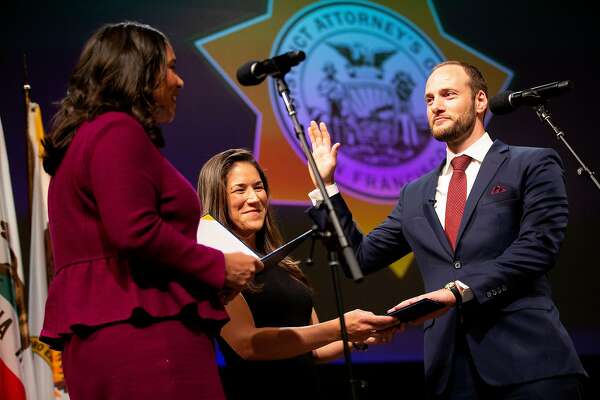
Chesa Boudin is now San Francisco District Attorney. A true people’s campaign was culminated with his swearing in at historic Herbst Theater in San Francisco’s Civic Center.

The stage on which District Attorney Boudin took the oath of office was the same place where the United Nations was founded in 1945.

A positively rapturous crowd, many of whom are still in a state of disbelief, looked on as Mayor London Breed administered the oath of office.

The frosting on the cake was the congratulatory video from Supreme Court Justice Sonia Sotomayor.

Breaking News 4.15.2019

San Francisco Chronicle 1.8.2020

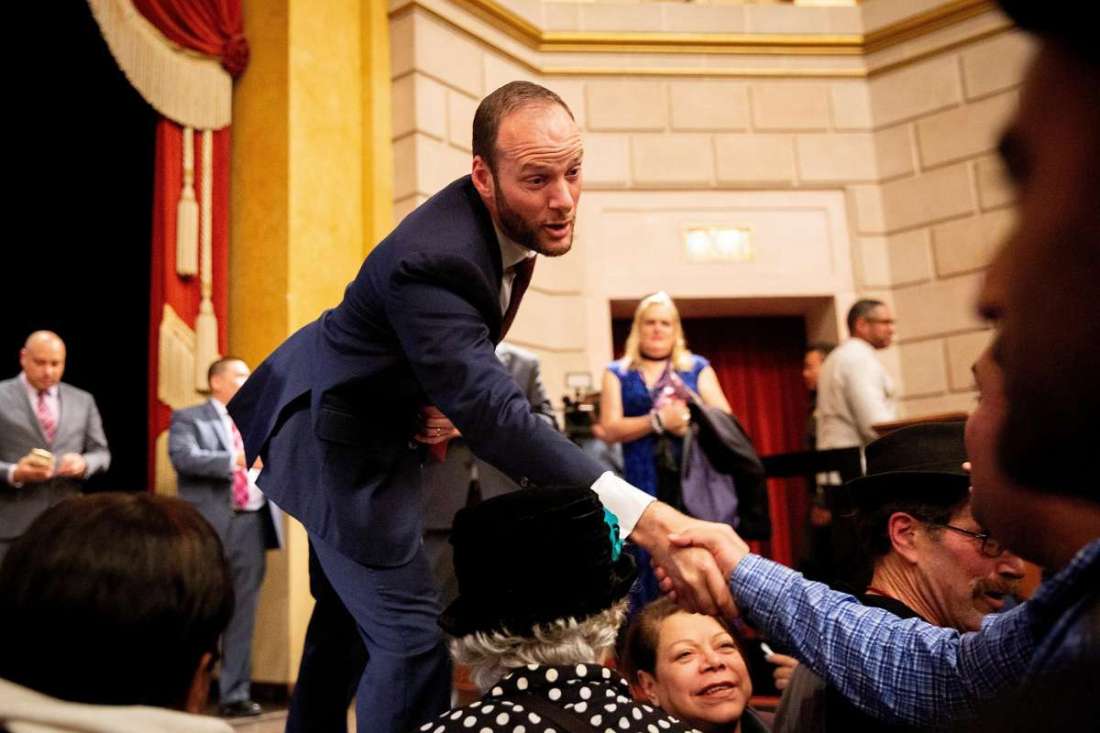
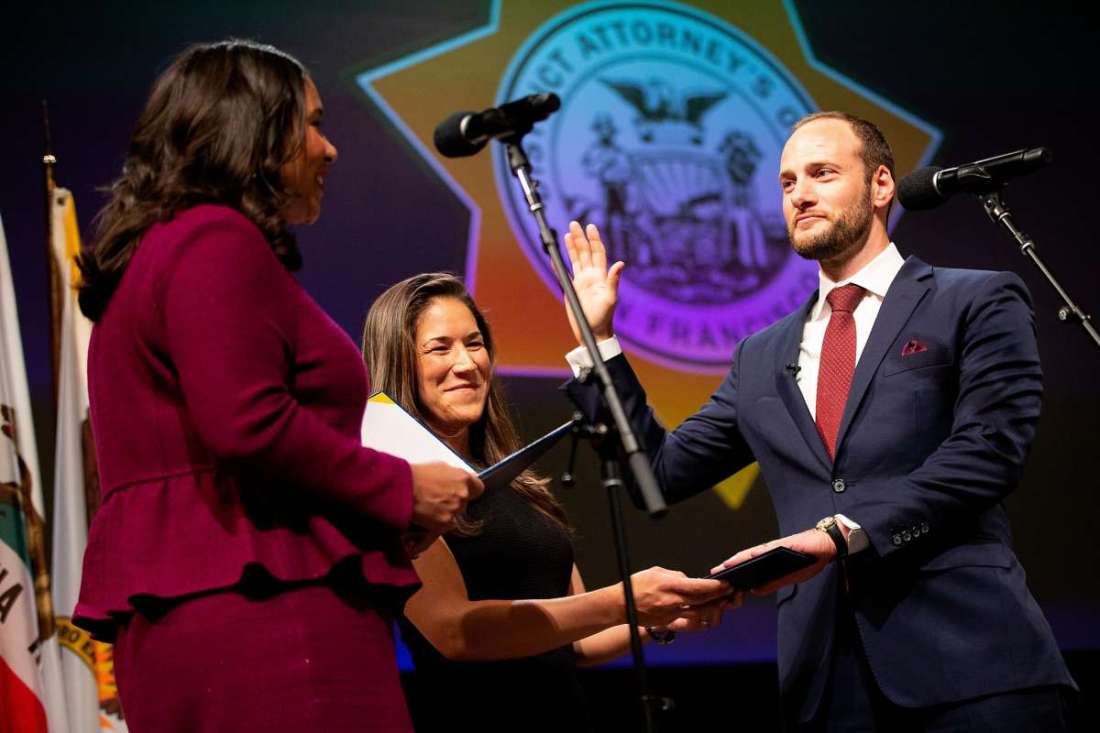
Standing on stage in front of a raucous crowd in San Francisco’s Herbst Theater, Chesa Boudin was sworn in Wednesday by Mayor London Breed as San Francisco’s new district attorney.

Boudin, 39, stood before the packed house of impassioned supporters, city dignitaries, law enforcement officials, judges and attorneys, promising to confront racial disparities in the criminal justice system and mass incarceration. And as the city’s top prosecutor, he said he will focus resources on the city’s most violent criminals while also pledging to hold police more accountable in cases of brutality.
Chesa X 1.8.2020.jpg

Mayor Breed, Valerie Block and DA Boudin

“Join me,” Boudin said to the crowd of hundreds. “Join this movement. Join us in rejecting the notions that to be free we must cage others, that to seek justice we must abandon forgiveness, that to empower our protectors requires tolerating excessive force, that to be safe we should put the mentally ill and addicted in cages, and that jails and prisons should be the primary response to all of our social problems.”

Before his rousing speech, U.S. Supreme Court Justice Sonia Sotomayor made a surprise appearance via a recorded message on the theater’s big screen to congratulate Boudin on becoming district attorney.
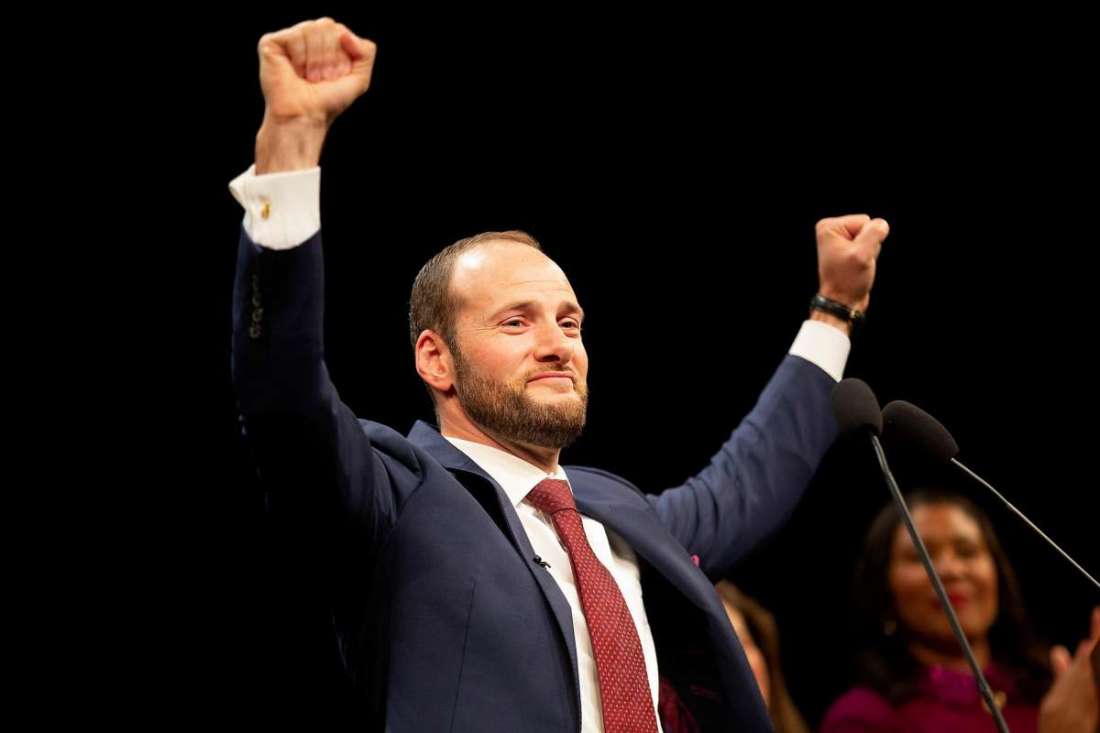
Chesa IX 1.8.2020.jpg

“Your personal strength and commitment to reforming and improving the criminal justice system is a testament to the person you are and the role model you will continue to be for so many,” she said. “Chesa, you have undertaken a remarkable challenge today. I hope you reflect as a great beacon to many.”

Boudin’s unlikely path to the high-profile position began when his politically radical parents were incarcerated when he was an infant. They acted as getaway drivers in an armored car robbery in upstate New York that left two police officers and a security guard dead.

Boudin said visiting his parents behind bars while growing up helped shape his understanding of the country’s criminal justice system.

He went on to study law at Yale and earned a Rhodes scholarship before coming to San Francisco where he worked at the public defender’s office and was instrumental in upending the state’s cash bail system.

His mother was released from prison after more than two decades behind bars. She was in the audience at Wednesday’s swearing in. Boudin addressed her and his father, who remains in prison in upstate New York.

“The crime you both participated in when I was an infant cost innocent men with families their lives,” he said. “It did not matter to the DA or the judge that neither of you was armed nor that you did not personally hurt anyone. Those details matter to me. What matters even more is that since that terrible day you and my father have focused your lives on love. Thank you for teaching me about forgiveness and redemption.”

Boudin was elected in November in a narrow race in which he ran the furthest politically-left campaign of four candidates. His election was celebrated by his supporters and activists as a momentous juncture in how the city’s legal system will operate.

Boudin’s win, though, has prompted concern from groups like the city’s police union and statewide law enforcement groups, which fear the new district attorney may be unfairly harsh on police and soft on criminals.

But while progressive prosecutors were once unusual around the country, San Francisco has a legacy of electing reform-minded district attorneys, including the last three, Gascón, Kamala Harris and Terence Hallinan, who was elected in 1995. Other cities, like Philadelphia, Boston and St. Louis, have followed San Francisco’s lead and recently elected progressive district attorneys.

And under San Francisco’s progressive prosecutors, violent crime has followed national trends and steadily decreased over the last two decades, reaching a 56-year low for homicides last year.

“We know there is a balance between justice and fairness and I appreciate that Chesa Boudin appreciates that balance,” Mayor London Breed said before administering the oath. “He knows that we need so desperately to reform our criminal justice system. But we don’t have to do so at the expense of keeping our community safe.”

Boudin ran on a slate of progressive reforms to transform the system, but he will also be confronted by major challenges including the worsening epidemic of drug abuse and dealing in neighborhoods like the Tenderloin, a mental health crisis on the streets, and the worst property crime rate in the country.

“Our work will yield the most comprehensive restorative justice program in the country,” Boudin said. “Restorative justice saves lives. I know this because it saved mine. Victim services, especially for limited-English speakers and marginalized communities, is a critical and under-resourced part of the criminal justice system.”

As he takes over operations from interim District Attorney Suzy Loftus, who was appointed by Breed after Gascón quit his post in October, Boudin has launched efforts to implement his sweeping vision.

This week he announced the creation of subcommittees of advisers who will help to implement his policies.

Members include deputy police chiefs, public defenders, retired judges and activists. Jamal Trulove, who was wrongfully convicted of murder in San Francisco, and Barry Scheck, co-director of the Innocence Project and former member of the O.J. Simpson “Dream Team,” are among the members of the subcommittee to develop the office’s second look and conviction integrity unit.

Boudin will also have to solidify his executive team, which oversees the prosecution and public policy divisions of the office.

Chief Assistant District Attorney Sharon Wu, who ran the prosecution team under Kamala Harris and Gascón, tendered her resignation last week. She will be taking a job at the city Department of Police Accountability.

In an interview before his swearing in, Boudin said he was disappointed that Wu is leaving the office but understands her decision. He has not decided whom he will hire.

“It’s not a decision that I want to rush into,” he said. “Those are big shoes to fill. She did a lot of work. I want to make sure the person I put there is someone I can work well with, and also someone who has the skills and temperament and capacity to take on all that we need to take on.”

Boudin said Gascón’s Chief of Staff, Christine Soto DeBerry, will remain the head of public policy.

https://www.sfchronicle.com/crime/article/San-Francisco-leaders-and-a-Supreme-Court-14960985.php#photo-18854589

Before the New Day. In last act, interim D.A. Loftus pushes new sex assault policy

Following a year long grass roots people’s campaign major change will arrive in San Francisco law enforcement at 5pm on Wednesday afternoon in Herbst Auditorium. 

The venue is already booked beyond capacity.

 Chesa Boudin will be sworn in by Mayor London Breed and will become San Francisco District Attorney. The torch will be passed to a new generation of law enforcement.

It is worldwide news. 

One policy which DA Boudin will pursue aggressively is the sex assault prosecution policy instituted by his predecessor.

San Francisco Chronicle – Heather Knight – 1.7.2020

Life at San Francisco’s Hall of Justice is about to change — again — with the baton-passing at 5 p.m. Wednesday from interim District Attorney Suzy Loftus to no-interim-needed Chesa Boudin.

Chesa Boudin 1.7.2020

Boudin famously edged out presumed front-runner Loftus in the Nov. 5 election after former District Attorney George Gascón quit to seek the same office in Los Angeles.

But as for what comes next for Loftus professionally, she’s not sure. She won’t be returning to her previous job as an attorney in the sheriff’s office and will take time off to consider her next steps. She said she wants to “evaluate different ways to make the greatest impact going forward.”

She still claims to not regret taking the job of interim district attorney two weeks before the Nov. 5 election. Breed tapped her for the role after Gascón left office earlier than expected, and political insiders mostly agree it wound up hurting Loftus in the election.

The musical chairs will end when Boudin is sworn in by Mayor London Breed at Herbst Theater, an event that Loftus will not attend because, she said, she’ll be out of town. The two have disagreed on plenty, but in good news for victims of sexual assault, they have agreed on a new way of prosecuting these brutal crimes.

On Monday, Loftus initiated a new policy that Boudin has pledged to continue. It requires a prosecutor in the sex crimes unit be on call 24/7 to assist police officers in sexual assault investigations.

That could include reviewing search warrants, guiding police in interviewing victims and suspects, or helping find video footage from, say, bars, Lyft cars or private buildings’ security cameras.

That in and of itself would be a big change from Gascón’s tenure when numerous women complained their sex assault and rape cases went nowhere. Gascón has said his office filed charges in nearly 40% of sexual assault cases — about twice the national average — but admitted it was “a far cry from where we need to be.”

All four candidates in the November race to replace him said it was a weak spot at the Hall of Justice they were determined to fix.

Under the new policy, at least eight prosecutors and managing attorneys on the sexual assault team will rotate so someone is always available to respond to police seeking aid in an investigation.

Loftus said a particular area of focus will be drug-facilitated sexual assaults, which, like homicide, might have a victim who can’t tell police or prosecutors what happened. Those crimes can include an assailant drugging someone to rape them or assaulting someone who is too drunk or high to give consent.

That’s where sending uniformed police officers to the scene as quickly as possible, seeking camera footage and even testing the victim’s sweat and vomit for drugs can be crucial, Loftus said.

“You consider everything and cast a broad net to piece back together what happened,” she said.

She said she’s talked numerous times to Police Chief Bill Scott about the changes and that he was immediately on board.

“Sexual assault is one of the very worst things that any one of us sees in law enforcement,” Loftus continued. “This idea we couldn’t do things better, couldn’t do more for people, didn’t sit well with him, either.”

Boudin confirmed he has spoken with Loftus and Scott about the changes.

“I approved the new policies,” he wrote in a text message. “I look forward to implementing them as a first step towards improving our victim-centered response to sex crimes.”

Loftus said she’s proud of her 2½ months in office and cited the changes in sexual assault prosecutions as one achievement. She said she’s also pleased her focus on property crime helped lead to last month’s bust of a fencing operation, netting $2.5 million in stolen laptops, smartphones, cameras, luxury handbags and other pricey goods.

She said she’s also worked to boost the notoriously low morale in the district attorney’s office.

“For as many days as I was here, I have been honored to serve,” Loftus said. “I wish the district attorney-elect the best of luck.”

https://www.sfchronicle.com/bayarea/heatherknight/article/In-last-act-interim-D-A-Loftus-pushes-new-sex-14954393.php

Jihad. Anti-bicycle Duo again disrupts San Francisco transit improvements

YEARS LONG OBSTRUCTION OF BICYCLE FRIENDLY STREETS IS A TOTAL DISGRACE.

SAN FRANCISCO IS INNUNDATED WITH CARS.

A LAUDABLE GOAL IS TO MAKE THIS TOWN HEALTHER FOR ITS NON DRIVING CITIZENS.

IF SAN FRANCISCO IS SO INCOMPATIBLE WITH A  FOSSIL FUELS RULE MANTRA I SUGGEST MOVING TO SOMEWHERE THAT EMBRACES YOUR PHILOSOPHY OF CARS CARS CARS.

HOPEFULLY THE CITY AGENCIES AND THE JUDICIAL BODIES SEE THIS LATEST JIHAD FOR WHAT IT IS…..JUST MORE VEXATIOUS TIME WASTING AND WHEEL SPINNING.

San Francisco Examiner – Joe Fitzgerald Rodriguez 1.7.2020

A duo that is notorious in transit and bicycling circles for efforts to block local bike lane projects is back in action.

Attorney Mary Miles and car advocate Rob Anderson, who successfully tied up city bike lane plans for years with litigation, have filed an environmental challenge to the Page Street Bikeway Pilot that could potentially delay the project.

The 12-month pilot project would create a bikeway on Page Street with a physical barrier for safety between Laguna and Octavia Streets, and also create some forced turns for drivers seeking to use Page Street as a shortcut to a nearby U.S. Highway 101 onramp. That additional traffic on Page Street has threatened children attending John Muir Elementary School with potential traffic collisions.

The project was approved in November by the San Francisco Municipal Transportation Agency Board of Directors, but drew some objections from Haight Street merchants who feared that some drivers would shift from Page Street to Haight Street, gumming up traffic there.

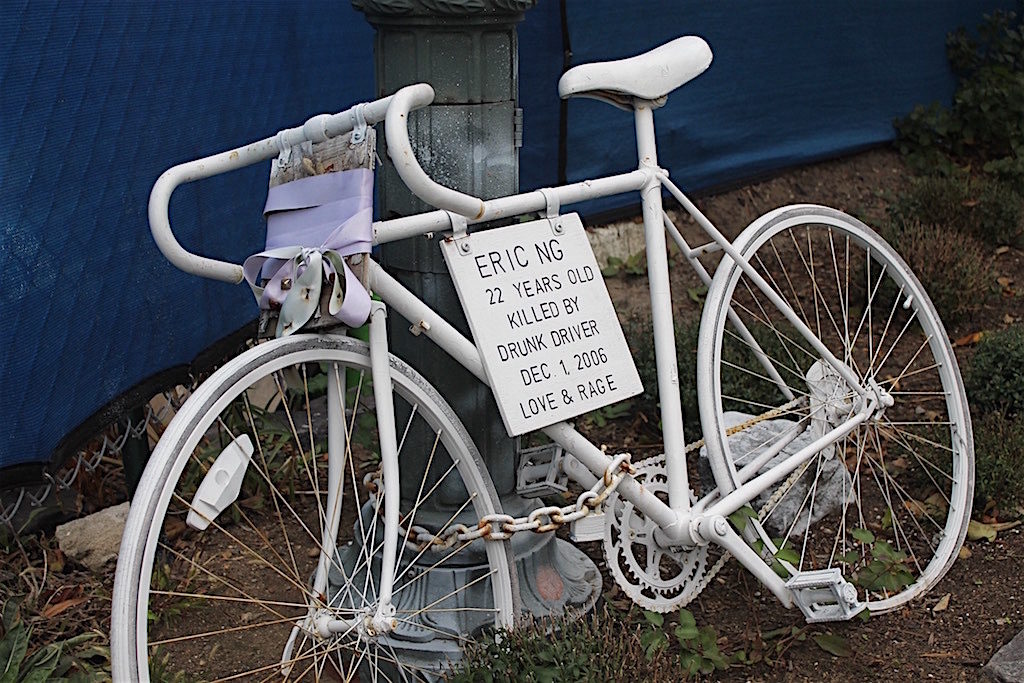
Bicycle Deaths 3.8.2019

SFMTA staff have written in reports that the point of making the project a pilot is to measure those impacts, with planned reviews to see who is impacted, and how.

However Miles and Anderson argued in the appeal, which was filed in late December, that the pilot’s purpose and duration are not to collect data but to implement a bicycle project “on behalf of” the San Francisco Bicycle Coalition, which the challengers call “a private lobbying corporation.”

The appeal asserts that the SFMTA failed to environmentally review the project’s “significant impacts” on transportation, transit, parking, air quality, energy use, and public safety, which includes access for city emergency vehicles.

The bike coalition responded with consternation to the appeal, which will go before the Board of Supervisors for a review and vote on Jan. 28.

“The Page Street Bikeway Improvements pilot enjoyed broad support among community members, elected officials and groups like the Hayes Valley Neighborhood Association,” said Brian Wiedenmeier, director of the coalition, in a statement. “We’re confident that the approval process for this project will stand on its own merit when heard during appeal. We just can’t delay safety on our streets any further.”

The appeal may serve as an early test for newly sworn-in Supervisor Dean Preston, who represents the neighborhood encompassing the soon-to-come Page Street bikeway.

“I have been a long-time advocate for bike safety improvements along Page Street,” Preston said in a statement. “As to the vote on the appeal, I look forward to the hearing and learning more.”

At the hearing, Miles and Anderson, or parties representing them, will argue that the bikeway requires environmental review. But this isn’t the pair’s first rodeo.

Miles and Anderson sued to block San Francisco’s 2005 bike plan, which laid out a vision for 34 miles of bike lanes on city streets. That legal challenge continued until at least 2013, the San Francisco Examiner previously reported, when construction on the bike lanes finally allowed some projects to move forward.

City Hall records show four previous Board of Supervisors hearings on challenges to pedestrian or bike safety projects by the pair’s group, The Coalition for Adequate Review, in 2005, 2007, 2009, and 2017.

Anderson became so infamous for his role in blocking the 2005 bike plan that a parody Twitter account was created under the name “Bob Gunderson,” whose profile claims he is “Fighting for wider streets, faster speeds & more parking everywhere. Battling the radical all-powerful bike lobby.”

The account tweets out exaggerated, car-favoring opinions, like this one in response to a new law in Oregon allowing cyclists to roll slowly through stop signs, “Waaahhhh, waahhhhh! Why can’t WE do this with 2-ton 200+ horsepower metal boxes if ~snowflake bicyclist~ get it, waaah, waaaaah!!!”

Anderson operates a blog called the District 5 Diary, referencing the supervisorial neighborhoods encompassing the Haight, North of the Panhandle, Inner Sunset, Japantown and Fillmore neighborhoods among others.

His blog posts frequently skewer San Francisco’s stances on street safety, including Vision Zero, which aims to reduce traffic deaths to zero by 2024, which he called in a December blog post “dumb and dishonest.”

Should the appeal be denied, and if “no further legal action is taken,” SFMTA spokesperson Erica Kato said “there will be no impact to our schedule” in implementing the bike project.

Miles did not return a request for comment by press time.

https://www.sfexaminer.com/news/theyre-back-frequent-bike-lane-foes-challenge-page-street-project/

Surf’s Up. Supremes turn away tech billionaire in California Coastline Dispute

The US Supreme Court reaffirmed that property owners do not possess unlimited rights to exclude the public when that access serves a greater good.  At issue is the right of the public to enjoy public beaches and shoreline vistas.

Excerpted from San Francisco Chronicle 1.6.2020

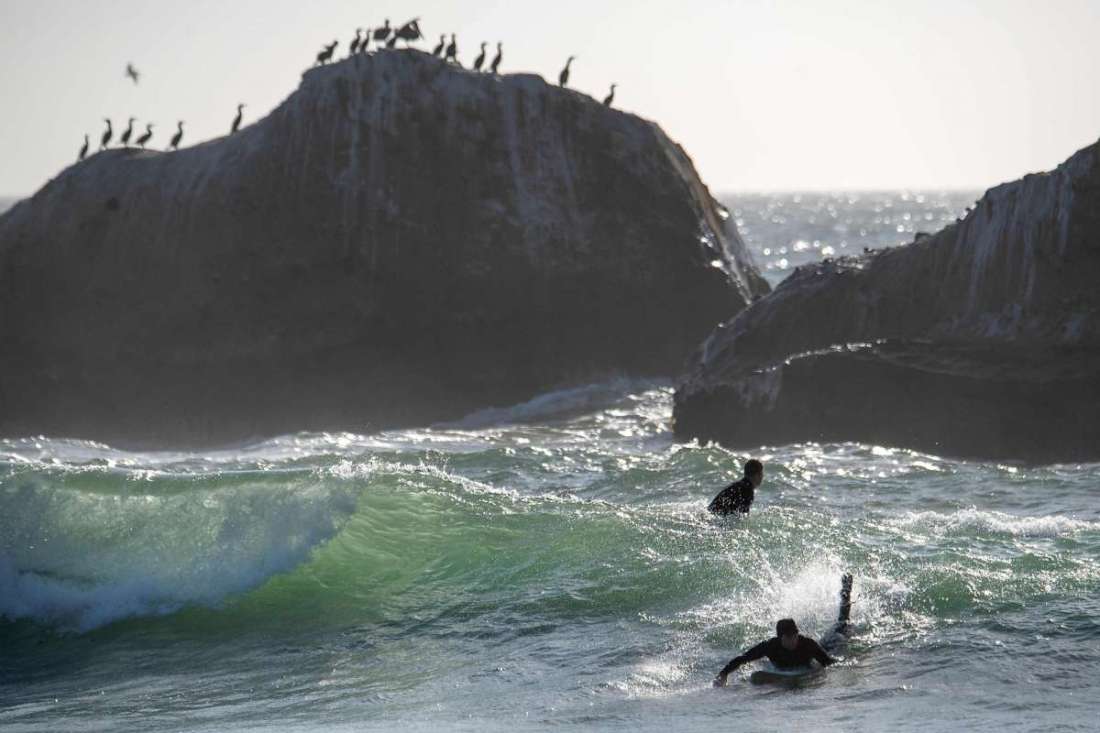
Surfers, lawyers and legislators hugged and high-fived Monday at an impromptu party on a sandy cove in San Mateo County after the U.S. Supreme Court decided not to take the case of a tech billionaire who wanted to block public access to the beach.

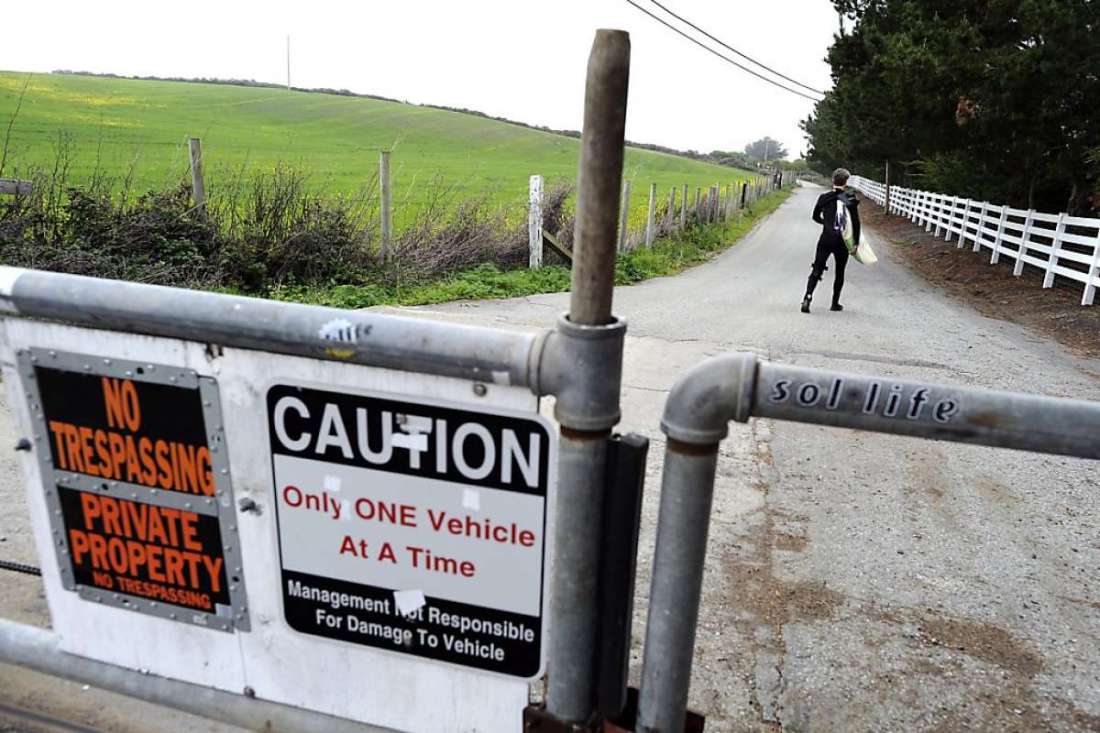
The decision means lawyers for Vinod Khosla, co-founder of Sun Microsystems, will not get the opportunity to argue before the high court that he has a right to stop people from crossing his property to reach a picturesque beach.

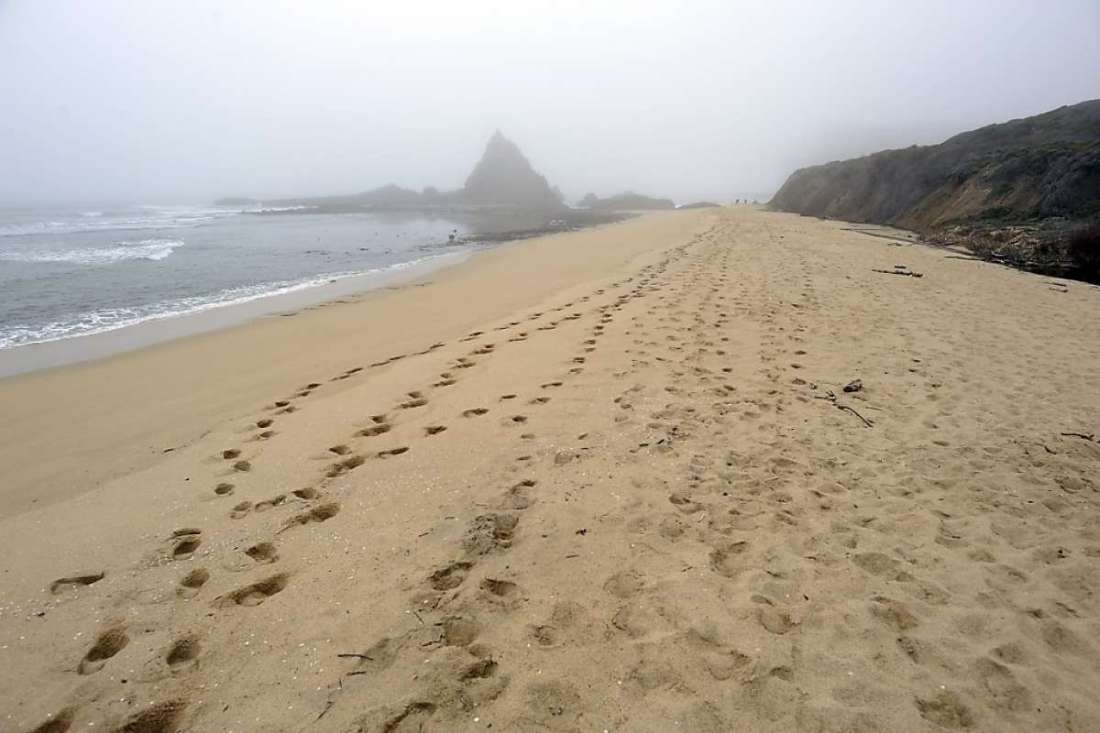
Advocates for public access touted the decision, which keeps an access road open to Martins Beach, about six miles south of Half Moon Bay, as a victory for beachgoers across the country.

Martins Beach III 1.6.2020

“Money cannot buy justice, and arrogance cannot stop the public’s right to use our beautiful ocean,” said Joe Cotchett, the lead attorney for the Surfrider Foundation, which filed suit against Khosla. “Remember, this case is all about the public. That’s who it’s for. … It’s about the right of anyone — child, adult — to go down to fish, go down to swim, but, more important, to have access to our wonderful ocean.”

The crescent-shaped cove, featuring a distinctive pyramid-shaped rock, has been the subject of an ugly, almost decade-long clash between Khosla and surfers and other beachgoers that began when Khosla blocked the only road leading to Martins Beach. The Supreme Court’s rejection of the case now prevents the battle from becoming a test case for public coastal access around the country.