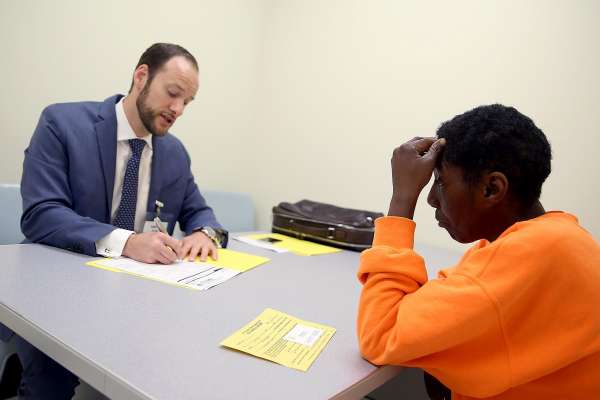

Bernie’s Rent Control proposal. Provide tenants with rights nationwide

Bernie Sanders has raised a legitimate issue.  Nationwide tenants are at the mercy of landlords. Affordable housing should be a basic human right similiar to education and health care.

Landlords large and small  use their property to enhance  profits through exorbitant rent levels, no fault evictions and  their well heeled real estate lobbyists who promote laws that work to the detriment of renters.

In California AB 1482 has been sitting on The Governor’s desk for three weeks awaiting his signature.  This law would give California renters a measure of security in  the face of unwarranted and excessive rent increases.

The following editorial speaks volumes about the rights landlords feel they are entitled to when it comes to tenants.

Wall Street Journal  9.29.2019

Bernie Sanders this month unveiled a $2.5 trillion housing agenda, but the price tag isn’t the only shocker. “Under my plan,” he told union members in Las Vegas, “we will establish a national rent-control standard, capping annual rent increases throughout the country at no more than 1½ times the rate of inflation or 3%, whichever is higher.”

Oy. Economists of all stripes agree rent control doesn’t work. A mere 2% think it has positive effects, according to a 2012 survey by the IGM Forum. In other contexts Bernie might cite that statistic as proof of settled science. No less definitive are the in-depth studies. An analysis last year of San Francisco’s 1994 rent-control initiative found that the landlords it affected “reduced rental housing supply by 15%, causing a 5.1% city-wide rent increase.”

The Sanders plan would generously let landlords “apply for waivers if significant capital improvements are made”—as if this wouldn’t be a politicized process and a brake on investment. Ditto for Bernie’s proposed House Flipping Tax, a 25% levy on sellers who either didn’t live in the property or didn’t own it for five years. The predictable outcome: less development, less renovation, and fewer rentals.

Bernie Sanders II 9.29.2019

The bulk of the plan’s money, about $1.5 trillion, would go to the National Affordable Housing Trust Fund. It would be spent to build and rehabilitate 7.4 million units that the plan promises would “remain affordable in perpetuity.” The trust fund would also administer two million new “social housing units,” constructed at a cost of $400 billion. But even all that wouldn’t be enough, given how Mr. Sanders’s proposal would crimp private building.

Housing prices do appear to be rising faster than wages. The cost to rent a primary residence is up about 3.7% year over year, per federal data. Not coincidentally, the vacancy rate for rentals, 6.8%, is at lows last seen in 1985. That gets to the real problem: It’s impossible to build denser housing in many places due to restrictive zoning and antigrowth activism by current homeowners.

Some sources say that 75% of residential land in Los Angeles is zoned for single-family homes. In San Diego a Lutheran church has been trying to build a couple of dozen affordable apartments in its underused parking lot. But the zoning rules specify that churches need one car spot for each 60 inches of pew space.

There are useful ways to attack such problems. This year Oregon passed a law that in some cities overrules local regulations to allow townhouses and quadplexes. Minneapolis has moved to repeal single-family zoning. Nationwide rent control would undermine these efforts.

It’s constitutionally dubious, too. What gives Washington the power to dictate rents in Cincinnati and Phoenix? In 2012 the Supreme Court balked at using the Commerce Clause to justify ObamaCare’s mandate to buy health insurance. It’s hard to imagine today’s Court giving federal rent control a friendlier reception.

Mr. Sanders says that his version of democratic socialism bears no relation to the kind practiced in Venezuela, yet his housing policy has all the earmarks: price controls that crimp supply and cause capital to flee, then government diktats and subsidies to counteract the damage from the controls. As in Venezuela, the poor would suffer the most.

‘The Memory Police’ An authoritarian government tries to erase the past

The Memory Police, a Japanese Dystopian Orwellian novel was published in 1994.  Finally, it has been translated into English and available. I read about the novel in the ‘Briefly Noted’ section in the 9.9.2019 The New Yorker.  The Memory Police fits in well with the just released “The Testaments” by Margaret Atwood. 

Washington Post review 8.15.2019

Look around. Choose a commonplace object.

A toaster, let’s say. Now imagine that object has been eradicated from your life and the lives of everyone you know. All memories of making toast vanish from your consciousness. You’re no longer even sure what “toast” is. When you see the word “toaster,” you have no idea what it refers to or how it should be pronounced. Now repeat this process with other objects — birds, calendars, flowers, photographs. Poof! All gone. The world begins to empty out and so does your soul.


This is the premise of Yoko Ogawa’s quietly devastating novel, “The Memory Police.” The setting is an unnamed island controlled by a faceless authoritarian government. Our narrator and chief protagonist is a never-named female novelist who is struggling to complete her latest manuscript.

Her parents are dead. She lives alone in the house where she grew up. Her social circle is small, consisting of a handful of neighbors, an old man who lives on a decaying ferryboat and her editor, known only as R. “The island is run by men who are determined to see things disappear,” R tells her. “From their point of view, anything that fails to vanish when they say it should is inconceivable. So they force it to disappear.”

It is the job of this novel’s titular organization to ensure these disappearances take place. The officers of the Memory Police, in their “dark green uniforms, with heavy belts and black boots” operate “efficiently, thoroughly, systematically, and without any trace of emotion.” If they find a toaster hidden in your house, you will be arrested and interrogated. You may also find yourself disappeared.

It’s a grim existence, a fascism of forgetting. But not everyone succumbs to the mass amnesia. A handful of people are able to retain memories of the vanished objects. Some of them become fugitives, hiding in a network of underground safe houses. The narrator’s mother, a sculptor, was one such exception. She kept a cache of disappeared objects in her studio until the Memory Police arrested her. The narrator recalls, “her body came back to us a week later, along with her death certificate.” The editor, R, is another exception. Fearing for his life, he takes up residence in a secret room in the narrator’s house. Keeping him safe from the Memory Police becomes the focus of her life for the remainder of the novel.

Memory Police IV 9.29.2019.jpg
The author Yoko Ogawa. (The author Yoko Ogawa. Tadashi Okochi)

Ogawa writes with a direct, understated style that enhances the uncanniness of the events she describes. Her flat tone matches the passivity of most of the island’s inhabitants, which in turn suggests a capitulation to deeply buried personal and societal trauma. “The disappearances are beyond our control,” a character says to the narrator. “They have nothing to do with us. We’re all going to die anyway . . . so what’s the difference?” The lack of names and other proper nouns gives the book the quality of a supernatural parable. When calendars disappear, the island becomes stuck in an endless winter. As the losses mount, life there becomes increasingly unbearable.

Fortunately, Ogawa’s wry humor keeps “The Memory Police” from drowning in its own gloom. Consider, for example, how many writers would jump at the chance to keep their editors locked up in a secret room!

Excerpts from the narrator’s work in progress are spliced into the book’s main text, providing a welcome change of pace. The novel-within-the-novel is a gothic tale about the relationship between a typing teacher and one of his students, a young woman who loses her voice. It starts out romantic but soon turns sinister. She winds up his captive, locked in a tower with a roomful of broken typewriters. On one level, it’s a funny nightmare about writer’s block; on another, it’s a horror story that harmonizes with the novel’s major motifs — control, captivity and loss of self.

“The Memory Police” alludes to a host of storied works of dystopian fiction, positioning itself in the lineage of George Orwell’s “1984” and Ray Bradbury’s “Fahrenheit 451.” It also calls to mind Anne Frank’s “Diary of a Young Girl.” Yet Ogawa finds new ways to express old anxieties about authoritarianism, environmental depredation and humanity’s willingness to be complicit in its own demise.

Late in the book, R desperately tries to convince the narrator that she still has access to the memories of all those disappeared objects. “I can never remember anything that can satisfy you,” she says. “It’s not about satisfying me,” he replies. “It’s about waking up your sleeping soul.” To which the narrator responds, “I wish it were just sleeping, instead of completely gone.”

Jon Michaud is the author of the novel “When Tito Loved Clara.”

The Memory Police

By Yoko Ogawa

Pantheon. 288 pp. $25.95


https://www.washingtonpost.com/entertainment/books/in-the-memory-police-an-authoritarian-government-tries-to-erase-the-past/2019/08/15/9cc3a7ea-be9a-11e9-b873-63ace636af08_story.html

Filmmaker Costa-Gavras. His new film on the Greek financial crisis

Two of my favorite political films are “Z” and “Missing. Both are political thrillers putting into Cinema the world of government oppression and tyranny.  “Z” told the story of the assassination of a Greek politician in the 1960’s.  “Missing” is a true story. It recounts the execution by the Chilean military of an American Citizen in Santiago, Charles Horman.  He was caught up in the tyranny following the Augusto Pinochet Coup which overthrew the elected government of Salvador Allende on 9.11.1973, a Coup which was actively promoted by President Nixon and Henry Kissinger.

Excerpted from Deutsche Welle 9.28.2019

The new film from Costa-Gavras about the Greek financial crisis, ‘Adults in the Room,’ will celebrate its Greek premiere on September 29. The film is based on the book by former Greek finance minister, Yanis Varoufakis.

The new film from Costa-Gavras about the Greek financial crisis, Adults in the Room, has its Greek premiere on September 29. The film is based on the book of the same name by the former Greek finance minister and political dissident, Yanis Varoufakis, which recounts the strained circumstances around the 2015 Greek financial bail-out.

Costa-Gavras is the winner of two Oscars for Z (1969) and Missing (1982). With this new movie, he has created a furious, insightful and at times funny political thriller centering around the audacious Varoufkis. The veteran Greek director aims to offer some explanation of a financial world gone mad — and one of the worst crises to emerge out of the EU financial crisis. DW asked the director a few questions about the new film.

Costa Gavras II 9.28.2019

“Z” 1969

DW: Adults in the Room is based on the non-fiction book by Yanis Varoufakis. What made you think that this book would make a good movie?

Costa-Gavras: The book had a strong main character speaking about a specific period of time and what happened to him. It was really helpful that Varoufakis had made a lot of recordings and a lot of notes. So I was able to verify everything he says in the book by reading his speeches and by listening to what others have said.

There are two main characters in the movie: Greece and Europe. Each defends their side forcibly, aggressively and, in my opinion, violently. And in a way I think that everyone is right. Even people who look like the bad guys are right because they’re defending something very serious.

You’ve been in the film industry for decades. What do you think the future of cinema will be like?

Cinema is going through a huge revolution. Look what’s happening with Netflix, for example. A positive part of this is that everyone can watch movies. Everyone in their own homes, in small villages or big cities, everywhere. And we don’t pay much money, which wasn’t possible before. On the other hand, this means the movies are hidden away and can be forgotten about very quickly. You don’t hear anything about them again and it’s difficult to find out information like how many people have watched those movies. That is the negative part of services like Netflix.

Costa Gavras III 9.28.2019

“Missing” 1982.  Sissy Spacek and Jack Lemon

But on the plus side: everyone can make a movie. If you have a camera and a couple of friends you can make a movie.

What do you want the viewers of Adults in a Room to take home?

That’s up to them. I don’t want to teach them. I tell stories in my movies just like I would with friends: I just tell the story, I don’t tell them when to laugh. It’s exactly like that as a director. We ask questions about this and that. And if we have good questions, then that’s even better. We don’t have the solutions.

https://www.dw.com/en/filmmaker-costa-gavras-on-politics-cinema-and-his-new-film-on-the-greek-financial-crisis/a-50595598

‘I hate myself’: Dallas cop testifies about night she killed unarmed black man

All the News may be about the impending collapse of Trump.

There are other stories reflecting on the current state of American culture. This murder trial in Dallas is one to which I am paying close attention. It meets at the intersection of Police behavior, black & white relations and women in law enforcement facing the criminal justice system to answer for their actions.

Most disturbing  in this tale is that an innocent black man is dead

The Guardian 9.27.2019

Amber Guyger, who fatally shot Botham Jean in September last year, says: ‘This is not about hate’

Amber Guyger, who is white, was off duty but in uniform when she shot Botham Jean, a 26-year-old native of St Lucia who was black and worked as an accountant in Dallas. (pictured below).

Amber Guyger II 9.27.2019

The Dallas police officer started to cry and shake Friday as she began to testify about the night she killed a neighbor in his own home, which she has said she mistook for her own unit one floor below.

Amber Guyger broke down while recalling approaching her neighbor Botham Jean’s door, leading the judge to call for a brief break so she could compose herself.

Guyger, who is charged with murder in the killing last September, was the first witness that her lawyers called in the high-profile case. She told jurors about how she grew up in a small house in the Dallas suburb of Arlington, how she played in the school band and how she aspired to become a police officer.

“I just wanted to help people, and that was the one career that I thought I could help people in,” said Guyger, who was fired from the police force after the shooting.

Guyger’s testimony marked the first time the public has heard directly from the 31-year-old since Jean’s killing last September.

The basic facts of the unusual shooting are not in dispute. Guyger walked up to Jean’s apartment – which was on the fourth floor, directly above hers on the third – and found the door unlocked. She was off duty but still dressed in her police uniform after a long shift when she shot Jean with her service weapon. Guyger was later arrested, fired and charged with murder.

“I hate that I have to live with this every single day of my life and I ask God for forgiveness, and I hate myself every single day,” Guyger told the packed courtroom.

She said she wished “he was the one with the gun” and had killed her. “I never wanted to take an innocent person’s life. And I’m so sorry. This is not about hate. It’s about being scared that night,” she said.

Guyger’s attorneys say she fired in self-defense after mistaking Jean for a burglar. Her attorneys also say the identical physical appearance of the complex from floor to floor frequently led to tenants parking on the wrong floor or trying to enter the wrong apartment.

Guyger told the jury that when she put her key in what she thought was her apartment door’s lock, the door opened because it hadn’t been fully closed.

Fearing it was a break-in, she drew her service weapon and stepped inside, she said.

Seeing someone inside, Guyger said she said: “Let me see your hands! Let me see your hands.” But she said she couldn’t see the person’s hands and he began coming toward her at a “fast-paced” walk. She said he yelled “Hey, hey, hey!” right before she opened fire.

Guyger told the court she intended to kill him when she pulled the trigger, which she said is what she had been trained to do.

“I was scared he was going to kill me,” she said under questioning by her lawyers, who called her as their first witness.

When prosecutors asked why she didn’t back away and radio for help once she suspected a break-in, Guyger said that entering the apartment “was the only option that went through my head”.

Prosecutors have questioned how Guyger could have missed numerous signs that she was in the wrong place, and suggested she was distracted by sexually explicit phone messages with her police partner. Prosecutors also say Jean was no threat to Guyger, noting that he was in his living room eating a bowl of ice-cream when she entered his apartment.

In a frantic 911 call played in court earlier this week, Guyger says “I thought it was my apartment” nearly 20 times. The shooting attracted intense national scrutiny for the strange circumstances and because it was one in a chain of shootings of unarmed black men by white police officers.

The trial began Monday.

https://www.theguardian.com/us-news/2019/sep/27/amber-guyger-trial-botham-jean-dallas-officer-apartment


Elizabeth Warren tops Democratic candidates in national poll for first time

When the Disgraced criminal buffoon Trump is driven from office there will be a woman with integrity and brains in power.

Breaking News 4.15.2019

The Guardian 9.25.2019

New Quinnipiac survey finds Massachusetts senator polling at 27% with Biden on 25% and Sanders 16%

Elizabeth Warren’s surge to the very top of the Democratic primary field is continuing, after the Massachusetts senator topped a national poll for the first time on Wednesday.

A survey by Quinnipiac found Warren polling at 27% among Democrats and Democratic leaning voters, with Joe Biden on 25%. Bernie Sanders, previously seen as part of a top three of Democratic presidential candidates, had 16%.

With margin of error factored in Warren is essentially tied with Biden, but the poll represents a major boost, coming after a slew of recent surveys in recent days found her leading or tied in Iowa, New Hampshire and Nevada.

The Quinnipiac poll contained bad news for the California senator Kamala Harris, who was at just 3%, and the New Jersey senator Cory Booker, who was the choice of 0% of Democratic leaning voters. South Bend, Indiana mayor Pete Buttigieg was at 7%.

On Sunday a survey of likely Iowa caucusgoers, carried out by the Des Moines Register, Mediacom and CNN, put Warren at 22% in the state, with Biden at 20%. Sanders had the support of just 11% of respondents, with Buttigieg on 9%.

Two polls released on Tuesday showed Warren also surging in New Hampshire and Nevada. The New Hampshire survey, carried out by Monmouth University, found Warren at 27% in the Granite state, to Biden’s 25%. The margin of error was 4.9%. That survey was a particular blow to Sanders, who was at just 11%, despite winning the New Hampshire primary with 61% of the vote in 2016.

Suffolk University/USA Today/Reno Gazette-Journal poll in Nevada found Biden at 23% and Warren at 19%.

The release of the Quinnipiac survey comes after Warren announced that she will spend at least $10m on advertising in Iowa, New Hampshire, Nevada and South Carolina – the first four states to vote in the Democratic primary.

Warren’s national support has increased dramatically since Quinnipiac’s August poll. In that survey Biden had 32% support, with Warren at 19%.

https://www.theguardian.com/us-news/2019/sep/25/elizabeth-warren-biden-national-poll-democrats-bernie-sanders

Murder in Dallas? Female Cop on Trial. Entered wrong apartment. Shot neighbor

Yet another stranger than fiction tragedy, the result of  Police killing a totally unsuspecting, innocent man in his own apartment.

Wall Street Journal 9.24.2019

DALLAS—The trial of a female white police officer who shot and killed her upstairs black neighbor after accidentally walking into his apartment began with prosecutors saying sexual banter between her and her work partner showed that fatigue wasn’t the problem when she failed to recognize it wasn’t her home.

Amber Guyger’s attorneys called it a tragic accident that she came home tired from a long day of work on Sept. 6 last year, walked into the apartment one floor above her own and mistook its occupant, Botham Jean, for a burglar.

What is undisputed is that Mr. Jean’s door was unlocked and that both were likely confused when she entered his apartment. Mr. Jean, who was watching TV in the dark, stood up and moved toward the door when Ms. Guyger fired two shots, prosecutors said.

He died on his floor as she frantically called 911, repeating to the operator more than a dozen times, “I thought it was my apartment.”

Prosecutors seeking a murder conviction, however, played down the stress and fatigue defense, saying Ms. Guyger —who was later fired from the Dallas police force—was a highly trained officer who had worked a normal day. They suggested she was making plans to meet up for a tryst with her work partner, Martin Rivera, before a conversation with him left her so rattled that she began making bad decisions.

Whether this constitutes murder or a noncriminal accident is expected to center on Ms. Guyger’s mistakes and if they were reasonable.

WSJ Ambery Guyger IV 9.24.2019.jpg

Trial Judge Tammy Kemp (shown above)

Trial Judge Tammy Kemp worked at the Dallas County district attorney’s office twice. Both times she prosecuted family violence cases. The first time was from 1995 to 2000. She left after her mother was diagnosed with terminal cancer and was expected to live only six months. Her mother lived another four and a half years. For a brief time, Kemp did defense work. She returned to the district attorney’s office in 2006 and stayed until she became a judge in 2015.

The shooting has captivated a city with a history of both racial tension—Mr. Jean was black and Ms. Guyger is white—and, in recent years, deadly attacks on police. It has raised questions about reasonable human fear as much as it has inspired horror at the idea of an officer walking in, unprovoked, to kill someone in his own home.

In the wake of the killing, civil rights activists and Dallas’s African-American community protested what they argued was an unjust shooting, while police officers largely rallied to Ms. Guyger’s side.

Family members of both Mr. Jean, who was 26 years old, and Ms. Guyger, 31, were in court Monday, along with reporters and community supporters jostling for entry to the small courtroom. The trial may last as long as two weeks, during which time the jury will be sequestered.

Ms. Guyger was coming off a 13-and-a-half-hour shift, at the end of which she had begun exchanging sexual messages and photos with Mr. Rivera as they discussed meeting up later that night, according to copies of the messages shown to the court.

Prosecutors claimed those and other messages showed she wasn’t particularly tired. Mr. Rivera, however, denied in testimony that he intended to meet Ms. Guyger that night. He said the texts were merely flirting and their sexual relationship had ended months earlier.

Phone records presented in court show that Ms. Guyger called Mr. Rivera while she was driving home and they spoke on the phone for more than 15 minutes. Prosecutors suggested that whatever happened during that phone call altered Ms. Guyger’s mental state, making her fail to notice that she’d parked a floor higher than normal or that Mr. Jean’s apartment had a red door mat and smelled of marijuana.

Defense attorneys contended that it was perfectly understandable, though tragic, that Ms. Guyger absorbed none of those things after a long week that left her so tired she had asked to take the next day off work.

“Everything was behind her and she went on autopilot,” defense attorney Robert Rogers told jurors. “Many of you have done the same thing.”

Mr. Rogers contended that Ms. Guyger was terrified as a large man in what she believed to be her home moved toward her. They said she reacted with reasonable self-defense.

Assistant District Attorney Jason Hermus said the downward trajectory of a bullet fired from a short woman into a tall man meant Mr. Jean had likely been shot just as he was getting up from the couch, before stumbling several steps toward the door. Mr. Rogers called it “preposterous” that Mr. Jean could have moved across the apartment after being shot and said he had likely leaned forward as he was walking toward Ms. Guyger.

The trial continues Tuesday.


https://www.wsj.com/articles/murder-or-mistake-cop-on-trial-for-shooting-neighbor-in-apartment-mix-up-11569334278?mod=cxrecs_join#cxrecs_s

Shameless McConnell Faults Dems For Taking Whistleblower Complaint Public

Normally I avoid anything Trump on this Blog.  Giving this horrific liar any time just validates his outrageous persona.  There is always an exception.  Mitch McConnell is the most craven, enabler of this awful man.  His unflagging kow towing and lapdog behavior is beyond disgraceful. The Kentucky Senator is a vile, evil person whose conduct as Majority Leader has done more to destroy American democracy than Trump ever imagined would be possible.

Talking Points Memo 9.23.2019

Reports that President Donald Trump repeatedly pressured the president of Ukraine to investigate Joe Biden’s son have roiled Washington for days, after news of an intelligence community whistleblower complaint about the incident surfaced last week.

But on Monday, Senate Majority Leader Mitch McConnell (R-KY) suggested he was upset that Democrats were even discussing the complaint publicly.

Senate Minority Leader Chuck Schumer (D-NY) and House Democrats were the reason the story was front page news, McConnell said.

“I’ve been disappointed to see our colleague, the Democratic leader, choose to politicize the [Senate Intelligence] Committee’s ongoing efforts with respect to a recent whistleblower allegation, the specific subject of which is still unknown,” McConnell said.

The complaint to the intelligence community’s inspector general, Michael Atkinson, is now being blocked from release to Congress by Director of National Intelligence Joseph Maguire.

McConnell contrasted Democrats’ alarm about the complaint — and Maguire’s handling of it — with the Senate Intelligence Committee, which, he described as working “on a bipartisan basis, in secure settings, out of the public spotlight, to conduct critically important oversight of classified and sensitive matters.”

Mitch McConnell IV TNR 4.11.2019.jpeg

Noting that the committee was working to get Atkinson and Maguire before the committee this week, McConnell suggested Democrats, not Maguire, had broken the rules.

“I believe it’s extremely important that their work be handled in a secure setting, with adequate protections, in a bipartisan fashion,” he said of the intelligence committee, “and based on facts rather than leaks to the press.”

Maguire refused to comply with a House subpoena to hand over the complaint last week. Before that, he wrote to both the House and Senate Intelligence Committees that he was withholding the complaint from Congress, despite the Atkinson’s belief that Congress should see it.

“It is regrettable,” McConnell continued, “that House Intelligence Committee Chairman Schiff and Senator Schumer have chosen to politicize the issue, circumventing the established procedures and protocols that exist so the committees can pursue sensitive matters the appropriate, deliberate, bipartisan manner.”


San Francisco voted to provide tenants with lawyers in 2018. Start up is slow.

San Francisco voters passed the measure to provide tenants with legal counsel.  

Nearly 16 months have passed.  The City has provided only a portion of the necessary funding. A bigger problem, as explained to me by a well known and respected tenants attorney, is a lack of “experienced litigators” versed in housing law who can represent tenants.  

The low starting salary of under 60K per year discourages attorneys from applying for a job which requires both professional legal skills along with political smarts in high action San Francisco and its rent control ordinance.

 Finally, explains the attorney, “There is little in terms of support staff in the funding; paralegal, social workers.”  

Excerpted from San Francisco Examiner 9.22.2019

A 2018 measure guaranteeing every San Francisco tenant facing an eviction the right to legal representation is not yet living up to its promise due to funding gaps and a shortage of attorneys able to do the work, the San Francisco Examiner has learned.

Fully funding the Right to Counsel program as quickly as possible is a matter of priorities, according to Prop. F’s author, Dean Preston, the former executive directors of Tenants Together who is a current candidate in the District 5 race for supervisor.

“What I’m hearing from providers is that there is a funding gap that hasn’t been filled and that prevents the full hiring,” Preston told the Examiner on Friday. “At best it’s a matter of priorities. I hope it’s not a political football. I hope there’s a shared commitment to making sure it’s fully implemented.”

In the June 2018 election, 55 percent of San Francisco voters supported Proposition F, or the Right to Counsel program, making San Francisco the second city nationwide to establish a “universal right to counsel” for tenants. An initial $5.8 million was secured to implement the measure, and a city spokesperson confirmed the program has received a total of $9 million so far.

Prop F II  9.22.2019.png

But the 10 service providers who have received funding to provide the expanded legal services report that they are struggling to hire enough attorneys to meet the current demand.

The budget includes funds for a total of 47 new attorneys to be hired by July 1, but only 37 had been hired by that date, according to Cary Gold, director of litigation and policy at the Eviction Defense Collaborative. The organization was selected as the lead partner for the program under the supervision of The City’s Mayor’s Office of Housing and Community Development.

“[Tenant litigation] isn’t the most popular area of law for lawyers [and] a lot of the organizations are having to hire new attorneys without experience. So even if they have reached their total hiring goals they may not be at full capacity [because the new attorneys need training],” said Gold. “It’s a shaky start.”

But even if all 47 attorney positions had been filled by July 1, the current funding still wouldn’t be enough to provide every tenant eligible for full scope representation with the service, according to Gold.

According to the new law, full-scope representation — meaning representation throughout the eviction proceedings — is triggered 30 days after an eviction notice is served or once an unlawful detainer lawsuit has been filed. The representation is supposed to continue until the notice is withdrawn or the lawsuit is resolved.

Before Prop. F’s passage, only a handful of nonprofit organizations provided pro-bono attorneys for tenants. Some 80 percent of tenants were undergoing eviction proceedings without representation, according to the law’s proponents.

In an effort to describe the demand for legal representation in eviction proceedings, Gold said that EDC has 15 cases “on the settlement conference calendar” on Wednesday, of which seven have full scope attorneys. On Thursday, clients in only six of 11 cases scheduled for a settlement conference have full-scope representation.

According to the law, “they should all have full scope attorneys,” Gold said.

Dustin Helmer, an attorney with the Aids Legal Referral Panel, which is among the organizations now tasked with providing tenants with representation, said that part of the problem is that “there is not enough attention focused on retention.”

“Everyone acknowledges the housing crisis and knows its a problem. The city and tenants want a solution, and there’s a lot of money put into studies about homelessness and finding additional housing, but the people doing the actual work themselves need a bit more support from The City,” said Helmer.

“I expected things to get worse. I didn’t expect The City to have its act together,” he said. “People passed the measure, but how do we implement it? Where do we get the money from? Housing and everything that goes along with it is such a multifaceted issue,” he said.

https://www.sfexaminer.com/news/voters-approved-a-measure-guaranteeing-tenants-representation-but-theres-not-enough-money-to-fulfill-its-promises/


Likely 2020 Nominee Elizabeth Warren. Dem foes have no plan to stop her

Elizabeth Ann Warren will be the 2020 Democrat’s Presidential nominee and she will be elected President in November. I have been writing about the Senator from Massachusetts since the inception of this Blog in late 2018. She is very electable and carries none of the baggage which the White House incumbent shamefully and dishonestly used against Hillary Clinton.  Senator Warren will take Trump to the cleaners.

Wall Street Journal 9.21.2019

While candidates have tangled publicly with Joe Biden, they are being more cautious with the Massachusetts Senator.

WASHINGTON— Elizabeth Warren is building a broad coalition of Democratic voters, and her rivals are taking notice. But so far, they are still testing out ways to undercut her appeal.

Ms. Warren’s steady rise has prompted primary opponents such as Bernie Sanders, Kamala Harris and Pete Buttigieg to search for ways to blunt her momentum at a time when the leading contender, Joe Biden, has weathered a series of stumbles and direct attacks.

Senator Warren I 9.21.2019

While candidates have tangled publicly with the former vice president over everything from his age to his agenda, they are being more cautious with Ms. Warren, often criticizing her indirectly or homing in on her policy proposals rather than her record.

“We got a lot of great people running, but some of these ideas are better left in the college faculty lounge than right here at this port,” Minnesota Sen. Amy Klobuchar said during a stop Thursday at a Detroit port.

She said later that she wasn’t singling out the former Harvard Law professor.

Ms. Harris, meanwhile, expressed her frustration about Ms. Warren’s fundraising practices during a private New York fundraiser on Tuesday, people familiar with the event said. Ms. Harris, who hasn’t been so critical of the Massachusetts senator in public, said it was hypocritical for Ms. Warren to claim she wasn’t taking money from large donors when her campaign was using millions transferred from her Senate account and raised before she swore off traditional fundraising.

Powered by large-scale rallies, Ms. Warren has attracted liberals and college-educated women as she seeks to challenge Mr. Biden in the primaries. But a recent Wall Street Journal/NBC News poll showed a boost in enthusiasm for Ms. Warren and detailed support for her among a range of age groups and backgrounds.

That is giving her opponents an incentive to confront her on health care and fundraising with an eye on cracking into her support in Iowa, where she has organized heavily ahead of next February’s leadoff caucuses.

Kristen Orthman, Ms. Warren’s communications director, said, “we will continue to run the campaign we have from the beginning: identifying what is broken, talking about our plans to fix it, and building a grass-roots movement to make it happen.”

The Warren campaign has noted that the senator raised and donated $11 million to help Democrats up and down the ballot around the country while she was running for re-election in 2018.

The large field of Democratic contenders is gathering in Des Moines this weekend for the Polk County Democrats’ steak fry fundraiser, an annual event expected to draw more than 10,000 activists.

Many Democratic campaigns have taken to heart the lessons of 2016, in which several Republican campaigns declined to challenge Donald Trump forcefully until he had built a significant advantage in the primary and then went on to win the party’s nomination and the presidency. Democrats have already tried to pick off Mr. Biden’s support.

A recent Wall Street Journal/NBC News poll showed a boost in enthusiasm for Sen. Elizabeth Warren. 

Now, with Mr. Biden still leading as the fall campaigning picks up, candidates who hope to finish in the top tier in Iowa are looking for new sources of votes.

“In this setup, it is more dangerous to be the No. 2 or No. 3 candidate in the vote total than it is to be 4, 5 or even No. 1,” said Democratic strategist Dan Sena, a former top aide for the House Democrats’ campaign arm.

When Ms. Warren has faced scrutiny, it has largely centered on her support for Mr. Sanders’s Medicare for All plan.

Mr. Biden, during an event Friday in Cedar Rapids, repeated his argument that a single-payer system would be too costly and require higher taxes on middle-class families.

“Tell Elizabeth,” the former vice president told a woman who accused him of protecting the insurance industry and later said she is backing Ms. Warren, “it’s going to cost a lot of money and she’s going to raise people’s taxes doing it, and what are we going to do in the middle of a recession if we end up there?”

Mr. Buttigieg, the mayor of South Bend, Ind., said Ms. Warren is too vague about how she would pay for such a plan.

He said in a Thursday interview with CNN that Ms. Warren “was extremely evasive” when she was asked during the September Democratic debate if the proposal would require taxes to be increased on middle-class families.

“I think that if you are proud of your plan and it’s the right plan, you should defend it,” Mr. Buttigieg said.

Mr. Biden has largely steered clear of Ms. Warren as he sits atop the polls. But both Ms. Warren and Mr. Sanders are looming large over his race.

Neil Bluhm, a billionaire real estate and casino magnate, introduced the former vice president at a Chicago fundraiser on Thursday, telling the audience that Ms. Warren and Mr. Sanders “don’t represent the Democratic Party” that he supports and that Mr. Biden “has the best chance of defeating Trump.”

Senator Warren III 9.21.2019

While Ms. Warren may be gaining momentum, Mr. Sanders is still largely focused on Mr. Biden, with whom he has more clearly defined policy and strategy differences.

Aides to Mr. Sanders have long said they believe that Mr. Biden and Mr. Sanders share a similar section of working-class voters and that one could benefit if the other stumbles.

When asked about Mr. Sanders’s approach to Ms. Warren, senior adviser Jeff Weaver said Mr. Sanders would highlight that he “is the only leading candidate who is running a 100% grass-roots campaign and committed to funding a grass-roots funded general election campaign.”

He also pointed out that Mr. Sanders said during the most recent Democratic debate that he was the only candidate to vote against all of the military budgets in the Trump administration.

Ms. Warren has voted for one of the three, but Mr. Sanders didn’t mention her.


https://www.wsj.com/articles/democratic-opponents-search-for-a-plan-against-elizabeth-warren-11569067200?mod=hp_lead_pos7&mod=article_inline

Widow of Israeli spy against Netflix series on her husband

I am watching the six part Netflix series, The Spy.  It is definitely well done, absorbs my attention and tense.  I came upon this article which provides a more sobering spin on the Israeli spy planted in Syria during the 1960’s and his ultimate fate.

Arutz Sheva 7.19.2019

Widow of Eli Cohen (pictured above), Israeli spy executed in Syria, attacks Mossad conduct and Netflix series creators for how character is portrayed.

Nadia Cohen, widow of Israeli spy Eli Cohen, launched a fierce attack on senior Mossad officials whom she says continue to bear responsibility for her husband’s death 54 years ago in Syria.

In an interview with Chanan Greenwood in the Shishabbat supplement of Israel Hayom that will be published this Friday, Cohen claims they gave inaccurate information to the creators of The Spy series that this month went streaming on Netflix.

The Spy II 9.19.2019

“A very senior man in the Mossad admitted that Eli was used like they squeeze a lemon. He told me there was no intelligence body in the country – military, civilian, Mossad, GSS, Air Force, Navy – who didn’t want information from him. They exposed him too much.”

She says the head of the Mossad at the time, Meir Amit, sent him back to Syria one last time, even though it was real life-threatening danger, and contrary to Cohen’s own judgement.

“They told him he was in no danger, that they were behind him, and Eli went back to Syria certain that they had betrayed him. The Syrians did the work, but Eli was murdered here in Israel; here they sentenced him to death.”

In 2015, then-head of the Mossad Tamir Pardo admitted that it was a mistake to send Cohen to his last assignment, saying: “To this day, officials at the Mossad continue to lead the line that Eli himself was to blame for being caught, not the fact that serious mistakes were made in the organization’s understanding of the realities on the ground. They’ve betrayed us and lied to us.”

Since Cohen’s public hanging, she has been fighting for the return of his body to Israel, when, among other things, last year she addressed Syrian President Assad with a public request for mercy. Asked if she believes they will return him, she says: “I want to believe. I think the State isn’t doing enough to bring him back.”

Asked if they had forgotten the bereaved family, she replied: “We haven’t got blue eyes. We’ve got no elites behind us. We asked dozens of times the defense ministers, prime ministers and presidents to mention Eli when talking about the prisoners and the missing. But we never heard it.”

Cohen is working to perpetuate his legacy, but says the education system could be doing more: “We try to pass on his legacy. Religious Zionists learn about him, but in the general education system it isn’t enough. There are so many figures in the country that you can admire and grow up on, and Eli is among them.”

Cohen also fiercely attacks the new series created by Gidi Raf (“Abducted” and “Homeland”) for Netflix, in which Sasha Baron Cohen plays the character of Eli Cohen. She says they should have acted in a more educational way.

About the “twisted” way in which the character was portrayed in the series, she said “The last two weeks have brought me back decades, to Eli’s capture, to his hanging. It brings me back to the darkness.”