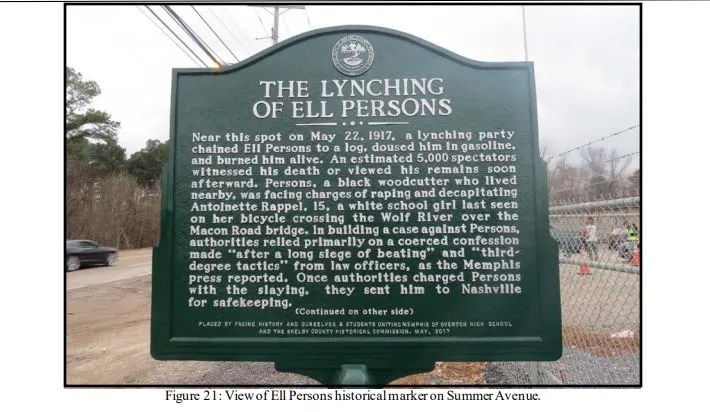
Tennessee was the 11th and final American State to secede and join the Confederacy in its insurrection against the United State government beginning in 1861 and concluding in 1865.
The Civil War was all about States rights and the right to own black slaves.
Obviously some beliefs have not changed in the past 158 years.
Civil rights is still a mirage for too many of America’s Black citizens.
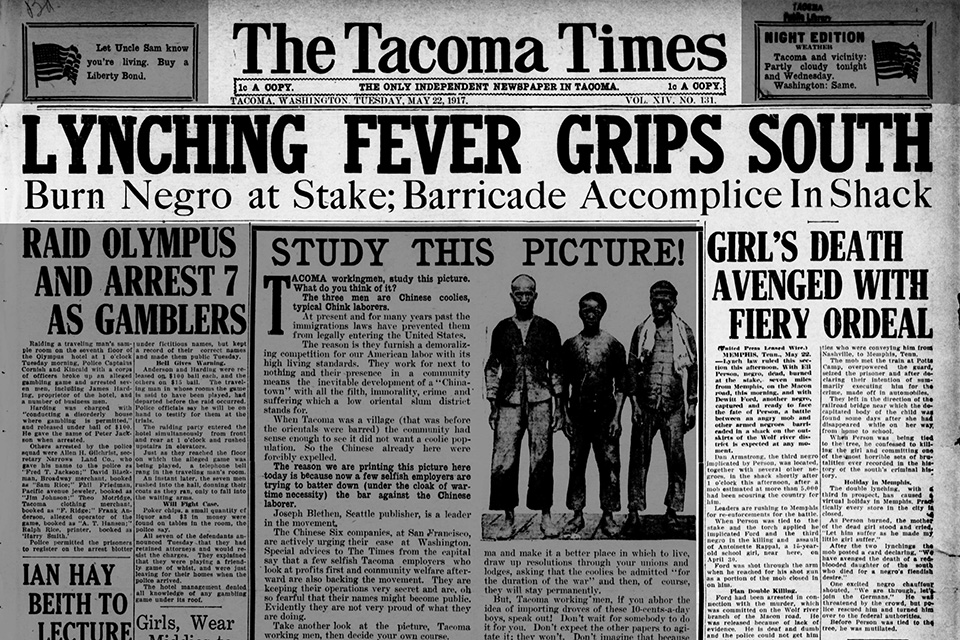
Top photo: Tacoma Times 5.22.2017 Just as appalling as the “Lynching Fever Grips South” is the story underneath it headlined “Study This Picture.” Blatant anti-Asian racism on full display on page one above the fold.The Chinese Six Companies of San Francisco is the subject of criticism for wanting tobring Chinese workers into the Tacoma, Washington area.
The Guardian 3.2.2023
Like many US states, Tennessee has a long history of official killing.
A Tennessee Republican lawmaker apologized after suggesting “hanging by a tree” could be added to a bill concerning methods of execution in the state.
Paul Sherrell, a state representative from Sparta, made the suggestion on Tuesday, during discussion of an amendment which would allow execution by firing squad in Tennessee.
“I was just wondering, could I put an amendment on that that would include hanging by a tree, also,” Sherrell asked, offering to co-sponsor the state bill.
The remark prompted considerable backlash, particularly as it was made in a southern state with a brutal history of racially motivated lynchings.
The prominent civil rights attorney Ben Crump wrote: “This is UNREAL! … How in 2023 can a government official have such a grotesque suggestion leave his mouth?!”
On Wednesday, Sherrell said sorry.
“My exaggerated comments were intended to convey my belief that for the cruelest and most heinous crimes, a just society requires the death penalty in kind,” he said.
“Although a victim’s family cannot be restored when an execution is carried out, a lesser punishment undermines the value we place on protecting life.”
Reprehensible Republican Paul Sherell
Sherrell said he “sincerely apologise[d] to anyone who may have been hurt or offended”.
There are currently 47 inmates on death row in Tennessee.
Earlier this year, the state was found to have repeatedly violated its execution protocol since 2018, regarding the improper testing of lethal injection drugs.
The Republican governor, Bill Lee, said in January there would be no more executions until action had been taken “to fix the protocol”.
According to the state government, “until 1913, all individuals convicted of a capital offense were hanged.
All too typical newspaper headline – June 16, 1920
“… From 1913 to 1915, there was no capital punishment in Tennessee … From 1916 until 1960, 125 persons were executed by electrocution in Tennessee.
“In 2000, lethal injection replaced electrocution as the primary method of execution. In September, 2007 the first electrocution in 47 years was carried out.”
For nine years from 2009, the state did not execute anyone. Executions resumed in 2018.
Why is it that so many people, even in San Francisco, believe the nonsense that lower taxes on big business and more cops make for a healthier City?
Mayor Breed and her @StopCrimeSF cadres are reaping the Whirlwind of their lies which drove Chesa Boudin from office.
1. Crime, which was generally in decline during Chesa’s tenure has ramped up. Typically the MSM (including The Chronicle) is reporting the crime but not holding Breed’s handpicked crony DA accountable like it did Chesa.
2. People were scared off from downtown by all the rhetoric about rampant crime. All in the interest in deposing someone who was not part of the City Hall gang.
Like, those of us who opposed the Recall and tried in vein to debunk the Mayor’s lies, the credulous San Francisco public can reap the whirlwind of a tanking economy and rampant crime.
Excerpted from The San Francisco Chronicle 3.1.2023
Mayor London Breed’s plan to use tax breaks to attract new companies to downtown San Francisco is facing early pushback from an influential critic on the Board of Supervisors.
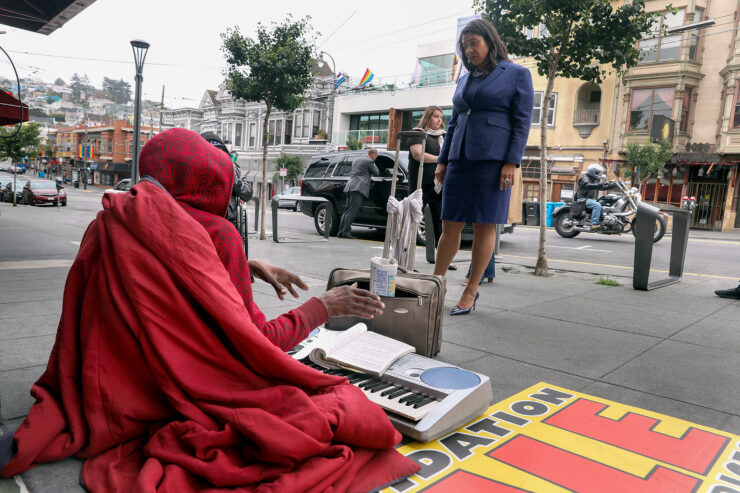
Supervisor Connie Chan at City Hall
Chan said her approach to any structural tax reform would be more about making sure that everyone is “paying their fair share.”
Supervisor Connie Chan, the board’s budget chair, on Wednesday questioned whether the mayor’s proposal could have unintended consequences, particularly in light of the city’s projected $728 million two-year deficit caused largely by reduced expectations from business and commercial property tax revenues.
“We’re not going to sacrifice these things at the expense of, if I may be frank, downtown interests,” Chan said. “We have to think of the city as a whole and not just one area. We have to take a step back and hold ourselves accountable.”
Empty streets of downtown San Francisco
Chan said she also wants to advocate for more ambitious proposals such as securing state and regional funding that could help make Muni free, first for low-income residents and eventually for the city’s entire population. Her office said free public transit could boost the city’s economic recovery by improving ridership. Breed previously vetoed legislation that would have made Muni free for a three-month pilot program.
Chan also hopes to advocate for a more regional approach to reducing homelessness, as well as expanded child care services for working families.
In a total abdication and dereliction of duty in her responsibility to uphold equal Justice under the law San Francisco District Attorney Brooke Jenkins is absolving a murderous cop of any culpability in the murder of an unarmed citizen.
Brooke Jenkins should not be the Chief Law Enforcement officer in San Francisco. Her political machinations to protect the San Francisco Police Department from facing Justice for their misconduct is an abomination and miscarriage of Justice.
San Francisco Chronicle 3.1.2023
District Attorney Brooke Jenkins on Wednesday moved to dismiss the historic manslaughter prosecution of the first San Francisco police officer believed to have ever been charged with an on-duty shooting.
Once the case is dismissed, only nine days remain in the statute of limitations to file charges.
The dismissal of the case against former Officer Christopher Samayoa, who was just days out of the police academy when he fatally shot a fleeing, unarmed Keita O’Neil in December 2017, has become a flashpoint for Jenkins and police reform advocates who say she is backing off her campaign promise to hold officers accountable for excessive violence.
Judge Loretta M. Giorgi granted but stayed filing the dismissal until March 7 in case Attorney General Rob Bonta’s office requests more time to weigh whether it will take up the prosecution.
Jenkins said the case never should have gone to court, and has characterized it as a political prosecution by her recalled predecessor, former District Attorney Chesa Boudin, who charged Samayoa nine months after taking office in 2020, and after discovering that he had only days to do so before the statute of limitations would expire.
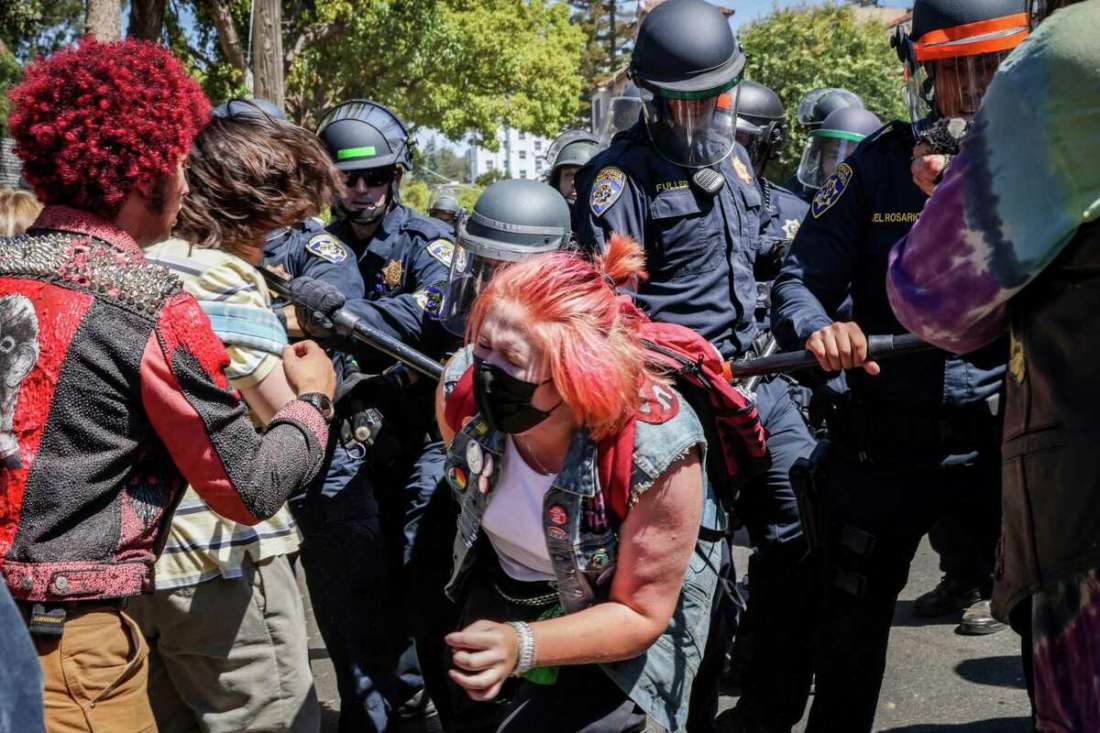
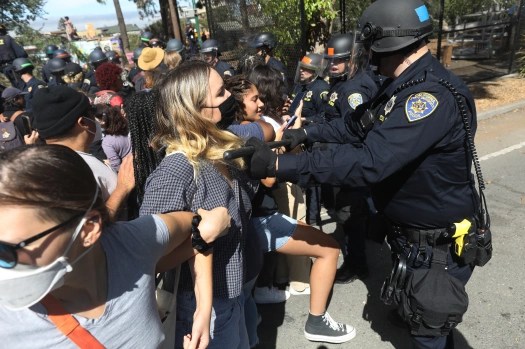
Governor Ronald Reagan, who had been publicly critical of university administrators for tolerating student demonstrations at the Berkeley campus, sent California Highway Patrol and Berkeley police officers into People’s Park on May 15, 1969, at 4:30 a.m. The action came at the request of Berkeley’s mayor, Wallace J.S. Johnson. Beginning at noon about 3,000 people appeared in Sproul Plaza at nearby UC Berkeley for a rally, the original purpose of which was to discuss the Arab–Israeli conflict. The crowd later moved down Telegraph Avenue toward People’s Park. Reagan’s chief of staff, Edwin Meese III, assumed responsibility for the governmental response to the People’s Park protest, and he called in the Alameda County Sheriff‘s deputies, which brought the total police presence to 791 officers from various jurisdictions.
James Rector was visiting friends in Berkeley and watching from the roof of Granma Books when he was shot by police; he died on May 19. A carpenter, Alan Blanchard, was permanently blinded by a load of birdshot directly to his face. At least 128 Berkeley residents were admitted to local hospitals for head trauma, shotgun wounds, and other serious injuries inflicted by police. One local hospital reported two students wounded with large caliber rifles as well.[News reports at the time of the shooting stated that 50 people were injured, including five police officers. Some local hospital logs indicate that 19 police officers or Alameda County Sheriff’s deputies were treated for minor injuries; none were hospitalized. However, the UCPD states that 111 police officers were injured, including one California Highway Patrol Officer, Albert Bradley, who was knifed in the chest.
That evening, Governor Reagan declared a state of emergency in Berkeley and sent in 2,700 National Guard troops. For two weeks, the streets of Berkeley were patrolled by National Guardsmen. Demonstrations continued for several days after Bloody Thursday. By May 26, the city-wide curfew and ban on gatherings had been lifted, although 200 members of the National Guard remained to guard the fenced-off park. On May 30, 1969, 30,000 Berkeley citizens (out of a population of 100,000) secured a city permit and marched without incident past the barricaded People’s Park to protest Governor Reagan’s occupation of their city and the casualties. Nevertheless, over the next few weeks National Guard troops broke up any assemblies of more than four people who congregated for any purpose on the streets of Berkeley, day or night. In the early summer, troops deployed in downtown Berkeley surrounded several thousand protesters and bystanders, emptying businesses, restaurants, and retail outlets of their owners and customers, and arresting them en masse.
Excerpt from Wikipedia.
Senator Scott Wiener, the lapdog and shill for realtors and speculators spouted off his outrage. He got it right by half when he said the Court ruling, “introduces the idea that people are pollution.“
Yes, Senator. “People are pollution” because they cause pollution.
People’s Park 1969 and 2023 – A decades long struggle
Excerpted from The Standard 2.27.2023
California Gov. Gavin Newsom said he’ll work this year to reform a landmark state environmental law that he says has been weaponized by wealthy homeowners to block badly needed housing for students at the University of California Berkeley.
The 1st District Court of Appeals’ ruling Friday could delay the building of a complex at Berkeley’s historic People’s Park, which is owned by the University of California Berkeley, for years or even decades, Newsom said.
State Sen. Scott Wiener, a Democrat from San Francisco, said the appeals court ruling was “horrific” and would have major implications for housing in California because it classifies noise from people as an environmental impact.
“It introduces the idea that people are pollution,” Wiener said.
The project has faced opposition since its inception and last year two local organizations, Make UC a Good Neighbor and The People’s Park Historic District Advocacy Group, filed a lawsuit against it, citing the CEQA law and saying the university’s environmental impact report had not considered the housing complex would bring more noise to the area.
The People United Will Never be Defeated
Newsom’s comments over the weekend followed a state appeals court ruling that found the University of California “failed to assess potential noise impacts from loud student parties in residential neighborhoods near the campus” as required by the California Environmental Quality Act, or CEQA, when it planned new housing near the university.
The housing complex would accommodate about 1,100 UC Berkeley students and 125 formerly homeless people. Part of the park would be set aside to commemorate its significance in the civil rights movement, university officials have said.
University officials said in a statement Monday they were dismayed by the decision and planned to file an appeal with the California Supreme Court, adding that their commitment to building the People’s Park project “is unwavering.”
The university called the appeals court decision “unprecedented and dangerous” because it could prevent colleges and universities across California from building student housing.
The landmark 1970 environmental law requires state and local agencies to evaluate and disclose significant environmental effects of projects and to find ways to lessen those effects. But in the decades since its passage, critics say the environmental law has been used by opponents of development to block housing and public transit projects.
“This law needs to change, and I’m committed to working with lawmakers this year to making more changes so our state can build the housing we desperately need,” he added.
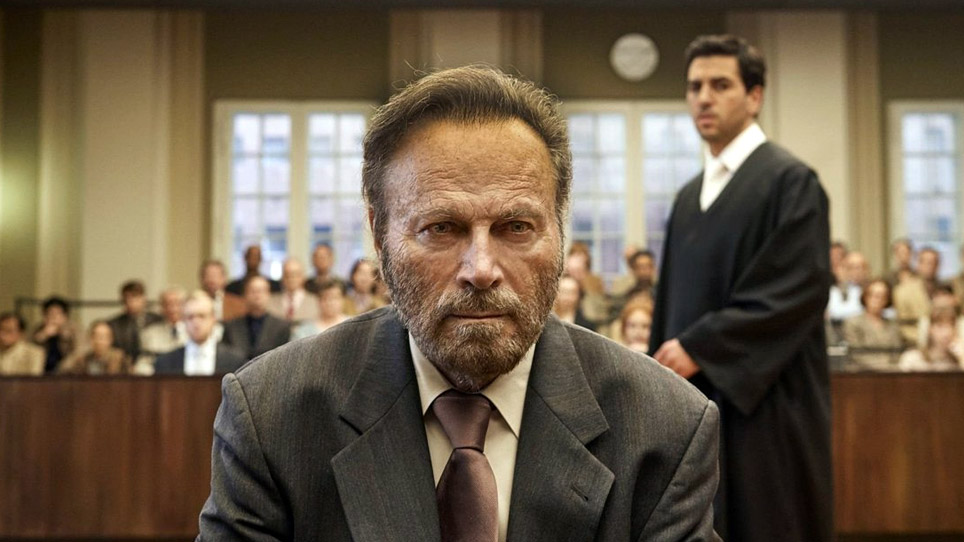
The story of The Collini Case is based on Ferdinand von Schirach‘s 2011 novel of the same name and set in 2001 Berlin. The film sees a young lawyer called Caspar Leinen (played by Elyas M’Barek) given the task of defending a murderer, an old and mysterious Italian man called Fabrizio Collini (Franco Nero), accused of killing German tycoon Hans Meyer (Manfred Zapatka), who was a father figure for him in the 1980s.
The case seems pretty straightforward from the start; however, the murderer’s motives are still unknown and Caspar begins to dig into his client’s and Meyer’s past to find out more. Meyer’s gradaughter, Johanna, (Alexandra Maria Lara) — who happens to be a former flame of Caspar’s — disapproves of him working on the case, and his former university lecturer Prof. Mattinger (Heiner Lauterbach) will play an adversary role during the trial.
Unlike most films of the genre, the story here does not focus entirely on the search for the murderer.
The viewer’s attention turns instead to the search for motives, trying to rebuild the two men’s personal tragedies.
Caspar’s tireless investigation will lead him to uncover a major scandal in the German justice system and a brutal war crime that took place in Tuscany at the end of the Second World War.
The film is characterized by a solid, involving script and great acting. M’Barek’s determination is plain to see on screen, and while his inner conflicts are not too evident in most of the scenes showing his investigation, his meetings with witnesses or him making his case in court, these are well conveyed through a few sequences interspersed throughout the narration that show him training in a boxing ring. Meanwhile, Nero’s interpretation sparkles especially through his silences, red eyes and hesitations, which say much more about his troubled soul than the few lines he pronounces throughout the film.
Future German tycoon Hans Meyer (Manfred Zapatka) as an Waffen SS leader in Italy in 1944
In terms of aesthetics, the film’s cinematography (courtesy of Jakub Bejnarowicz) is astonishing, powerfully depicting the torments suffered by the lawyer and Collini, and contributing to creating the gloomy atmosphere required by the genre. Ben Lukas Boysen‘s score is present only when indispensable, and often has a great emotional impact.
The search for the truth is finally rewarding. In its simplicity, the film’s last scene gifts the viewer a touch of poetry and a moving moment that makes the entire enterprise worthwhile.
Kreuzpaintner’s latest feature is a beautiful piece, its change of perspective — searching for the motives rather than for the murderer – making it much more appealing and innovative than other films of the genre, all the while sticking closely to its codes and conventions.
The weather in San Francisco has been extremely windy and chilly.
Living close by the Pacific Ocean and the Golden Gate National Recreation area I am able to capture the beauty and the the wildness of the northwest corner of the City.
The photos were taken in Sutro Heights Park and along the Coastal Trail.
There were few people on a Wednesday afternoon who wanted to brave the elements.
It was a very invigorating day to go on a photo shootand capture the moment for posterity.
One of the lions guarding the gate to Sutro Heights Park
A fallen tree toppled over by the fierce northwest wind
Another fallen tree in Sutro Heights Park
The beginning of the Coastal Trail road
The view of the Marin Headlands from the Coastal Trail on a blustery day
The iconic Golden Gate Bridge
Further along the Coastal Trail
The beautiful white rock
The dense trees and shrubbery dominate the Coastal Trail
It must have been a frosty meeting in Moscow when U.S. Ambassador Lynne Tracy was summoned to the Foreign Ministry for a dressing down.
Putin’s Foreign Ministry issued its demand as the first anniversary of the Russian invasion of Ukraine approaches.
The same day Putin withdrew participation in the one remaining nuclear arms treaty between the Americans and the Russians.
It appears there is no end in sight on the anniversary of Putin’s war of aggression against Ukraine. The killing and suffering will continue.
The Moscow Times 2.21.2023
The Russian Foreign Ministry summoned the U.S. ambassador on Tuesday over what it called “Washington’s expanding involvement” in the war in Ukraine, the Interfax news agency reported.
The ministry demanded the U.S. withdraw “soldiers and equipment” from Ukraine — a reference to Western military assistance to the country.
Ukrainian soldiers remove body of a Russian soldier in the city of Kupiansk-Vuzlovyi near frontline in Ukraine’s northeastern Kharkiv region, Nov. 1, 2022. Russian families searching for loved ones say the system for finding missing soldiers is as disorganized as President Vladimir Putin’s military effort, which has been marked by dysfunction from the beginning. (Finbarr O’Reilly/The New York Times)
The Foreign Ministry served a notice to the U.S. Ambassador to Moscow Lynne Tracy, accusing Washington of supplying weapons to the Armed Forces of Ukraine as well as sharing information on Russia’s military and civilian infrastructure with Kyiv.
“In this regard, the ambassador has been informed of the counter-productivity of the current aggressive U.S. course,” a Foreign Ministry statement said.
“It was noted in particular that in order to de-escalate the situation, Washington should take steps to ensure the withdrawal of U.S.-NATO soldiers and equipment and also stop its anti-Russian activities,” the ministry added.
The move comes just a day after U.S. President Joe Biden made a trip to Kyiv, promising $500 million in fresh arms deliveries to Ukraine ahead of the first anniversary of the Russian invasion.
Meanwhile, Russian President Vladimir Putin vowed on Tuesday to press on with Russia’s military campaign in the country and said that further Western arms deliveries to Ukraine would provoke a Russian response.
Vladimir Putin and his generals ponder their next moves in Ukraine
“The more long-range Western systems are delivered into Ukraine, the further we’ll have to push the threat from our borders,” Putin said in an address to both houses of parliament in Moscow.
A sober American Ambassador Lynne Tracy leaves the Russian Foreign Ministry 2.21.2023
Top photo credit: A troop carrier full of Ukrainian soldiers returns from the front line in Sievierodonetsk, on June 22, 2022. Johanna-Maria Fritz / Ostkreuz
While the Russian aggression continues against Ukraine, the Berlin Film Festival carries on.
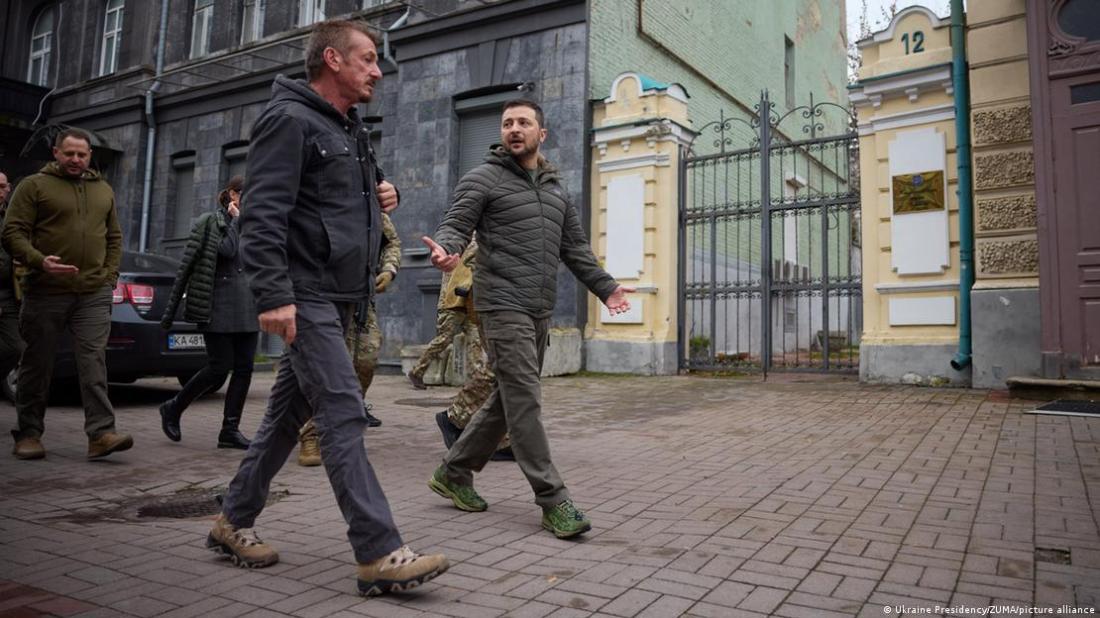
One of the political hi-lites of the 2023 Festival is the premier of Sean Penn’s documentary ‘Superpower’.
As the following DW piece indicates this documentary about Volodymyr Zelenskyy was planned before Putin invaded Ukraine a year ago.
The onset of the Russian aggression and Zelenskyy’s leadership makes the film all the more powerful and poignant.
Excerpted from Deutsche Welle 2.18.2023
The actor-director’s highly anticipated documentary about Volodymyr Zelenskyy and the Ukrainians’ fight for democracy has premiered at the Berlin International Film Festival.
Three months before the invasion, Sean Penn and his film production team were already in Ukraine, preparing a documentary that would profile Volodymyr Zelenskyy’s atypical career trajectory from actor-comedian-producer to president.
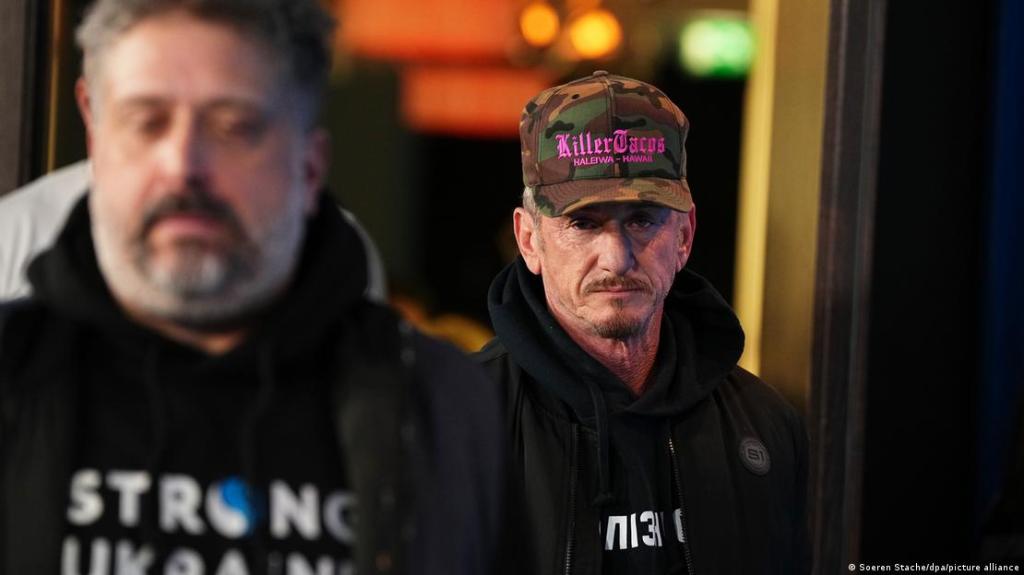
Sean Penn director of the documentary ‘Superpower’ at the Berlin Film Festival
But that story took an unexpected turn when Russia invaded Ukraine, leading the still relatively inexperienced politician to become a wartime leader.
The ensuing documentary, “Superpower,” co-directed by Sean Penn and Aaron Kaufmann, premiered on Friday at the Berlinale.
The premiere came a day after Penn’s appearance on stage at the film festival’s opening ceremony, where he introduced a live video address by the Ukrainian president.
“Superpower” offers a good introduction to how the comedic superstar, as a Russian-speaking Jew, did not fit into Putin’s propaganda narrative that Ukraine is filled with neo-Nazis who want to deprive the ethnic Russian population of their rights. That didn’t stop the Kremlin from branding Zelenskyy as a Nazi, though.
The film also shows how the Ukrainians’ own perception of Zelenskyy evolved within a few months.
In interviews shot in December 2021, different people admit that they didn’t vote for him, skeptical of his ties to oligarchs as a powerful TV producer, all while accepting that he was still “the lesser of all evils.” A Crimea veteran says the president unfortunately “probably doesn’t have the balls” to face Putin.
Ukrainian President Zelenskyy makes an appearance via video at the 2023 Berlin Film Festival
But Zelenskyy did become the unifying leader of Ukraine, notably by staying in his country to defend it instead of fleeing, famously declining US President Joe Biden’s offer to help him leave by stating, “I need ammunition, not a ride.”
A year into the conflict, Russia’s continued attacks and the growing number of casualties make it hard to conclusively define the leader’s legacy: “Zelenskyy went beyond expectations, but Russia is not going anywhere,” as one expert interviewed in the film puts it.
But Sean Penn definitely found a figure of hope in Zelenskyy, one he believes should inspire Americans to remember “that their hardwired sense of freedom shouldn’t be taken for granted.”
He knows of what he speaks. His latest report published in substack.com has received vigorous pushback from the Biden Administration.
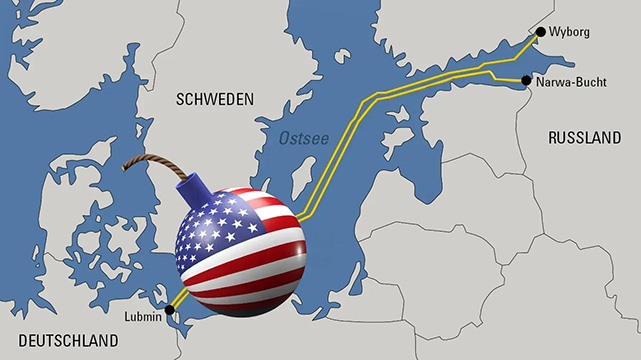
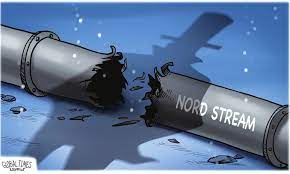
Hersh claims that the United States was responsible for destroying the Nordstream 2 pipeline in September 2022 which was set to carry natural gas from Russia to Germany.
The American administration has been consistent in its disavowal of any involvement. Instead attempting to cast responsibility on Russia.
Seymour Hersh was interviewed at length on Democracy Now last week. A link to this fascinating interview is attached.
The American mainstream media has been totally derelict in not following up on this story though it finally seems to be gaining traction in international media.
Nordstream 2 – From Russia with Gas
Excerpted from Substack.com-Seymour Hersh 2.8.2023
The source had a much more streetwise view of Biden’s decision to sabotage more than 1500 miles of Gazprom pipeline as winter approached. “Well,” he said, speaking of the President, “I gotta admit the guy has a pair of balls. He said he was going to do it, and he did.”
Asked for comment, Adrienne Watson, a White House spokesperson, said in an email, “This is false and complete fiction.” Tammy Thorp, a spokesperson for the Central Intelligence Agency, similarly wrote: “This claim is completely and utterly false.”
Biden’s decision to sabotage the pipelines came after more than nine months of highly secret back and forth debate inside Washington’s national security community about how to best achieve that goal. For much of that time, the issue was not whether to do the mission, but how to get it done with no overt clue as to who was responsible.
President Biden re destruction Nordstream 2 pipeline – “I promise you, we’ll be able to do that.” 2.7.2022
In the immediate aftermath of the pipeline bombing, the American media treated it like an unsolved mystery. Russia was repeatedly cited as a likely culprit, spurred on by calculated leaks from the White House—but without ever establishing a clear motive for such an act of self-sabotage, beyond simple retribution. A few months later, when it emerged that Russian authorities had been quietly getting estimates for the cost to repair the pipelines, the New York Times described the news as “complicating theories about who was behind” the attack. No major American newspaper dug into the earlier threats to the pipelines made by Biden and Undersecretary of State Nuland.
While it was never clear why Russia would seek to destroy its own lucrative pipeline, a more telling rationale for the President’s action came from Secretary of State Blinken.
Asked at a press conference last September about the consequences of the worsening energy crisis in Western Europe, Blinken described the moment as a potentially good one:
“It’s a tremendous opportunity to once and for all remove the dependence on Russian energy and thus to take away from Vladimir Putin the weaponization of energy as a means of advancing his imperial designs. That’s very significant and that offers tremendous strategic opportunity for the years to come, but meanwhile we’re determined to do everything we possibly can to make sure the consequences of all of this are not borne by citizens in our countries or, for that matter, around the world.”
More recently, Victoria Nuland expressed satisfaction at the demise of the newest of the pipelines. Testifying at a Senate Foreign Relations Committee hearing in late January she told Senator Ted Cruz, “Like you, I am, and I think the Administration is, very gratified to know that Nord Stream 2 is now, as you like to say, a hunk of metal at the bottom of the sea.”
Asked why he thought the Russians failed to respond, he said cynically, “Maybe they want the capability to do the same things the U.S. did.
“It was a beautiful cover story,” he went on. “Behind it was a covert operation that placed experts in the field and equipment that operated on a covert signal.
It is a major city where elections are chaotic and tenants stand up for their rights.
Refusal by the Socialist Party (SPD) incumbent Mayor Franziska Giffey to follow the will of the voters who want expropriation of major Berlin landlords has completely disrupted the political status quo.
At risk-Ruling Left, Socialist, Green Party coalition in Berlin
Excerpted from The Nation 2.17.2023
BERLIN—An unprecedented do-over election here last Sunday, February 12, put the notoriously left-wing German capital on the precipice of conservative government for the first time in two decades.
While the city of Berlin was never viewed as the paragon of German efficiency, the 2021 election mess is still remarkable: polling sites without enough ballots, or with the wrong ones; hours-long lines that delayed voting into the night; a marathon race on polling day that blocked traffic across the capital.
While the election hiccups are one obvious reason for discontent, another equally troubling issue is Mayor Franziska Giffey’s pointed refusal to take action in response to a historic 2021 referendum that saw 59.1 percent of voters endorse expropriating major landlords in the city to order to increase the supply of publicly-held housing.
Berliners take to the streets to protest landlord profiteering
The revote for state and municipal government—ordered by the state’s constitutional court after widespread mishandling of the September 2021 polls—saw support for the Social Democrats (SPD) plummet, while the rival Christian Democrats (CDU) surged more than 10 percent to 28.2 percent to take the clear lead among parties.
“Berlin chose change,” proclaimed Kai Wegner, the CDU’s top candidate—albeit a bit prematurely.
While negotiations may still return the Red-Red-Green coalition of the SPD, the Green party and the Left party to power with a narrow majority, the results signal deep discontent among Berliners about the direction of the city under SPD Mayor Franziska Giffey. Support for her party fell to 18.4 percent—its lowest since German reunification—putting them in a practical tie for second place with the Greens, while the Left party maintained its traditional base of support, with 12.2 percent.
The far-right Alternative for Germany (AfD) also maintained its appeal among a small swath of voters in the latest poll with 9.1 percent support, despite having almost no chance of entering government. Complex negotiations could take up to six weeks before party leaders agree on a coalition arrangement.
Renters protest in Kreuzberg neighorhood – Berlin
Support for the successful campaign “Deutsche Wohnen & Co Enteignen” (Expropriate Deutsche Wohnen and Co.), which I covered for The Nation, cut across many social groups outside the traditional hard left, including many SPD voters. No wonder, in the face of a housing crisis and indifferent leadership, 68 percent of Berliners recently reported that their trust in political institutions had declined.
When the Constitutional Court finally threw out the results more than a year after the botched vote, SPD leadership failed to take ownership of the situation, giving an easy attack line to the opposition on the right who claimed that the city was poorly run. Wegner and other CDU politicians engaged in dog-whistle politics connecting the narrative of urban mismanagement by City Hall to crime and disorder in the streets, especially after New Year’s Eve “riots” in several immigrant-heavy neighborhoods.







































 Lee's Perspective