

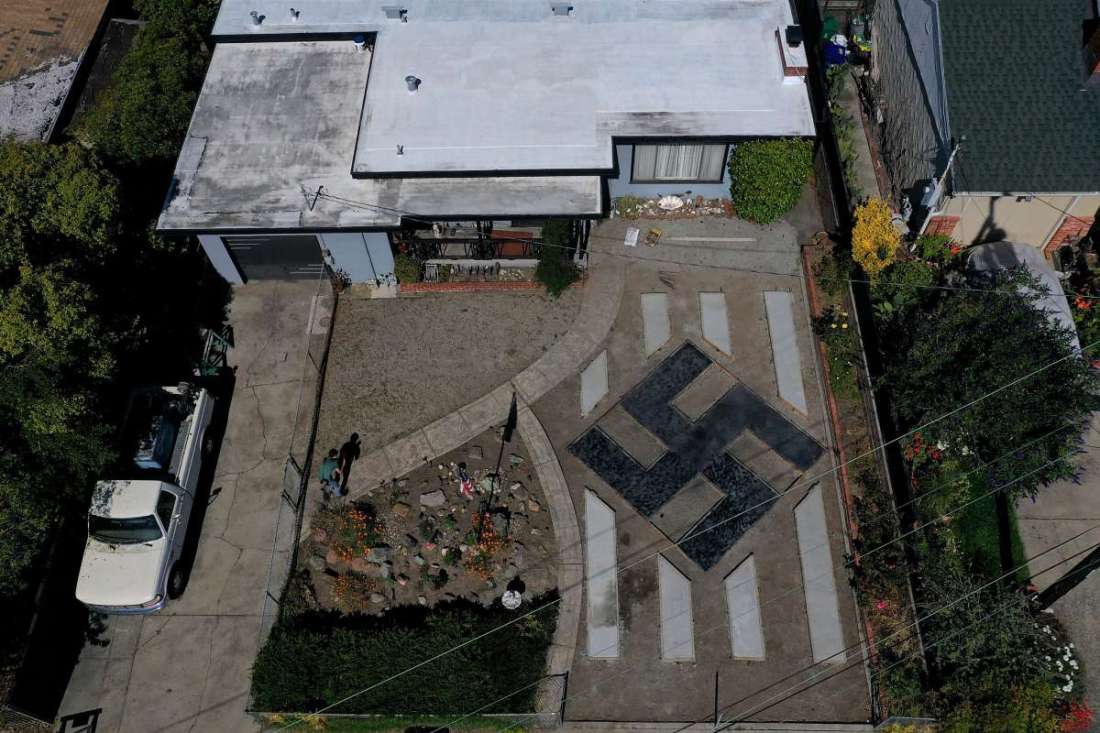
This Swastika is totally gross, disgusting and should be taken out immediately. In Germany a citizen who displays such a symbol could face criminal charges. In Germany the Swastika is outlawed if used in a context of völkisch ideology. It is reassuring the local citzenry is taking up this issue and demanding that this symbol of hate and genocide be removed immediately. It is despicable.
Excerpted from San Francisco Chronicle 6.12.2019
An online petition calling on an El Sobrante man to remove a giant concrete swastika from his front lawn has gathered more than 3,000 signatures, but the homeowner sounded unmoved Wednesday.
The petition was posted Monday on the Care2 website by a group calling itself “Not in Our Town El Sobrante.” As of 1:30 p.m. Wednesday, the petition had digital signatures from 3,207 supporters.
The petition’s goal is to persuade Steve Johnson (pictured below), a 67-year-old retired welder, to rip out a swastika he put in his front yard as part of a driveway he said he is building. Johnson told The Chronicle he understood the historical significance of the Nazi symbol, but he decided to install it anyway because he liked the design.
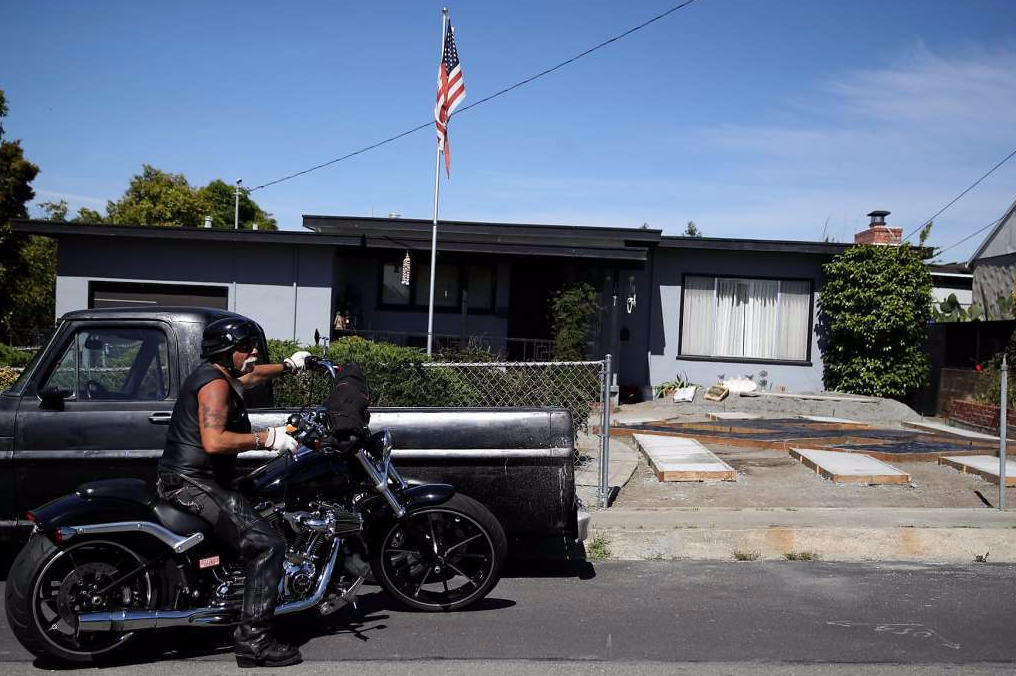
Since news stories about the swastika appeared, Johnson’s car and two pickup trucks have been egged, he said. He suspects neighbors. The answering machine on his phone has been filled with insults and threats, he added, and lots of people have driven past and taken photographs.
Johnson covered the swastika with “blankets and stuff to calm things down,” but he hasn’t removed the offending symbol — though he held out the possibility.
“I haven’t decided what I’m going to do,” Johnson said. “There’s been a lot more (reaction) than I expected. Everybody’s on my butt about this.”
The petition’s author — identified as Sarah Dunham by a Care2 spokeswoman — did not, and she notes that the swastika has become an international symbol of hatred.
















 Lee's Perspective