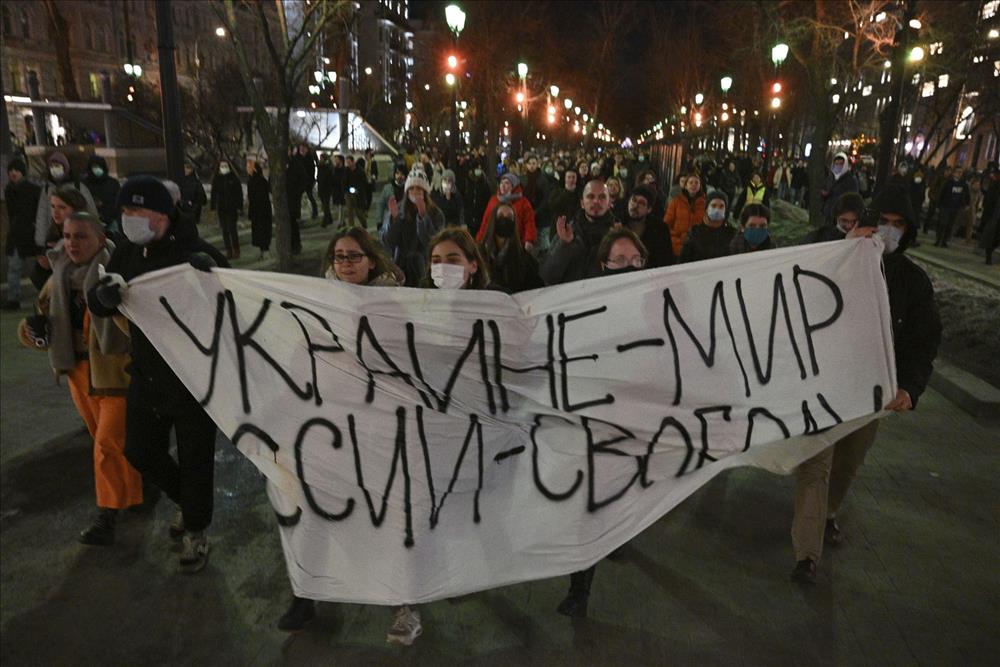
Ukraine. “We want to remind the great powers there are no minor incursions.”

The situation in Ukraine is growing increasing perilous. Most Americans are not tuned in to this rapidly escalating crisis. They should.

Excerpted from The Moscow Times 1.20.2022

The United States and its allies Thursday warned Moscow of grave consequences if “any” of the tens of thousands of troops massed on the border were to cross the border into Ukraine.

“We want to remind the great powers that there are no minor incursions and small nations. Just as there are no minor casualties and little grief from the loss of loved ones,” Ukrainian President Volodymyr Zelensky wrote on Twitter.

Hours before Secretary of State Anthony Blinken arrived in Berlin to coordinate the possible response to Russia, President Biden sparked controversy as he appeared to indicate that a “minor incursion” might prompt a smaller reaction from NATO allies.

“It’s one thing if it’s a minor incursion, and then we end up having a fight about what to do and not do, et cetera,” he said.

Following talks in Berlin with Germany, France, and Britain, U.S. Secretary of State Antony Blinken underlined that Russia “cannot match” Western powers’ resoluteness.

Ukraine II 1.20.2022.jpg

Allowing Russia to violate Ukraine’s territorial integrity would “drag us all back to a much more dangerous and unstable time, when this continent, and this city, were divided in two… with the threat of all-out war hanging over everyone’s heads,” he said in the German capital.

In a show of that unity, German Foreign Minister Annalena Baerbock, speaking alongside Blinken, said the West would not shy away from taking action even if that included measures that “could have economic consequences for ourselves.”

Fears are mounting that a major conflict could break out in Europe, and British Prime Minister Boris Johnson cautioned that Russia marching on Ukraine would have repercussions beyond the continent. “It would be a disaster for the world,” he said.

Ukraine III 1.20.2022.jpg

https://www.themoscowtimes.com/2022/01/20/west-warns-russia-against-any-ukraine-incursion-a76107

Idea Germany delivers weapons that could kill Russians. Difficult for Germans

Lee Heidhues 1.19.2022

On June 22, 1941 Nazi Germany launched Operation Barbarossa and invaded Russia.

https://en.wikipedia.org/wiki/Operation_Barbarossa

An invasion which resulted in the loss of hundreds of thousands of soldiers and civilians. The Russians finally repelled the Nazi Germany invasion and proceeded to march onto Berlin at the end of World War II in 1945.

Nazi Germany’s invasion of Russia and its aftermath resulted in the division of Germany into East and West, the partition of Berlin, the creation of satellite States beholden to Russia and the Cold War between East and West which lasted over 40 years.

Many Germans know full well the price both countries paid for the Nazi invasion of Russia. This is why Germans today still believe, “The idea that Germany delivers weapons that could then be used to kill Russians is very difficult to stomach for many Germans,”

Excerpted from Deutsche Welle 1.19.2022

Both the United States and the United Kingdom have announced arms deliveries to Ukrkaine, mostly handguns, ammunition and anti-tank weapons. A group of US senators visiting Ukraine earlier this week promised more weapons would be on the way.

Operation Barbarossa I 1.19.2022

German government officials have expressed concern that such deliveries could push tensions higher and make negotiations more difficult.

In their coalition agreement, the center-left SPD, the Greens and the neoliberal Free Democrats (FDP) agreed on a restrictive arms export policy that does not allow any weapons deliveries to crisis regions. 

German foreign minister Annalena Baerbock said her government’s decision on weapons had a historical dimension — a reference to Germany’s invasion of the Soviet Union during the Second World War.

“The idea that Germany delivers weapons that could then be used to kill Russians is very difficult to stomach for many Germans,” Marcel Dirsus, a nonresident fellow at the Institute for Security Policy at Kiel University (ISPK), told DW.

Operation Barbarossa II 1.19.2022.jpg

It hasn’t taken long to put the new German government’s talk of a bolder and more values-based foreign policy to the test. After just six weeks in power, it finds itself confronted by Russia’s military moves against Ukraine, which fears another attack from its bigger and more powerful neighbor.

Germany and its allies are struggling to agree on a response to Russia’s unclear intentions. German policymakers, including within the three-party coalition government, are also debating among themselves.

On Tuesday, Chancellor Olaf Scholz, of the Social Democrats (SPD), said Russia would pay a “high price” in the event of an invasion of Ukraine. On Wednesday, Scholz reiterated that silence on the issue of Ukraine was not an option. His foreign minister, the Greens’ Annalena Baerbock, has made similar expressions of solidarity with Ukraine but rejected its latest request for weapons deliveries.

“We are prepared to have a serious dialogue with Russia to defuse the highly dangerous situation right now because diplomacy is the only viable way,” Baerbock told reporters on Monday during a visit to Kyiv, the Ukrainian capital.

Operation Barbarossa III 1.19.2022
Russian soldiers display captured Nazi Germany flag

https://www.dw.com/en/why-germany-refuses-weapons-deliveries-to-ukraine/a-60483231


SF Mayor joins forces with Big Brother “Exigency can mean almost anything.”

The shocking push to give cops more power and turn San Francisco into the Surveillance State just got another push from our Law and Order Mayor.

London Breed will be placing a measure on the upcoming ballot which would open the doors to more police surveillance of San Francisco citizens. Breed is pandering to fear and paranoia as she continues her Police State crusade.

law and order Time 12.14.2021

San Francisco voters must turn back this continuing official assault on its civil rights.

Excerpted from San Francisco Chronicle 1.18.2022

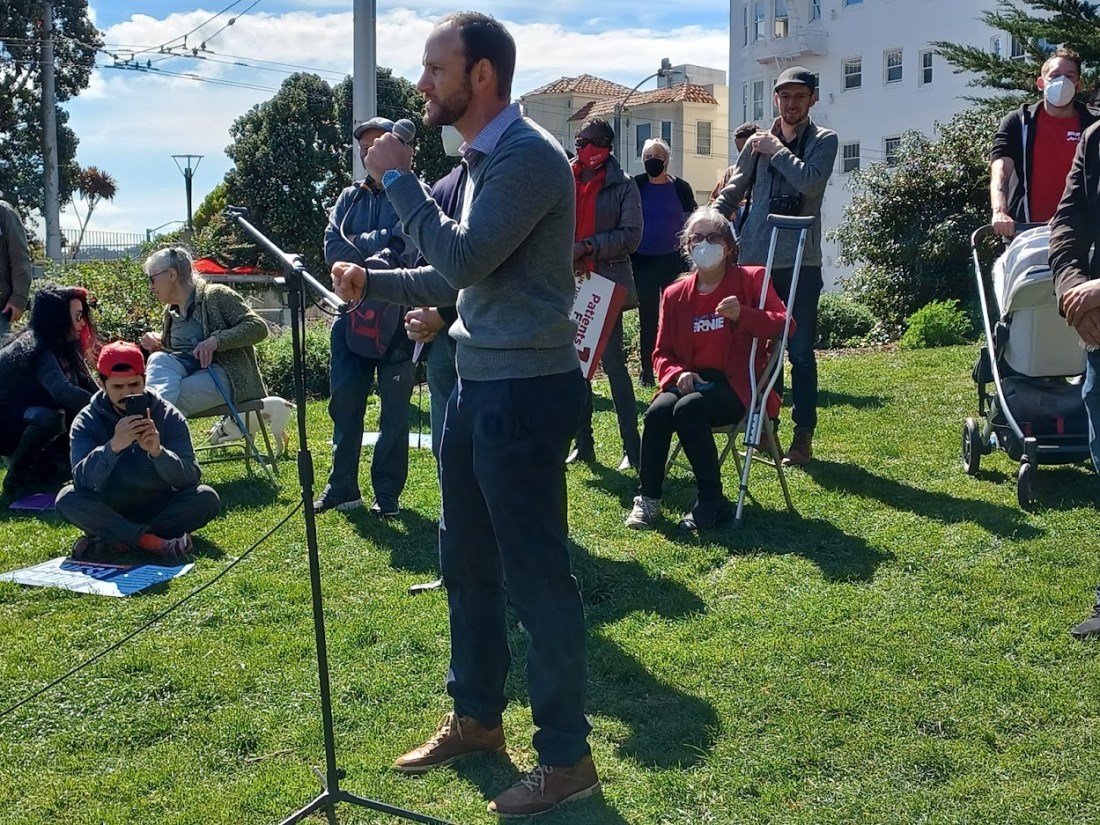
Mayor London Breed on Tuesday filed a ballot measure that will ask San Franciscans to expand and clarify the circumstances under which police can monitor surveillance cameras in real time, advancing a key element of her plan to crack down on crime in the Tenderloin and citywide.

Saira Hussain, an attorney with the Electronic Frontier Foundation — a San Francisco-based nonprofit that focuses on privacy protections — said she believes the proposal was “poorly drafted, and introduces a loophole large enough to render the surveillance technology ordinance meaningless.”

War is Peace Freedom is Slavery 1.18.2022.jpg
Mayor Breed joins Big Brother – “Exigency can mean almost anything.”

“The ordinance as it stands allows for exigency when there is a danger to life or serious physical harm to a person,” Hussain said. “What the mayor’s proposal tries to do is expand that to the point (that) basically exigency can mean almost anything.”
The measure is twofold: One portion seeks to broaden the instances in which police can access live feeds, adding certain property crimes like organized retail theft, looting and rioting to a list of “critical events” that qualify. Current law, under a 2019 ordinance on that limits city use of surveillance technology, states that only emergencies that involve danger of death or serious injury can bypass an approval process with the Board of Supervisors.

The second portion would allow police camera access in “public safety crisis areas,” which would include spaces known for open-air drug markets or where there has been a documented spike in violent crimes. The measure involves privately owned security cameras placed throughout the city.

Dick Tracy I 3.16.2021
Mayor Breed’s playbook

“The criminal activity at issue is not victimless,” Breed said in a statement. “We are talking about violent crimes, including property crimes that are being perpetrated more frequently with the use of guns, getaway vehicles, and other weapons that can seriously injure or even kill innocent bystanders.”

The mayor’s ballot measure has already drawn scrutiny from privacy advocates and supporters of the 2019 surveillance technology ordinance.

https://www.sfchronicle.com/bayarea/article/Breed-files-ballot-measure-seeking-to-expand-16786369.php

England: Draconian,anti-democratic laws. Reminiscent of Cold War Soviet states

It is shocking to watch the news reports that the British Parliament is considering a series of harsh laws to limit the right of free speech. For now the effort by the Conservative government of Boris Johnson has come to a halt. The House of Commons was ready to pass the legislation.

Fortunately reason prevailed in the House of Lords. At least temporarily. The goverment argued these harsh measures are necessary to preserve “the rights and freedom of the law abiding majority” and vows to keep pushing.

This is a free speech issue which needs close monitoring and scrutiny.

Excerpted from The Guardian 1.18.2022

Controversial measures including police powers to stop noisy protests could be brought back to the Commons by the government after a series of late-night defeats in the House of Lords, the justice secretary, Dominic Raab, has said.

The Labour frontbencher Richard Rosser said the “sweeping, significant and further controversial powers” had not been considered by the Commons and called it an “outrageous way to legislate”.

Rosser said: “We cannot support any of these last-minute, rushed and ill-thought-through broad powers… … with the exception of approving the increased sentences for wilfully obstructing motorways and major roads.”

The independent crossbencher and prominent QC Alex Carlile, who served previously as independent reviewer of terrorism legislation, said: “The dilution of without-suspicion stop and search powers is a menacing and dangerous measure.”

Britain anti protest bill V 1.18.2022.jpg

Brian Paddick, a Liberal Democrat peer who was a deputy assistant commissioner in the Metropolitan police, said: “If the government is determined to bring in these draconian, anti-democratic laws, reminiscent of cold war eastern bloc police states, they should withdraw them now and introduce them as a separate bill to allow the democratically elected house time to properly consider them.”

Lord Paddick added: “The anti-protest measures in the original bill were dreadful. These measures and the way they have been introduced are outrageous.”

Peers rejected a series of measures in the police, crime, sentencing and courts bill that were proposed in response to activist movements such as Insulate Britain and Extinction Rebellion. The bill will return to the Commons for MPs to decide whether to accept the changes.

Britain anti protest bill VII 1.18.2022.jpg
The House of Parliament gets carried away with its dranconian measures

Proposed powers that were voted down included allowing police officers to stop and search anyone at a protest “without suspicion” for items used to prevent a person being moved, known as “locking-on”.

A move that would allow individuals with a history of causing serious disruption to be banned by the courts from attending certain protests was also dismissed, along with a proposal to make it an offence for a person to disrupt the operation of key national infrastructure, including airports and newspaper printers.

In a separate defeat, peers backed restricting the imposition of tougher sentences for blocking a highway to major routes and motorways rather than all roads.

Asked if any measures would be reintroduced through the Commons, the justice secretary told BBC Radio 4’s Today programme: “We’ll look very carefully at all of that, but, yes, absolutely.

“In relation to noise, of course we support the right to peaceful and rambunctious protest, but it cannot be allowed to interfere with the lives of the law-abiding majority.”

Rejection of the Conservative government’s plans sets the stage for a protracted “ping-pong” parliamentary tussle, whereby legislation passes between the Lords and the Commons until agreement can be reached.

Britain anti protest bill I 1.22.2022.jpg

Peers were strongly critical of not only the measures, but also the way they had been introduced at such a late stage of the passage of the bill, after it had already gone through the elected house.

Earlier, the Lords also defeated other contentious curbs on demonstrations proposed in the legislation, including powers to impose conditions on protests judged to be too noisy.

Stressing the need for the protest measures, the Home Office minister Susan Williams argued they were “vitally important in protecting the country from the highly disruptive tactics employed by a small number of people”.

Lady Williams said: “The rights to freedom of speech and assembly are a cornerstone of our democracy and this government will not shrink from defending them.

“But a responsible government, one that stands up for the rule of law, must also defend the rights and freedom of the law-abiding majority.”

Britain anti protest bill II 1.22.2022.jpg

https://www.theguardian.com/uk-news/2022/jan/18/curbs-on-noisy-protests-may-return-to-commons-after-lords-defeat

No class. Dallas Cowboys point fingers, blame officiating for loss to San Francisco

The San Francisco media is reporting about the hard fought nail biting victory of the 49ers against Dallas.

I want to provide a different perspective about how things look from the perspective of the Lone Star State fandom. It’s obvious this loss hurts and will have ramifications deep in the heart of Texas football.

Excerpted from SB Nation 1.16.2022

The Dallas Cowboys lost on Sunday. Losing only six times since September sounds like a deal we would sign up for, but knowing that it would all end on a loss is a bitter pill to swallow. This season was supposed to be different for the Cowboys – it was different at times – yet it all ended in the same way that it always has for the better part of three decades.

Much is being said about the final play of the game when QB Zak Prescott was trying to spike the ball after running a quarterback draw with little time remaining and no clock stoppages left. For what it’s worth Prescott said that the team has practiced it many times and that they were prepared to trust their training.

49ers v Dallas II 1.16.2022
Official rushes in as time runs out on Dallas Cowboys season

Perhaps what is most frustrating about Dallas failing, yet again, to deliver in the postseason is that, unlike previous years, they are not even able to come to terms with it themselves.

Sunday evening saw Dak Prescott take to the podium following a Cowboys game like many times before but in this instance QB1 approached things very differently.

When asked about the state of the game Prescott chose to partly blame the officials.

Seriously.

Obviously officials aren’t perfect, but the Cowboys were at fault on Sunday and hardly some sort of victim. Fans were displeased with the way that the game ended and chose to throw debris at officials as they ran off of the field which was an ugly thing to see. Prescott was asked about the debris flying and mistakenly thought that fans were throwing things at players. When he was corrected in that things were being thrown at officials he said “a credit to them” talking about the fans doing the throwing.

Ever since being drafted by the Cowboys in 2016 we have seen Dak only say and do the right thing as far as when he is in the public space. For him to openly endorse fans throwing debris at officials because they did not like the calls that they made is poor judgment by Prescott.

49ers v Dallas III 1.16.2022.jpeg
The look on this Cowboys fan says it all, “It’s gonna be over….that’s the end of the game.”

Sunday was really disappointing in that the Cowboys completely collapsed as a football team. Seeing them point fingers and blame officiating in the aftermath only solidified some of our worst fears in that they don’t believe they were in the wrong in any real way.

That’s a big problem.

https://www.bloggingtheboys.com/2022/1/16/22887378/dallas-cowboys-point-fingers-blame-officiating-following-season-ending-loss-san-francisco-49ers

What’s a “false flag” operation? The World may soon find out in Ukraine

Lee Heidhues 1.14.2022

It’s difficult to get a balanced perspective on what is happening in Ukraine.

What’s available to American audiences is a decidedly anti-Russia spin.  The main diet being American networks and newspapers along with the BBC and Deutsche Welle.

It’s fair to remind oneself that since the collapse of the Soviet dominated regimes in Eastern Europe many countries have joined NATO and are pressing up against Russia. In fact four former Soviet satellite nations; Poland, Slovakia, Hungary and Romania all border on Ukraine. The Russians have always maintained that Ukraine is a part of Russia. This slow encroachment of NATO near what it feels to be its territory is one reason this tinderbox is smoldering.

Russia false flag operation I 1.14.2022.jpg

Excerpted from Wikipedia

A false flag operation is an act committed with the intent of disguising the actual source of responsibility and pinning blame on another party.

The term “false flag” originated in the 16th century as a purely figurative expression to mean “a deliberate misrepresentation of someone’s affiliation or motives”.[1] 

The term today extends to include countries that organize attacks on themselves and make the attacks appear to be by enemy nations or terrorists, thus giving the nation that was supposedly attacked a pretext for domestic repression and foreign military aggression.[6]

https://en.wikipedia.org/wiki/False_flag

Excerpted from Moscow Times 1.14.2022

Russia has put in place operatives trained in explosives to carry out a “false-flag” operation to create a pretext to invade Ukraine, U.S. officials alleged Friday.

The United States released intelligence findings the day after National Security Advisor Jake Sullivan said that Russia, which has amassed tens of thousands of troops on the Ukrainian border, was “laying the groundwork to have the option of fabricating a pretext for an invasion.”

NATO-enlargement-stages.jpg
NATO members in shades of  green. Several former Soviet bloc nations are now members of NATO and border on Ukraine

White House Press Secretary Jen Psaki said U.S. intelligence believed Russia could begin the operations “several weeks” before a military invasion, which could start between mid-January and mid-February.

“We have information that indicates Russia has already prepositioned a group of operatives to conduct a false-flag operation in eastern Ukraine,” Psaki told reporters.

“The operatives are trained in urban warfare and in using explosives to carry out acts of sabotage against Russia’s own proxy forces.”

Russia quickly denied the account, with Kremlin spokesman Dmitry Peskov calling the U.S. statements “unfounded.”

But Pentagon spokesman John Kirby said the intelligence was “very credible” and that the classification had been downgraded to allow its release to the public.

He said that Russian operatives could include intelligence agents, military elements and other security services.

“They often hybridize their personnel to such a degree that the lines are not necessarily really clear,” Kirby told reporters.

Russia false flag operation IV 1.14.2022

https://www.themoscowtimes.com/2022/01/14/us-says-russia-readying-false-flag-operation-to-invade-ukraine-a76051

Yellowstone doesn’t court the critical attention or media scrutiny

At first glance Yellowstone may appear to be another “conservative” modern day western drama. 

To sit through the four seasons of this riveting violent family drama will leave the discerning viewer with a different take on the Yellowstone story.

Excerpted from The Guardian 1.13.2022

Yellowstone, a violent drama about familial legacy and the tides of changes in the mountains of Montana, is the most-watched show on cable in the US, though depending on where you live, you might not know it.

The Paramount Network drama starring Kevin Costner as the stony, scheming owner of the largest contiguous ranch in the US drew over 11 million people for its fourth season finale earlier this month without streaming, ratings not seen since the heyday of such 2010s staples as Game of Thrones or The Walking Dead, which were both broadly popular and critically feted.

Yellowstone V12.3.2021.jpg

(The HBO fantasy epic’s sixth season, for example, averaged 10.61 million first-week viewers including streaming; AMC’s zombie apocalypse staple peaked in its fifth season from 2014-2015 with an average of 14.4 million viewers per episode).

Yet despite batting in the same league as Thrones and The Walking Dead without a clear streaming outlet (full seasons were licensed to NBC’s Peacock, while new episodes land on CBS’s nascent streaming network Paramount+), Yellowstone doesn’t court the critical attention or media scrutiny as its ratings predecessors. Co-creator Taylor Sheridan (who also serves as head writer and occasional director) has drawn accolades for gritty neo-westerns such as Sicario, Hell or High Water and Wind River, but Yellowstone, which premiered in 2018, has been ignored by awards shows. (It received its first major nomination, a 2022 Screen Actors Guild nod for best ensemble in a drama, on Wednesday.)

Culture websites such as Vulture and the Ringer publish episode-by-episode recaps, but there’s not nearly the essays, media Twitter chatter or substantive analyses of, say, HBO’s Succession, the buzzy and bruising portrait of a media conglomerate family which parallels Yellowstone’s thematic frame – mega-wealth, squabbling siblings, a family guarding its assets – and offers a stark contrast to its lack of critical attention.

Streaming was supposed to be the great equalizer, for either access to content (see: global megahits like Netflix’s Squid Game, the South Korean dystopian drama which reached a whopping 111m households worldwide in late 2021) or its segmentation into competitive platforms warring for their niche and slice of IP.

Yellowstone III 12.3.2021.jpg

Yellowstone presents a fascinating rebuke to these trends: a word-of-mouth hit in the heartland, for lack of a better term for the loose but distinct geographical segmentation in the US, and a phenomenon of cultural silos between urban-skewing consumers of premium cable and ex-urban (smaller cities surrounded by agricultural land, suburbs, small towns, rural communities) consumers of basic cable.

Paramount is building a popular universe around the success of Yellowstone – the prequel 1883, starring the country super couple Tim McGraw and Faith Hill as well as Sam Elliott, scored the biggest debut for a cable show since 2015 in December – and a good portion of the country hasn’t noticed.

https://www.theguardian.com/tv-and-radio/2022/jan/12/yellowstone-the-smash-hit-tv-show-that-exposed-a-cultural-divide


Spy vs. Spy. Israel charges four women with spying for Iran

The intrigue in the Middle East is ongoing and never ending. In the latest chapter in the ongoing docudrama Israel intelligence agents have hauled in a catch of four women and one man charged with “serious crimes.”

What is one of the alleged “serious crimes”? One of the accused installed a secret camera in a “massage room” in her home. Wow!!! I Hope the tapes are interesting.

Excerpted from Deutsche Welle 1.12.2022

Israel’s domestic intelligence service, the Shin Bet, charged four women and one man accused of spying for Iran with “serious crimes,” a statement released Wednesday said.Israeli media described them as Jewish immigrants from Iran.

An Iranian operative going by “Rambod Nambar” contacted the women via Facebook posing as an Iranian Jew, the security agency said, adding that in some cases, the contact endured for several years on WhatsApp.

Iranian spys I 1.12.2022

The statement said the women were indicted by a Jerusalem court this month.

While some of the women suspected the man was an agent working on behalf of the Iranian government, the Shin Bet said they accepted payment in return for intelligence work.

“I congratulate the Shin Bet and the Israeli police on a successful operation to foil hostile terrorist activity,” Prime Minister Naftali Bennett said in a statement.

He warned Israelis to be on the lookout for suspicious content online, adding that Tehran could be behind “information you consume or share on social media.”

What were the women asked to do?

One of the women, a 40-year-old from Cholon, was alleged to have made a trip with her husband to photograph the former US Embassy in Tel Aviv. The same woman also photographed a local shopping center and provided details on the security measures in place.

The same woman allegedly tried to pressure her son to do his military service in the intelligence department. The son’s Farsi language skills were evaluated over the phone by the Iranian recruiter, the Shin Bet charged.

Spy v Spy III  5.30.3021.png

In another case, a 57-year-old woman from Beit Shemesh did various tasks for a $5,000 (€4,375) payment. She similarly pushed her son to join a secret service unit and sent pictures of his military ID and dog tags to the Iranian agent.

Additionally, the Shin Bet said she also photographed the US Embassy after it was relocated to Jerusalem during the Trump administration.

The Shin Bet said the woman was further instructed to establish a club for the Iranian diaspora in Israel and provide information on its members. The Iranian agent also told her to get close to a legislator, who is not named.

She was instructed to install a secret camera in a “massage room” in her home.

One of the alleged recruits also photographed a polling station. Some were instructed to try and get close to certain politicians.

The Iranian handler was also interested in various security protocols at different locations in Israel, the Shin Bet said.

Iranian missile tests V 12.24.2021.jpg

https://www.dw.com/en/israel-charges-four-women-with-spying-for-iran/a-60403606

First woman Director for SF Ballet. “Passionate about pushing boundaries”

Lee Heidhues 1.11.2022

Another male bastion has fallen in San Francisco. The world reknown San Francisco Ballet has hired only its sixth and first female director in its 89 year history.

Growing up in San Francisco and Marin County my parents were intimately involved with the SF Ballet. They took ballet classes. It seems they were always going to the San Francisco Opera House to watch a performance. My mom worked in the administration at the ballet school. Their social friends were dancers in the SF Ballet.

While I never danced, due this early immersion, the ballet unwittingly became a part of my life.  It definitely influenced my life long mania to stay in good physical condition through running and cycling.

Excerpted from The San Francisco Chronicle 1.11.2022

Tamara Rojo, the dynamic and inventive Spanish ballerina who has served since 2012 as artistic director and lead principal of the English National Ballet in London, will be the next artistic director of the San Francisco Ballet, beginning at the end of 2022.

Tamara Rojo III 1.11.2022.jpg
Tamara Rojo new Director San Francisco Ballet

“It may not sound that revolutionary, but my focus will be to enable creativity through a diverse variety of voices, including both American and international creators, and particularly to empower female voices in the ballet world. That is something I’m very passionate about.”

Rojo’s career as a performer began in earnest with her 1994 victory at the Paris International Dance Competition and has included acclaimed stints with the Scottish Ballet and the Royal Ballet. Her repertoire includes principal roles in wide array of full-length ballets — “Swan Lake,” “Romeo and Juliet,” “La Sylphide” and others — as well as works by George Balanchine, Jerome Robbins and Kenneth MacMillan.

Danielle St. Germain-Gordon, the San Francisco Ballet’s interim executive director, said that Rojo’s commitment to expanding access for audiences was one of the factors that made her appealing for the post.

“She’s dedicated and passionate about pushing boundaries,” St. Germain-Gordon said. “She’s a wildly engaging figure who is dedicated to making ballet more accessible to everyone.”

Rojo, 47, is set to succeed Helgi Tomasson, who will step down in June after 37 years at the helm of the company. The appointment, announced on Tuesday, Jan. 11, makes Rojo just the sixth person — and the first woman — to lead the company in its 89-year history.

tamara-rojo-i-1.11.2022.jpg
London, UNITED KINGDOM: Spanish ballerina Tamara Rojo, of the Royal Ballet, plays Princess Aurora alongside Carlos Acosta of Cuba as Prince Florimund during a dress rehearsal of The Sleeping Beauty at The Royal Opera House in London, 25 October 2006.  AFP PHOTO / JOHN D MCHUGH (Photo credit  JOHN D MCHUGH/AFP/Getty Images)

“I’m a longtime admirer of the San Francisco Ballet,” Rojo told The Chronicle in a Zoom interview from her London home. “Even when I was a young dancer, it was one of my dreams to dance with the company.

“Helgi, in my opinion, has been an absolutely groundbreaking director and made San Francisco into the most exciting company in North America. I’m very happy that the board chose me to be the next director of the company.”

Rojo was selected after a nearly yearlong search process that began as soon as Tomasson announced his decision to retire, said board member Fran Streets, who led the search committee along with Sunnie Evers.

“We came to the process with determination we would do an extensive outreach globally, to ensure that everyone was included, and that the search would be conducted in a fair and equitable manner,” Streets said.

“Tamara stood out from the very beginning. Everything about her impressed us.”

S.F. Ballet names Tamara Rojo as artistic director, succeeding Helgi Tomasson


Sidney Poitier. A Black man holding off a white mob with a pistol?

Sidney Poitier’s passing last week continues to generate discussion about perhaps his finest cinematic role.  The homicide detective who by happenstance assists in the investigation of a murder in a small Mississippi town.

Amazingly, even though In the Heat of the Night received several Academy Awards including best pictre in 1968, Poitier wasn’t even nominated for Best Actor.

Excerpted from The Nation – Gene Seymour 1.10.2022

“Sidney Poitier by James Baldwin.” A cover story in the now-defunct Look magazine in June 1968 announcing itself with these five words.

Poitier was a year removed from a trifecta of major hits—To Sir with Love, In the Heat of the Night, and Guess Who’s Coming to Dinner—that affirmed his unprecedented stature as a Black movie star big enough to draw millions of dollars and viewers on his name alone.

At the same time, Poitier was also drawing increasing criticism that his movie image was too accommodating to whites to reflect the increasing militancy in the Black community—especially in the wake of Martin Luther King’s assassination three months earlier. I wanted to hear more from Poitier on this and other matters, and who better to get it out of him than the Black writer who was himself under increasing scrutiny from militant writers and yet remained an influential and respected voice and, as with Poitier, achieved a level of fame that transcended racial barriers?

But the article wasn’t an interview with Poitier so much as an essay about how well Baldwin knew Poitier and how he generally felt about Poitier’s work. 

Sidney Poitier V 1.7.2022.jpg

In the Heat of the Night, the 1967 murder mystery set in the Deep South that won Oscars for almost everybody involved except director Norman Jewison and Poitier—who wasn’t even nominated for what I still believe to be his finest purely cinematic performance, as Virgil Tibbs, the cool, circumspect Black police detective dragooned into helping the bullying, belligerent small-town police chief Bill Gillespie (Rod Steiger) solve the murder of a prominent Northern businessman.

When the movie came up for discussion in the wake of Poitier’s passing, most people remembered the galvanic moment when an imperious white plantation owner (Larry Gates) slaps Tibbs’s face for interrogating him, whereupon Tibbs slaps back with equal force, creating a moment of tension that froze everybody who witnessed it, on-screen and off.

Thirty years later, I’d seen the film at an film festival’s anniversary screening and found myself frozen in place by a moment I didn’t remember from the first time I’d seen the movie, but which created within me a similar frisson: It came when Poitier’s Tibbs has determined the identity of the murderer and, for the second time in the movie, is confronted by a surly mob of redneck thugs prepared to thrash the uppity Negro detective with chains and lead pipes. A shoot-out ensues between the murderer and one of the thugs; the latter falls dead after wounding the former. At which point, with police sirens wailing, Tibbs picks up one of the two pistols and points it at the remaining, perplexed pack of would-be attackers.

He had a gun? I said to myself. How did I miss that the first time? A Black man holding off a white mob with a pistol? That seemed almost as unprecedented and unexpected as Tibbs’s refusal to turn the other cheek. I was so uncertain of this that I called the archivist responsible for restoring the original print for its reshowing. He never called back, but a DVD released not long afterward confirmed what I’d seen, or, more to the point, missed the first time.

Sidney Poitier VI 1.10.2022.jpg
Sidney Poitier and Rod Steiger – In the Heat of the Night

From then on, I saw both the movie, and Poitier, with even greater appreciation. What did it take, I wondered, for Poitier’s Tibbs to be allowed to do all the things in this movie that his white counterparts did as a matter of course? What alloy of patience and poise had Poitier managed to fashion over what was already a celebrated career to bring off moments like these that couldn’t have been imagined or allowed in a Hollywood movie not long before? And, once again: How did I not see it first time around?

https://www.thenation.com/article/culture/sidney-poitier-james-baldwin/