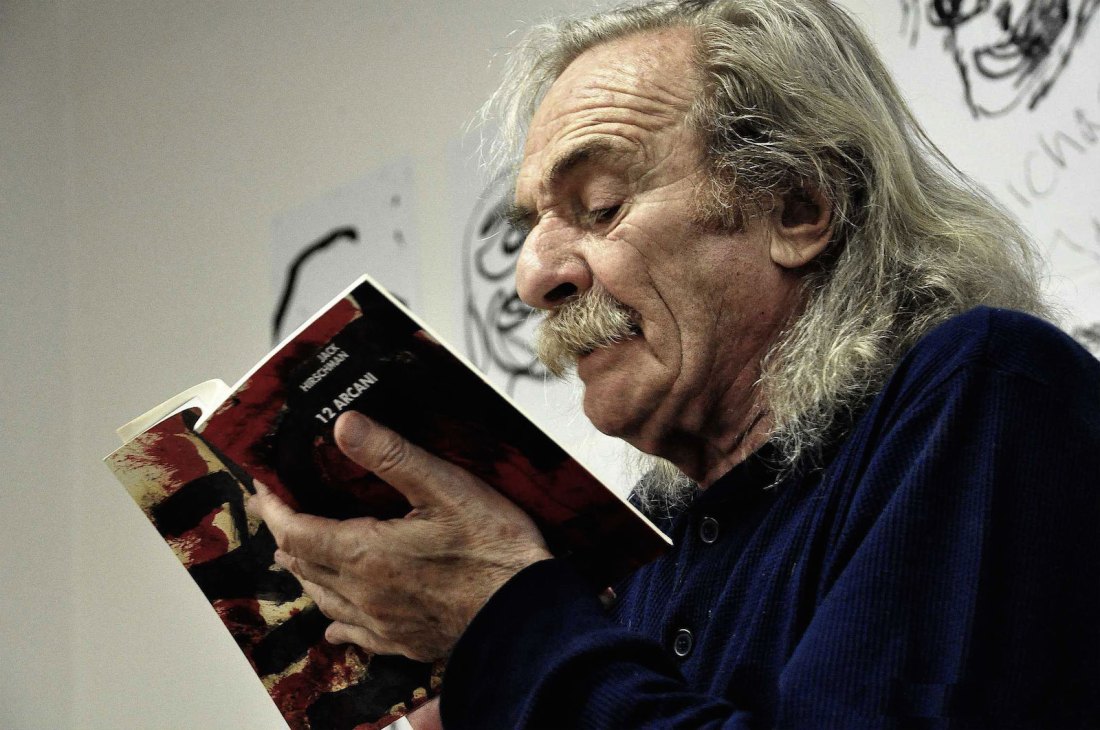
San Francisco has lost an original. I used to see Jack Hirschman frequently at Cafe Trieste where I spent time sipping a cappuccino while reading a book or writing in my journal. Jack an integral piece of the North Beach ambience, was known by every local. His passing is a sad day for San Francisco. His memory will live on.
Excerpted from San Francisco Chronicle 8.22.2021
Jack Hirschman, a scholar and translator in nine languages who threw over a career as a college professor for the life of a proletarian North Beach poet, died Sunday at his home on Union Street in San Francisco.
A former San Francisco poet laureate, Hirschman enjoyed a publishing career that lasted more than 50 years and more than 100 volumes, though half of them were translations.
“The most important thing as a poet is that I worked for the Communist movement for 45 years, and the new class of impoverished and homeless people,” he said in a 2018 interview to inform this obituary, while laying on his double bed on the fourth floor of a walk-up, overlooking Columbus Avenue.
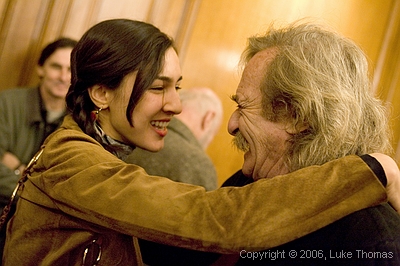
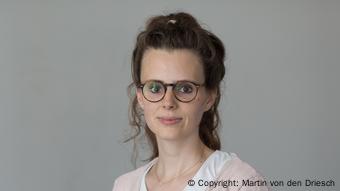
Mishana Hosseinioun with Jack Hirischman. A Clarendon Scholar at the University of Oxford. She is a Drafter with the International Convention on Human Rights Research Project within the Institute for Global Challenges and the Law at the University of California, Berkeley School of Law.
With his push-broom mustache, weathered face, wild hair and outlandish hat, Hirschman was what you looked for in a bohemian, and he lived the part in a single room in the old hotel above Caffe Trieste. Even after marriage upgraded him to a cottage behind an apartment house, Hirschman still came to write every day in his room.
Hirschman was 87 and had given a reading at Foreign Cinema on Wednesday before coming down with a cold, his wife, Agneta Falk, a poet and calligrapher, said Sunday. Cause of death is undetermined.
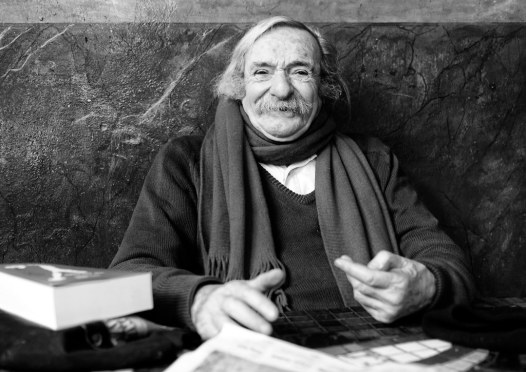
Jack Hirschman at his favorite San Francisco spot, Cafe Trieste
“It is devastating to the local community because Jack was a friend to everybody, ” said Beat Museum founder Jerry Cimino on Sunday. “Jack was too young to be considered a Beat but he knew them all, and his reach and influence went far beyond San Francisco and California. He was always approachable, and a word of recommendation from Jack could launch a poet’s career.”
Much of his work was put out by small publishers, often as small as Hirschman’s room, outfitted with a copy machine and stapler, and a print run of 150 copies. “One of my presses,” he said, “is this room you are sitting in.”
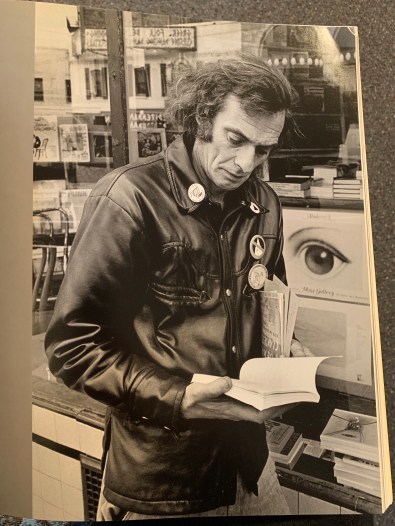
A younger Jack Hirschman at City Lights Bookstore
If he was not in that room, Hirschman was usually around the corner in Caffe Trieste, his face hidden beneath a floppy hat and behind a double espresso. It was here that he wrote his first San Francisco poem, in the early 1970s, not long after he’d been fired from the faculty of UCLA for antiwar activism.
He wrote a poem in Russian, then translated it to English, as follows. “You are not a slave/And I am not a machine/And this ain’t no opium den, comrade.”
On the success of that, he wrote a poem a day in Russian for 12 years, in addition to two poems in English as his daily output. The poems piled up. His best known work, “The Arcades,” was published in two volumes of 1,000 pages each. At the time of his death he was 450 pages into Volume 3.
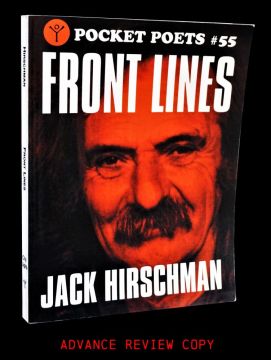
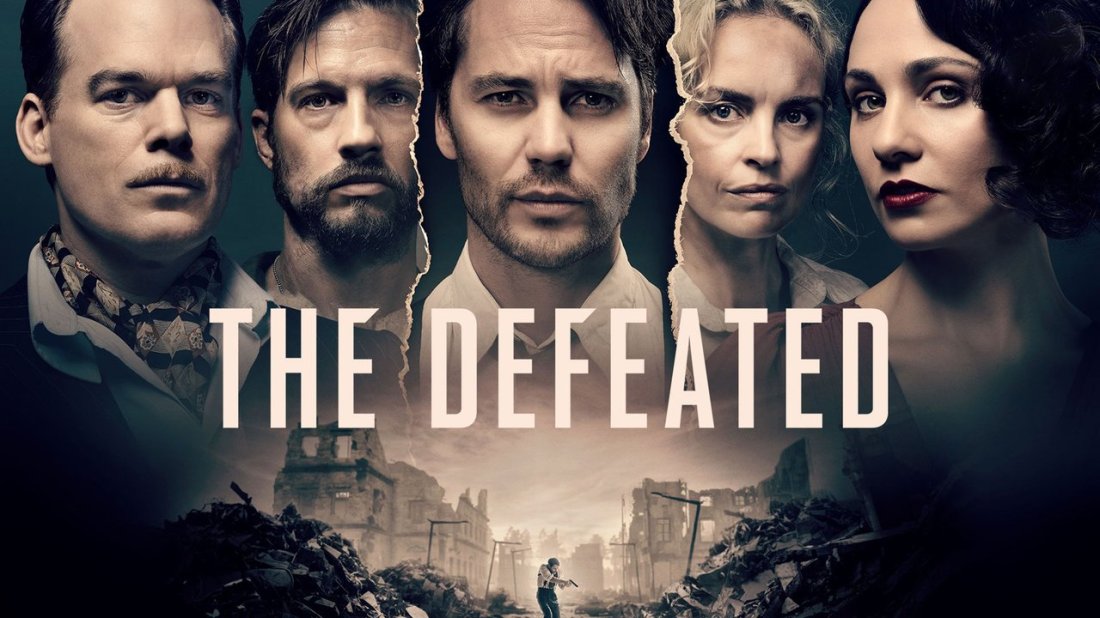
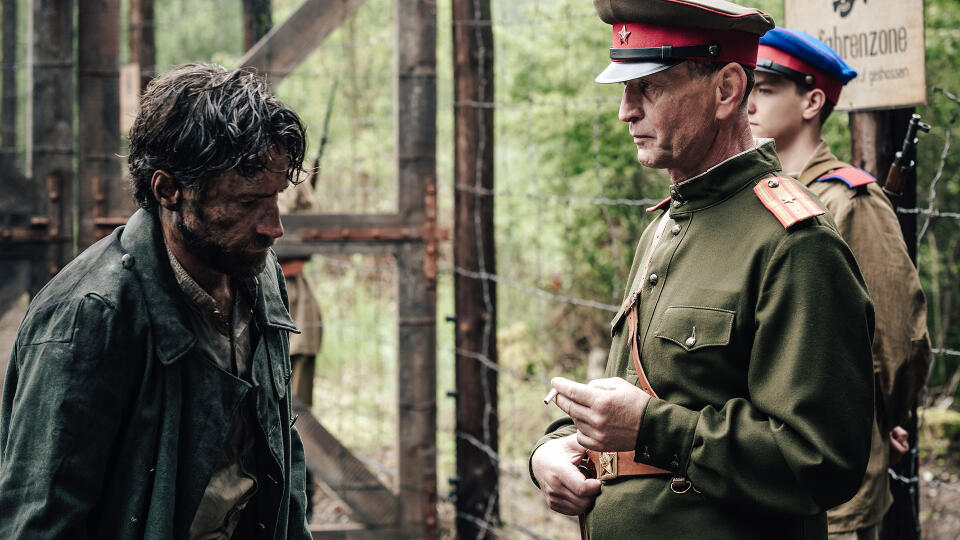
The Defeated is a gripping and disturbing drama. At times it is difficult to watch as the storyline is violent, enthralling and absorbing. The acting performances and cinematic recreation (actually filmed in Prague) of postwar World War II Berlin in 1946 are excellent.
At certain moments it makes me think of the classic 1992 film by Lars van Trier, Zentropa.
Excerpted from Ready Steady Cut 8.18.2021
Nazis are the quintessential villains of all popular culture, and indeed of history.
Anyone after a more lighthearted experience will be better looking elsewhere since The Defeated isn’t interested in giving you an easy ride, but it does provide a relatively unique and welcome slant on the Second World War – and it’s a gripping thriller for as long as it lasts.
What’s unusual about The Defeated, a new eight-part German-Canadian collaboration now streaming on Netflix is that it frames its setting of a bombed-out post-war Berlin within a specifically German perspective, despite its classically handsome American protagonist.
There’s a pulpiness to all this that stands in stark contrast to the pitch-dark themes and a convincing simulacrum of a decimated Berlin that has been brought to life with impressive production design.
It isn’t trying to engender any sympathy for the Nazis, you understand, but to point out, often very effectively, that there was an entire country full of people who were forced to live under their rule and exist in their wake.
The Russians have role to play in The Defeated as one of Berlin’s post war occupiers
One such person is Elsie (Nina Hoss), a former schoolteacher turned head of a fledgling police force that Brooklyn detective Max McLaughlin (Taylor Kitsch) is sent to whip into shape. It’s the smallest department in the American Occupied Zone, staffed mainly by teenagers and entirely by civilians, but it’s caught in the middle of rivalrous factions that include the Allied occupiers, a serial killer, a crime boss, former Nazis, and those just trying to make do without antagonizing any or all of the above.
Everyone is looting to survive, many are killing for pleasure, and American GIs are raping the local women with enough frequency that a local crime boss, the enigmatic Engelmacher, or “Angel Maker”, is using the promise of backstreet abortions as a recruitment tool.
If this were all Max and Elsie had to worry about it’d be quite enough, but they’re also besieged on all sides by the nebulous motivations of Max’s superior, Tom Franklin (Michael C. Hall), and his flirty, often drunk wife Claire (Tuppence Middleton), and the exploits of Max’s missing GI brother Moritz (Logan Marshall-Green), who went AWOL after being among the American division who discovered the first German death camp at Dachau.
It’s part earnest historical drama and part pulpy mystery; that it does both things really rather well is a bit of a welcome surprise, especially since it manages to do them at the same time.
The Defeated was shot entirely in the Czech Republic, under the title Shadowplay, for about four months from April to September of 2019 at a budget of about 750 million crowns ($35 million).
A largely-abandoned former sugar factory was used to recreate the dusty streets of bombed-out Berlin. Prague’s Invalidovna complex was converted into a Jewish hospital in the German capital, where an action scene takes place.
In addition to production in Prague, The Defeated also filmed scenes in Doksy, Karlovy Vary, Kladno, Lenešice, Mladá Boleslav, Ploskovice, Slapy, and Ústí nad Labem.
Given the fact San Francisco has one of the highest rates of people taking the vaccine and one of the lowest rates of infection in the world Mr. Bohlin’s critique seems harsh. A more apt obseravation is that San Francisco is doing what needs to be done to mitigate the danger to its citizens during the Pandemic.
I hope Mr. Bohlin is happy in his new position as an organist back home in Sweden while awaiting for the clinical tests to be complete in 2022 or 2023.
Excerpted from The San Francisco Chronicle 8.20.2021
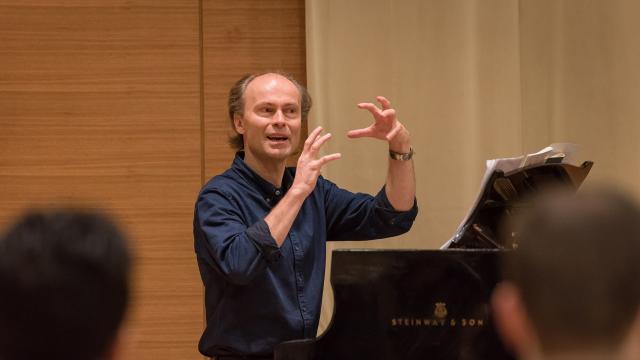
San Francisco Symphony Choral Director Ragnar Bohlin is resigning because of vaccine mandate policies instituted by both the company and the city of San Francisco, the Symphony announced Friday, Aug. 20. His term concludes at the end of the month, ending a 14-year tenure.
Bohlin has been outspoken about his anti-vaccination views on his Facebook page over the course of the pandemic; in the 24 hours before his exit was announced, he shared at least eight anti-vaccine posts.
Symphony spokesperson Robin Freeman confirmed that the reason for Bohlin’s departure was the vaccine mandate. In the Bay Area arts world, Bohlin’s is the first prominent resignation over vaccine mandates.
“I have with a growing sense of alarm observed the tide turn in this direction, in regards to medical passports,” Bohlin wrote to The Chronicle from Sweden, while on a night train to Stockholm. “I am sad to now see the SFS comply with these diktats and to deprive their employees their basic rights to privacy, bodily autonomy and informed consent.”
“I deeply regret that I feel compelled to leave the SFS and my beloved Chorus because of this,” Bohlin said. He added that he has no plans to get a vaccine at least until clinical trials scheduled for 2022 and 2023 are complete.
On Aug. 3, the Symphony announced a vaccine mandate for audience members. On Aug. 12, San Francisco city officials introduced a mandate for indoor venues that seat more than 1,000 — which includes Davies Symphony Hall — applying the policy to anyone who enters, including workers and volunteers.
“He is a gifted and expressive musician and has led the San Francisco Symphony Chorus through countless artistic achievements and memorable performances,” Symphony Interim CEO Matthew Spivey said in a statement.
Indeed, Bohlin’s work with the Symphony on a recording of Mahler’s Symphony No. 8 won a 2010 Grammy for best choral performance.
“He will be greatly missed, and we wish him well as he embarks on his next chapter,” Spivey added.
Bohlin said he has secured an organist position in Sweden and that he will be guest-conducting the Ericson Chamber Choir there in December. He hopes to return to San Francisco to work with his a cappella group, Cappella SF, in the future.
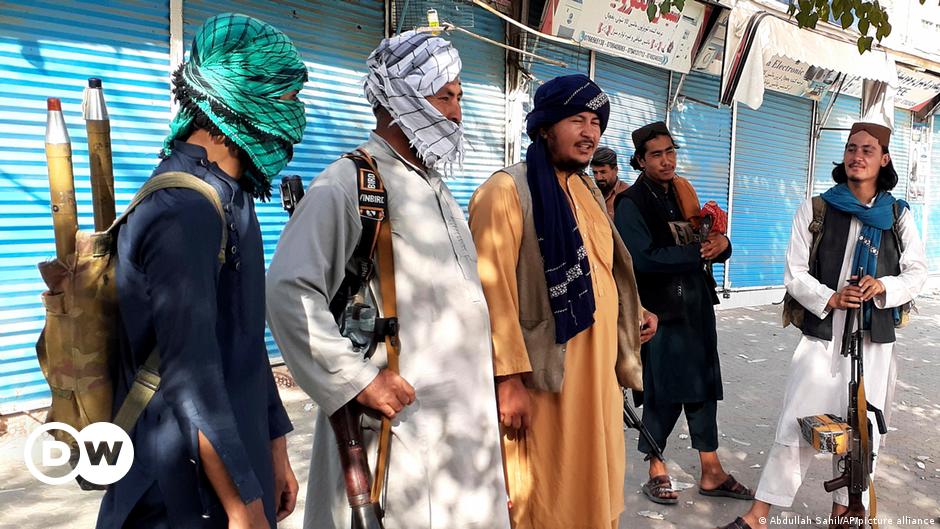
Journalists around the world are always at risk. The Taliban takeover in Afghanistan has placed women journalists in harms way. The Taliban with their prehistoric attitudes towards women can be expected to treat female journalists with terror and violence. A record which has already been made painfully obvious.
Excerpted from Deutsche Welle 8.17.2021
After the Taliban takeover, Afghan journalists should be permitted to leave the country as soon as possible. Women are in particular danger, according to Anne Renzenbrink from Reporters Without Borders.
The news from Afghanistan is devastating. Over the last few weeks, the Taliban have captured one province after another. Now, they have seized Kabul and are proclaiming “victory,” as TVs around the world show images of Islamist fighters in the presidential palace.
Ariana News female anchor Mina Khairi, who was killed in a Kabul blast on June 3.
Five Afghan media workers have already been killed this year. More fatalities are likely to follow unless swift action is taken. Journalists’ lives are under threat.
The Taliban are also among the world’s biggest enemies of press freedom. In recent years, their numerous attacks on people working in the media have claimed several lives.
In 2017, for example, a cameraman and a colleague working for the Afghanistan National Assembly’s public broadcast channel were among those killed in twin bombings near the parliament building in Kabul. Two more colleagues from the station and a journalist from the weekly newspaper Kerad were injured.
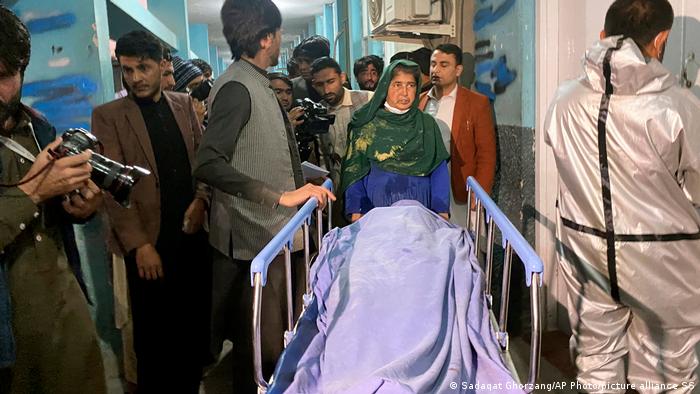
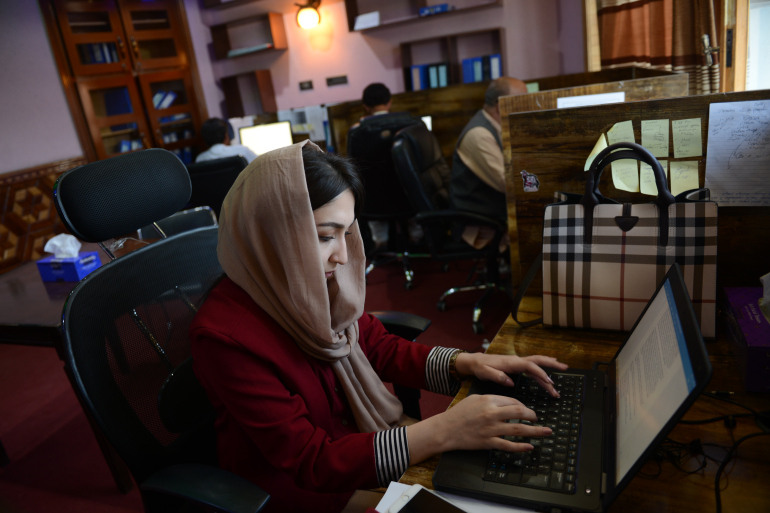
Afghanistan. Dangerous assignment for women journalists
The so-called “Islamic State” (IS) has also carried out repeated terror attacks in Afghanistan. In 2018, the group specifically targeted journalists in a twin attack in Kabul, killing nine media workers.
Afghanistan already regularly ranks among the world’s five most dangerous countries for journalists in Reporters Without Borders annual report on violence against media representatives. It is to be feared that the situation will deteriorate dramatically with the Taliban takeover.
Anne Renzenbrink is a press officer and Afghanistan expert at Reporters Without Borders
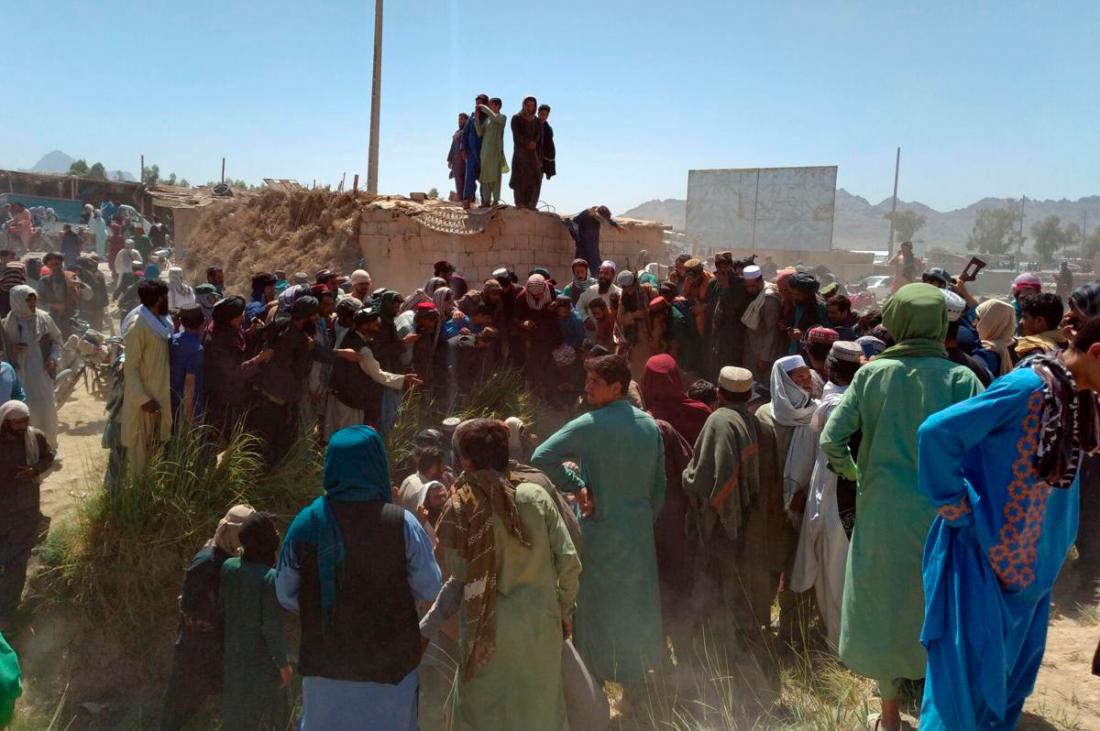
Women who work as journalists in Afghanistan are particularly at risk. On March 2 in the eastern city of Jalalabad three female journalists — Mursal Wahidi, Sadia Sadat and Shahnaz Raufi — were killed in a country where women are frequently the target of fundamentalist propaganda. (See top photo)
On December 10, 2020, two men opened fire on journalist Malala Maiwand’s car as she was traveling to work. Maiwand and her driver were both killed in the attack.
Trying to do journalist’s work is difficult in Afghanistan
The Taliban takeover does not merely pose a danger to people’s lives. It also threatens to cut off their information supply. More than 50 media outlets — mostly local radio and TV stations — have been forced to shut down in Taliban-controlled areas. Those still in operation are only broadcasting religious programming or other content dictated by the extremist group. Some 100 journalists have lost their jobs because they have been forced to flee areas occupied by the Taliban and seek protection in the country’s big cities.
This is an unfolding humanitarian and human disaster.
Excerpted from New York Times 8.15.2021
The U.S. military raced to evacuate diplomats and civilians as the insurgents stood poised to retake complete control of the country 20 years after being toppled by American forces.
Afghanistan’s government collapsed on Sunday with President Ashraf Ghani’s flight from the country and the Taliban’s entry into the capital, effectively sealing the insurgents’ control of the country after dozens of cities fell to their lightning advance.
On Sunday evening, former President Hamid Karzai announced on Twitter that he was forming a coordinating council together with Abdullah Abdullah, chairman of the Afghan delegation to peace talks, and Gulbuddin Hekmatyar, the leader of the Hesb-i-Islami party, to manage a peaceful transfer of power. Mr. Karzai called on both government and Taliban forces to act with restraint.
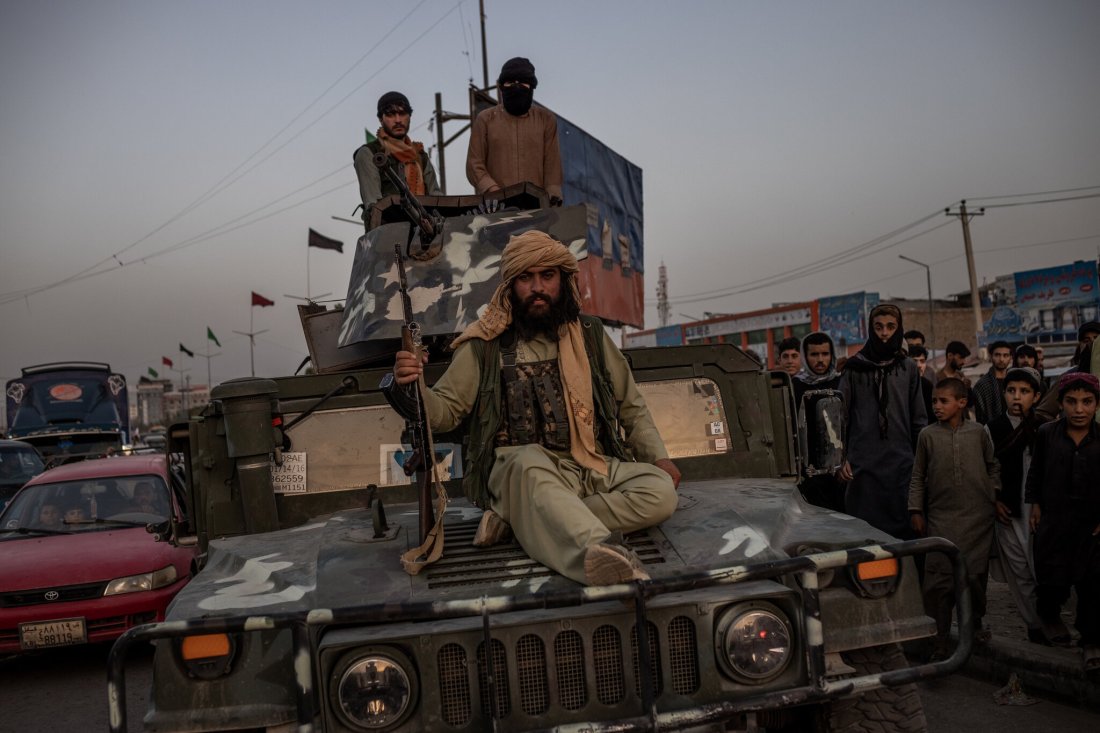
Taliban fighters on a Humvee in Kabul on Sunday.Credit…Jim Huylebroek for The New York Times
As it became clear that members of the Taliban had entered Kabul, the capital, thousands of Afghans who had sought refuge there after fleeing the insurgents’ brutal military offensive watched with growing alarm as the local police seemed to fade from their usual checkpoints. The U.S. Embassy warned Americans to not head to the airport in Kabul after reports that the facility was taking fire, and said that the situation was “changing quickly.”
At 6:30 p.m. local time, the Taliban issued a statement that their forces were moving into police districts in order to maintain security in areas that had been abandoned by the government security forces. Taliban fighters, meeting no resistance, took up positions in parts of the city, after Zabiullah Mujahid, spokesman for the Taliban, posted the statement on Twitter.
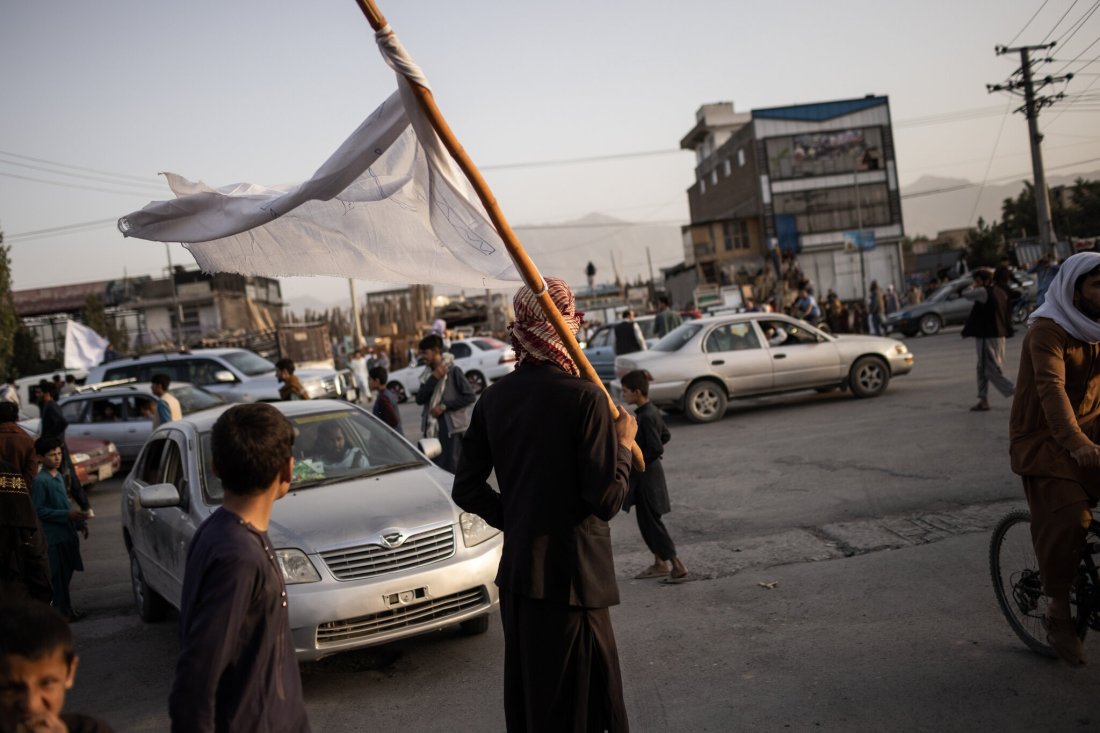
A man carrying the distinctive white flag of the Taliban directing traffic in Kabul on Sunday.Credit…Jim Huylebroek for The New York Times
“The Islamic Emirates ordered its forces to enter the areas of Kabul city from which the enemy has left because there is risk of theft and robbery,” the statement said. The Taliban had been ordered not to harm civilians and not to enter individual homes, it added. “Our forces are entering Kabul city with all caution.”
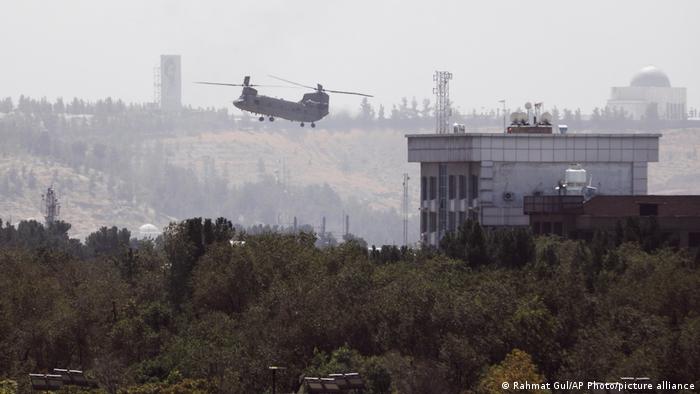
Top photo – Chinook helicopter hovers over American Embassy
The parallels between the American exodus from Vietnam on April 30, 1975 and the Taliban takeover of Afghanistan in August 2021 are uncanny.
America was in Vietnam for 20 years, fought a long war which resulted in the deaths of nearly 60,000 American soldiers, cost the country billions and disrupted the social and political fabric of both nations.
America has been in Afghanistan for 20 years fought a so called War on Terror which resulted in the deaths of over 2300 American soldiers, cost the country billions and disrupted the social and political fabric of both nations.
America, thus far, is not leaving Afghanistan from the roof of the Embassy by helicopter as occurred in Vietnam in 1975. It could happen as Afghanistan falls to the brutal Taliban.
Afghanistan people await their fate
The Guardian 8.14.2021
A summary of the situation in Kabul as this story unfolds:
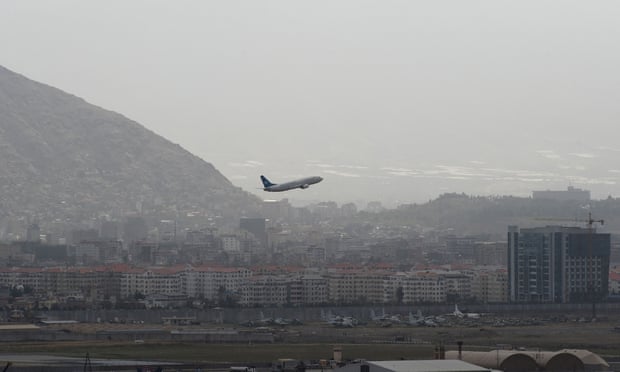
Kabul’s population of 5 million people has been swollen with thousands fleeing other parts of the country. Thousands of troops from the United States and Britain are flying in to secure the airport.
The Afghan army has vowed to defend the capital.
Kabul covers an area of about 1,000 square km (400 sq miles) and is ringed by mountains. There are four main roads into the city: from Maidan Shahr in the southwest, Pul-e-Alam in the south, Surobi in the east and Bagram in the north.
The Taliban took Pul-e-Alam on Saturday without much resistance, a local provincial council member said.
The Taliban say they are close to capturing Maidan Shahr. They have already taken Ghazni, down the road from Maidan Shahr, and have a strong presence in surrounding areas.
On Sunday, the Taliban took the eastern city of Jalalabad without a fight. The main highway from there to Kabul passes through Surobi.
The US has started evacuating diplomats from its Kabul embassy, according to two US officials.
US Embassy personnel were destroying sensitive documents, according to two US military officials who spoke to the Associated Press on condition of anonymity.
Arrangements are being made to airlift the British ambassador Sir Laurie Bristow our of Kabul by Monday evening.
Afghanistan in turmoil as Americans leave and The Taliban closes in – August 2021Last Americans leave Vietnam by helicopter on roof of US Embassy – April 30, 1975Frantic Vietnamese storm American Embassy – April 30, 1975
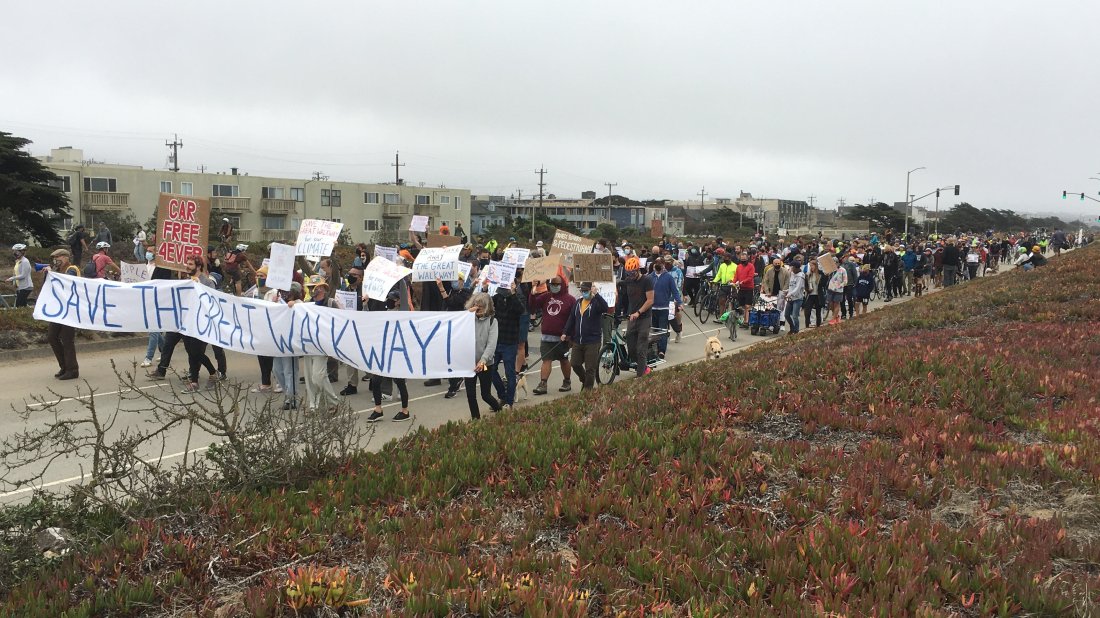
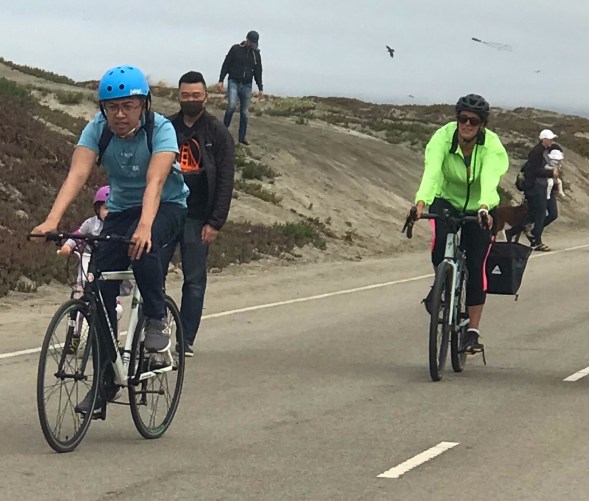
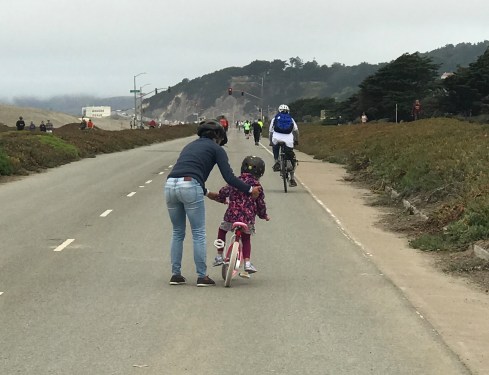
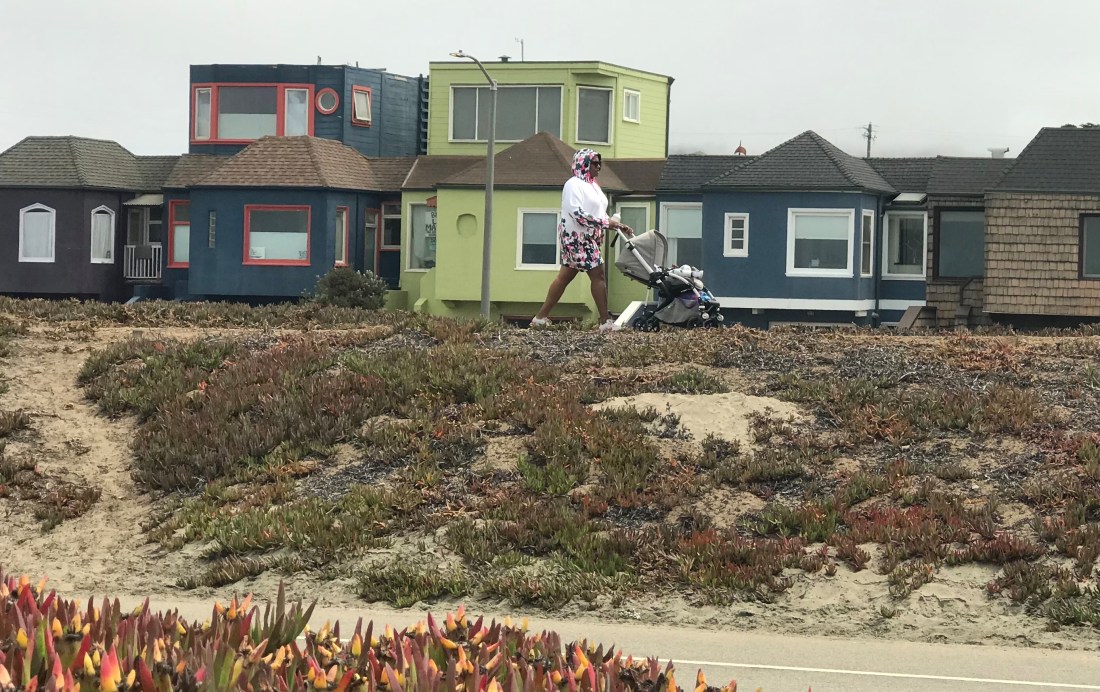
Adults, kids, toddlers and a dog enjoy The Great Walkway
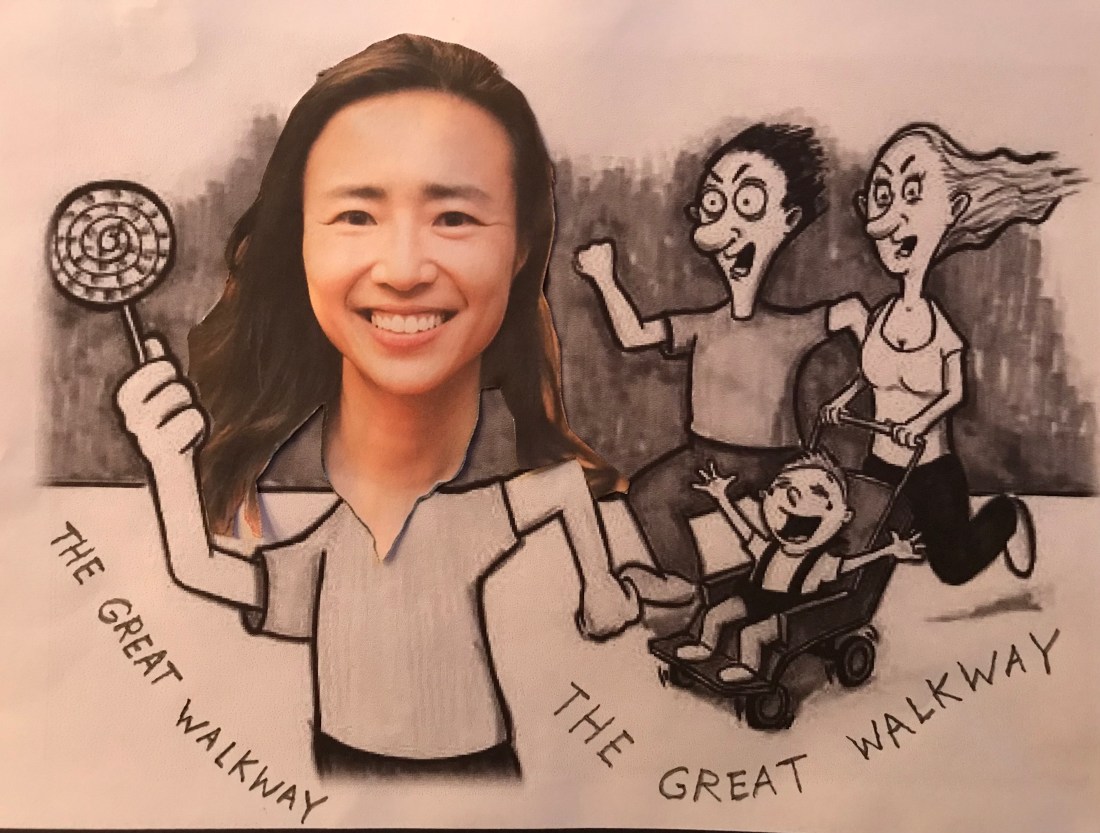
As Easy as Stealing Candy from A Baby.
The voters of District 1 have been played and betrayed by a “Progressive” Supervisor who campaigned on the vow: “I pledge not to take ANY contributions from oil, gas, and coal industry executives, lobbyists, and PACs and instead prioritize the health of our families, climate, and democracy over fossil fuel industry profits” #NoFossilFuelMoney.
Connie Chan – D1 Candidate 2020
Supervisor Connie Chan, the faux progressive, must walk away from her backroom deal with Mayor London Breed to steal The Great Walkway from the People of San Francisco.
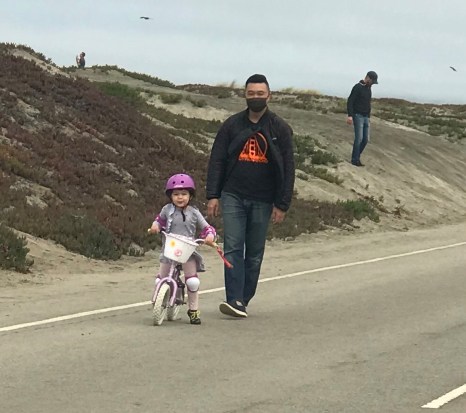
Learning to ride in a safe environment
It was as easy for Ms. Chan to steal the possibilities for a green and safe transportation corridor as it is for an unscrupulous person to steal candy from a baby. Stealing candy from the proverbial baby .. in this instance thousands of adults and children.. is what Supervisor Connie Chan did by acting as a co-conspirator to secretly reopen The Great Walkway to cars.
Cyclists and pedestrians of all ages
In her zeal to allow cars onto The Great Walkway Supervisor Chan sabotaged the negotiation process, in which she was a participant, between advocates of The Great Walkway and City officials. Ms. Chan secretly met with Mayor Breed to trash the Mayor’s own pandemic emergency order and return The Great Walkway to its pre-pandemic status of an auto freeway.
A happy young cyclist
Ms. Chan knew the decision does not have to gain approval before the full Board of Supervisors. The unilateral decision was permitted under the vast emergency powers The Mayor granted herself during the pandemic.
Cycling along the Great Walkway
Ms. Chan’s backroom deal to reopen The Great Walkway to cars was announced while the Board of Supervisors was on summer recess. Ms. Chan knew this unilateral decision would be controversial. It would have generated fierce debate. A debate Ms. Chan wanted to avoid.
Taking a first ride on The Great Walkway
Supervisor Chan’s move to reopen The Great Walkway to cars is redolent of autocracy, special interests, and complete disregard for the needs and rights of her diverse constituents – Many of her constituents feel motorists do not have the presumptive right to inhabit every street in San Francisco.
Strolling along on The Great Walkway
Her decision invalidates the needs of her constituents. She has a responsibility to meet Vision Zero goals by creating safe environments for children and adults to pursue recreational and social goals.
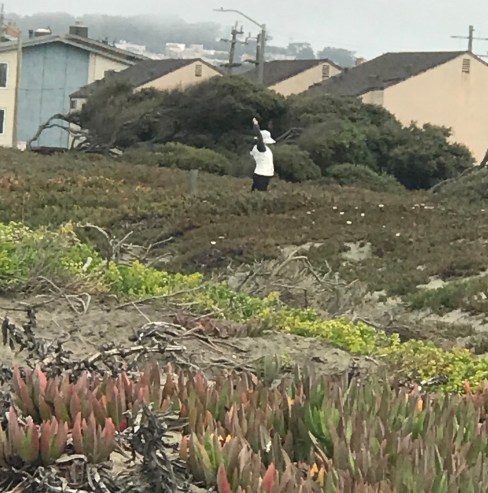
Exercise time
Supervisor Chan misrepresents the reasons for reopening The Great Walkway to cars. She argues this strip is essential for parents to take their kids to school by car. Families in District 1 do not have a practical way to take their kids to school by car using the roadway. There are no exits between Lincoln Way and Sloat Boulevard where Sunset District schools are located. Only 6.4% of Richmond District students go to school in the Sunset district.
Land skiing on The Great Walkway
Furthermore, Supervisor Chan’s argument that closing the roadway to cars pushes cars into the critical green space of Golden Gate Park is specious and misleading.
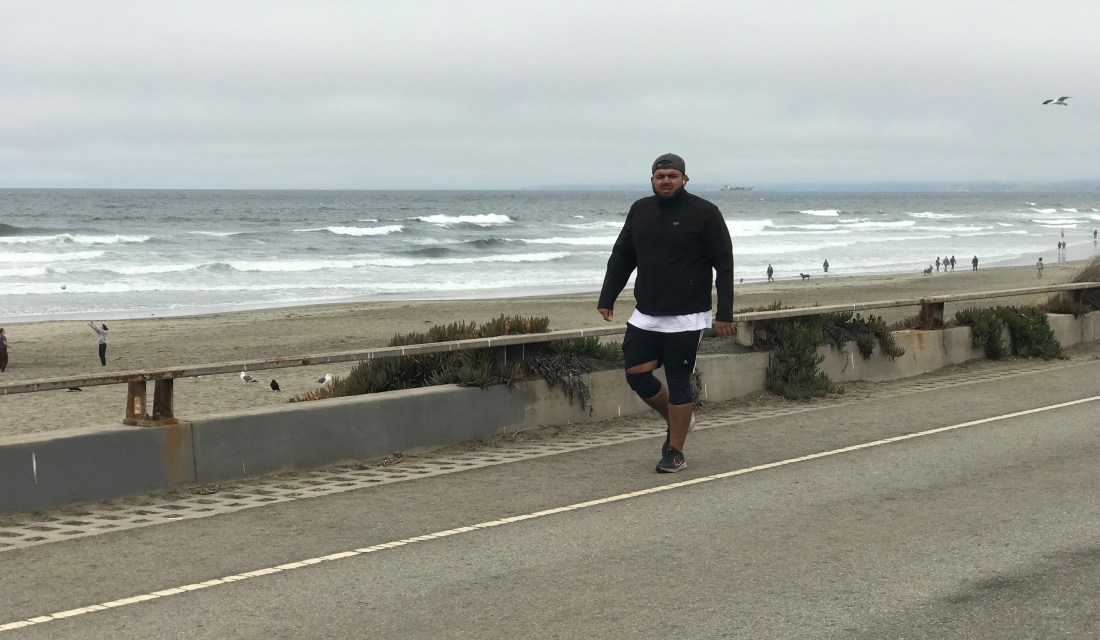
A view of The Pacific Ocean along The Great Walkway
We have been running, bicycling, or walking through Golden Gate Park to shop in the Sunset District since 1972. We have witnessed cars violating the sanctuary of the Park for nearly 50 years. Motorists drive around barriers, speed on JFK Drive, kill bicyclists in accidents (such as Heather Miller), and park freely on trails meant only for pedestrians.
Birds and man fly free
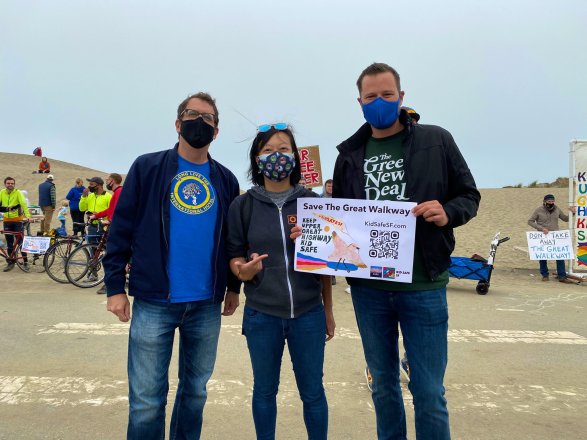
This photo montage takes you on a trip down The Great Walkway to illustrate how the roadway is used and enjoyed in a sustainable way.
Photos and adapted Brian O’Meara Cartoon – Liz Heidhues
The United States isn’t the only nation withdrawing its military from Afghanistan. The Germans were part of the NATO force which has been involved in the so called War on Terror the past 20 years
The situation is horrific. Germany and America can’t acts as the world’s self appointed policeman. The British and Russians occupied Afghanistan. Both nations eventually withdrew after years of struggle, loss of life, domestic political turmoil and money spent to no good end.
Now the citizens of Afghanistan are facing the return of the brutal and misogynistic Taliban rule. It is an unfolding humane crisis and horror story.
Excerpted from Deutsche Welle 8.10.2021
The sight of Taliban fighters overrunning Kunduz in Afghanistan has triggered anger, grief and helplessness among German veterans who fought to free the Afghan city. Many now fear for the Afghans who helped them.
“It triggered an earthquake in the emotions of veterans,” said Wolf Gregis, a former soldier and now an author and professor of pedagogy at the University of Rostock. “No other place is associated so much with the death toll that the German military suffered than Kunduz itself.”
“It feels extremely shitty,” said Johannes Clair, a former Bundeswehr corporal who published a book about his seven-month mission in Kunduz from 2010 to 2011. “We left blood, sweat and tears there,´; our comrades were killed there. And it was predictable. In 2014, when the combat troops were withdrawn, it was clear that the Afghan forces were not going to be able to control the situation on their own.”
“The second thing is that, while we’re all back home, the Afghans over there are in mortal danger, especially those that cooperated with the West — that makes it even worse,” he added. “Now I’m sitting here and I can’t do anything about it.”
At the same time, Clair thinks the final withdrawal of Western troops this year was inevitable and logical because the whole mission had simply become what he called an “alibi mission — half-hearted. That’s why I’m angry, because even though the fundamental problems in Afghanistan have long been known, even in 2010 when I was there, they were never addressed properly,” he told DW.
For years, he said, NATO and the German government stumbled from one strategy to the next, hoping that it would work out, but largely because the mission was unpopular back home, the government never properly committed to its mission. That all culminated in the withdrawal of combat troops in 2014. “It was completely clear then that the positive effects that we had caused were not sustainable,” he said. “We betrayed all the work we did there, but more than anything we betrayed the Afghans.”
German Bundeswehr troops leave Afghanistan
It was in the Kunduz province that the Bundeswehr suffered the most casualties and where the events that shaped the German public’s abiding images of the Afghanistan war took place. “This is the place where German soldiers first learned on a large-scale what fighting and dying in an asymmetric war meant and how ugly that is,” said Gregis, (the name is a pseudonym, which he prefers to go by).
Though it was initially seen as one of the safest provinces in the country, where Germany could take command of one of the NATO alliance’s Provincial Reconstruction Teams and help build new infrastructure, fighting grew heavier in the region from 2006 onwards. It was Kunduz, according to Gregis, that put the purpose of Germany’s mission in Afghanistan to the test.
Several horrific incidents happened in the province: In September 2009, a German officer ordered a US airstrike on an oil truck that left over a hundred civilians dead, causing a scandal back home that eventually cost then-Defense Minister Franz Josef Jung his Cabinet office. A year later, German soldiers were increasingly finding themselves in firefights with the Taliban, especially when a patrol was ambushed and pinned down in the nine-hour “Good Friday battle” of April 2010. Three soldiers were killed and eight more injured, their lives saved by a US helicopter.
San Francisco is going to mandate a logical step in the face of the resurgent Pandemic.
All City employees must be vaccinated.
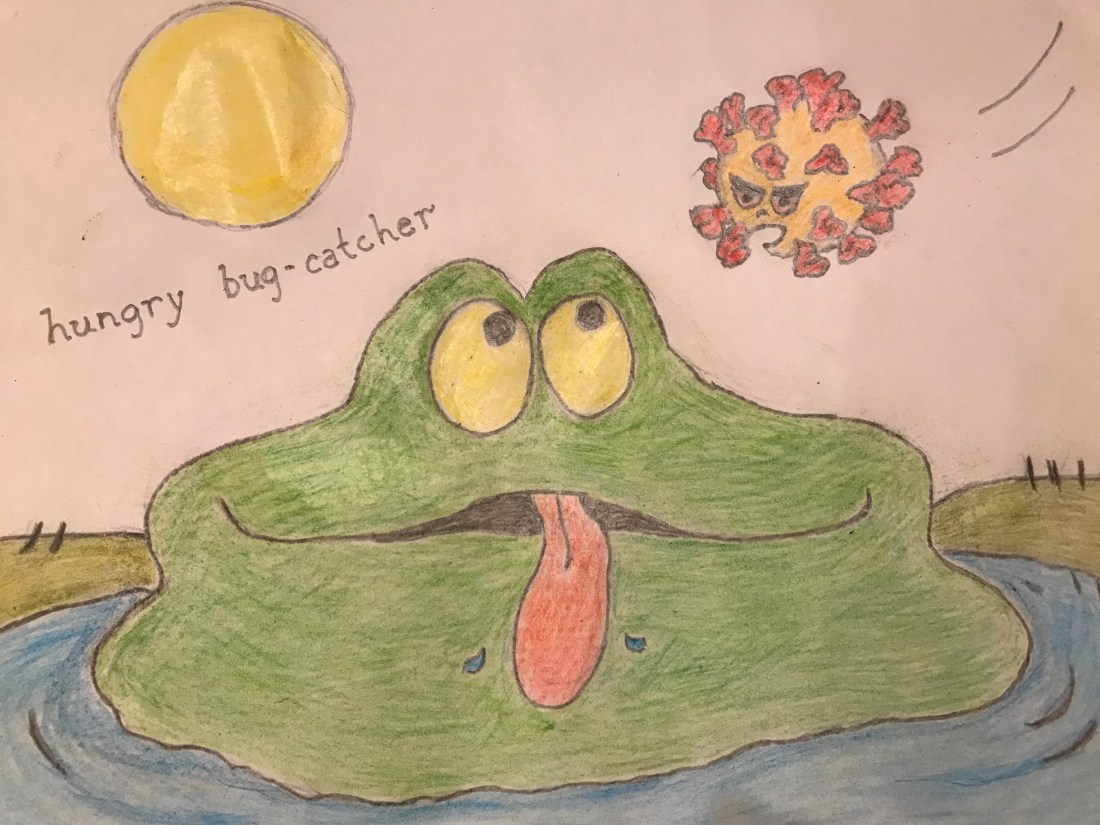
Reading the overwrought statements by some employees one could draw the conclusion that a portion of San Francisco’s workforce has been infected by a hungry bug-catcher from an off world colony.
‘hungry bug-catcher’ – Liz Heidhues 2020
Excerpted from The San Francisco Chronicle 8.9.2021
Nearly 200 San Francisco employees are attempting to rebuff the city’s COVID-19 vaccine mandate and other protocols like testing and mask wearing for city workers, submitting identical, conspiracy-tinged letters suggesting the city is infringing upon their “God-given and constitutionally secured” rights.
“Almost all of the statements are either absurd, misleading, meaningless, and are written not to solicit any serious response but to be deliberately hostile for political purposes,” said Dr. Lee Riley, an infectious disease expert at UC Berkeley.
Concerns raised in the letter about the contents of vaccines or other products, or their safety and efficacy, are baseless, said Dr. Robert Siegel, an infectious disease expert at Stanford.
“This came from some kind of conspiracy factory,” Siegel said.
Many of the products the letter suggests as potentially dangerous vaccine additives — including lipids (fat), sodium chloride (salt) and sucrose (sugar) — are consumed by people daily, Siegel said. Other products mentioned in the letter include chemicals commonly found in the environment.
“The whole thing is just garbage,” he said.
Anti-vaxxers come “from some kind of conspiracy factory.”
Siegel said the contents of the letter raised concerns about the judgment of those who signed it.
The letters, which began streaming into San Francisco’s HR department in late June, came after city officials announced they would require city employees — with certain exceptions — to get inoculated or risk losing their jobs.
The letters say the workers would submit to the vaccination mandate only if the city accedes to a long list of demands and disclosures around vaccine safety that health experts said were “nonsensical” or false.
Vaccination data released to The Chronicle on Friday showed at least 167 fire department employees remained unvaccinated, or about 9.5% of its workforce. At the Sheriff’s Department 161 were reportedly unvaccinated, making up about 16% of its employees. About 7.7% of city employees across all departments have not received at least one shot.
City fire officials did not immediately respond to requests for comment. In an interview, Shon Buford, president of San Francisco Firefighters Local 798, said labor leaders wished department heads had created more of a dialogue around the vaccine mandate.
Buford said because union leaders did not have the time to vet the letter, he was unable to endorse it or comment on its contents.
The letter, titled and framed as “conditional acceptance” of the city’s vaccine and mask mandates, poses an eight-page, 41-point list of its demands to meet the vaccination requirement.
It cites discredited theories about dangers of the vaccine, testing and masks, and asks city officials to prove the negative before they will consent to the city’s mandates.