Hubby and wife attorneys hit with felony indictments. Pointed guns at protestors

Gun toting Americans need to be taught a lesson in tough justice.

Ironic that it’s officers of the Court, wife and husband attorneys, who face up to four years in prison. This is the couple which Trump paraded before the nation during the Republican convention last August.

It’s the best Trump can offer as an example of his soon to be exiled Make America Great Again campaign. 

These attorneys are the type people who have risen from the toxic swamp of America’s underbelly during the past four years.

Talking Points Memo 10.6.2020

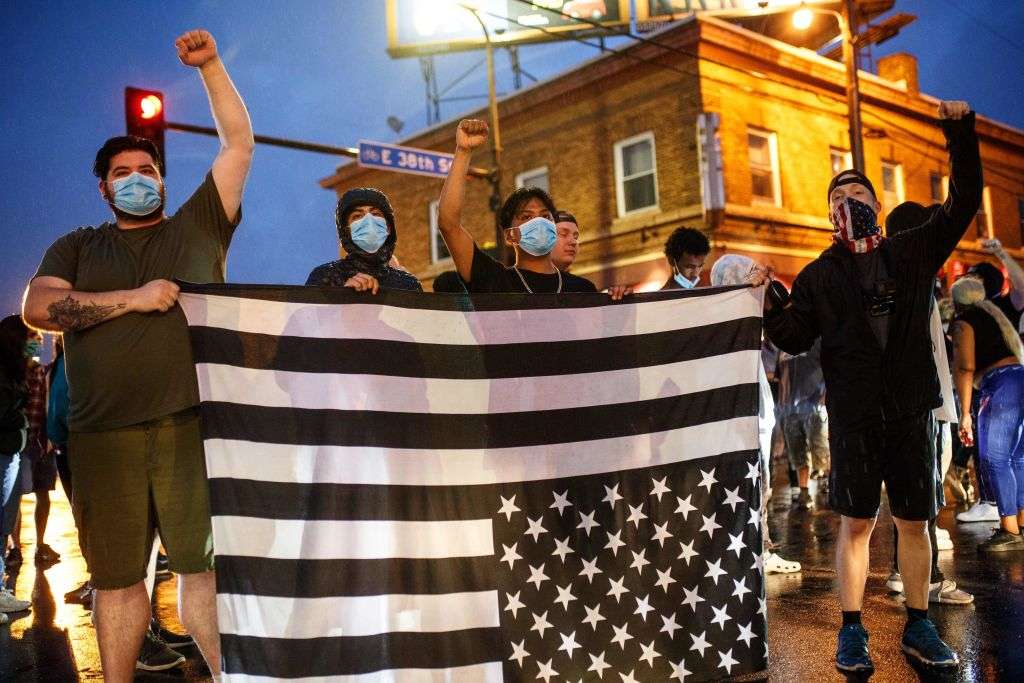
ST. LOUIS (AP) — A grand jury on Tuesday indicted the St. Louis couple who displayed guns while hundreds of racial injustice protesters marched on their private street.

A police probable cause statement said protesters feared “being injured due to Patricia McCloskey’s finger being on the trigger, coupled with her excited demeanor.”

The incident happened June 28 as protesters were walking toward the home of Mayor Lyda Krewson, a few blocks away. They suddenly decided to veer onto the McCloskeys’ street, prompting the confrontation that was caught on cellphone video. It showed Mark McCloskey in front of the $1.15 million home armed with an AR-15 rifle and Patricia McCloskey with a semiautomatic handgun.

Al Watkins, an attorney for the couple, confirmed to The Associated Press the indictments against Mark McCloskey, 63, and his wife, Patricia McCloskey, 61. A spokeswoman for Circuit Attorney Kim Gardner declined comment.

Fascism and Trump II 8.26.2020

The McCloskeys, who are both attorneys, have become folk heroes among some conservatives. They argue that they were simply exercising their Second Amendment right to bear arms, and were protected by Missouri’s castle doctrine law that allows the use of deadly force against intruders. The case has caught the attention of President Donald Trump, and Republican Missouri Gov. Mike Parson has said he will pardon the couple if they are convicted.

The McCloskeys also were featured speakers on the first night of the Republican National Convention. They’ve accused the “leftist” Democratic St. Louis leadership for their plight.

But Gardner, a Democrat, charged the couple with felony unlawful use of a weapon. She said the display of guns risked bloodshed at what she called an otherwise peaceful protest.

Watkins said that addition to the weapons charge, the grand jury indictment includes a tampering with evidence charge. It wasn’t clear what led to that additional count, he said.

The McCloskeys contend the protest was hardly peaceful. They say protesters came onto the private street after knocking over an iron gate and ignoring a “No Trespassing sign,” and said they felt threatened.

Qanon at RNC I 8.26.2020

Nine people involved in the protest were charged with misdemeanor trespassing, but the city counselor’s office later dropped the charges. The city counselor’s office handles lesser crimes and is not affiliated with the circuit attorney’s office.

Mark McCloskey, after a brief court hearing last week, expressed anger that he and his wife faced criminal charges while those who trespassed onto his property did not.

“Every single human being that was in front of my house was a criminal trespasser,” McCloskey said on Oct. 6. “They broke down our gate. They trespassed on our property. Not a single one of those people is now charged with anything. We’re charged with felonies that could cost us four years of our lives and our law licenses.”

The June protest in St. Louis was among hundreds nationwide in the aftermath of George Floyd’s death in Minneapolis.

https://talkingpointsmemo.com/news/st-louis-couple-indicted-for-waving-guns-at-protesters

Led Zeppelin sings the right tune. Supreme Court oks “Stairway to Heaven”

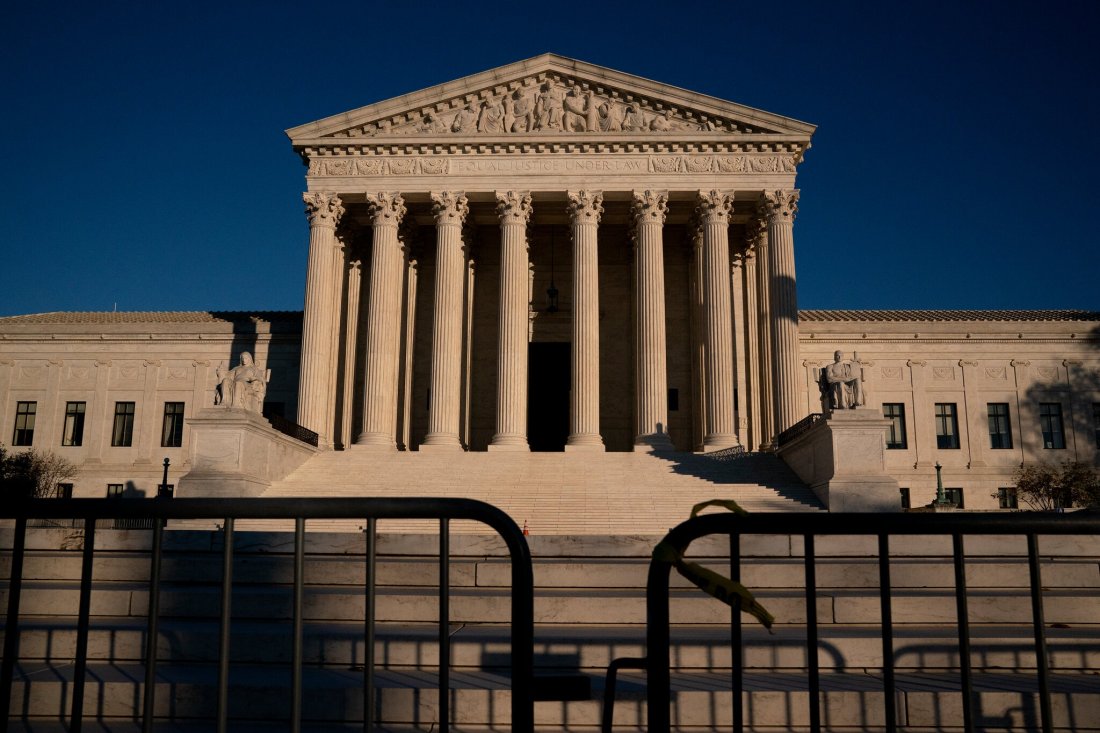
Even Rock ‘n Roll can make its way to the august chambers of the US Supreme Court.

The Justices, short one with the passing of Ruth Bader Ginsburg, decided in favor of the iconic British band in its years long copyright fight over the song Stairway to Heaven. 

Deutsche Welle 10.5.2020

The US Supreme Court declined to hear the case, ending a years-long legal dispute over the classic rock song. The Led Zeppelin case has had a wide impact on other musicians facing their own copyright claims.

British rock band Led Zeppelin effectively won a long running legal battle on Monday over claims that they stole the opening guitar riff for their classic song “Stairway to Heaven.”

The US Supreme Court declined to take up a copyright case against the band, meaning that a decision made in March this year by a US appeals court will stand.  

The lower court in California court ruled that Led Zeppelin had not copied musician Randy Wolfe in the opening guitar riff to the song.

The Supreme Court’s move to not take up the case has effectively ended the legal challenge, which could have had massive effects on the music industry.

The case was originally filed in 2014 by musician Randy Wolfe’s estate, as Wolfe died in 1997 and never took legal action. Wolfe’s band, Spirit, had Led Zeppelin as an opening act during the British band’s first US tour in 1968. The song in question was written in 1971.

Led Zeppelin II 8.16.2019

Experts called by the plaintiffs in lower courts said there were substantial similarities between Spirit’s song “Taurus” and “Stairway to Heaven.” But defensive witnesses said the chord progression in Led Zeppelin’s song was so common that copyright did not apply.

Led Zeppelin guitarist Jimmy Page had said in a 2016 jury trial in Los Angeles that he had not heard “Taurus” until recently.

https://www.dw.com/en/led-zeppelin-wins-stairway-to-heaven-plagiarism-case/a-55168257


The queen of rock’n’roll: Remembering Janis Joplin

It’s sobering to realize that Janis Joplin, Jimi Hendrix and Jim Morrison all died within a short period of time.

Deutsche Welle 10.4.2020

Texan girl, blues queen and music pioneer: The iconic figure in the 1960s hippie and women’s liberation movement died 50 years ago, on October 4, 1970.

June 25, 1970: Wearing a purple suit, countless bracelets and a pink feather boa in her hair, Janis Joplin had a chat with TV show host Dick Cavett.

He asked if she often returned to her hometown, Port Arthur, Texas. No, Joplin said, excitedly adding that she was planning on going back for her 10th annual high school reunion. Asked about her former schoolmates, she said: “They laughed me out of class, out of town and out of the state. Now I’m gonna laugh.” It was a moment of triumph and of pain in the life of the megastar.

She would die less than four months after that Cavett interview.

The class reunion at the Thomas Jefferson High School in Port Arthur was filmed. She showed up in her typical eccentric hippie style — obviously a colorful foreign body among the rest of her former elegantly dressed classmates. Interviewed that day, she was asked who invited her to the prom night back in the day: “No one,” she replied. It appeared to still hurt.

Born on January 19, 1943 in the oil refinery town of Port Arthur, Janis Lyn Joplin was able to read before she went to school.

As a 14-year-old chubby girl with severe acne, she was bullied in school. She was interested in art and literature, and wrote poetry. “I started singing when I was about 17. I could sing. It was a surprise — to say the least,” she later said. She hadn’t realized how powerful her voice was.

Janis Joplin II 10.4.2020.jpg

Her inner liberation from her conservative milieu would eventually be noticeable in her appearance: Janis dyed her hair orange, wore men’s clothes or shaggy dresses. The girl who had an inferiority complex decided to start attracting attention. Parents didn’t want their children to hang out with her; she was seen as a bad influence.

Janis finished high school and trained as a secretary. She later studied art at the University of Texas in Austin. There, her provocative appearance led her to be named “the university’s ugliest man” in a frat boys’ satire magazine.

Read more:Who was Janis Joplin?

Newsweek 1969 Cover (Newsweek)

San Francisco’s counter-culture

At the age of 18 she moved to San Francisco — culturally light-years away from Port Arthur, Texas. She became an icon of the hippie movement. And her voice felt like an earthquake in the music scene. 

The unpopular high school girl eventually landed on the cover of Newsweek magazine. The article titled Rebirth of Blues described her as rock’s first female superstar, adding that at the 1967 Monterey International Pop Music Festival, “a volatile viol of nitroglycerine named Janis Joplin blew the rock world wide open.”

In Janis Joplin’s five-year career, she sold 15.5 million albums in the US alone and obtained international recognition — all while leading a rather self-destructive lifestyle.

It was later revealed that she wrote many letters to her parents during this period, constantly craving their recognition. As the singer would drink whisky and swear on stage, she wasn’t allowed to perform in Houston, Texas. Her parents reportedly found her provocative behavior appalling as well. Her family nevertheless stood by her until the end.

Janis Joplin I 10.4.2020

On October 4, 1970 Janis Joplin failed to turn up as scheduled for a recording session at Sunset Sound Studios in Los Angeles where she had been working on her album Pearl with her Full Tilt Boogie Band. A colleague drove to the Landmark Hotel, where she was staying, and found her lying on the floor, dead. The autopsy revealed the cause of death to have been a heroin overdose. Guitar legend and fellow hippie icon Jimi Hendrix had died only two weeks before, also age 27.

Only days before her death, Joplin had signed her will, including a large sum for her wake at Lion’s Share in San Anselmo, California. Sent to 200 guests, the invitations were printed with the message “Drinks are on Pearl.” The rest of her estate went to her family. 

https://www.dw.com/en/the-queen-of-rocknroll-remembering-janis-joplin/a-42219540

Police and anti-fascists clash with Neo-Nazis on Reunificiation Day in Berlin

Today is Reunification Day in Germany.  A day of celebration disrupted by neo-Nazi thugs who fought with both anti-fascists and the police.

This is a scene which is not uncommon in Germany as the stench of Nazism has never been fully eradicated. This type of neo-Nazi behavior is  common place in America.

Trump encourages this Nazi like behavior. Particularly after he told the reprehensible ‘Proud Boys’ to “Stand down and stand by” during this week’s Presidential debate.

Deutsche Welle 10.3.2020

A protest in Berlin by the German far-right ended in violent clashes with riot police and a blockade by anti-fascist demonstrators, as the anniversary of German reunification was celebrated elsewhere in the city.

Between 250 and 300 neo-Nazis clashed with police and counterdemonstrators on Germany’s Unity Day celebrations in an eastern district of Berlin on Saturday.

The demonstration, organized by the far-right organization Der III. Weg (“The Third Path”) in the Lichtenberg district, was blocked at both ends of its planned march by several hundred counter-demonstrators, who claimed victory after the far-right protesters were forced to find an alternative route.

Brandenburg Gate 5.2.2017

Historic Brandenburg Gate – Berlin  (Photo- Liz Heidhues)

According to the DPA news agency, the demo, registered under the slogan “The people want a future,” was faced with a heavy police presence in riot gear, supported with police dogs and a helicopter.

The counterdemonstrators, many from far-left groups united under the name “Berlin alliance against the right,” sat down in the path of the march, at one point barricading the road with shopping carts and other objects.

Some altercations broke out after the counterdemonstrators refused to comply with police requests to move, and though some were arrested, the blockade remained in place, public broadcaster RBB reported.

There were also repeated attempts by the far-right demonstrators to break through police lines, which resulted in violent clashes. In the end, protest organizers agreed to take a shorter route on their march.

Police said officers had been injured during the clashes, which saw “occasional stones and bottles thrown” at them, though it was not clear how many or how serious the injuries were.

Some social media posts also showed images of officers violently arresting both anti-fascist demonstrators and neo-Nazis.

https://www.dw.com/en/neo-nazi-demo-mars-german-unity-day-in-berlin/a-55149527

Edie Locke fled from “the thumping of those boots” Nazis. Edited Mademoiselle

Right until the end of her 99 yearlife Edie Locke was involved in fashion criticizing people in 2020 who refuse to wear protective masks during the pandemic, “Stay the hell away from poisoning your fellow women and men.”

Wall Street Journal 10.2.2020

In her late 90s, Edie Locke kept in touch with friends by texting and wrote a column for the newsletter published by her senior living home in Thousand Oaks, Calif. A few months ago, writing about the social and fashion implications of pandemic face masks, she noted that some people refused to wear them: “To each his own? Okay, but stay the hell away from poisoning your fellow women and men.”


The teenage Edie Laub, growing up in Vienna, knew about anti-Semitism. Still, when Nazi troops occupied Austria in March 1938, she was stunned by the reaction of schoolmates she considered friends. “Open the windows,” one shrieked. “It stinks of Jews.”

 In an unpublished memoir, she recalled as Nazi troops marched down her family’s street in Vienna. Along with her mother, she was forced to join other Jewish women scrubbing floors at a Nazi headquarters.

A year later, after months of waiting, the 17-year-old obtained a visa, said goodbye to her parents and fled to Brooklyn to live with relatives. In New York, she worked her way into advertising and fashion journalism and—under her married name, Edie Locke—served as editor in chief of Mademoiselle magazine in the 1970s, when it was still influential in both fashion and literature.

Edie Locke II 10.3.2020.jpg

Edie Locke (circa 1960’s)

Ms. Locke, who died Aug. 23 at the age of 99, mentored young designers, including Betsey Johnson, Ralph Lauren and Donna Karan. As editor in chief, she carried on the magazine’s literary traditions and hired Joyce Carol Oates to review books. The magazine, she said later, “combined fashion and beauty with feeding the mind.”

In the mid-1960s, she advised women who were contemplating the purchase of miniskirts: First, try it on, sit down in front of a mirror, cross your legs and “look at yourself realistically,” she wrote. Culottes or tent dresses were alternatives.

“Today’s reader wants to be shown, not told, about fashion, beauty or anything,” she told Women’s Wear Daily in the 1970s. “We will stay away from ‘this is how you must look.’ We’ll make a statement but not a dictation. We won’t give them any hope, no promises.”

Her advice to women seeking to break into the fashion world: “Take any kind of a job, clerical or secretarial, to get your foot in the door. It won’t take long for talent to be noticed.”

Executives at the magazine’s publisher, Condé Nast Publications, pressed her in the late 1970s to adopt a lighter and sexier tone, closer to that of Cosmopolitan. She resisted and was fired in 1980. Months after her departure, Mademoiselle published a guide to vibrators. “Everything became about sex and relationships,” she said later. Publication of the magazine ended in 2001.

Ms. Locke reinvented herself as a television personality. In 1981, she debuted as producer and host of the cable television series “You!” It featured fashion, diet and careers. She was later co-host of a fashion segment on a Lifetime cable show.

Edith Rosenberg Laub was born on Aug. 3, 1921, in Vienna, where her father was a buyer for a department store. She served as a tutor in Latin and math at her high school but was ejected, along with other Jewish students, after Nazi Germany’s annexation of Austria in 1938.

In 1939, she said goodbye to her parents at a train platform. At the border, guards confiscated her cheap watch, frisked her to make sure she had no other valuables and allowed her to keep the equivalent of $5 in cash. She traveled by train to Cherbourg, France, and crossed the Atlantic to New York on the Aquitania ocean liner. Her parents, after spending the early 1940s in England, joined her in New York.


“My German accent was atrocious,” she wrote later. A friend held tissue paper in front of her mouth and asked her to repeat words containing “th” and “wh” sounds. “If the tissue did not move, I had said the words correctly. His method worked.”

At an underwear factory, she was fired after a day because she couldn’t operate the sewing machines properly. Later she found a job packing toothbrushes into boxes and took evening courses at Brooklyn College.

She talked her way into a secretarial job at Harper’s Bazaar magazine and then worked for an advertising agency, where she wrote a fashion newsletter. Betsy Blackwell, editor in chief at Mademoiselle, noticed her articles and hired her as an assistant fashion editor in the early 1950s.

Edie Locke III 10.3.2020.jpg

Mademoiselle sent her on overseas trips to supervise fashion-photo shoots, including one of a model riding a camel. In the early 1960s, during a visit to St. Croix in the U.S. Virgin Islands, she met Ralph Locke, who managed the Buccaneer hotel. They married in 1963.

Ms. Locke is survived by her husband along with their daughter, Katie Aviv, and three grandchildren.


This story shows how screwed up and myopic are the Republicans in Congress

Trump is inWalter Reed hospital with Covid-19.  We could soon have a President Pence.  Are you kidding me?

Those around Trump are testing positive and falling like proverbial bowling pins.

Yet the moronic, stupid and myopic Republicans in Congress won’t even agree to a bill which will help keep employed tens of thousands of airline workers. Airlines are the kind of business which the Wall Street Journal falls all over itself to show the love.

Do not these moronic Republicans take a step back and realize that what is happening is a result of their self-centered and stupid behavior?

Wall Street Journal 10.2.2020

WASHINGTON—House Speaker Nancy Pelosi said Friday she is willing to move forward with aid for airlines as separate legislation or as part of a broader coronavirus relief deal that Democrats and the White House continue to negotiate as carriers prepare to cut thousands of jobs.

The California Democrat called on airlines to delay the job cuts as Congress crafted the legislation. Mrs. Pelosi previously resisted passing a narrower bill focused on airlines, instead arguing for a broader agreement that included jobless aid, money for states and cities, and other priorities.

“This initiative is focused solely on the workers, keeping them on the payroll so these workers maintain their critical training and certification requirements unique to their industry,” Mrs. Pelosi said of an airline-specific bill.

But an attempt to quickly pass aid for airlines quickly fell apart Friday, with Republicans rejecting a Democratic effort to unanimously approve new assistance. Each party accused the other of sabotaging the process on the stand-alone bill, while negotiations on a broader package continued between Mrs. Pelosi and Treasury Secretary Steven Mnuchin.

Airline cutbacks I 9.30.2020

The pair spoke for 65 minutes Friday afternoon and were expected to continue negotiating.

Earlier this week, American Airlines Group Inc. and United Airlines Holdings Inc. said they would go forward with a total of more than 32,000 job cuts after lawmakers were unable to agree on a broad coronavirus-relief package. Both carriers said they would bring workers back if a deal is reached in the next few days.

Airlines received $25 billion in aid under the Cares Act passed in March. A stipulation of that aid was that the carriers couldn’t lay off or furlough any workers before Oct. 1.

Airlines had hoped they would be on firmer footing by the time that assistance ran out, but travel demand hasn’t bounced back. The companies have warned for months that they would need to cut staff when that date arrived unless they received another $25 billion to cover salaries and benefits through the end of March.

Lawmakers in both the House and Senate have worked on legislation targeting the airlines industry directly. Democrats said the Republican opposition Friday to extending the airline aid would imperil the livelihoods of airline workers.

“They don’t know how they’re going to make ends meet, feed their kids or anything else. All because the Republicans in the House of Representatives would not agree,” said Rep. Peter DeFazio (D., Ore.), chairman of the House Transportation and Infrastructure Committee.

A House Republican aide said Republicans hadn’t vetted the bill Democrats sought to pass and argued that the House should have advanced a separate airlines bill with bipartisan support.

Two bills introduced last month but not yet voted on in the Senate or House would extend about $25 billion to airlines, specifying that most of the money come from unused allocations previously approved by Congress. The legislation Democrats put forward Friday didn’t include measures to repurpose existing funds.

The airlines’ planned cuts have put more pressure on lawmakers who have negotiated on and off for months over an aid package that could include relief for airlines and other hard-hit industries like restaurants and small businesses. With fresh signs that the economic recovery is lagging without additional federal aid, Mrs. Pelosi and Mr. Mnuchin recently restarted negotiations on a new aid package after weeks of stalemate between the two sides.

Mrs. Pelosi said on MSNBC earlier Friday that the sides were moving closer to reaching a broader agreement.

“I think we’re coming to terms in terms of the money on crushing the virus, finally. But it’s the language that is important.…Some of our work that we’re continuing is to make sure that they agree to the language for a strategic plan,” Mrs. Pelosi said.

The House passed a $2.2 trillion bill Thursday, as Democrats largely coalesced around an updated proposal that still lacks Republican support. That Democratic bill, which would reinstate a lapsed $600 weekly supplement to unemployment benefits and provide another $1,200 direct check to many Americans, is a large reduction from a previous $3.5 trillion proposal.

Mr. Mnuchin put forward a $1.6 trillion offer to Mrs. Pelosi earlier this week, a small increase from the $1.5 trillion the administration had previously indicated it could support. The Trump administration’s proposal included aid for small businesses and airlines. Mrs. Pelosi and Mr. Mnuchin have agreed that the next bill should include another round of direct government checks to individuals and families.

In a letter to House Democrats on Friday, Mrs. Pelosi outlined five areas where Republicans and Democrats continue to disagree. She said disputes remained on jobless aid, money for state and local governments, tax credits for children, virus testing, and other funding priorities.

“We are expecting a response from the White House on these areas and others with more detail. In the meantime, we continue to work on the text to move quickly to facilitate an agreement,” Mrs. Pelosi said.

TRUMP TESTS POSITIVE FOR COVID-19

Breaking News 4.15.2019

Liz Crow II.jpg

THE FIRE NEXT TIME RAGES IN THE WHITE HOUSE

New York Times 10.1.2020

WASHINGTON — President Trump said early Friday that he and the first lady have tested positive for the coronavirus, throwing the nation’s leadership into uncertainty and escalating the crisis posed by a pandemic that has already killed more than 207,000 Americans and devastated the economy.


Just watch. Now Congress will act. American Airlines, UAL to Cut 32,000 Jobs

The Republicans haven’t agreed to a new Stimulus package until now.  Why? The working class doesn’t count to the Party of Trump

Whoa!!! Two major airlines are eliminating tens of thousands of jobs which will impact their bottom line.  A big bummer for the Wall Street Journal.

Now Congress will fly into action.

Wall Street Journal 9.30.2020

American Airlines Group Inc. and United Airlines Holdings Inc. will go forward for now with a total of more than 32,000 job cuts Thursday after lawmakers were unable to agree on a broad coronavirus-relief package, the airlines told employees.

The airlines’ moves put more pressure on lawmakers who have negotiated on and off for months over an aid package that could include relief for airlines and other hard-hit industries like restaurants and small businesses. Both carriers said they would bring workers back if a deal is reached in the next few days.

“We implore our elected leaders to reach a compromise, get a deal done now, and save jobs,” United said Wednesday night. The airline said over 13,400 employees will be out of a job starting Thursday.

American, which has planned deeper cuts than any other carrier, also told Treasury Secretary Steven Mnuchin that it will bring its 19,000 workers back if lawmakers can approve more aid in the next few days, Chief Executive Doug Parker told employees in a letter. Airlines considered postponing their cuts—something Mr. Mnuchin urged them to do earlier Wednesday.

But Mr. Parker said too much uncertainty remained.

“I am extremely sorry we have reached this outcome. It is not what you deserve,” he wrote to employees.

That aid was meant to help airlines manage through what they hoped would be a temporary crisis without resorting to mass layoffs. While air-travel demand has climbed from the depths it reached in April, it remains nearly 70% lower than a year ago. Analysts forecast that U.S. airlines will lose $30 billion this year, according to FactSet data.

So while tens of thousands of workers opted to retire early or took buyouts as airlines scrambled to cut spending, most have been able to stay in their jobs until now.

Airlines and their labor unions have lobbied aggressively for another $25 billion to pay workers for another six months, and continued the push into the final hours of negotiations on Wednesday.

While Republicans and Democrats both supported aid to airlines and several other items under consideration, they have remained split on other issues and have been unable to come to terms on how much to spend overall.

Airline cutbacks II 9.30.2020.jpg

Mr. Mnuchin and House Speaker Nancy Pelosi (D., Calif.) renewed their stalled negotiations this week, though they failed to reach an agreement Wednesday afternoon. Still, Democrats and the White House continued to seek common ground. The House of Representatives opted to delay a vote on a $2.2 trillion coronavirus-aid package, which Democratic aides said would allow the two sides to keep talking. As it stands now, the legislation has no chance of passing in the Senate.

Labor unions, whose members have picketed and inundated lawmakers with letters and tweets, also said they plan to continue ratcheting up their efforts.

American and United account for the bulk of the job cuts scheduled for this week, though a few other carriers have planned smaller reductions. Allegiant Air said it remained optimistic and decided to hold off on the 275 job cuts it had planned. Hawaiian Airlines said it would go ahead with its furloughs.

Several airlines have whittled down the number of jobs they plan to cut, offering buyout and early-retirement offers and striking deals with unions to cut costs. Some, including Southwest Airlines Co., aren’t planning any furloughs at all this week, though they have warned they might not be able to avoid them indefinitely without aid.

For workers, the last-minute wrangling has added to months of uncertainty about their futures. “I’m scared,” said Leo Valladares, a flight attendant set to be furloughed this week. The coronavirus outbreak in Asia was barely on his radar when he began training in February after two years with a smaller carrier. Now he is faced with spending his savings as he looks for work.

“I thought it was going to be a steady job,” he said.

Write to Alison Sider at alison.sider@wsj.com

Pass that Joint my friend? Anti-pot group Wrong for Montana says snuff it out.

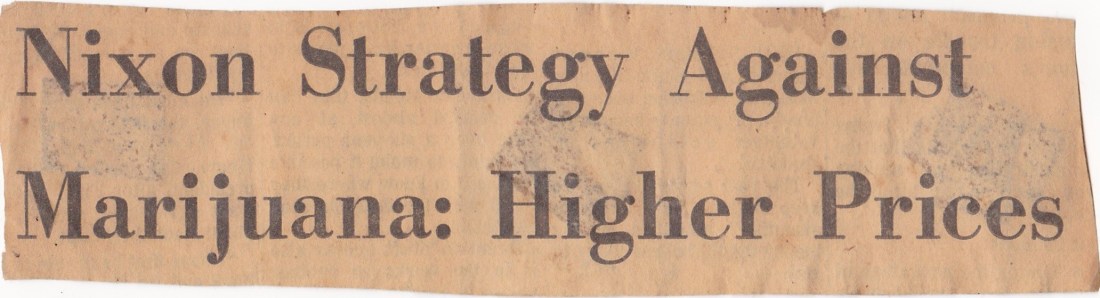
Hard to believe in 2020 there are  people who oppose legalization of marijuana and myriad personal choice issues.  

Wrong for Montana is wrong on weed, abortion and same-sex marriage.

Montana has the reputation of being a tolerant western State.  We’ll find out.

Let’s hope the tolerance of Montana shines through on Election day

The Missoulian 9.30.2020

The campaign to reject marijuana legalization mobilized quickly last month, raising more than $78,000 and burning through $61,000 in advertising, including 18 billboards near Montana’s largest cities.

Wrong for Montana filed with state election officials earlier this month to oppose Initiative 90 and Constitutional Initiative 118, joint initiatives which if passed would legalize, regulate and tax marijuana, and also set the age of consumption at 21. The group is headed by Billings car dealer Steve Zabawa, who has long opposed marijuana, including expanding the program that administers its medical use, “at every turn.”

Filings submitted to the Montana Commissioner of Political Practices on Wednesday show $55,000 of the groups’ September haul comes from two donors: the Montana Contractors Association, which opposes legalized cannabis to ensure a sober workforce, and the Montana Family Foundation.

Wrong for Montana I 9.30.2020

While analysts and proponents have said this year that marijuana legalization is neither a Republican nor Democratic issue, the Montana Family Foundation has been a vocal and ardent opponent to efforts from the left including protection of abortion rights; same-sex marriage equality; and non-discrimination laws protecting lesbian, gay, bisexual and transgender people. Jeff Laszloffy, president of the foundation, said earlier this month pro-life efforts would be renewed during the 2021 legislative session. 

The group made a $30,000 donation to Wrong for Montana. Laszloffy was not available for comment Wednesday afternoon.


The Montana Contractors Association made good on its promise to help fund Wrong for Montana’s efforts with a $25,000 contribution. Additional opponents to emerge in the last month have included the Montana Bankers Association and the Montana Chamber of Commerce.

The campaign’s expenditure list shows more than $26,000 spent on billboards to go up near Great Falls, Helena, Bozeman, Billings, Kalispell, Butte and Missoula. Another $7,750 was spent on 250 8-foot-tall signs and vests for people to hold the signs.

Election Day is Nov. 3.


https://missoulian.com/news/state-and-regional/govt-and-politics/anti-pot-group-quick-to-mobilize/article_6fe77c7b-3447-53aa-a041-bc3c02dd04a9.html#utm_source=missoulian.com&utm_campaign=%2Fnewsletter-templates%2Fnews-alert&utm_medium=PostUp&utm_content=75e39b1c77e6ac5614d99dcbf7e64428d7faeb44

In Memory of RBG. Giving up is a luxury that none of us can permit ourselves

Whether it be in our own personal battles or world events the memory of The Notorious RBG will live on within us all.

Ruth Bader Ginsburg is an inspiration to be revered and respected.

Excerpted from the New York Times 9.29.2020 – Jennifer Weiner

Giving up is a luxury that none of us can permit ourselves. It is the last thing the Notorious R.B.G. would want — and the least Jewish thing we could do.

I thought about the meaning of Judaism when I read the obituary for Justice Ruth Bader Ginsburg in The Guardian. Without offering any proof, the obituary asserted that Justice Ginsburg had “abandoned her religion” at 17, when she found herself excluded because of her gender from the minyan, or group of 10 observant Jews, who said the prayer for the dead for her mother.

I remember the words from the Torah exhortation framed on Justice Ginsburg’s wall and woven into one of her lace jabots: Justice, justice, shall you pursue. And another Jewish teaching that she must have known, which says, “You are not obligated to complete the work, but neither are you free to desist from it.”

Credit…Collection of the Supreme Court of the United States, via Associated Press
 American Jews were quick to push back against the newspaper. R.B.G. attended services — at least, occasionally. She spoke openly and proudly about her Judaism. She kept a mezuza, or a prayer scroll, on the door of her chambers, and an Old Testament quotation on her wall. After an outpouring of complaints, The Guardian adjusted the article’s language to say that although the justice “moved away from strict religious observance” she “nevertheless remained deeply committed to her Jewish identity.”

The controversy, however, left me with a question: What does it mean to be Jewish in America? And what, especially, does it mean to be Jewish right now?

I can’t answer for R.B.G. But most Jews will tell you that a Jewish identity has little to do with whether you keep kosher or attend services every Friday, and everything to do with your culture, your ethnicity; with the way you see the world and the way the world sees you. It is an identity we can’t slip, even if we want to.

From what I can tell, Ruth Bader Ginsburg didn’t want to. She might not have been a regular at synagogue or at Sisterhood meetings, but she lived a Jewish life.

She was, for starters, a mensch, a boss who treated her clerks like family, serving them birthday cakes (that her husband baked) and helping them find partners. A piece of Jewish lore holds that a Jew who makes three successful matches automatically ascends to the highest level of heaven. I’d give the justice extra credit for not just making those matches but officiating at some of their marriages.

Jewish values run through her writings like a shining thread. If you’ve been excluded, you fight for inclusion. If you’ve been made to feel less-than, because of your gender or your sexual orientation or your race or your religion, you stand up for others who’ve been denied a seat at the table. The notion of tikkun olam, that the world is broken and that each of us has a role in its repair, is a value that would lead someone to a life like hers. It is a value that overlaps with the highest American ideals.

As a woman, as a feminist, as the mother of daughters, as a Jew, I am devastated that we won’t have Justice Ginsburg as our advocate and role model. In the days of Presidents Bill Clinton and Barack Obama, her presence on the bench was a symbol of progress, a crucial step in the right direction. In the days of Donald Trump — an era that has brought us rising incidents of anti-Semitism, and the Tree of Life massacre — she was a bulwark.

She was also a living, breathing rebuke to a president who saw “very fine people” on both sides of a white-power rally where one side chanted “Jews will not replace us” — a president who has allegedly complained about Jewish clannishness and ingratitude for everything he’s done for Israel, which, by the way, is the country to which he seems to think our primary allegiance lies.

I haven’t become significantly more observant in the last four years. But I have never felt more Jewish. The rise in anti-Semitism, the torrents of toxic online abuse directed toward Jewish women, the idea that Jews are not “really” Americans — all of it has only rooted me more deeply in my faith and my identity, and made me more committed to Jewish values.

In this terrible year of so much sorrow, losing Ruth Bader Ginsburg — and losing her on the eve of Rosh Hashana, at the start of the High Holy Days, at the end of an old year and on the cusp of a new one — felt especially painful. It’s hard not to give into the despair of worst-case scenarios: that Mr. Trump will lie about the election results, that his Republican enablers will cheer him on, that our democracy will die, not in darkness, but at the Supreme Court.