New York Times Shameful Hit Piece

New York Times 2.22.2019

Any reader who is taken aback by the anecdotes discussed in the article has watched Mary Poppins too many times.  The Republicans must be jumping for joy. Senator Klobuchar is a candidate who could defeat Trump. The Times is doing the dirty work for this misogynist abuser. Who needs Roger Stone when the Times is carrying the ball for Trump? This is a vile hit piece. Nothing more. Guys are just as bad in their behavior. When is The Times going to unload its faux fury on a man?

Voters have short attention spans. Senator Klobuchar was one Senator who very effectively got under the skin of now Justice Kavanaugh.  The Senator may not be Ms. Congeniality. She gets the job done.

International Armaments News. Heckler & Koch fined €3.7 million. Illegal weapons sales to Mexico

The Germans have a robust profile  as international arms merchants. Sales and profits from munitions keep drug cartels in business. Read my earlier post about the courageous journalist Anabel Hernandez.

Deutsche Welle 2.21.2019

Two former staff members at the weapons manufacturer were given suspended sentences for violating Germany’s War Weapons Control Act for their involvement in the delivery of machine guns to Mexico.

Mexican Drug Cartels 2.21.2019

The 10-month trial of former employees of Germany’s biggest gun-maker, Heckler & Koch, ended in disappointment for arms trade opponents as former CEOs were acquitted for their part in the illegal sale of G36 assault rifles to Mexico between 2006 and 2009, while Marianne B. and Ingo S., employees with largely administrative duties, were found guilty.

A few boos rang out in the courtroom as Judge Frank Maurer read the verdict, especially as Peter B., a former CEO, was found not guilty. The executive, who was also H&K’s main contact with government export authorities, was the most powerful of the defendants, none of whom showed a visible reaction as the verdict was read.

The judge’s narrow legal focus drew outrage from the gallery. After he dismissed what he called the “populist” argument that the “executioners” were being condemned while the big decision-makers were being let go, Grässlin called out, “That’s exactly how it is!” Afterwards, Grässlin called the verdict an example of “two-class justice,” and said the trial had revealed how ineffective Germany’s arms export controls are.

The company Heckler & Koch itself was fined €3.7 million ($4.2 million), the approximate value of the guns at the time of their sale. That came as a welcome surprise to veteran anti-arms trade activist Jürgen Grässlin, who had initially pressed the charges and had expected a fine based only on the profits from the illegal sale. He added that the fine could exacerbate H&K’s financial troubles.

https://www.dw.com/en/heckler-koch-fined-37-million-over-illegal-arms-sales-to-mexico/a-47610975


Oakland Teachers Strike Against a Broke and Broken School District

CNN 2.21.2019

Photo by Lee Heidhues. Strikers at 12th and Oak Streets

(CNN)Of all the teachers’ strikes across the country, this one is especially consequential.

Oakland teachers hit the picket lines Thursday, unable to afford the soaring cost of living near Silicon Valley.
Some are getting priced out of their homes. The crisis is so dire, the school district is losing almost 20% of its teachers every year.
“It’s time for the (school) district to listen now. They forced us to this moment to strike,” said Oakland Education Association President Keith Brown.
But here’s the problem: Teachers are demanding higher raises from a school district that’s already broke. The Oakland Unified School District is in such bad shape, it’s planning to lay off 112 staff.
The district says it barely has enough money to take care of its low-income students — 75% qualify for free or reduced lunch. So giving teachers higher raises might be out of the question.
No one knows how long this strike will last, or what victory for either side will look like. But it will come at a steep cost to a community already suffering.

Clarence Thomas Wants to Overturn Landmark Libel Ruling

Clarence Thomas who has spent nearly 30 years trashing civil liberties has now set his sights on the Free Press.  This is the same sexual abuser who trashed Anita Hill and lied his way on to the Supreme Court with an assist from then Senate Judiciary Chairman Joe Biden.

Excerpted from New York Times – Adam Liptak 2.20.2019

WASHINGTON — Justice Clarence Thomas on Tuesday called for the Supreme Court to reconsider New York Times v. Sullivan, the landmark 1964 ruling interpreting the First Amendment to make it hard for public officials to prevail in libel suits.

He said the decision had no basis in the Constitution as it was understood by the people who drafted and ratified it.

“New York Times and the court’s decisions extending it were policy-driven decisions masquerading as constitutional law,” Justice Thomas wrote.

Justice Thomas, writing only for himself, made his statement in a concurring opinion agreeing that the court had correctly turned down an appeal from Kathrine McKee, who has accused Bill Cosby of sexual assault. She sued Mr. Cosby for libel after his lawyer said she had been dishonest.

Clarence Thomas 2.20.2019

Justice Thomas’s statement came in the wake of complaints from President Trump that libel laws make it too hard for public officials to win libel suits.

“I’m going to open up our libel laws so when they write purposely negative and horrible and false articles, we can sue them and win lots of money,” Mr. Trump said on the campaign trail. “We’re going to open up those libel laws. So when The New York Times writes a hit piece which is a total disgrace or when The Washington Post, which is there for other reasons, writes a hit piece, we can sue them and win money instead of having no chance of winning because they’re totally protected.”

Thanks to the Sullivan decision, it is indeed hard for public figures to win libel suits. They have to prove that something false was said about them, that it harmed their reputation and that the writer acted with “actual malice.” That last term is misleading, as it has nothing to do with the ordinary meaning of malice in the sense of spite or ill will.

To prove actual malice under the Sullivan decision, a libel plaintiff must show that the writer knew the disputed statement was false or had acted with “reckless disregard.” That second phrase is also a term of art. The Supreme Court has said that it requires proof that the writer entertained serious doubts about the truth of the statement.

Justice Thomas questioned those standards.

“There appears to be little historical evidence suggesting that the New York Times actual-malice rule flows from the original understanding of the First or Fourteenth Amendment,” he wrote.

Daring Journalist Anabel Hernández. “Freedom of Speech” Award Recipient

Deutsche Welle 2.19.2019

A daring journalist who has spent her career reporting on drug cartels and corruption in Mexico, Anabel Hernández is the fifth person — and first woman — to receive the Deutsche Welle Freedom of Speech Award.

“Anabel Hernández investigates thoroughly and always very close to the story. She follows cases of corruption, collecting legal evidence for years. Her fight against hush-ups and impunity is an impressive example of courageous journalism,” DW Director General Peter Limbourg said in Mexico City on Tuesday, February 19.

Born in Mexico, Anabel Hernández began her career in journalism in 1993, working for the newspaper Reforma while still a student in university. In the decades that followed, Hernandez has made a name for herself as one of Mexico’s leading investigative journalists, publishing stories of government corruption, sexual exploitation and drug trafficking.

That groundbreaking reporting, which includes two books investigating the interconnections between Mexican government officials at all levels and the leading drug cartels in the country, has come with a price. Hernández currently lives in exile, having fled Mexico after credible death threats directed at her and her children.

“During this dramatic period in Mexico’s history, silence is killing men, women and children, ordinary members of civil society, it is killing human rights defenders, it is killing government officials, and it is killing journalists,” she said when accepting the Golden Pen of Freedom Award in 2012.

“But breaking the silence can also be deadly,” she added.

Hernández has intimate knowledge of the dangers that citizens in Mexico face as a result of the country’s criminality. Her father, who initially discouraged her ambitions of becoming a journalist, was murdered in Mexico City in 2000. His killing remains unsolved as her family refused to pay the officials who were tasked with the investigation. Hernández said that his murder is what drives her work.

Mexican Drug Gangs 2.19.2019

After five years of research, Hernández published the book Los Señores del Narco in 2010 (released in English in 2013 under the title, Narcoland: The Mexican Drug Lords And Their Godfathers). The book thoroughly explores those behind the drug cartels. It shows how utterly interwoven the “narco system” is into the fabric of everyday life in Mexico and the complicity of politicians, the military and businessmen in the drug trade.

“Between them all, they have turned Mexico into a graveyard,” she wrote.

The detailed accounting of corruption was a best-seller upon its release in Mexico. It also earned Hernandez numerous death threats. She was later assigned bodyguards for around-the-clock protection.

“After I published Los Señores del Narco in Spanish — now Narcoland in English — I received death threats. Last June, someone left decapitated animals in front of my house,” Hernández told The Nation magazine in October 2013. “It’s sad to say, but I didn’t receive the threats from the drug cartels. I received the threats from the federal government, from the most powerful chief of police in Mexico.”

https://www.dw.com/en/anabel-hern%C3%A1ndez-honored-with-dw-freedom-of-speech-award-2019/a-47535543

Berlin Film Festival. Ai Weiwei’s segment cut from ‘Berlin, I Love You’

Deutsche Welle 2.18.2019

Producers of the film ‘Berlin, I Love You’ have cited Chinese influence as the reason they cut Ai Weiwei’s segment. The artist told DW that the Berlin International Film Festival suggested his section be removed.

Ai is an outspoken critic of China’s government and spent four years under house arrest in China until he was finally allowed to leave the country in July 2015. He then moved to Berlin.

The Berlin Film Festival told DW they do not comment on films that had not been selected, but added: “We can confirm that the involvement of Ai Weiwei would never be a criteria for choosing or not choosing a film.”

Ai Weiwei DW 2.18.2019

Chinese dissident artist Ai Weiwei’s segment in the film “Berlin, I Love You” was cut from the final version due to concerns the artist had become a political liability, the artist and film producers said.

“The reason we were given for the episode’s removal was that my political status had made it difficult for the production team to secure further funding,” Ai told DW reporter Melissa Chan.

Ai told DW that the Berlin International Film Festival had suggested his participation in the film had made it difficult for the producers to submit it as an entry to the event, a claim the festival has denied.

“[The producers] told me they submitted this film to the Berlin Film Festival and the festival told them, if Ai Weiwei’s in there, the film can never be accepted,” Ai said.

DW’s Melissa Chan reviewed a document which appeared to confirm Ai’s story.

“Berlin, I Love You” is not the only film to have succumbed to apparent influence from China. Earlier, top Chinese director Zhang Yimou withdrew his film “One Second” — set during the Cultural Revolution — from consideration for the Berlinale’s prized Golden Bear in what is widely believed to be censorship and control by Chinese officials.

https://www.dw.com/en/chinese-artist-ai-weiweis-segment-cut-from-berlin-i-love-you/a-47575219


Female German referee. Bundesliga broadcast canceled in Iran

SCARY. We know what the Ayatollahs think about women’s place in society. 

Deutsche Welle 2.17.2019

Iranian state TV did not broadcast a Bundesliga soccer match because of the presence of a woman as referee, media say. The Islamic country censors the showing of women in “revealing” clothes such as football shorts.

Bibiana Steinhaus, 39, is the first woman to have officiated at men’s football matches at a professional level in Germany. She refereed her first Bundesliga match in September 2017.

The broadcast was reportedly canceled because the Iran’s strict Islamic regulations do not allow the showing of images of women wearing clothes that reveal large amounts of skin, such as football shorts.

https://www.dw.com/en/female-german-referee-causes-bundesliga-broadcast-to-be-canceled-in-iran/a-47553812

The Waiting Rooms of History

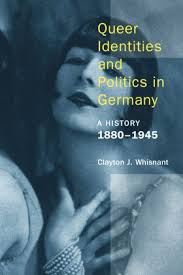
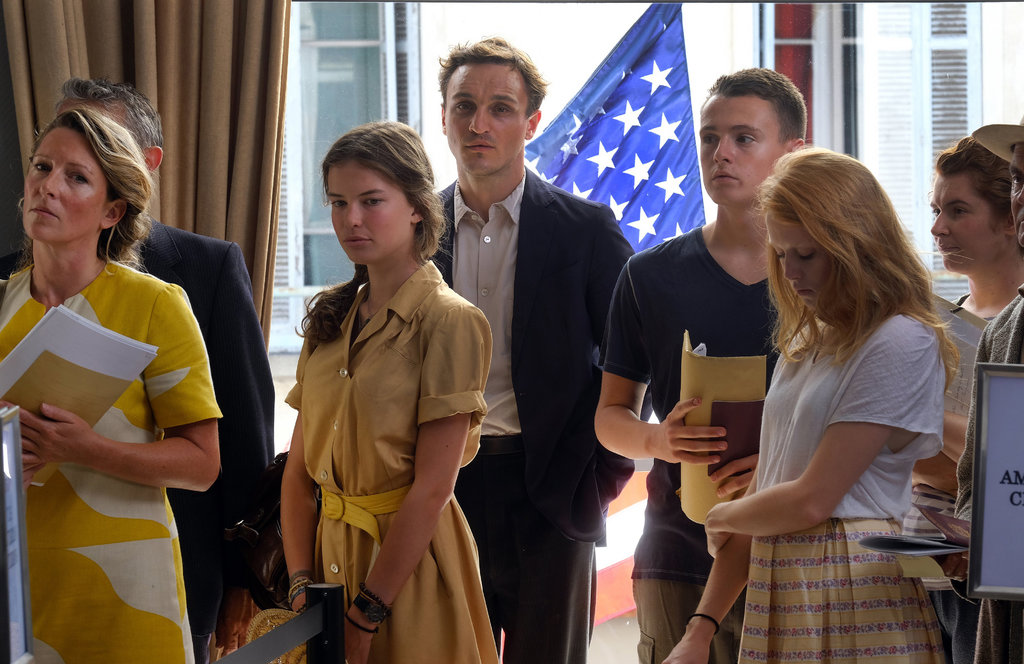
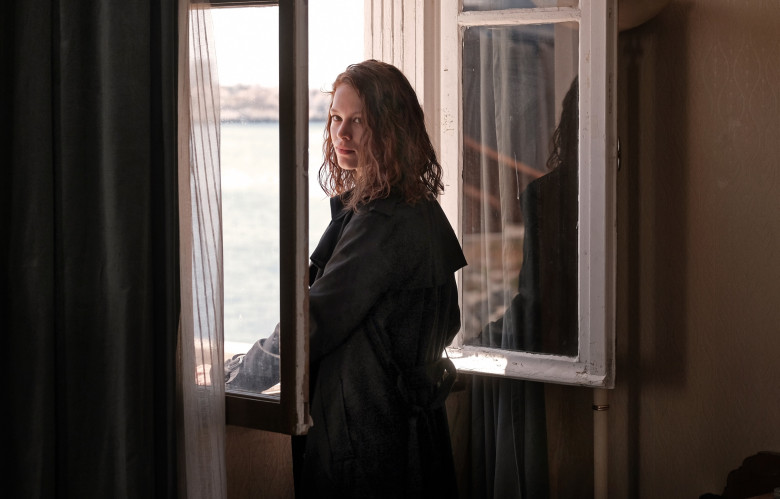
Earlier this year I read Anna Segher’s novel Transit. When the film adaptation had its brief appearance in San Francisco art cinemas I watched it. The book and its companion film require the reader/viewer’s concentration in explaining the perilous life of the refugee/immigrant populations. Whether it be in World War II Europe or the world  in which we live today, 2019. (Post updated 5.14.2019).

Transit –  Review by J Hoberman.

Written and directed by Christian Petzold, adapted from the novel by Anna Seghers

New York Review of Books 3.7.2019

The protagonist of Anna Seghers’s novel Transit (1944)—the source for Christian Petzold’s new film of the same name—is a young German who, having escaped from a Nazi concentration camp and then a French work camp, makes his way to occupied Paris. There he is recruited by another former inmate to deliver a letter to an anti-fascist writer named Weidel. The letter is described to him as a desperate plea from Weidel’s estranged wife, Marie, who is stranded in Marseille.

anna-seghers-5.14.2019.jpg

But Weidel, as Seghers’s nameless fugitive discovers, has committed suicide in a Left Bank hotel room. Carrying the dead man’s suitcase, which contains a manuscript that he reads out of boredom, as well as the letter, the fugitive travels to Marseille; once there, “a specter among the visa applicants,” he finds himself, almost unintentionally, taking Weidel’s identity and applying for his exit visa. The consul seems weirdly eager to help someone so distinguished. Waiting for passage to the New World among a disparate horde of desperate souls seeking to escape Europe, the fugitive shadows and is shadowed by Marie, who is frantically searching for her dead husband; thanks to the bureaucratic trail left by the imposter, she believes him to be alive in Marseille. Tipped off that her “husband” is enjoying a pizza in a harbor café, she finds only the fugitive Weidel, and her unrealizable pursuit continues.

Seghers’s existential thriller—recounted in the first person, a tale told by one refugee to another, and written while the author, having successfully gotten out of Marseille, was in exile in Mexico—has been described as Casablanca imagined by Franz Kafka.  Sartre’s No Exit, first performed in 1944, the same year that Transit was published in English and Spanish versions, is another analogue. So too perhaps is Camus’s The Stranger (1942). The underlying absurdity of the fugitive’s condition, as well as Transit’s understated modernism, belies Seghers’s reputation as a Marxist ideologue; most certainly this strain of absurdism helped interest Petzold in the material.

https://www.nybooks.com/articles/2019/03/07/christian-petzold-waiting-rooms-history/

Israeli Democracy

In 1970 I spent three months in Israel. One night my traveling companion and I were at a roadside cafe in the Negev Desert. A patrol of Israeli soldiers came by.  We engaged in a dialogue. At one point an Israeli soldier poked me in the stomach with his Uzi.  Half laughingly he told me, “If you were an Arab I would shoot you.”

Freedom and Despair: Notes from the South Hebron Hills

by David Shulman
University of Chicago Press, 198 pp., $54.00; $18.00 (paper)

Excerpted from New York Review of Books 3.7.2019

Review by Raja Hhehadeh

Photo. Israeli soldiers detaining a Palestinian during clashes at a protest, Hebron, West Bank, February 2018. Kobi Wolf/Contact Press Images

On June 2, 1980, three members of an offshoot of the right-wing Israeli settler movement, a terrorist group that became known as the Jewish Underground—Menachem Livni, Uzi Sharabaf, and Shaul Nir, all West Bank settlers—placed bombs under the cars of the Palestinian mayors of Ramallah, Bireh, and Nablus. The mayor of Nablus, Ghassan Shakaa, lost both his legs; Kareem Khalaf, the mayor of Ramallah, lost a foot. A rumor circulated that Menachem Livni worked at the military governor’s office in Ramallah. If so, I must have seen him there. When I heard what he had done and saw his picture, I wondered at the incongruity of his innocent-looking face.

The three were apprehended in 1984 and convicted in 1985 after another attack, which killed three Palestinian students at the Islamic College in Hebron. They received life sentences, but these were commuted by Israeli president Chaim Herzog. In 1990 they were released from prison, to the cheers of Jewish settlers and no real show of public protest. Menachem Livni now produces cabernet sauvignon at his winery in the settlement of Kiryat Arba next to Hebron.

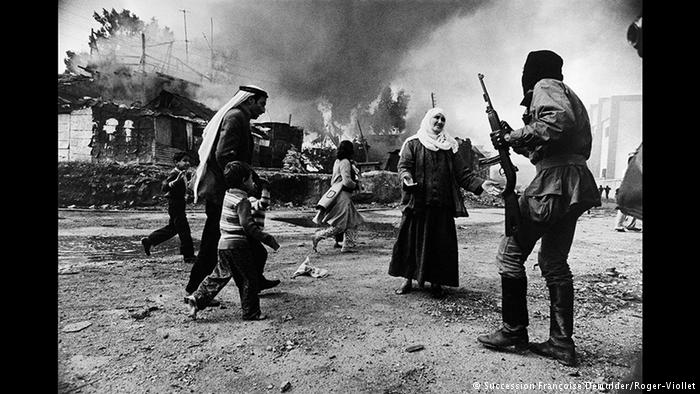
Israeil Defense Forces 2.16.2019

Photo: Israeli Defense Force members

After the bombings, Al-Haq, a Palestinian human rights NGO, met with the Association for Civil Rights in Israel and urged an investigation of settler violence in the West Bank. In 1981 a committee to carry one out was formed by the Israeli attorney general, headed by his deputy, Judith Karp. The Karp Report: On the Investigations of Suspicions Against Israelis in Judea and Samaria, published in 1984, described numerous acts of violence carried out by Jewish settlers against Palestinian Arabs in the West Bank, including assaults, destruction of property, armed threats, shootings, obstructed access to places of employment, and attacks on schoolchildren. It was not followed by any significant change in the ways settler violence was addressed by the Israeli police and security services.

Such criminal behavior is more widespread now than it was in the 1980’s.

https://www.nybooks.com/articles/2019/03/07/bearing-witness-in-the-west-bank/